Thursday, January 8th 2026

GIGABYTE RTX 5090 AORUS Infinity, ASUS RTX 5090 ProArt, and MSI RTX 5090 Lightning Z, Hands On
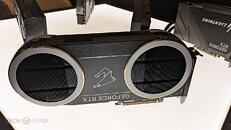
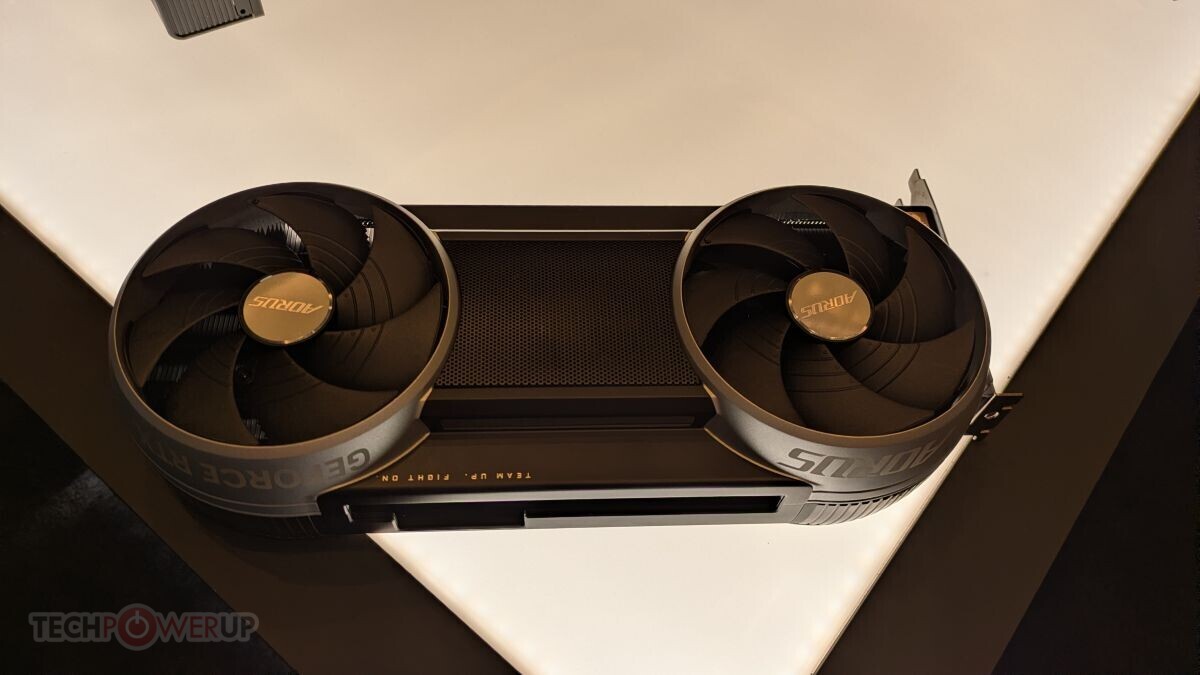
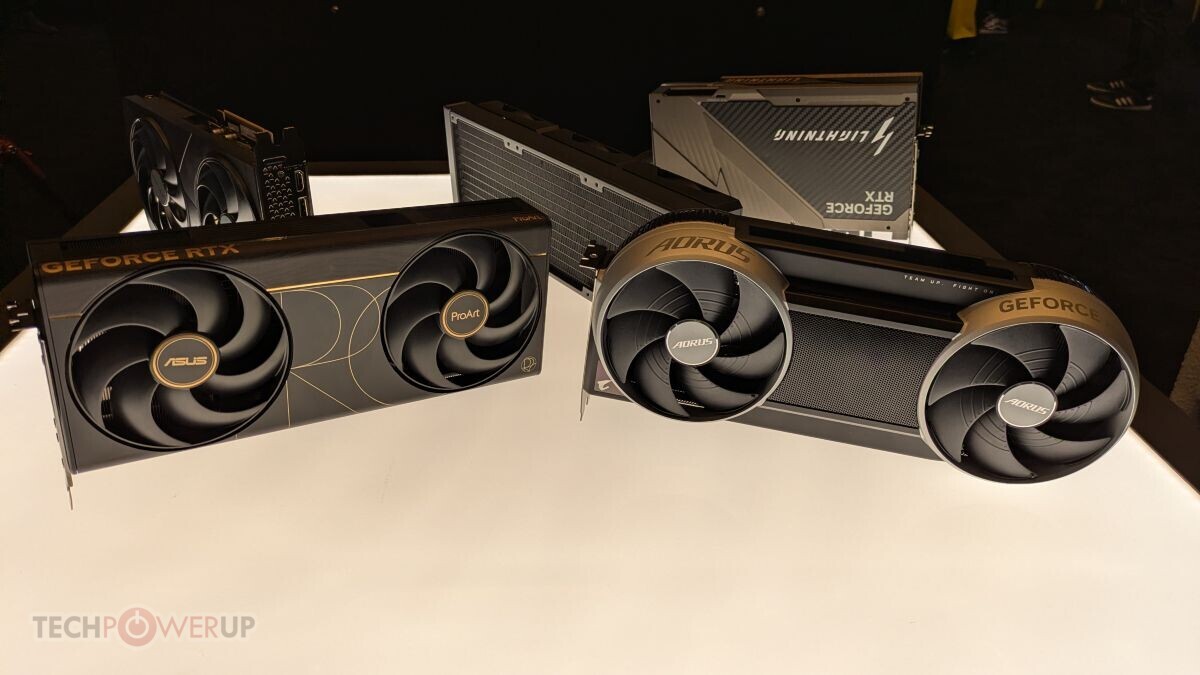
At the 2026 International CES, we went hands on with a new crop of ultra-premium custom-design GeForce RTX 5090 graphics cards that launched in quick succession of each other this year, exactly 1 year following the RTX 5090's original launch. Earlier today, we also held the Inno3D iChill RTX 5090 Frostbite PRO, another such recently announced premium RTX 5090 custom-design. The GIGABYTE RTX 5090 AORUS Infinity and ASUS RTX 5090 ProArt stand out as being the first custom design implementations of NVIDIA's Dual Flow-Through cooler design that it introduced with the RTX 5090 Founders Edition graphics card, the company's de facto reference design.
This design involves placing the main PCB of the card with the GPU, memory, and VRM, as a separate, centrally located component, with heat drawn from these hot components projecting along the length of the card, and fans located at both ends, push air through the cooler and out of the backplate, through cutouts. The PCB relies on additional breakout PCBs for the PCI-Express gold fingers, and the display I/O. GIGABYTE's design sees two large 120 mm fans pump air through the heatsink, with some of it being guided through the central region of the cooler. GIGABYTE has used a similar two-tone color scheme as NVIDIA Founders Edition. We can't wait to get our hands on this card to see how the cooler fares against rival custom designs.


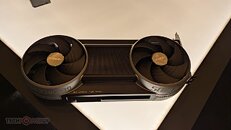
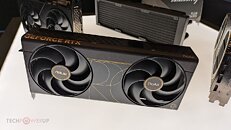
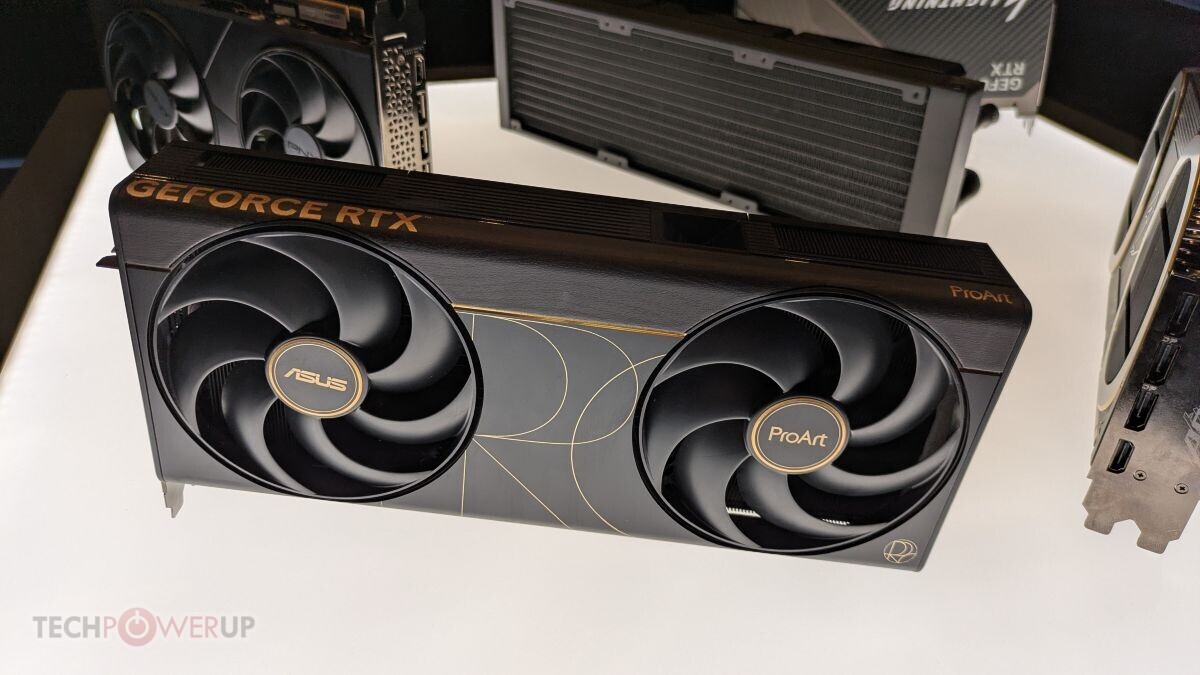
 Next up, is the ASUS RTX 5090 ProArt. This card is targeted at creators and power users that need the graphics and compute muscle of the RTX 5090. The card is interestingly only two slots thick, and closely follows NVIDIA's FE design of using a high density aluminium fin-stack that pushes all the way to the edges of the card, and uses nearly the entire thickness of the card where it can. Two 100 mm Axial Tech fans push air through the heatsink, which vents out from cutouts at the back. From what we could tell, the cutouts are slimmer than the diameter of the fans, which means a portion of the airflow falls onto the PCB. The design goal for this card would be to run the RTX 5090 quieter than the Founders Edition card; it's not trying to smash records here. For that you'll need the ASUS ROG MATRIX RTX 5090, which launched last November.
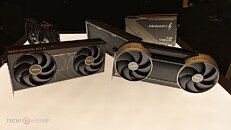
 Lastly, there's the highly desirable MSI RTX 5090 Lightning Z. This card is positioned above the MSI RTX 5090 SUPRIM Liquid SOC. It features a far superior PCB design based on MSI's learning of the RTX 5090's electrical and thermal behavior over the past year. This card is designed to seek out and smash overclocking and benchmarking world records. Professional overclockers will strip it apart and use the bare PCB with their own extreme cooling solutions, but for the rest of its customer base, MSI is offering a high-end all-in-one liquid cooling solution, complete with a 360 mm x 120 mm radiator, and a trio of premium fans.
This design involves placing the main PCB of the card with the GPU, memory, and VRM, as a separate, centrally located component, with heat drawn from these hot components projecting along the length of the card, and fans located at both ends, push air through the cooler and out of the backplate, through cutouts. The PCB relies on additional breakout PCBs for the PCI-Express gold fingers, and the display I/O. GIGABYTE's design sees two large 120 mm fans pump air through the heatsink, with some of it being guided through the central region of the cooler. GIGABYTE has used a similar two-tone color scheme as NVIDIA Founders Edition. We can't wait to get our hands on this card to see how the cooler fares against rival custom designs.


11 Comments on GIGABYTE RTX 5090 AORUS Infinity, ASUS RTX 5090 ProArt, and MSI RTX 5090 Lightning Z, Hands On
Looks like it was stolen from a car's dashboard A/C.
In the 4080 super thread, you may find a post where I actually suggested the 4080 Super FE should have not had the corner and instead curved around the fan, as the corner blocked access to the screw to support to the case.
I will attach a pic to show you what I mean, of course you can argue its a case design flaw. But historically cards were not so tall. these 4xxx and 5xxx GPUs are much higher the height of the bracket. My 3080 was only slightly above bracket height.
Basically the green area preventing access to the screw, the red bit. If that green area wasnt there, it solved a headache. The problem not existing on older GPU's as they werent so tall. So not blocking the screw area.