News Posts matching #Real

Return to Keyword Browsing

DLSS 5: Gamers Prefer Original Visuals, Many Await Real-World Results

When NVIDIA announced its Deep Learning Super Sampling (DLSS) 5 technology, which the company describes as the first real-time neural rendering technology to bring photorealism to game textures, the response from gamers was not entirely positive. Many were unhappy with the results, and the backlash grew online. That's why we asked the TechPowerUp readers in a poll to share their opinions on the technology and found a consistent theme in the results. After collecting nearly 20,000 votes, a majority of 58% of gamers expressed that AI should not alter games at all. They prefer to keep their favorite titles original and intact, as envisioned by the original game studio, without any changes to lighting or photorealism. They want no alterations, meaning AI should not change character faces, apply realistic material rendering, or add any other modifications.

Interestingly, the second-largest group is still undecided, waiting to see real-world results in their favorite AAA titles. When DLSS 5 is implemented in major releases, about 28% of gamers who have seen NVIDIA's DLSS 5 demos believe that the final release will shape their opinion, whether positive or negative. This indicates that the technology has not yet fully resonated with the gaming community, who require further convincing. A smaller segment, 8.1% of those polled, believes that DLSS 5-enabled titles actually look better than native rendering, showing some optimism that the technology can improve visuals. Finally, about 6.4% of respondents are willing to accept visual changes if they lead to a significant FPS boost. As with DLSS and other upscaling methods, gamers now expect to see a substantial performance increase from neural rendering, and the situation appears similar with DLSS 5.


NVIDIA Develops 2-3x Faster Real-Time Path Tracing with Better Image Quality

NVIDIA has developed a new algorithm for path tracing that will make it 2-3 times faster, deliver better visual quality, and improve the robustness of real-time path tracing. Scheduled for a technology demo at the ACM conference on Computer Graphics and Interactive Techniques in May, NVIDIA has found a way to make real-time path tracing a fully realistic rendering process, moving beyond the usual emulation, software denoising, upscaling, and other techniques we use today. Since real-time path tracing is extremely compute-intensive, modern GPUs are still not powerful enough to execute the full path tracing technology in all its potential. Instead, we currently rely on emulations in modern games, implemented across many titles to address this computational demand. Below is the abstract described on NVIDIA's paper page, though the paper itself is not yet available as its publication is scheduled for May. However, note that the technology is still in development, and we have to wait more for it to hit commercial games.
NVIDAAlgorithms leveraging ReSTIR-style spatiotemporal reuse have recently proliferated, hugely increasing effective sample count for light transport in real-time ray and path tracers. Many papers have explored novel theoretical improvements, but algorithmic improvements and engineering insights toward optimal implementation have largely been neglected. We demonstrate enhancements to ReSTIR PT that make it 2-3x faster, decrease both visual and numerical error, and improve its robustness, making it closer to production-ready. We halve the spatial reuse cost by reciprocal neighbor selection, robustify shift mappings with new footprint-based reconnection criteria, and reduce spatiotemporal correlation with duplication maps. We further improve both performance and quality by extensive optimization, unifying direct and global illumination into the same reservoirs, and utilizing existing techniques for color noise and disocclusion noise reduction.

GIGABYTE Shows Real-Time LCD System Information Display

GIGABYTE debuted its LCD Edge View display for showcasing real-time system information. Designed as a small and compact LCD display, it acts as a desktop-standing box capable of displaying critical system information like CPU and GPU temperatures, fan speeds of GPUs and CPU coolers, PC fans, as well as everything else happening inside of a PC. Interestingly, it isn't just a fixed-function display. It can show custom images/videos and display custom text, serving as a small display companion to the main monitor for users to look at occasionally or just monitor system health. The design of the LCD Edge View is to be a plug-and-play white box that could easily be positioned on any desktop, blending seamlessly with the user's setup.

It requires external power connection, and can be driven by any GPU/video output. It also features a USB port.

Xiaomi Announces CyberDog Powered by NVIDIA Jetson NX and Intel RealSense D450

Xiaomi today took another bold step in the exploration of future technology with its new bio-inspired quadruped robot - CyberDog. The launch of CyberDog is the culmination of Xiaomi's engineering prowess, condensed into an open source robot companion that developers can build upon.

CyberDog is Xiaomi's first foray into quadruped robotics for the open source community and developers worldwide. Robotics enthusiasts interested in CyberDog can compete or co-create with other like-minded Xiaomi Fans, together propelling the development and potential of quadruped robots.

Tesoro Debuts Alphaeon W1 Glasses, S1 Chair, and Wireless Qi RGB Mouse Pad

Tesoro looked to keep things stately at this years Computex, going with more refined designs that feature a cleaner aesthetic for office and business use. The first item to make s splash was the Alphaeon W1 which is a set of glasses that protect one's eyes with blue light reduction lenses which are TÜV Rheinland certified. Made for use both indoor and outdoor with both computers and mobile devices, but if that's all they were capable of they wouldn't be newsworthy. Meaning they took things a step further with the company equipping these glasses with Bluetooth 4.0 with a connection distance of up to 15m. Add in Bone Conduction technology and users can not only enjoy music or answer phone calls but also hear surrounding sounds. Compatibility is quite broad as the glasses are capable of pairing with any Bluetooth devices and are Active Voice Control ready. They are also lightweight at just 45g and have a rated phonecall/music playback time of up to 8 hours.

Witness the Power of Unity With Heretic Real-Time Demo, Megacity Tech Demo

Unity has grown from a relatively simple engine to one of the most flexible options available for developers, allowing everything from 2D platformers to 3D games and short cinematics, all rendered in real-time, in-engine. The new Heretic real-time demo, showcased at GDC 2019, is one such example of a 3D engine being used to render a breathtaking cinematic.

The Heretic builds upon learnings derived from both the Adam and Book of the Dead shorts, and take advantage of the latest technologies embedded into the Unity engine. Motion blur, bloom, depth of field, film grain, color grading, and Panini projection, including by real-time lights and usage of a probe-based lighting solution. Just take a look at the video yourself, right after the break, and read on for the other part of this Unity-related piece: the Megacity Tech Demo.

Crytek Shows Off Neon Noir, A Real-Time Ray Tracing Demo For CRYENGINE

Crytek has released a new video demonstrating the results of a CRYENGINE research and development project. Neon Noir shows how real-time mesh ray-traced reflections and refractions can deliver highly realistic visuals for games. The Neon Noir demo was created with the new advanced version of CRYENGINE's Total Illumination showcasing real time ray tracing. This feature will be added to CRYENGINE release roadmap in 2019, enabling developers around the world to build more immersive scenes, more easily, with a production-ready version of the feature.

MSI Launches the GeForce GTX 680 Lightning Graphics Card

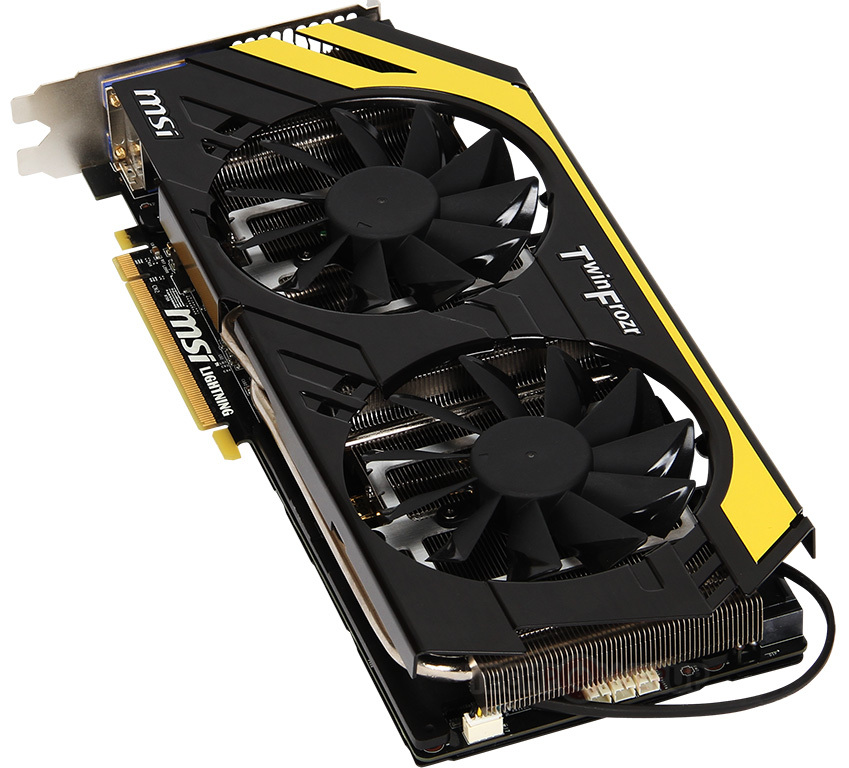
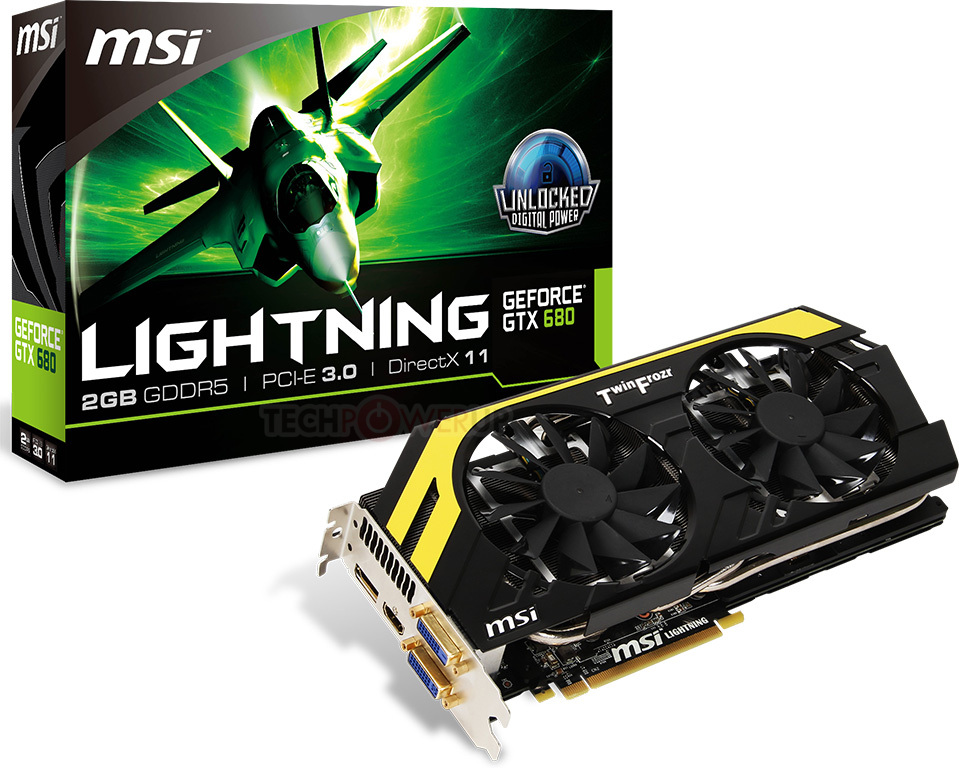
Leading mainboard and graphics card maker MSI has just announced the release of the N680GTX Lightning, the new king of the graphics card world equipped with the NVIDIA GeForce GTX 680 GPU. The N680GTX Lightning utilizes proprietary Unlocked Digital Power architecture to unleash the full performance of the graphics card without any extra modifications. The innovative patented GPU Reactor power supply back plate also reduces power supply noise and improves overclocking stability. the N680GTX Lightning is kept cool by the Twin Frozr IV cooling solution with Dust Removal technology, dual temperature-controlled fan setup and SuperPipe.

Intel Investing in Web-Based TV

With US cable-TV operators' fees to cable channels crossing the US $40 billion/year mark, Intel is eying a share of the market. According to a WSJ report, Intel is working on a "virtual cable operator" service that would distribute cable-TV channels nationwide over the internet. The paid service wouldn't cover costs of internet service and bandwidth utilized by it, leaving customers to pay them on their end. This could mean that Intel's service is more affordable than those of conventional cable-operators that supply their own wired/satellite infrastructure to customers. Intel has recently made some notable IP acquisitions, which could contribute to this effort. For one, we know that Intel recently bought video encoding/streaming technology patents from RealNetworks (the people behind RealPlayer). Intel's TV service could go live by the end of 2012.

Cooler Master Unveils GeminII S524: Ultimate Versatility Realized

Cooler Master, an industry leading chassis, thermal solution, peripheral, and accessory manufacturer, uncovers the ultimate follow-up to the widely popular GeminII CPU Cooler, the GeminII S524. The GeminII S524 is the embodiment of versatility, efficiency, and silence.

GeminII S524, a unique alternative to traditional CPU & system memory cooling. Rotated 90 degrees, it harnesses the constant flow of cool air from the side of the system and directs it to the heatsink fins to cool the CPU. Unique to this design, the GeminII S524 channels a portion of this cool air to the system memory to help dissipate the heat generated by critical system components. Benefiting from a larger heatsink surface area, increased clearance for high-end system memory modules, and an easily upgradeable fan, the GeminII S524 claims its position as a transformative cooling solution while maintaining an impressive performance-to-noise ratio.

Gigabyte GA-A75-UD4H Socket FM1 Motherboard Pictured

Like most others, Gigabyte is ready with some of its first motherboards to launch with AMD's new Fusion Llano A-Series APU platform, based the new FM1 socket and AMD A75 chipset. Gigabyte's top socket FM1 motherboard is called GA-A75-UD4H. It's a return to the company's signature blue Ultra Durable 3 PCB. The FM1 socket is powered by a 10-phase VRM, it is wired to four DDR3 DIMM slots supporting dual-channel DDR3-1866 MHz memory. Expansion slots include two PCI-Express 2.0 x16 (x8/x8 when both are populated), supporting AMD CrossFireX and NVIDIA 2-way SLI; three PCI-Express x1, and two PCI.

The A75 single-chip chipset handles all the storage connectivity on this board, with five SATA 6 Gb/s internal ports, and one eSATA 6 Gb/s. Display connectivity includes DVI, D-Sub, and HDMI. Other connectivity includes eight USB 3.0 ports driven by three controllers, including four ports by header, gigabit Ethernet, 8+2 channel HD audio driven by Realtek ALC889 CODEC, and FireWire. Expect this board to be out in mid-June.

Micron Technology Announces Superfast SSDs, 250 MB/s Sustained!

Considered by many as the memory perfectionists, Micron Technology, that's working closely with Intel these days in the field of solid state storage, NAND flash technologies, etc., has devised a drive series it calls RealSSD, the series is branched into consumer and enterprise segments, the P200 series are the enterprise offerings which are manufactured in a way that allows high uptime and MTBF to for mission-critical storage environments. The P200 uses Single-Level Cell (SLC) NAND technology while RealSSD C200 series aimed at the consumer segment uses the much cheaper Multi-Level Cell (MLC) NAND technology.

What makes the RealSSD stand out is that the drives offer sequential read and write speed of a whopping 250MB/s, something that takes 4 ~ 6 member RAID 0 arrays using conventional drives to achieve. The C200 series are available in the 1.8" and 2.5" form-factors, the 1.8" drives come in capacities between 32GB and 128 GB while the larger drives offer capacities up to 256 GB. The drives use the 3 GB/s SATA II interface and the MLC-based C200 parts offer respectable write speeds of around 100 MB/s which is still high for its segment, with read speeds of around 250 MB/s. These drives are expected to arrive in Q4, 2008 under the Lexar brand.

Yahoo! Shuts Down Yahoo! Unlimited Music Service

For a while, you could only get your legal music from three main music distributors: Napster, Real Rhapsody, URGE, and Yahoo. However, there have been a lot of changes. With restriction-free music gaining momentum, with distributors like Wal-Mart providing cheaper music, and distributors like Amazon simply offering more music, business is awful hard to come by for any of those distributors. Yahoo, which at one point offered more than two million songs, has been forced to shut down the Unlimited music service. Yahoo has officially sold the Unlimited music service to Real Rhapsody, and current subscribers of Yahoo will be given a migration notice very soon, if they haven't been already. Yahoo will still be in the music business, though, and is considering offering a very limited catalog of subsidized free music, much like competitor Spiral Frog.
Return to Keyword Browsing
Nov 11th, 2026 17:03 CST change timezone

New Forum Posts

Popular Reviews

TPU on YouTube

Controversial News Posts