News Posts matching #accessories

Return to Keyword Browsing

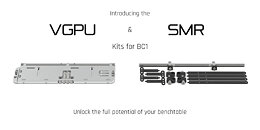
Streacom Launches VGPU and SMR Kits for BC1 Open Benchtable V2

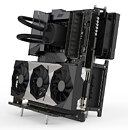
Over a decade ago, the BC1 Open Benchtable launched with one clear goal: the ultimate portable platform for traveling overclocking enthusiasts. Its minimalist, toolless, flat pack design proved so effective that it quickly became the benchmark for open air builds, evolving from road warrior to permanent showcase platform for hobbyists and professionals alike.

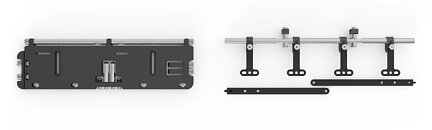
Portability demanded compromises: slim profile, simple brackets, no native support for complete vertical builds. Today we close those gaps with precision engineered accessories that extend the BC1's legendary versatility without changing its core DNA.

Lenovo Leak Tips "ThinkBook Modular AI PC" for MWC Showcase

We recently reported on a Lenovo MWC leak that claimed Lenovo would show off a Legion Go Fold at Mobile World Conference in Barcelona in early March. Now, a new leak shared by evleaks on X has shown off what Lenovo will apparently call the "ThinkBook Modular AI PC Concept." The leaker didn't provide much information other than the name and two images of the device, but the combination of the word "modular" in the name and the clues from the images provide a pretty clear idea of what's going on.

From the looks of it, the ThinkBook concept will have a traditional clamshell design, but the space where the keyboard deck would usually be on a traditional laptop will instead be a space for modular accessories. The accessories shown off in the leaked renders of the device are a laptop keyboard and a display equal in size to the main display in the top of the clamshell. This looks to be an iteration of devices like the Lenovo ThinkBook Flip, although the ThinkBook Modular AI PC Concept could achieve a similar effect, especially in terms of screen real-estate and possibly ergonomics, although likely with significantly lower costs, thanks to a simpler design without a flexible OLED panel. The new concept would also offer users more flexibility—you could just leave the lower display at home or pack both displays and a mechanical keyboard and mouse for better ergonomics and all the other benefits better peripherals offer.

Razer Elevates Everyday Carry with the Laptop Sleeve 16-inch with Wireless Charging

Razer, the global leading lifestyle brand for gamers, today announced the Razer Laptop Sleeve 16" with Wireless Charging for Devices, a new addition to its lifestyle accessories lineup that blends premium protection with built-in wireless power. Designed for gamers, creators, and professionals who move between setups throughout the day, the sleeve reduces the need to carry additional cables or chargers while keeping essential devices powered and protected wherever the day leads.

At the core of the Laptop Sleeve 16" are integrated wireless charging pads housed in the sleeve's cover flap. Featuring two MagSafe-compatible charging zones, the sleeve connects to an external power source via USB-C to charge multiple devices (such as a smartphone and wireless earbuds) simultaneously. Magnetic alignment helps keep devices securely in place for consistent and efficient power delivery.

Awekeys Launches All-Metal Low-Profile Keycaps on Kickstarter

Awekeys, one of very few companies making metal keycaps for mechanical keyboards, has just announced the Awekeys Air as its latest addition to the line-up. The Awekeys Air keycaps are low-profile keycaps designed for slim mechanical keyboards, like the Iqunix Magi65 Pro, NuPhy Air series, and even split ergonomic keyboards, like the ZSA Voyager and MoErgo Go60. The Awekeys Air series is available for both cross stems—for Choc V2 and Gateron switches—and Choc V1 stems, which are common on niche low-profile split keyboards, and Early Bird Kickstarter pricing starts at $109 for a 68-key DIY kit, $139 for a 95-key 80% Base kit, and $159 for a 113-key 100% kit. These prices are only for the Ivory White and Obsidian Black, with the Titanium Black and Satin Copper coming in slightly more expensive and the limited edition Satin Silver and Satin Gold costing as much as $249 for the 80% Base kit. These prices will also increase when the keycaps hit retail. The Kickstarter campaign lists MSRP of the Ivory White and Obsidian Black 100% kit colorways as $249, but keyboards and accessories often cost less than anticipated when moving from a Kickstarter to regular retail.

The Awekeys Air keycaps come in six different colors—Titanium Black, Ivory White, Obsidian Black, Satin Copper, Satin Silver, and Satin Gold—and Awekeys is offering a hand-finished brush finish on the Gold, Silver, Copper, and Titanium colorways. The keycaps themselves are made from a recycled alloy called cupronickel, which is predominantly copper and nickel, which resists corrosion, offers some anti-microbial benefits, and is considered low allergy risk—although you may want to avoid it if you have a known nickel allergy. The keycaps are also available with legends or as blanks, and the profile has a uniform height with spherical tops and a total height of 5 mm.

NuPhy Adds Whimsical Aquarium Theme to nSA Low-Profile Keycap Line-Up

NuPhy is known for making some of the best mid-range low-profile mechanical keyboards, having recently launched the Node series, a $99.95-109.95 low-profile mechanical keyboard family shortly after releasing the V3 update for its Air series keyboards. Now, adding to its growing list of accessories for its aforementioned low-profile keyboard collection, NuPhy has released a NuPhy x Riel Aquarium nSA profile keycap set, which is available on the NuPhy site for $49.95.

[Editor's note: Our in-depth review of the NuPhy Air 60 HE is live]

NuPhy designed the Aquarium keycap set in collaboration with Riel, and the set will be manufactured by KeyTok, but it uses NuPhy's low-profile, uniform-height nSA profile, which can also be found on its pre-built low-profile keyboards. The keycap set employs a whimsical sea-life theme, featuring various shades of blue and off-white alphanumeric and modifier keys and orange navigation accent keycaps. There are also alternative white and blue modifier keycaps featuring aquarium doodles. The Aquarium nSA keycap set is made of five-sided dye-sublimated PBT, and the set has a total of 159 keycaps. Given that nSA is a uniform-height keycap set, compatibility with ortholinear and small form factor keyboards with split spaces should actually be quite high.

Kysona Launches Saturn Pro, Saturn SE: 56 g Ergo Gaming Mice with Charging Dock

Kysona is known for its affordable, high-performance gaming peripherals, having previously launched the Jupiter and Mercury wireless symmetrical gaming mice, which weigh in at 40-46 g, and the brand has now announced the Saturn series gaming mice, which bring the same sensor and MCU hardware found in the aforementioned symmetrical models into an ergonomic shell. The Saturn series comes in two flavors: the more expensive Pro model, which comes with a PixArt PAW 3395 sensor and a bigger 500 mAh battery, and the Saturn SE, which uses the PixArt PAW 3311 sensor, ditches the 8 kHz polling, features a different coating, and comes in around 2 g lighter for it—56 g for the SE, 58 g for the Pro.

The Saturn gaming mice use a shell design reminiscent of something like the Razer Basilisk V3 or the more recent Mchose G7 series—that is to say, the Saturn shell is a right-handed ergonomic gaming mouse with a thumb rest. Kysona suggests that the shape is optimized for palm and claw grips and that the "ice-feeling coating" is resistant to sweat and helps maintain grip during intense gaming sessions. The Saturn measures in at 126 × 75 × 41 mm, making it 4 mm shorter than the Aforementioned Razer Basilisk and 5 mm shorter and 4 mm narrower than the venerable Logitech G502. The Saturn also looks to have slightly more palm support and a pronounced curve to the right near the back of the mouse shell. No specific switches or encoder are mentioned, but an image on the site suggests that the Saturn mice will use Huano 100M Transparent Green Shell White Dot switches, which are a medium force mechanical switch with an MTBF of 100 million clicks. Aside from the main click buttons, the Saturn features two programmable side buttons, and both models feature wired, 2.4 GHz, and Bluetooth connectivity. The Saturn Pro comes in black, pink, and white, and is available for $35.99 after a 60% launch discount, while the Saturn SE is available in white or black and comes in at $24.99 after that same launch discount, but this model includes a charging dock that doubles as a receiver extender.
Razer CEO's Perspective on the Future of Gaming: "We're Unhappy with GenAI Slop"

Following CES 2026 and the broader conversation around the role of AI in gaming, Razer is sharing more about how we think about AI, how it fits into the future of gaming, and the principles shaping our development efforts. These ideas reflect what Razer CEO and Co-founder Min-Liang Tan discussed during his appearance on The Verge's Decoder podcast.

Razer CEO Dislikes GenAI Slop in Gaming
"As gamers… what we're unhappy with is GenAI slop. When I play a game, I want to be engaged. I want to be immersed. I want to compete. I don't want to see characters with extra fingers or shoddily written storylines." said Min. AI has played a role in gaming for decades, evolving from the predictable patterns of early arcade titles like Pac-Man into the adaptive NPCs and procedural systems of modern open worlds. What has changed recently is the rise of generative AI tools that can create large volumes of content quickly, sometimes at the expense of quality. For Razer, the question has never been whether AI belongs in gaming, but how it should be used to strengthen the craft of making games.

Sony Patents Buttonless Adaptive Controller With Customizable Layouts

Xbox made waves not too long ago with the hyper-customizable Adaptive Controller that features remappable physical buttons, 19 3.5 mm jacks for additional accessories, and switchable profiles for different games and use cases. With its latest patent, Sony looks to at least be considering going in a different direction with its adaptive controller design. A new patent, spotted by Insider Gaming, details a controller design with virtually no physical inputs, where players can configure their own layouts—no more arguments about offset vs in-line thumb sticks—and the layouts could potentially adapt to the user's needs.

The prospective controller's main objective would be to replace physical buttons with touch surfaces and optical sensors, which would be able to sense when the player interacts with the controller, but also when the player's hand, thumb, or finger approaches the controller. The controller would use user-defined profiles dictating the layout of the face buttons, D-Pad, and even virtual analog sticks—there is even mention of automatic user identity detection to access those profiles. Sony also explains that you could combine multiple control schemes on the same side of the controller and even adjust the size of each of the button groups to better suit different hand sizes, shapes, and levels of dexterity. Owing to the touch-sensitive control surfaces, the controller would also be able to recognize gestures like swipes, pinches, and slides. It's unclear whether this controller design will make it into a future PlayStation controller design, although given many gamers' aversion to non-tactile inputs in video games, interest is likely to be low aside from the obvious accessibility benefits.

CannonKeys Launches New PFF Profile Uniform Height Keycaps for Mechanical Keyboards

CannonKeys has just announced upcoming availability of a new low-profile keycap profile for custom keyboard enthusiasts. The PFF profile—Penguin Flat Foot—designed by prolific designer, Matt3o and commercialized by CannonKeys, and manufactured by Keyreative, is, for all intents and purposes, a low-profile spin on the previously released PBS (Penguin Belly Slide) profile. Much like PBS, PFF prioritizes ergonomics, although, as Matt3o explains in his blog about the new profile, he opted to redesign the keycaps in order to work within the space constraints of low-profile switches.

The design itself features cylindrical front and back edges—like Cherry keycaps—with a spherical scoop on the top—like SA or Keychron's KSA profile—which will likely result in a more distinctive separation between each key than typical cylindrical keycaps. Like PBS, PFF is universal height, which allows a great degree of freedom for those who enjoy custom keyboard layouts, like Dvorak, Workman, and Colemak. Matt3o showed off PFF with the Aperture Priority design, which previously showed up on PBS and on the Bullet Train keyboard, but the only PFF sets currently available on CannonKeys are WoB (white on black) and Verdant Retro. Both keycap sets have 1.5 mm wall thicknesses and dye-sublimated printing. The stems on the available kits are MX-style, meaning they will be compatible with Gateron Low-Profile and Kailh Low Profile Choc V1 switches. Pricing has not yet been announced for either PFF keycap set, but the creator notes that they will be cheaper than PBS, which retail for anywhere between $40 and $80, depending on the set and size.

Abxylute N6 and N9C Switch 2 Controllers Boast Retro Looks, Hall Effect Sticks, and On-Board Macros

Abxylute is known for its mobile gaming controllers, with models often featuring TMR joysticks and triggers, and the company's latest projects, which are yet to launch, bring its designs and tech to the Nintendo Switch 2. The N9C is a retro-themed game controller based on the design and layout of the Nintendo GameCube. It features a wired USB-C connection that plugs into the bottom of the Switch 2, and it has traditional capacitive joysticks and mechanical micro switches for the face buttons, Alps tactile switches for the shoulders, and mechanical micro switches for the triggers. There are also two customizable rear buttons on the back of each controller side, and it has a 9-axis gyro input. Interestingly, the N9C has a built-in stand and BLE, although it has no built-in battery. That's because the BLE is designed to be used exclusively for customization and reprogramming. It also features on-board macros and customizable vibration and mapping for the rear and face buttons.

The N6 is a more modern take on a Switch 2 controller. It also connects to the Switch 2 via the same bottom USB-C port, but this time the focus seems to be on comfort and customizability rather than the retro looks of the N9C. The N6's grip design is reminiscent of the Steam Deck, although Abxylute has opted for a more traditional Xbox-style layout, with the offset joysticks. While the N6 is also fully customizable, it only features one rear button per side instead of the dual rear buttons of the N9C. The N6, however, uses Hall effect sticks, which are resistant to drift, and the joysticks have an anti-friction ring around the joysticks to avoid sticky movements. The ABXY face buttons on the N6 are silicone rubber domes, which are likely to feel somewhat softer than the Alps switches in the N9C, and the D-pad uses tactile switches. The triggers, meanwhile are digital triggers. The N6 has a solid tray back panel, but Abxylute has designed the back panel so that it redirects the sound from the Switch 2's down-firing speakers directly towards the user's face. Anxylute claims the audio chamber delivers "10% stronger bass," than the stock Switch 2 configuration. Both the Anxylute N9C and the N6 are launching on Kickstarter "soon," and pricing is not yet available for either controller. You can follow along on the shared Prelaunch page if you're interested.

2025 Nintendo Switch 2 Sales Topped 4.4 Million in US Alone

Despite launching in what must be one of the worst years for gaming, at least in recent memory, the Nintendo Switch 2 still managed to outsell its predecessor in the US market by nearly double during the same time period. According to Mat Piscatella from research firm, Circana, the Nintendo Switch 2 has sold 4.4 million units in the US in its first seven months on the market. This makes the Nintendo Switch 2 the fastest-selling video game console hardware platform, according to the analyst, beating out the likes of the Sony PlayStation 4 by 35% during the same relative time period.

Piscatella also shared some insights into the overall state of the video game market towards the end of 2025. In December 2025, total hardware spending increased by 6%, while actual unit sales fell by 8%, meaning that, on average, people spent more, but fewer people bought hardware over the last festive season. The Nintendo Switch 2 sold both the most units of any hardware platform in December and raked in the highest dollar amount. This is likely somewhat attributed to its more recent launch compared to the other console alternatives, which have been available since 2020. Spending on video game accessories was down across the board in December, with spending coming in at $625 million, which is a 7% decline compared to the same time in 2025.

Lenovo Reveals Expansion Plans for Magic Bay Accessory System in 2026

Lenovo previously showed off the Magic Bay modular accessory system to add features like a 4K webcam with integrated speakers or a mini modular HUD to its ThinkBook laptops, although there hasn't been all that much news about those accessories since. Now, as reported by Videocardz, a Lenovo product manager has confirmed on Weibo that the Magic Bay accessory system will open up to third-party accessories in 2026. Supposedly, Lenovo will publish electronic and mechanical schematics and specifications for the proprietary connection system, which uses magnets and pogo pins to add accessories to Lenovo's ThinkBook series.

In addition to the news about third-party accessories, the Magic Bay system will also be coming to Lenovo's unannounced ThinkBook 14+ and ThinkBook 16+ laptops in 2026, with more ThinkBook models to gain the feature in the future. With a growing line-up of supported laptops and official third-party support, it seems reasonable to assume that the Lenovo Magic Bay's accessory ecosystem will grow in the coming years. It's unclear exactly when Lenovo will announce the new ThinkBook line-up, although last year's refresh landed around September, so as long as there are no dramatic shake-ups thanks to the current RAM crisis, September 2026 seems to be a likely launch window.

Keychron Q0 HE TMR Num Pad Launches at $139.99

The latest in Keychron's endeavor to put Hall effect and TMR tech into every keyboard form factor under the sun sees the keyboard maker launch the Q0 HE, a wireless standalone num pad featuring the same TMR sensors and features as the rest of the Q HE line-up. It's not a typical num pad, though, since the Q0 HE also has five macro keys and a programmable knob in a column along the left side of the num pad and a row of customizable keys above the main num pad cluster. The idea seems to be to provide an option for those who want something like the compact 60% Keychron Q4 HE for gaming but need the num pad for other tasks and want to maintain the same look and feel across their keyboard and num pad. The Q0 HE is available via the Keychron online store at a price of $139.99, and it comes in white and black, although the black version curiously only has black keycaps on the macro column, while the actual num pad keys are topped with white keycaps. Meanwhile, the white version has matching white keycaps with dark green accent keycaps on the macro column.

In terms of hardware, the Q0 HE matches the rest of the Q HE series. This means the same Gateron Double-Rail magnetic Nebula switches, e-coated aluminium chassis, and double-shot PBT keycaps in Keychron's OSA profile, as well as the same in-depth customization via Keychron Launcher. Given the Hall effect tech on-board, the Q0 HE has adjustable actuation distance, DKS, SOCD, Rapid Trigger, and analog input. It also supports macro creation, opening up the possibility of setting up different layers so that it can be used as both a productivity tool and a gaming-focused macro pad. The internal design is likewise identical to that of the regular Q HE series keyboards, which means the Q0 HE has a Poron foam gasket mount, internal case foams for sound damping, and an MCU with QMK firmware. The polling rate also remains at 1,000 Hz for both the USB-C and 2.4 GHz connections, and it supports Bluetooth, with 90 Hz polling, for convenience. This wireless connectivity is powered by a 1,800 mAh battery, which Keychron says should deliver 56 hours of use on a single charge with the backlighting disabled.

Zalman Adds ZM-VS3 DS GPU Holders to Accessory Range - Featuring Integrated LCD Screen

Graphics support brackets or stands have become more common in an age of increasingly large and heavy shroud and cooling solution designs. Depending on personal taste, DIY PC system builders have either selected subtle/stealthy anti-sag products or more garish options. As highlighted by a recent VideoCardz article, Zalman has produced something that errs more in the direction of being flashy. Instead of integrating lots of ARGB emitting zones, the South Korean manufacturer has outfitted its two vertical format ZM-VS3 DS GPU Holder models with LCD screens and two minimal/narrow stripes of colored lighting. Two official product pages have turned up online, as of January 16, detailing BLACK and WHITE variants.

Zalman's short spec sheet does not list any concrete details regarding the make up of the ZM-VS3 DS's screen. Promo shots indicate that it is software-driven, and connected to motherboard headers via a nine-pin USB 2.0 connector. A five volt 3-pin ARGB link to mainboards grants power to and control of thin ARGB strips. As standard, the ZM-VS3 DS holders are capable of displaying CPU Temperature, GPU Temperature, and current time of day. At the time of writing, the black and white models are available to order in South Korea. Initial investigations have uncovered surprisingly reasonable price tags at launch—around $11 to $12, when converted to USD from (local currency) won.

Razer Intros Blackpink Gaming Gear Collection

Razer, the leading global gaming lifestyle brand for gamers, today reveals the full BLACKPINK X Razer Collection, bringing its collaboration with global superstars BLACKPINK to life with a complete range of gaming gear and lifestyle accessories.

Power, Performance, and Pink
Inspired by BLACKPINK's electrifying World Tour <DEADLINE>, this collection blends the band's signature aesthetics with gaming-grade performance. From sleek peripherals to statement-making accessories, every piece is designed for fans who play to shine whether on stage, on stream, or in everyday life.

WLMouse Teases Bright Red Limited Edition Huan Year of the Horse Wireless Gaming Mouse

The WLMouse Huan is a premium, lightweight magnesium alloy gaming mouse with a solid shell that takes after the Razer Viper Mini and weighs in at just under 50 g (48 g ±2 g) and features flagship internals. As a celebration for Chinese New Year, WLMouse has announced a limited edition Year of the Horse colorway of the Huan mouse. The Huan Year of the Horse mouse will officially become available for purchase on February, although pricing has not been announced yet. There also appears to be a matching mousepad for the Huan Year of the Horse edition, and it will ship with all the typical accessories, like extra wide skates and dot skates, a USB-C cable, and likely two sets of grips.

The Huan Year of the Horse Limited Edition mouse will have a striking red body with a custom graphic on the shell, and it will include a matching red base station and included grips with intricate printing. The internals will likely remain unchanged compared to the regular Huan, which means the Year of the Horse mouse will be built around a Nordic 54HM MCU and a tuned PixArt PAW3950HS sensor with an optional 20K FPS lock. The main click switches are Omron Optical switches, and the mouse uses a TTC Silver Dust-Proof encoder for the scroll wheel. If the $155 pricing of the original WLMouse Huan is anything to go by, potential buyers should prepare to drop a pretty penny on the limited edition variant. The Nekko colorway, for example, increases the price to $169, and that isn't a limited edition.

Akko Debuts New Wireless Gaming Mice - Flagship "Nest" Model Features Dual Nordic Chips

Akko is best known as a manufacturer of keyboards, yet they do offer a couple of wireless mouse models—mostly shaped as cute cartoon animals. Unsurprisingly, the Chinese brand had its colorful selection of Cat-themed pointer devices on prominent display at last week's CES trade event. TechPowerUp noticed a couple of more sober-looking offerings positioned in front and to the side of Akko's chunky feline-profiled peripherals. As of early 2026, Akko has debuted brand-new Nest, Dash, and Framer wireless gaming mice models—showcased as standard black or white variants. The keyboard specialist has already released two symmetrical designs—under the Pulse 01 and AG ONE lines—but their latest wave branches off with two right-hand ergonomic shape options.

The flagship Nest model is advertised as offering "ergonomic control" over really long first-person shooter or MOBA gaming sessions. Its overall shape seems to be inspired by Zowie's popular EC range. MSRP is $89.99, but Akko was running a special launch priced promo during CES week. The lightweight (49 grams) Nest design is based around a custom implementation of Pixart's top-level PAW3950 optical sensor, paired up with a pair of high-performance Nordic MCUs. Specifically, the nRF52840 and nRF52820 chipsets have been deployed in order to enable ultra-stable wireless transmission and low-latency response. The Nest can support 8000 Hz polling rates across its 2.4G wireless and wired modes.

GameSir Shows Off G7 Pro 8K PC Models & Many New Gaming Controllers

At CES 2026, GameSir debuted its G7 Pro 8K PC controller. Developed in partnership with Aimlabs, this is the Chinese gaming brand's first go at releasing a product that features a maximum 8000 MHz polling rate via a wired connection. TechPowerUp visited the company's booth earlier today, where two variants of the flagship G7 Pro 8K PC model were on prominent display. The fairly standard black Aimlabs Edition was positioned next to a gaudier Champion sample.

Nearby specification sheets list 2.4G wireless polling rates, proprietary Mag-Res TMR sticks, clicky hall effect micro-switch trigger stops, optical micro switch ABXY face buttons, four remappable macro buttons, and the selection of esports-grade materials. The G7 Pro controller range launched last year, in white/gray Xbox-licensed form. The latest additions do not carry any official Microsoft gaming credentials—as a result of being competitive multiplayer PC title-centric input devices.

Sony Intros Hyperpop Collection for PlayStation 5 DualSense Controllers & Console Covers

We're sharing the first look at our Hyperpop Collection, featuring three new striking designs for DualSense wireless controllers and PS5 console covers. With glossy blacks shifting into vivid neons, each finish introduces an all-new aesthetic into your gaming setup. With the vibrant Hyperpop Collection, players can choose their track between Techno, Remix, or Rhythm.

To share more about the Hyperpop Collection's design and creative process, here's Leo Cardoso and Sae Kobayashi from our Color, Material, and Finish design team. Leo Cardoso: "we're cranking the volume all the way up with a collection that doesn't just stand out, it takes over the room. Inspired by the glow of the RGB lights of your impressive gaming setups, these new colors go LOUD in the best possible way."

Cooler Master Debuts Updated MasterLiquid AIO CPU Liquid Coolers at CES 2026

We have already covered much of what Cooler Master has presented at CES 2026, specifically its new cases and case accessories, a bunch of beefy air coolers, and PSU tech, but the PC hardware maker has also shown off a slew of new water cooling gear at the show. The expansions to the MasterLiquid line-up mostly revolve around making the CPU liquid coolers faster, stealthier, and more customizable, and given that it's 2026, there is at least one LCD mounted to a CPU water block.

The most interesting part of the new AIO water cooler line-up has to be the new MasterLiquid Atmos II Stealth, which iterates on the Atmos II series with new waterblock cover designs, new unannounced Mobius 120 Black fans, as opposed to the Sickleflow Edge fans of the previous Atmos II coolers, and an impressively thin pump design. Currently, the additional pump covers consist of an LCD panel, a Pixel LED module, and a VRM fan, all of which attach magnetically to the top of the pump block. Much of the rest of the cooler remains the same, including the CPU block internals, which still use the Dual Chamber pump design. However, the new fans included with the MasterLiquid Atmos II Stealth operate at up to 2400 RPM, which is slightly slower than the 2500 RPM fans in the original Atmos II coolers.

Cooler Master GPU Shield Adaptor and PSUs Addresses Pesky 12V-2x6 Connector Meltdowns

We've already taken a look at Cooler Master's new PC case designs and case accessories on the CES 2026 show floor, but the hardware company also showed off some new PSU tech and a smart power adaptor that should help address some of the issues with 12V-2x6. The core technology is called GPU Shield, and it is launching in two new products, including the new Cooler Master MWE Gold V4 modular PSUs, which will be available in 750-1,000 W variants and feature 80+ Gold ratings, and a new drop-in GPU power adaptor that sits between the GPU and the PSU with the goal of preventing 12V-2x6 cable meltdowns.

The GPU Shield system works the same way in both the PSU and the in-line adaptor, providing visual feedback to the user when installing the cable—the images below show a red LED on the PSU when the cable is incorrectly inserted and a green LED when correctly installed—and monitoring the current through the cable for imbalances. Cooler Master says that GPU Shield monitors the current in real-time and, at least in the case of the GPU, "actively intervenes" when there are any abnormalities. While it certainly isn't the first solution of its kind—ASRock has a similar system that appears to work quite well—it's interesting to see alternatives pop up, especially those that don't rely on buying an entirely new PSU.

Cooler Master Reveals New PC Cases and Accessories at CES 2026

At CES 2026, Cooler Master showed off its latest PC cases from the COSMOS and MasterFrame lines, along with a range of matching add-ons. The high-end COSMOS series now includes the new COSMOS Alpha case. It is built using a modular design, curved aluminium frame and tempered glass side panels. One of its standout features is a sliding motherboard tray, which allows the internal layout to be adjusted for cleaner airflow or liquid-cooling-focused builds. Cooler Master also includes a sliding, adjustable fan bracket that supports multiple fan sizes. COSMOS Alpha can house E-ATX and EEB motherboards in addition to ATX and microATX, graphics cards up to 400 mm long, and power supplies up to 240 mm. Cooling support includes up to 15 fans, with dual pre-installed 200 × 38 mm extra-thick fans, removable dust filters, and radiators up to 420 mm.

Cooler Master also expanded its open-frame MasterFrame lineup with the new MasterFrame 360 series, built around a 360-degree display concept. The series includes three variants: MasterFrame 360 Panorama, a sealed tempered-glass enclosure designed for full visibility and protection; MasterFrame 360 Stage Mirror, an open-frame design with a mirrored base to enhance visual depth; and MasterFrame 360 Stage LCD, which integrates a 15.6-inch display for custom visuals or use as a secondary screen.

OWC Announces Fully Certified 2-Meter Thunderbolt 5 (USB-C) Cable

Other World Computing (OWC), a trusted leader in high-performance storage, memory, connectivity, software, and accessories that empower creative and business professionals to maximize performance, enhance reliability, and streamline workflows, today announced the launch of its fully certified 2-meter Thunderbolt 5 (USB-C) cable for Macs and PCs. Creative and business professionals now have a long-length solution - engineered with signal amplification, precision shielding, and end-to-end signal integrity - for workflows that demand maximum speed, display performance, and power delivery - along with all the capabilities of Thunderbolt 5.

"OWC's 2-meter Thunderbolt 5 Cable delivers the full Thunderbolt 5 experience at extended length with no compromises," said Larry O'Connor, Founder and CEO, Other World Computing (OWC). "It gives users the flexibility to connect high-performance devices exactly where they need them, while maintaining the performance, reliability, and compatibility Thunderbolt is known for."

Redragon Launches Slew of Gaming and Office Peripherals Including an "AI Mouse"

Redragon has officially announced the Wyvern K761 Pro as its latest full-size wireless mechanical keyboard, featuring both Bluetooth 5.0 and 2.4 GHz wireless connectivity. The K761 Pro is launching at just $74.99, and it features some enthusiast-grade touches, like a built-in LCD, to show keyboard information, and a knob for adjusting volume. The K761 Pro is available in two colorways—white and green and white and blue—and both feature shine-through RGB backlighting and "round" PBT keycaps, which look to be similar to OEM height, although no specific keycap profile is provided. It comes with linear Mint Mambo switches, which are 40 gf linear mechanical switches with 3.6 mm of travel, and it features hot-swap sockets, compatible with 3- and 5-pin mechanical switches. It also features a gasket mount and five-layer sound-damping in the case. The Redragon Wyvern K761 Pro is also reprogrammable and customizable on Windows with Redragon's proprietary software suite. The keyboard is charged via USB-C and features a 4,000 mAh battery, which should be more than enough, even for those who want to use RGB backlighting effects.

NuPhy Launches Node 100 Low-Profile and Full-Height Retro Mechanical Keyboard

NuPhy earlier this year unveiled the Node 75, a 75% wireless mechanical keyboard with a retro design inspired by the Braun T3, and it has now brought that retro design language to an 1800 layout, which means you get a keyboard with a full-size num pad in a slightly more compact layout. The Node 100 also has the same touch-sensitive area on the right-hand side of the top edge of the keyboard—kind of mimicking the Apple Touch Bar in functionality—and the same dot matrix indicator LEDs on the left side of that same top edge. The Node 100 has a PCB gasket mount and is constructed of plastic, which allows NuPhy to bring the price down to a pretty reasonable $109.99, and it is available in Ink Grey, Lunar White, and Light Pink from NuPhy's online store. It is also available as both high- and low-profile designs and with a choice of linear, silent, and light tactile switches in both variants.

The Node series uses both 2.4 GHz and Bluetooth for wireless connectivity, with USB-C available as a wired option. The low-profile version uses NuPhy's Low-Profile Nano switches, which follow Gateron's Low-Profile 3.0 design, meaning the switch selection is somewhat limited at the time of writing. The low-profile version of the Node 100 keyboard is pitched as a portable option for on-the-go productivity, although it still weighs in at 787 g. Both versions of the keyboard have PBT keycaps, although the low-profile version uses NuPhy's nSA profile and dye-sublimated legends, while the high-profile version has double-shot keycaps in the mSA profile. Both versions of the Node 100 have two-stage adjustable feet for typing angles of 6°, 9°, and 12°. The front height of both versions of the keyboard are also reasonably low, at 13.8 mm on the low-profile keyboard and 18.9 mm on the full-height version.
Return to Keyword Browsing
Nov 11th, 2026 04:11 CST change timezone

New Forum Posts

Popular Reviews

TPU on YouTube

Controversial News Posts