News Posts matching #cloud services

Return to Keyword Browsing

Fujifilm to Increase Production Capacity by 5x for Magnetic Data Storage Tape

FUJIFILM Corporation will invest approximately 10 billion yen at its Kanagawa Factory, Odawara Site, to increase its production capacity for data storage magnetic tape by approximately five times. The investment will strengthen Fujifilm's stable supply system for magnetic tape in response to growing data archiving demand accompanying the spread of generative AI. This investment, to be made from fiscal 2026 through fiscal 2028, will be used to expand manufacturing facilities and increase personnel to strengthen the production structure.

The rapid spread of generative AI and cloud services is driving exponential growth in the volume of data generated worldwide. As a result, establishing environments in which the enormous amounts of data accumulated through AI training and inference as well as the digitalization of business activities can be stored and utilized securely and efficiently is becoming increasingly important in supporting the digital society. Magnetic tape can store large volumes of data over long periods at low cost and can also be physically isolated from networks.

Synology Brings AI-Powered Private Cloud, Backup, and New Surveillance Solutions to Computex 2026

Synology had plenty to show at Computex 2026 in Taipei, unveiling a broad range of new products and software updates focused on AI, private cloud, data protection, and surveillance, but while many focused on AI, Synology focused on keeping users data private and under control with all those AI enhancements. The biggest update is the next generation of DSM, Synology's operating system that powers its NAS systems. The company is leaning heavily into AI features, adding smarter automation tools, AI-assisted workflows, and improved management for both businesses and larger deployments. Since the company is focusing on data security, those same AI features are meant to be run locally instead of relying entirely on cloud services.

Synology also showcased updates to its ActiveProtect platform, including ActiveProtect Manager 2.0 and the new DP5200, which promises further flexibility for deployment. The updated platform now supports more cloud and virtualization services while also adding AI-powered threat and anomaly detection. The company is obviously focusing on enterprise backup and cybersecurity due to raising AI-related security issues. On the surveillance side, which also fell victim to AI, Synology introduced new cameras, access control products, and updated DVA systems with smarter AI-powered search and tracking capabilities. The company also previewed Surveillance365, a hybrid cloud surveillance platform aimed at easier remote and multi-site monitoring.

Microsoft Announces Third Quarter Fiscal 2026 Results

Microsoft Corp. today announced the following results for the quarter ended March 31, 2026, as compared to the corresponding period of last fiscal year:
  • Revenue was $82.9 billion and increased 18% (up 15% in constant currency)
  • Operating income was $38.4 billion and increased 20% (up 16% in constant currency)
  • Net income was $31.8 billion and increased 23% on a GAAP basis, and increased 20% (up 18% in constant currency) on a non-GAAP basis
  • Diluted earnings per share was $4.27 and increased 23% on a GAAP basis, and increased 21% (up 18% in constant currency) on a non-GAAP basis
  • Non-GAAP results exclude the impact from investments in OpenAI, explained in the Non-GAAP Definition section below
"We are focused on delivering cloud and AI infrastructure and solutions that empower every business to eval-max their outcomes in the agentic computing era," said Satya Nadella, chairman and chief executive officer of Microsoft. "Our AI business surpassed an annual revenue run rate of $37 billion, up 123% year-over-year."

Intel and Google Partner on AI Infrastructure with Xeon CPUs and Custom IPUs

Intel Corporation (NASDAQ: INTC) and Google today announced a multiyear collaboration to advance the next generation of AI and cloud infrastructure, reinforcing the critical role of CPUs and custom infrastructure processing units (IPUs) in scaling modern, heterogeneous AI systems.

As AI adoption accelerates, infrastructure is becoming more complex and heterogeneous, driving increased reliance on CPUs for orchestration, data processing and system-level performance. Through this collaboration, Intel and Google will align across multiple generations of Intel Xeon processors to improve performance, energy efficiency and total cost of ownership across Google's global infrastructure.

Xbox Hardware Sales Plunge 32% YoY as Services Keep Gaming Division Afloat

Microsoft just reported its Q4 2025 results, providing some interesting insights into its gaming ventures. The company's overall quarterly revenue increased by an impressive 17% compared to the same period last year, reaching $81.3 billion. This growth is primarily driven by the strong performance of the cloud sector. However, Microsoft's gaming divisions are experiencing challenges with declining revenue. In its Xbox unit, hardware revenue decreased by 32% year-over-year, significantly impacting the business. The overall Xbox division saw a 9% decline, while Xbox content and services dropped by 5%. The services section, which includes the Game Pass subscription, is the only area not experiencing a steep decline. By recently rising Game Pass subscription prices, Microsoft aims to offset some of the hardware losses.

An interesting detail from the earnings report is the Windows OEM and Devices sector, which reported a modest growth of 1%. This is minor considering the Windows 10 end-of-life, which was expected to boost this sector significantly. Windows itself reported a 5% growth, but this is only a slight increase compared to what Microsoft anticipated from OEMs purchasing Windows license keys for Windows 11, as well as a major consumer upgrade spree to Windows 11 devices. With Xbox revenue declining significantly year-over-year for several years, it is becoming less of a priority for the company, which now derives substantial revenue from Microsoft Azure and 365 Commercial subscriptions.

Microsoft Announces Second Quarter Fiscal Year 2026 Results

Microsoft Corp. today announced the following results for the quarter ended December 31, 2025, as compared to the corresponding period of last fiscal year:
  • Revenue was $81.3 billion and increased 17% (up 15% in constant currency)
  • Operating income was $38.3 billion and increased 21% (up 19% in constant currency)
  • Net income on a GAAP basis was $38.5 billion and increased 60%, and on a non-GAAP basis was $30.9 billion and increased 23% (up 21% in constant currency)
  • Diluted earnings per share on a GAAP basis was $5.16 and increased 60%, and on a non-GAAP basis was $4.14 and increased 24% (up 21% in constant currency)
  • Non-GAAP results exclude the impact from investments in OpenAI, explained in the Non-GAAP Definition section below

Mobvoi and Olares Announces World's First "Hybrid-Cloud" AI Note-Taking Earbuds

Mobvoi, a global leader in AI interaction and hardware, and Olares, the innovator behind the Personal AI Cloud, today announced a partnership designed to redefine the modern workflow. By integrating Mobvoi's TicNote Pods with the computational power of Olares One, the two companies are introducing a flexible ecosystem that offers users an unprecedented choice between subscription-based cloud services and private, local processing.

The partnership centers on the TicNote Pods, a device that has already garnered significant industry acclaim as the world's first 4G-enabled AI note-taking earbuds. Unlike traditional wearables that rely on a tethered smartphone, TicNote Pods operate autonomously. Whether in a boardroom, a lecture hall, or on a run, these earbuds capture high-fidelity audio and instant voice memos, ensuring that no critical information or sudden flash of inspiration is ever lost.

Microsoft, NVIDIA and Anthropic Announce Strategic Partnerships

Today Microsoft, NVIDIA and Anthropic announced new strategic partnerships. Anthropic is scaling its rapidly-growing Claude AI model on Microsoft Azure, powered by NVIDIA, which will broaden access to Claude and provide Azure enterprise customers with expanded model choice and new capabilities. Anthropic has committed to purchase $30 billion of Azure compute capacity and to contract additional compute capacity up to one gigawatt.

For the first time, NVIDIA and Anthropic are establishing a deep technology partnership to support Anthropic's future growth. Anthropic and NVIDIA will collaborate on design and engineering, with the goal of optimizing Anthropic models for the best possible performance, efficiency, and TCO, and optimizing future NVIDIA architectures for Anthropic workloads. Anthropic's compute commitment will initially be up to one gigawatt of compute capacity with NVIDIA Grace Blackwell and Vera Rubin systems.

Samsung and OpenAI Announce Strategic Partnership To Accelerate Advancements in Global AI Infrastructure

OpenAI, Samsung Electronics, Samsung SDS, Samsung C&T and Samsung Heavy Industries today announced a letter of intent (LOI) for their strategic partnership to accelerate advancements in global AI data center infrastructure and develop future technologies together in relevant fields. This expansive collaboration will bring together the collective strengths and leadership of Samsung companies across semiconductors, data centers, shipbuilding, cloud services and maritime technologies.

The signing ceremony was held at Samsung's corporate headquarters in Seoul, Korea, attended by Young Hyun Jun, Vice Chairman & CEO of Samsung Electronics; Sung-an Choi, Vice Chairman & CEO of Samsung Heavy Industries; Sechul Oh, President & CEO of Samsung C&T; and Junehee Lee, President & CEO of Samsung SDS.

Opera Ships the Opera Neon AI Agentic Browser

The Norwegian browser company Opera is shipping Opera Neon to the first users today: it's a browser built to not only let you browse the web, but to also use agentic AI to act for you and with you as you browse and work on complex projects. Opera Neon moves beyond a simple AI chat to execute tasks, create code, and deliver outcomes directly within the browser experience.

"We built Opera Neon for ourselves - and for everyone who uses AI extensively in their day-to-day" said Krystian Kolondra, EVP Browsers at Opera. "Today, we're welcoming the first users who will help shape the future of agentic browsing with us".

Microsoft Designs Custom Silicon for Azure Cybersecurity

During Hot Chips 2025, Microsoft showed its latest cybersecurity protection layer, now built directly into the silicon and on the server boards powering its Azure cloud services. At the scale of Azure, embedding layered security protection is a must to avoid cyberattacks, and Microsoft's reputation has been flawless in keeping its customers secure and protected from external attack vectors. These silicon "shields" are hardware security modules (HSMs) and Caliptra Root of Trust (RoT) 2.0—dedicated silicon that verifies cryptographic keys for any modification, stores them, and executes certain operations before reaching the actual CPU. Bryan Kelly, a security architect at Microsoft, explains that "They're specialized hardware that are deployed separately in separate clusters, and this can create some challenges with scaling them as the compute and AI infrastructure is deployed."

Bryan Kelly later explains that "Another challenge is they're remotely accessed. When a workload wants to access its keys that are stored in HSM, it has to do a TLS connection to the HSM, ask it to perform an operation with the key, and then return the data. That creates latency… so, it becomes impractical for some workloads." This would mean that all cloud VMs benefit from these HSMs; however, for larger-scale HPC workloads that are latency-sensitive, Microsoft must employ an entirely different security approach. Additionally, open-source projects like Caliptra RoT 2.0 are also integrated across the server vertical, providing an extra layer of security protection. Finally, CPUs and GPUs have their own trusted execution environments (TEEs), which are the final point of security for VMs and shared hardware. By the time an attack vector is loaded onto the system, it must pass several layers of protection and key checks before any execution happens. At the scale most CSPs operate today, it is necessary to ensure maximum security of sensitive user data. Keep in mind that hyperscalers like Azure work with governments, so all of this is a good selling point for their systems.

Microsoft Releases FY25 Q4 Earnings Report

Microsoft Corp. today announced the following results for the quarter ended June 30, 2025, as compared to the corresponding period of last fiscal year:
  • Revenue was $76.4 billion and increased 18% (up 17% in constant currency)
  • Operating income was $34.3 billion and increased 23% (up 22% in constant currency)
  • Net income was $27.2 billion and increased 24% (up 22% in constant currency)
  • Diluted earnings per share was $3.65 and increased 24% (up 22% in constant currency)
"Cloud and AI is the driving force of business transformation across every industry and sector," said Satya Nadella, chairman and chief executive officer of Microsoft. "We're innovating across the tech stack to help customers adapt and grow in this new era, and this year, Azure surpassed $75 billion in revenue, up 34 percent, driven by growth across all workloads."

Synology Introduces DiskStation DS1525+

Synology today announced the launch of the DiskStation DS1525+, a compact and high-performance storage solution, designed for small and medium businesses, as well as professional users. "The DS1525+ offers a powerful foundation for data management and collaboration," said Owen Liao, product manager at Synology. "With evolving needs for data management, it's designed to deliver business-grade performance, scalability, and reliability."

Superb Performance and Scalability
To ensure optimal performance for demanding applications, the DS1525+ is equipped with dual 2.5GbE ports and can be upgraded to 10GbE using the E10G22-T1-Mini module. Two M.2 slots enable the creation of an all-flash cache or storage pool to accelerate high-performance workloads. In performance testing, the DS1525+ achieved SMB sequential throughput of up to 1,181 MB/s read and 1,180 MB/s write using SSDs.

Xbox Opens Doors to a Billion Players - Xbox App Mockup Hints at Steam Library Detection

At Xbox, our mission is clear: bring the joy and community of gaming to everyone on the planet. We believe that gamers should be able to play the games they want, with the people they want, anywhere they want. Central to this vision is empowering game creators to deliver exceptional content across all platforms seamlessly. Our goal is simple: to make every screen in the world an Xbox.

Since the original Xbox debuted as the first game console equipped with a built-in hard drive, this kernel of innovation has been at the core of our identity. With Xbox Live, we reshaped multiplayer gaming, establishing an industry standard for online connectivity, community building, and digital distribution. Furthering our commitment to accessibility and choice, Xbox Game Pass introduced a subscription model that redefined how players discover and engage with games, creating new opportunities for developers to connect with audiences worldwide. Since our earliest explorations in the console space, we're proud to have led the way in ensuring that hardware and services can best meet the changing needs of the gaming audience.

CoreWeave Launches Debut Wave of NVIDIA GB200 NVL72-based Cloud Instances

AI reasoning models and agents are set to transform industries, but delivering their full potential at scale requires massive compute and optimized software. The "reasoning" process involves multiple models, generating many additional tokens, and demands infrastructure with a combination of high-speed communication, memory and compute to ensure real-time, high-quality results. To meet this demand, CoreWeave has launched NVIDIA GB200 NVL72-based instances, becoming the first cloud service provider to make the NVIDIA Blackwell platform generally available. With rack-scale NVIDIA NVLink across 72 NVIDIA Blackwell GPUs and 36 NVIDIA Grace CPUs, scaling to up to 110,000 GPUs with NVIDIA Quantum-2 InfiniBand networking, these instances provide the scale and performance needed to build and deploy the next generation of AI reasoning models and agents.

NVIDIA GB200 NVL72 on CoreWeave
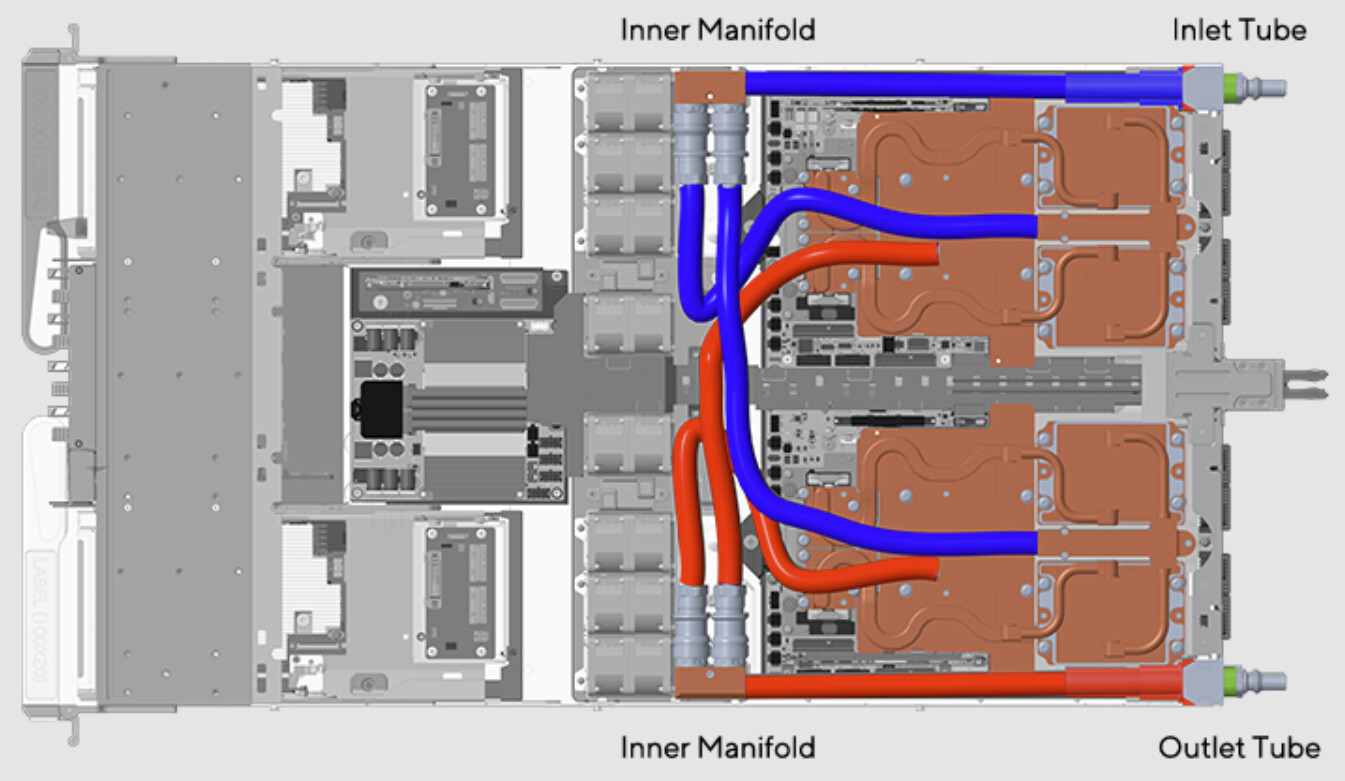
NVIDIA GB200 NVL72 is a liquid-cooled, rack-scale solution with a 72-GPU NVLink domain, which enables the six dozen GPUs to act as a single massive GPU. NVIDIA Blackwell features many technological breakthroughs that accelerate inference token generation, boosting performance while reducing service costs. For example, fifth-generation NVLink enables 130 TB/s of GPU bandwidth in one 72-GPU NVLink domain, and the second-generation Transformer Engine enables FP4 for faster AI performance while maintaining high accuracy. CoreWeave's portfolio of managed cloud services is purpose-built for Blackwell. CoreWeave Kubernetes Service optimizes workload orchestration by exposing NVLink domain IDs, ensuring efficient scheduling within the same rack. Slurm on Kubernetes (SUNK) supports the topology block plug-in, enabling intelligent workload distribution across GB200 NVL72 racks. In addition, CoreWeave's Observability Platform provides real-time insights into NVLink performance, GPU utilization and temperatures.

ASUS AI POD With NVIDIA GB200 NVL72 Platform Ready to Ramp-Up Production for Scheduled Shipment in March

ASUS is proud to announce that ASUS AI POD, featuring the NVIDIA GB200 NVL72 platform, is ready to ramp-up production for a scheduled shipping date of March 2025. ASUS remains dedicated to providing comprehensive end-to-end solutions and software services, encompassing everything from AI supercomputing to cloud services. With a strong focus on fostering AI adoption across industries, ASUS is positioned to empower clients in accelerating their time to market by offering a full spectrum of solutions.

Proof of concept, funded by ASUS
Honoring the commitment to delivering exceptional value to clients, ASUS is set to launch a proof of concept (POC) for the groundbreaking ASUS AI POD, powered by the NVIDIA Blackwell platform. This exclusive opportunity is now open to a select group of innovators who are eager to harness the full potential of AI computing. Innovators and enterprises can experience firsthand the full potential of AI and deep learning solutions at exceptional scale. To take advantage of this limited-time offer, please complete this surveyi at: forms.office.com/r/FrAbm5BfH2. The expert ASUS team of NVIDIA GB200 specialists will guide users through the next steps.

AMD Believes EPYC CPUs & Instinct GPUs Will Accelerate AI Advancements

If you're looking for innovative use of AI technology, look to the cloud. Gartner reports, "73% of respondents to the 2024 Gartner CIO and Tech Executive Survey have increased funding for AI." And IDC says that AI: "will have a cumulative global economic impact of $19.9 trillion through 2030." But end users aren't running most of those AI workloads on their own hardware. Instead, they are largely relying on cloud service providers and large technology companies to provide the infrastructure for their AI efforts. This approach makes sense since most organizations are already heavily reliant the cloud. According to O'Reilly, more than 90% of companies are using public cloud services. And they aren't moving just a few workloads to the cloud. That same report shows a 175% growth in cloud-native interest, indicating that companies are committing heavily to the cloud.

As a result of this demand for infrastructure to power AI initiatives, cloud service providers are finding it necessary to rapidly scale up their data centers. IDC predicts: "the surging demand for AI workloads will lead to a significant increase in datacenter capacity, energy consumption, and carbon emissions, with AI datacenter capacity projected to have a compound annual growth rate (CAGR) of 40.5% through 2027." While this surge creates massive opportunities for service providers, it also introduces some challenges. Providing the computing power necessary to support AI initiatives at scale, reliably and cost-effectively is difficult. Many providers have found that deploying AMD EPYC CPUs and Instinct GPUs can help them overcome those challenges. Here's a quick look at three service providers who are using AMD chips to accelerate AI advancements.

Seagate Anticipates Cloud Storage Growth due to AI-Driven Data Creation

According to a recent, global Recon Analytics survey commissioned by Seagate Technology, business leaders from across 15 industry sectors and 10 countries expect that adoption of artificial intelligence (AI) applications will generate unprecedented volumes of data, driving a boom in demand for data storage, in particular cloud-based storage. With hard drives delivering scalability relative to terabyte-per-dollar cost efficiencies, cloud service providers rely on hard drives to store mass quantities of data.

Recently, analyst firm IDC estimated that 89% of data stored by leading cloud service providers is stored on hard drives. Now, according to this Recon Analytics study, nearly two-thirds of respondents (61%) from companies that use cloud as their leading storage medium expect their cloud-based storage to grow by more than 100% over the next 3 years. "The survey results generally point to a coming surge in demand for data storage, with hard drives emerging as the clear winner," remarked Roger Entner, founder and lead analyst of Recon Analytics. "When you consider that the business leaders we surveyed intend to store more and more of this AI-driven data in the cloud, it appears that cloud services are well-positioned to ride a second growth wave."

Microsoft Announces its FY25 Q1 Earnings Release

Microsoft Corp. today announced the following results for the quarter ended September 30, 2024, as compared to the corresponding period of last fiscal year:
  • Revenue was $65.6 billion and increased 16%
  • Operating income was $30.6 billion and increased 14%
  • Net income was $24.7 billion and increased 11% (up 10% in constant currency)
  • Diluted earnings per share was $3.30 and increased 10%
"AI-driven transformation is changing work, work artifacts, and workflow across every role, function, and business process," said Satya Nadella, chairman and chief executive officer of Microsoft. "We are expanding our opportunity and winning new customers as we help them apply our AI platforms and tools to drive new growth and operating leverage."

Microchip Releases 20 Advanced Wi-Fi Products for Industrial and Commercial Applications

With Industry 4.0, the rapid rise of Artificial Intelligence (AI), digitized manufacturing and the age of IoT everything, the demand for wireless connectivity in commercial and industrial applications is growing at an exceptional pace. These applications typically require reliable connectivity that can withstand extreme environments that are exposed to high temperatures, background noise and obstructions. To help meet this need, Microchip Technology has added 20 products to its Wi-Fi portfolio. Expanding one of the industry's most extensive wireless connectivity product lines, Microchip offers high-performance Wi-Fi microcontrollers (MCUs), network and link controllers and plug-and-play modules designed to simplify development and speed time to market.

The company's Wi-Fi solutions are designed to support various application needs and developer skill levels. The selection ranges from modules that are regulatory certified in several countries that require no Radio Frequency (RF) expertise and little programming to robust Systems-on-Chip (SoCs) with industrial-level features.

ASUS Presents Comprehensive AI Server Lineup

ASUS today announced its ambitious All in AI initiative, marking a significant leap into the server market with a complete AI infrastructure solution, designed to meet the evolving demands of AI-driven applications from edge, inference and generative AI the new, unparalleled wave of AI supercomputing. ASUS has proven its expertise lies in striking the perfect balance between hardware and software, including infrastructure and cluster architecture design, server installation, testing, onboarding, remote management and cloud services - positioning the ASUS brand and AI server solutions to lead the way in driving innovation and enabling the widespread adoption of AI across industries.

Meeting diverse AI needs
In partnership with NVIDIA, Intel and AMD, ASUS offer comprehensive AI-infrastructure solutions with robust software platforms and services, from entry-level AI servers and machine-learning solutions to full racks and data centers for large-scale supercomputing. At the forefront is the ESC AI POD with NVIDIA GB200 NVL72, a cutting-edge rack designed to accelerate trillion-token LLM training and real-time inference operations. Complemented by the latest NVIDIA Blackwell GPUs, NVIDIA Grace CPUs and 5th Gen NVIDIA NVLink technology, ASUS servers ensure unparalleled computing power and efficiency.

Report: AI Software Sales to Experience Massive Growth with 40.6% CAGR Over the Next Five Years

The market for artificial intelligence (AI) platforms software grew at a rapid pace in 2023 and is projected to maintain its remarkable momentum, driven by the increasing adoption of AI across many industries. A new International Data Corporation (IDC) forecast shows that worldwide revenue for AI platforms software will grow to $153.0 billion in 2028 with a compound annual growth rate (CAGR) of 40.6% over the 2023-2028 forecast period.

"The AI platforms market shows no signs of slowing down. Rapid innovations in generative AI is changing how companies think about their products, how they develop and deploy AI applications, and how they leverage technology themselves for reinventing their business models and competitive positioning," said Ritu Jyoti, group vice president and general manager of IDC's Artificial Intelligence, Automation, Data and Analytics research. "IDC expects this upward trajectory will continue to accelerate with the emergence of unified platforms for predictive and generative AI that supports interoperating APIs, ecosystem extensibility, and responsible AI adoption at scale."

Google Launches Axion Arm-based CPU for Data Center and Cloud

Google has officially joined the club of custom Arm-based, in-house-developed CPUs. As of today, Google's in-house semiconductor development team has launched the "Axion" CPU based on Arm instruction set architecture. Using the Arm Neoverse V2 cores, Google claims that the Axion CPU outperforms general-purpose Arm chips by 30% and Intel's processors by a staggering 50% in terms of performance. This custom silicon will fuel various Google Cloud offerings, including Compute Engine, Kubernetes Engine, Dataproc, Dataflow, and Cloud Batch. The Axion CPU, designed from the ground up, will initially support Google's AI-driven services like YouTube ads and Google Earth Engine. According to Mark Lohmeyer, Google Cloud's VP and GM of compute and machine learning infrastructure, Axion will soon be available to cloud customers, enabling them to leverage its performance without overhauling their existing applications.

Google's foray into custom silicon aligns with the strategies of its cloud rivals, Microsoft and Amazon. Microsoft recently unveiled its own AI chip for training large language models and an Arm-based CPU called Cobalt 100 for cloud and AI workloads. Amazon, on the other hand, has been offering Arm-based servers through its custom Graviton CPUs for several years. While Google won't sell these chips directly to customers, it plans to make them available through its cloud services, enabling businesses to rent and leverage their capabilities. As Amin Vahdat, the executive overseeing Google's in-house chip operations, stated, "Becoming a great hardware company is very different from becoming a great cloud company or a great organizer of the world's information."

Intel Unleashes Enterprise AI with Gaudi 3, AI Open Systems Strategy and New Customer Wins

At the Intel Vision 2024 customer and partner conference, Intel introduced the Intel Gaudi 3 accelerator to bring performance, openness and choice to enterprise generative AI (GenAI), and unveiled a suite of new open scalable systems, next-gen products and strategic collaborations to accelerate GenAI adoption. With only 10% of enterprises successfully moving GenAI projects into production last year, Intel's latest offerings address the challenges businesses face in scaling AI initiatives.

"Innovation is advancing at an unprecedented pace, all enabled by silicon - and every company is quickly becoming an AI company," said Intel CEO Pat Gelsinger. "Intel is bringing AI everywhere across the enterprise, from the PC to the data center to the edge. Our latest Gaudi, Xeon and Core Ultra platforms are delivering a cohesive set of flexible solutions tailored to meet the changing needs of our customers and partners and capitalize on the immense opportunities ahead."

Jensen Huang Believes That Every Country Needs Sovereign AI

Every country needs to own the production of their own intelligence, NVIDIA founder and CEO Jensen Huang told attendees Monday at the World Governments Summit in Dubai. Huang, who spoke as part of a fireside chat with the UAE's Minister of AI, His Excellency Omar Al Olama, described sovereign AI—which emphasizes a country's ownership over its data and the intelligence it produces—as an enormous opportunity for the world's leaders. "It codifies your culture, your society's intelligence, your common sense, your history - you own your own data," Huang told Al Olama during their conversation, a highlight of an event attended by more than 4,000 delegates from 150 countries.

"We completely subscribe to that vision," Al Olama said. "That's why the UAE is moving aggressively on creating large language models and mobilizing compute." Huang's appearance in the UAE comes as the Gulf State is moving rapidly to transform itself from an energy powerhouse into a global information technology hub. Dubai is the latest stop for Huang in a global tour that has included meetings with leaders in Canada, France, India, Japan, Malaysia, Singapore and Vietnam over the past six months. The Middle East is poised to reap significant benefits from AI, with PwC projecting a $320 billion boost to the region's economy by 2030.
Return to Keyword Browsing
Nov 11th, 2026 07:09 CST change timezone

New Forum Posts

Popular Reviews

TPU on YouTube

Controversial News Posts