News Posts matching #semiconductor manufacturing

Return to Keyword Browsing

India Next in Line With Incentives for Chip Makers

Over the past couple of months there have been a lot of calls for more investment into the semiconductor industry due to the current shortage of many different kinds of semiconductors. As we've seen, several government organizations have already started working on how to woo chip makers to their part of the world and the latest nation to join the fray is India.

Unlike the US and the EU where so far no firm budgets have been approved, India has already approved a US$10 billion incentive plan for semiconductor, as well as display panel manufacturers who are willing to consider India as the next location for their new fabs. According to Reuters, the Indian government is said to cover up to 50 percent of the project cost of new semiconductor and display panel fabs. So far it seems like at least three companies are interested in the scheme for semiconductor manufacturing, namely Tower Semiconductor out of Israel, Foxconn and an unnamed Singaporean consortium.


Report: Intel to Become One of the Three Largest TSMC Clients in 2023

Intel and TSMC are positioning themselves as two competing foundries for a significant period. However, as the difficulties in semiconductor manufacturing rise, the collaboration of the two seems inevitable. Not because Intel is eyeing TSMC's clients, but because of the race to produce the most minor and best possible semiconductor node. We already know that Intel plans to use some of TSMC's nodes for its Ponte Vecchio accelerator that contains 47 tiles. However, we didn't realize just how big the contract between the two companies was. According to the latest report from DigiTimes, Intel is supposed to become one of the top three clients at TSMC.

As the report notes, the collaboration should extend to at least TSMC's 2 nm node, expected in 2025. After that, the state of semiconductors is unknown. Intel has a solid chance to be in the top three customers in 2023 and become one of the primary sources of profit for the Taiwanese giant. We are excited to see how this prediction plays out and hope to hear more from both in the future.

Intel CEO Writes Opinion Piece on CNN Asking For Government Support

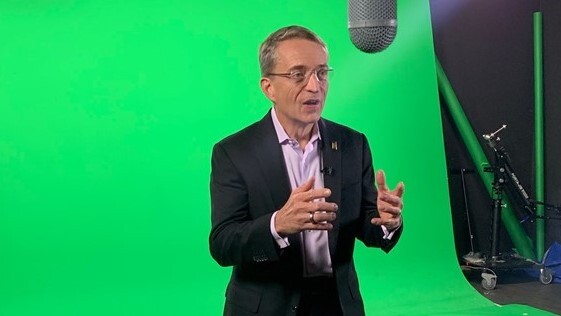
Not content with his speech at Fortune Brainstorm Tech conference—Intel's CEO—Pat Gelsinger has now written an opinion piece on CNN where he's telling the US congress that it must pass the CHIPS for America Act. It's quite bold for a CEO of any company to make such demands, least not for one that has been less than a year in the position.

The CHIPS Act involves US$52 billion earmarked for chip makers who are willing to produce chips on US soil, although as we already know, Gelsinger wants the bulk of that to go to US companies. To try and win over the House, his opinion piece on CNN is trying to win over the hearts and minds of the US senators by pitching all the positive things that will happen if Intel gets more money than its competitors.

AMD to Tap Samsung's 4 nm Process for Chromebook Processors, Notes the Report from J.P. Morgan

Historically, AMD was working with two semiconductor manufacturing companies: TSMC and GlobalFoundries. According to the latest report coming from Gokul Hariharan, an analyst at J.P. Morgan, AMD could soon tap another semiconductor manufacturer to produce the company's growing list of processors. As the report indicates, AMD could start working with the South Korean giant Samsung and utilize the firm's 4LPP process that represents a second generation of the low-power 4 nm silicon node. This specific node is allegedly the choice for AMD APUs designed to fit inside Google's Chromebook devices, which require low-power designs to achieve excellent battery life.

AMD could realize this move in late 2022, as Samsung's 4LPP node goes into mass production at that point. It means that we could see the first Samsung-made AMD APUs in late 2022 or the beginning of 2023. And apparently, the two company's collaboration could be much more significant as AMD is evaluating Samsung's 3 nm nodes for other products spanning more segments in 2023/2024. There are no official, definitive agreements between the two, so we have to wait for more information and official responses from these parties. Anyways, if AMD decides to produce a part of its lineup at Samsung, the remaining TSMC capacity would ensure that the supply of every incoming chip remains sufficient.

Intel Negotiates 3nm Allocation with TSMC Even as Pat Gelsinger Cautions Against Investing in Taiwan

Intel is reportedly in talks with TSMC to secure foundry allocation to meet its product roadmap execution. The company is sending an executive delegation to meet with TSMC later this month, to secure foundry capacity for the N3 (3 nm) silicon fabrication node, and ensure that Intel's allocation isn't affected by other customers such as Apple. As part of its IDM 2.0 strategy, Intel has decided to build its products essentially as multi-chip modules with each block of IP built on a silicon fabrication node most optimal to it, so the company maximizes cutting-edge foundry nodes only on the technology that benefits from it the most. N3 will play a vital role with logic/compute tiles in products bound for 2023, as N3 hits critical volume in the first half of the year.

In related news, Intel CEO Pat Gelsinger speaking at the Fortune Brainstorm Tech conference, stressed on the importance for American chip designers to seek out semiconductor manufacturing in America, and cautioned against investing in Taiwan (without naming TSMC). This comes in the wake of geopolitical uncertainty in the region. In response to this statement issued to DigiTimes, TSMC CEO Mark Liu downplayed the matter, and said that Gelsinger's statement wasn't worth responding to, and that he doesn't slander industry colleagues. TSMC and Samsung have each announced multi-billion Dollar foundry investments in the US, in attempts to make the global semiconductor supply chains resilient to any security situation that may emerge in East Asia.

Samsung Electronics Announces New Advanced Semiconductor Fab Site in Taylor, Texas

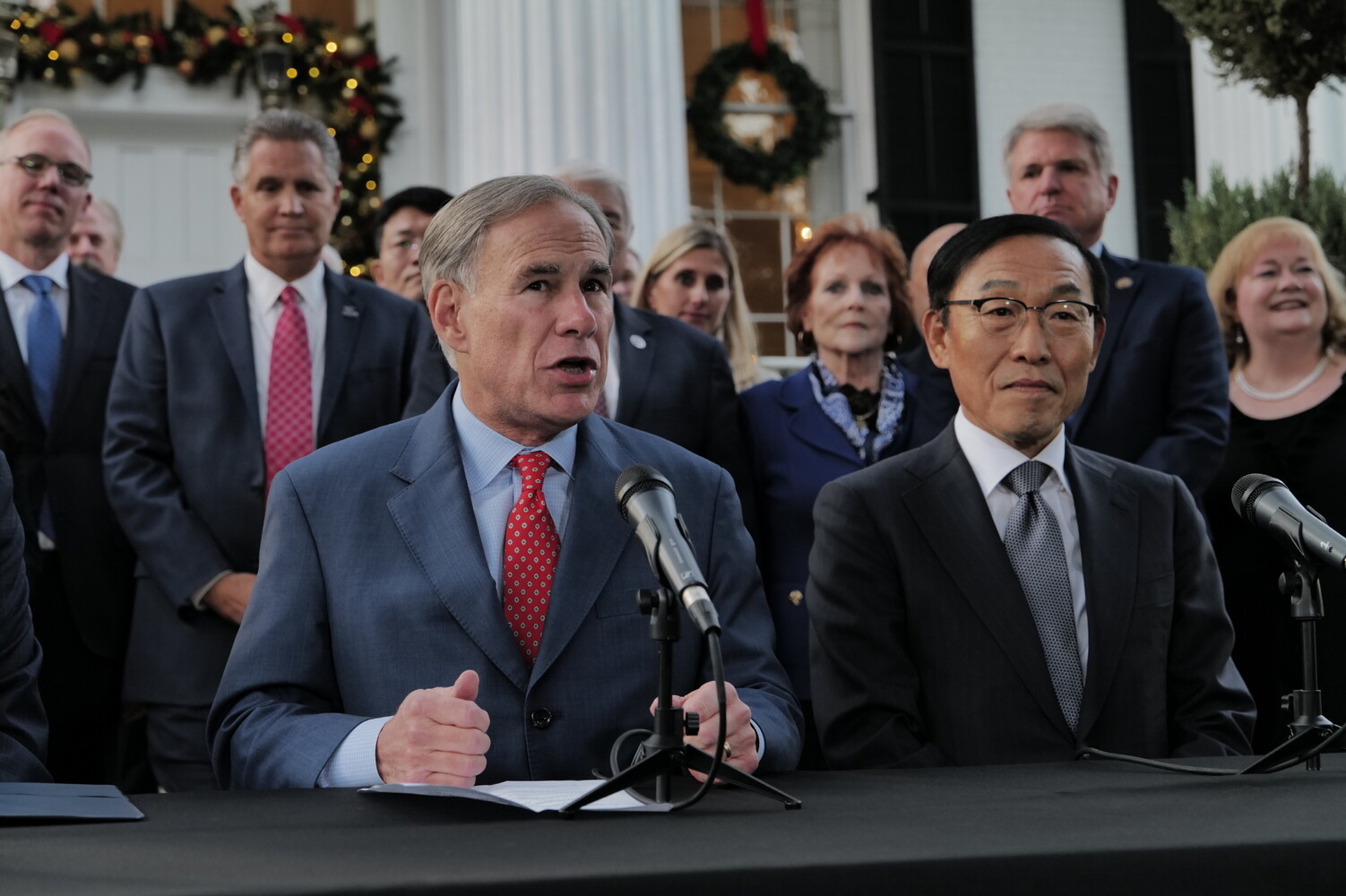
Samsung Electronics, a world leader in advanced semiconductor technology, today announced that it would build a new semiconductor manufacturing facility in Taylor, Texas. The estimated $17 billion investment in the United States will help boost production of advanced logic semiconductor solutions that power next-generation innovations and technologies.

The new facility will manufacture products based on advanced process technologies for application in areas such as mobile, 5G, high-performance computing (HPC) and artificial intelligence (AI). Samsung remains committed to supporting customers globally by making advanced semiconductor fabrication more accessible and meeting surging demand for leading-edge products.

Toshiba Announces Strategic Reorganization into Three Standalone Companies

Toshiba Corporation (TOKYO: 6502) ("Toshiba" or the "Company") today announced its intention to separate into three standalone companies:
  • Infrastructure Service Co., consisting of Toshiba's Energy Systems & Solutions, Infrastructure Systems & Solutions, Building Solutions, Digital Solutions and Battery businesses;
  • Device Co., comprising Toshiba's Electronic Devices & Storage Solutions business; and
  • Toshiba, holding its shares in Kioxia Holdings Corporation (KHC) and Toshiba Tec Corporation (TOKYO: 6588).
The separation will create two distinctive companies with unique business characteristics leading their respective industries in realizing carbon neutrality and infrastructure resilience (Infrastructure Service Co.), and supporting the evolution of social and IT infrastructure (Device Co.). The separation allows each business to significantly increase its focus and facilitate more agile decision-making and leaner cost structures. As such, both companies will be much better positioned to capitalize on their distinct market positions, priorities and growth drivers to deliver sustainable profitable growth and enhanced shareholder value. At the same time, Toshiba intends to monetize shares in Kioxia while maximizing shareholder value and return the net proceeds in full to shareholders as soon as practible to the extent that doing so does not interfere with the smooth implementation of the intended spin-off.

TrendForce: Annual Foundry Revenue Expected to Reach Historical High Again in 2022 with 13% YoY Increase with Chip Shortage Showing Sign of Easing

While the global electronics supply chain experienced a chip shortage, the corresponding shortage of foundry capacities also led various foundries to raise their quotes, resulting in an over 20% YoY increase in the total annual revenues of the top 10 foundries for both 2020 and 2021, according to TrendForce's latest investigations. The top 10 foundries' annual revenue for 2021 is now expected to surpass US$100 billion. As TSMC leads yet another round of price hikes across the industry, annual foundry revenue for 2022 will likely reach US$117.69 billion, a 13.3% YoY increase.

TrendForce indicates that the combined CAPEX of the top 10 foundries surpassed US$50 billion in 2021, a 43% YoY increase. As new fab constructions and equipment move-ins gradually conclude next year, their combined CAPEX for 2022 is expected to undergo a 15% YoY increase and fall within the US$50-60 billion range. In addition, now that TSMC has officially announced the establishment of a new fab in Japan, total foundry CAPEX will likely increase further next year. TrendForce expects the foundry industry's total 8-inch and 12-inch wafer capacities to increase by 6% YoY and 14% YoY next year, respectively.

Global Ranking of Top 10 SSD Module Makers for 2020 Shows 15% YoY Drop in Annual Shipment, Says TrendForce

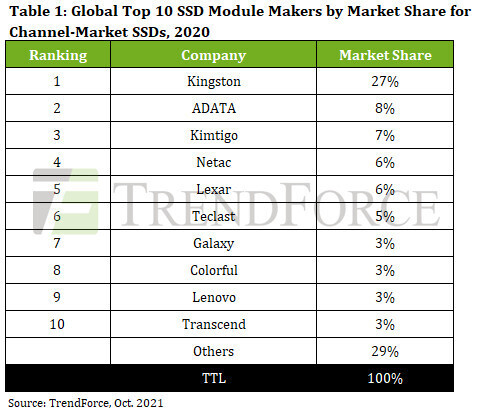
The emergence of the COVID-19 pandemic led to severe delays in manufacturing and logistics. In particular, governments worldwide began implementing border restrictions in 2Q20 to combat the ongoing health crisis, leading to a sudden decline in order volumes for channel-market SSDs, according to TrendForce's latest investigations. Annual shipment of SSDs to the channel (retail) market reached 111.5 million units in 2020, a 15% YoY decrease. In terms of market share by shipment, Kingston, ADATA, and Kimtigo once again occupied the top three spots, respectively.

Looking at the channel market for SSDs as a whole, NAND Flash suppliers (among which Samsung possessed the largest market share) accounted for around 35% of the total shipments in 2020, while SSD module makers accounted for the other 65%. The top 10 module makers accounted for 71% of channel-market SSD shipments from all SSD module makers. Taken together, these figures show that the market remained relatively oligopolistic in 2020. However, it should be noted that TrendForce's ranking of SSD module makers for 2020 takes account of only products bound for the channel market and under brands owned by the module makers themselves; NAND Flash suppliers were therefore excluded from the top 10 ranking.

Micron Announces Over $150 Billion in Global Manufacturing and R&D Investments to Address 2030 Era Memory Demand

Micron Technology, Inc. (Nasdaq: MU), the only U.S.-based manufacturer of memory and one of the world's largest semiconductor manufacturers, today announced that it intends to invest more than $150 billion globally over the next decade in leading-edge memory manufacturing and research and development (R&D), including potential U.S. fab expansion. Micron's investment will address increasing demand for memory that is essential to all computing.

Memory and storage are a growing portion of the global semiconductor industry, and today represent approximately 30% of the semiconductor market. Secular growth drivers like 5G and AI will expand usage of memory and storage across the data center and the intelligent edge, and in areas like automotive and a diversity of user devices.

GlobalFoundries Announces Launch of Initial Public Offering

GlobalFoundries (GF ), a global leader in feature-rich semiconductor manufacturing, today announced the commencement of its initial public offering of 55,000,000 ordinary shares, 33,000,000 of which are being offered by GF and 22,000,000 of which are being offered by GF's existing shareholder, Mubadala Investment Company PJSC, pursuant to a registration statement on Form F-1 filed with the U.S. Securities and Exchange Commission ("SEC"). The initial public offering price is currently expected to be between $42.00 and $47.00 per share. In connection with the offering, Mubadala expects to grant the underwriters a 30-day option to purchase up to an additional 8,250,000 ordinary shares at the public offering price, less underwriting discounts and commissions. GF has applied to list its ordinary shares on the Nasdaq Global Select Market under the ticker symbol "GFS."

Morgan Stanley, BofA Securities, J.P. Morgan, Citigroup and Credit Suisse are acting as active book-running managers for the proposed offering. Deutsche Bank Securities, HSBC and Jefferies are acting as additional book-running managers for the proposed offering. Baird, Cowen, Needham & Company, Raymond James, Wedbush Securities, Drexel Hamilton, Siebert Williams Shank and IMI - Intesa Sanpaolo are acting as co-managers for the proposed offering.

Intel Wins US Government Project to Develop Leading-Edge Foundry Ecosystem

The U.S. Department of Defense, through the NSTXL consortium-based S2MARTS OTA, has awarded Intel an agreement to provide commercial foundry services in the first phase of its multi-phase Rapid Assured Microelectronics Prototypes - Commercial (RAMP-C) program. The RAMP-C program was created to facilitate the use of a U.S.-based commercial semiconductor foundry ecosystem to fabricate the assured leading-edge custom and integrated circuits and commercial products required for critical Department of Defense systems. Intel Foundry Services, Intel's dedicated foundry business launched this year, will lead the work.

"One of the most profound lessons of the past year is the strategic importance of semiconductors, and the value to the United States of having a strong domestic semiconductor industry. Intel is the sole American company both designing and manufacturing logic semiconductors at the leading edge of technology. When we launched Intel Foundry Services earlier this year, we were excited to have the opportunity to make our capabilities available to a wider range of partners, including in the U.S. government, and it is great to see that potential being fulfilled through programs like RAMP-C." -Pat Gelsinger, Intel CEO.

Intel Prospects Europe for a Massive €20 Billion New Fab

Intel is exploring a massive €20 billion ($23.7 billion) manufacturing investment in the European Union that aims to produce "20% of the world's logic chips" by 2030, reports the Financial Times. This is likely to be separate from the company's ongoing investments in Ireland. Intel CEO Pat Gelsinger recently met with the leaders of France and Italy in a bid to "rebalance the semiconductor manufacturing landscape to make supply chains more resilient." Reading between the lines it becomes clear that they are referring to the world's overdependence on Asia, particularly Taiwan, for cutting-edge semiconductor manufacturing.

The location of Intel's new mega-fab remains undecided, as the company is still sitting down with the various EU member states to work out a favorable deal. Regardless of where it lands, the investment would align with the EU's grand-strategy to localize semiconductor manufacturing on a large scale, with the goal of making the EU a net-exporter of semiconductors.

Intel Books Two 3 nm Processor Orders at TSMC Manufacturing Facilities

Intel's struggles with semiconductor manufacturing have been known for a very long time. Starting from its 10 nm design IP to the latest 7 nm delays, we have seen the company struggle to deliver its semiconductor nodes on time. On the other hand, Intel's competing companies are using 3rd party foundries to manufacture their designs and not worry about the yields of semiconductor nodes. Most of the time, that 3rd party company is Taiwan Semiconductor Manufacturing Company (TSMC). Today, thanks to some reporting from Nikkei Asia, we are learning that Intel is tapping TSMC's capacities to manufacture some of the company's future processors.

Citing sources familiar with the matter, Nikkei notes that: "Intel, America's biggest chipmaker, is working with TSMC on at least two 3-nm projects to design central processing units for notebooks and data center servers in an attempt to regain market share it has lost to Advanced Micro Devices and Nvidia over the past few years. Mass production of these chips is expected to begin by the end of 2022 at the earliest." This means that we could expect to see some of the TSMC manufactured Intel processors by the year 2023/2024.

Micron to Sell Lehi, Utah, Fab to Texas Instruments

Micron Technology, Inc. announced today that it has entered into a definitive agreement to sell its Lehi, Utah, fab to Texas Instruments. The economic value for Micron from the sale is $1.5 billion, comprised of $900 million in cash from TI from the sales transaction, and approximately $600 million in value from select tools and other assets. Micron has sold some of these assets and will retain the remainder to redeploy to its other manufacturing sites or sell to other buyers.

Micron's Lehi, Utah, facility has been home to a highly skilled team with expertise in all aspects of advanced semiconductor manufacturing. TI will offer all Lehi site team members the opportunity to become employees upon the closing of the sale and intends to deploy its own technologies at the site. The sale is anticipated to close later this calendar year.

"Micron's Lehi, Utah, facility has a strong history of technology innovation and leading-edge semiconductor manufacturing," said Micron President and CEO, Sanjay Mehrotra. "We are pleased to have reached an agreement with Texas Instruments as it is an industry leader and truly values the talented Lehi team and the capabilities this site offers to deploy its technology effectively. We are greatly appreciative of the contributions that the Lehi team has made to Micron, as well as the collaboration and engagement Micron has had with the local community."

GLOBALFOUNDRIES Breaks Ground on New Fab in Singapore with 450K Wafer-per-Year Capacity

GLOBALFOUNDRIES (GF ), the global leader in feature-rich semiconductor manufacturing, today announced it is expanding its global manufacturing footprint with the construction of a new fab on its Singapore campus. In partnership with the Singapore Economic Development Board and with co-investments from committed customers, GF's more than US $4B (S$5B) investment will play an integral role in meeting the growing demand for the company's industry-leading manufacturing technologies and services to enable companies worldwide to develop and scale their business.

In a virtual groundbreaking ceremony, Singapore Minister for Transport and Minister-in-charge of Trade Relations S. Iswaran and Mubadala Investment Company Managing Director and Group CEO H.E. Khaldoon Khalifa Al Mubarak, were joined by: UAE Ambassador to Singapore H.E. Jamal Abdulla Al Suwaidi; Singapore Ambassador to the UAE H.E. Kamal R Vaswani; Singapore Economic Development Board Managing Director Chng Kai Fong; GF Board Chairman Ahmed Yahia Al Idrissi; along with GF executives including CEO Tom Caulfield; CFO David Reeder; SVP and Head of Global Operations KC Ang; SVP of Global Sales Juan Cordovez; VP of Human Resource for APAC and International Fabs Janice Lee; and VP of Technology Development in Singapore Dr. Soh Yun Siah.

AI-Designed Microchips Now Outperform Human-Designed Ones

A recent Google study led by Mirhoseini et al. and published in Nature details how AI can be leveraged to improve upon semiconductor design practices currently employed - and which are the result of more than 60 years of engineering and physics studies. The paper describes a trained machine-learning 'agent' that can successfully place macro blocks, one by one, into a chip layout. This agent has a brain-inspired architecture known as a deep neural network, and is trained using a paradigm called reinforcement learning - where positive changes to a design are committed to memory as possible solutions, while negative changes are discarded, effectively allowing the neural network to build a decision-tree of sorts that's optimized every step of the way.

The AI isn't applied to every stage of microchip design as of yet, but that will surely change in years to come. For now, the AI is only being employed in the chip floorplanning stage of microchip production, which is actually one of the more painstaking ones. Essentially, microchip designers have to place macro blocks on their semiconductor designs - pre-made arrangements of transistors whose placement relative to one another and to the rest of the chips' components are of seminal importance for performance and efficiency targets. Remember that electric signals have to traverse different chip components to achieve a working semiconductor, and the way these are arranged in the floorplanning stage can have tremendous impact on performance characteristics of a given chip. Image A, below, showcases the tidy design a human engineer would favor - while image B showcases the apparently chaotic nature of the AI's planning.

GLOBALFOUNDRIES and GlobalWafers Partnering to Expand Semiconductor Wafer Supply

GLOBALFOUNDRIES (GF ), the global leader in feature-rich semiconductor manufacturing, and GlobalWafers Co., Ltd. (GWC), one of the top silicon wafer manufacturers in the world, today announced an $800 million agreement to add 300 mm silicon-on-insulator (SOI) wafer manufacturing and expand existing 200 mm SOI wafer production at GWC's MEMC facility in O'Fallon, Missouri.

The silicon wafers produced by GWC are key input materials for semiconductors and an integral part of GF's supply chain. The wafers are used in GF's multi-billion dollar manufacturing facilities, or fabs, where they are used to manufacture the computer chips that are pervasive and vital to the global economy. Today's announcement expands GF's domestic silicon wafer supply from the United States.

TSMC 4nm Production Hit By... A Full Quarter Advance?

Here's something that has been sorely missing from tech news: good news. It seems that TSMC's development on the 4 nm manufacturing process is running better than anticipated by the company itself, which has prompted for a full quarter advancement for the test production on TSMC's next miniaturization level. Previously scheduled for test production starting on 4Q 2021, TSMC has announced that it has now moved test production to 3Q 2021.

This could mean an equivalent - or perhaps even better - reduction in volume production and time-to-market, but it's anyone's guess at this point. As notably difficult and onerous as semiconductor development is, problems are more likely to appear than not. 4 nm is expected to bring respectable improvements to the PPA equation for semiconductors over 5 nm - however, TSMC still hasn't disclosed expected gains.

Raytheon Technologies and GLOBALFOUNDRIES Partner to Accelerate 5G Wireless Connectivity Using Gallium Nitride on Silicon (GaN-on-Si)

Raytheon Technologies (NYSE: RTX), a leading aerospace and defense technology company, and GLOBALFOUNDRIES (GF ), the global leader in feature-rich semiconductor manufacturing, will collaborate to develop and commercialize a new gallium nitride on silicon (GaN-on-Si) semiconductor that will enable game-changing radio frequency performance for 5G and 6G mobile and wireless infrastructure applications.

Under the agreement, Raytheon Technologies will license its proprietary gallium nitride on silicon technology and technical expertise to GF, which will develop the new semiconductor at its Fab 9 facility in Burlington, Vermont. Gallium nitride is a unique material used to build high-performance semiconductors that can handle significant heat and power levels. This makes it ideal to handle 5G and 6G wireless signals, which require higher performance levels than legacy wireless systems.

South Korea Unveils Ambitious $450 Billion Semiconductor Manufacturing Investment Plan

The South Korean government, along with 153 Korean companies, has unveiled an ambitious plan to invest USD $450 billion over the next decade, to make its semiconductor manufacturing industry globally competitive, as China and the U.S. are executing similar national plans of their own, which threaten to blunt South Korea's competitiveness in the industry. Leading the effort will be Samsung Electronics and SK Hynix.

Samsung will be spending over $151 billion through 2030 in expanding its manufacturing facilities, while SK Hynix will spend $97 billion to expand its existing facilities; in addition to $106 billion planned to build four new fabs in the Yongin. Both Samsung and SK Hynix are predominantly memory companies, manufacturing DRAM and NAND flash products. This means that while Korea is globally competitive in semiconductor manufacturing overall, it is relying mainly on memory dies, and not logic dies (chips such as ASICs, CPUs, GPUs, SoCs, FPGAs, etc). The two could put in efforts to change this, so their foundry capacity attracts fabless logic IC companies away from Taiwan's TSMC, which specializes in logic over memory.

PsiQuantum and GLOBALFOUNDRIES to Build the World's First Full-scale Quantum Computer

PsiQuantum, the leading quantum computing company focused on delivering a 1 million-plus qubit quantum computer, and GLOBALFOUNDRIES (GF ), the global leader in feature-rich semiconductor manufacturing, today announced a major breakthrough in their partnership to build the world's first full-scale commercial quantum computer. The two companies are now manufacturing the silicon photonic and electronic chips that form the foundation of the Q1 system, the first system milestone in PsiQuantum's roadmap to deliver a commercially viable quantum computer with one million qubits (the basic unit of quantum information) and beyond.

PsiQuantum and GF have now demonstrated a world-first ability to manufacture core quantum components, such as single-photon sources and single-photon detectors, with precision and in volume, using the standard manufacturing processes of GF's world-leading semiconductor fab. The companies have also installed proprietary production and manufacturing equipment in two of GF's 300 mm fabs to produce thousands of Q1 silicon photonic chips at its facility in upstate New York, and state-of-the-art electronic control chips at its Fab 1 facility in Dresden, Germany.

GLOBALFOUNDRIES Integrates its Corporate HQ with Fab 8 New York

GLOBALFOUNDRIES (GF), the global leader in feature-rich semiconductor manufacturing, announced today at an onsite event with Senate Majority Leader Chuck Schumer that it will relocate its headquarters to Malta, New York, the site of Fab 8, the company's most advanced semiconductor manufacturing facility—as the company positions itself for growth, strengthens partnerships with customers and recruits new talent. This change is effective today.

GF has invested more than $15 billion in its Fab 8 facility over the last decade to support innovation and manufacturing capacity. In 2021, the company is doubling its planned investment to expand global capacity, with $500 million targeted for Malta, NY alone.

The move from GF's previous headquarters to its state-of-the-art fab in New York is part of the company's commitment to address the soaring global chip demand, with a focus on semiconductor manufacturing innovation. GF will maintain a substantial presence in Santa Clara, California, in the heart of Silicon Valley, where many of GF's leading U.S. customers and ecosystem partners are based.

2020 Global Semiconductor Equipment Sales Surge 19% to Industry Record $71.2 Billion, SEMI Reports

Worldwide sales of semiconductor manufacturing equipment surged 19% from $59.8 billion in 2019 to a new all-time high of $71.2 billion in 2020, SEMI, the industry association representing the global electronics product design and manufacturing supply chain, reported today. The data is now available in the Worldwide Semiconductor Equipment Market Statistics (WWSEMS) Report.

For the first time, China claimed the largest market for new semiconductor equipment with sales growth of 39% to $18.72 billion. Sales in Taiwan, the second-largest equipment market, remained flat in 2020 with sales of $17.15 billion after showing strong growth in 2019. Korea registered 61% growth to $16.08 billion to maintain the third position. Annual spending also increased 21% in Japan and 16% in Europe as both regions are recovering from the contraction in 2019. Receipts in North America decreased 20% in 2020 following three years of consecutive growth.

Intel Could Rename its Semiconductor Nodes to Catch Up with the Industry

In the past few years, Intel has struggled a lot with its semiconductor manufacturing. Starting from the 10 nm fiasco, the company delayed the new node for years and years, making it seem like it is never going to get delivered. The node was believed to be so advanced that it was unexpectedly hard to manufacture, giving the company more problems. Low yields have been present for a long time, and it is only recently that Intel has started shipping its 10 nm products. However, its competitor, TSMC, has been pumping out nodes at an amazing rate. At the time of writing, the Taiwanese giant is producing the 5 nm node, with a 4 nm node on the way.

So to remain competitive, Intel would need to apply a new tactic. The company has a 7 nm node in the works for 2023 when TSMC will switch to the 3 nm+ nodes. That represents a marketing problem, where the node naming convention is making Intel inferior to its competitors. To fix that, the company will likely start node renaming and give its nodes new names, that are corresponding to the industry naming conventions. We still have no information how will the new names look like, or if Intel will do it in the first place, so take this with a grain of salt.
Return to Keyword Browsing
Nov 19th, 2026 03:55 PST change timezone

New Forum Posts

Popular Reviews

TPU on YouTube

Controversial News Posts