News Posts matching #ssd

Return to Keyword Browsing

Lite-On Unveils Powerful New SSD for Enterprise Workloads

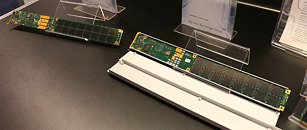
At the Flash Memory Summit (FMS) 2018, LITE-ON Storage previewed the first EDSFF 1U solid-state drive (SSD) to emerge from its work with CNEX Labs. The revolutionary drive gained great interest among storage advocates.

In collaboration with such partners, LITE-ON delivers an innovative and highly efficient storage solution for scalable computing that aligns to Open Compute Project (OCP) specifications. The resulting EDSFF (Enterprise and Datacenter SSD Form Factor) SSD will provide a more cost-effective solution for enterprise and hyperscale cloud environments.

"Standard SSD solutions are great at handling many typical business workloads, but the complexity of storing information in both cloud and data center infrastructure requires SSD firmware to be flexible and adaptable," said Charlie Tseng, CEO of LITE-ON Storage. "LITE-ON's expertise in SSD firmware is perfect for the varying needs of customers."
NAND Flash Prices Could Reach $0.08/GB in 2019

Prices of NAND flash could drop to historic lows of $0.08 per gigabyte in 2019, according to Jim Handy from Objective Analysis, addressing delegates at the 2018 Flash Memory Summit. If you add the cost of the controller, optional DRAM chip, and other low-cost parts that make up an SSD, 480~512 GB drives under $70 could finally be a reality; followed by 1 TB under $120, and 2 TB under $200. Handy attributes the low prices to a catastrophic oversupply of NAND flash in the industry, which could push manufacturers to the brink of economic collapse.

The price drop is also accelerated with the introduction of the QLC (4 bits per cell) technology, which increases densities (and conversely decreases price/GB). Luckily, most NAND flash manufacturers also happen to make DRAM, and are offsetting some of their NAND flash losses with DRAM profits, as DRAM remains in undersupply. The NAND flash price-crash threatens to wipe out conventional hard-disk drives from the consumer-space, at least in matured markets; relegating them to developing markets.

Seagate Launches Nytro 1000 SATA SSD Series with SandForce's DuraWrite Technology

Expanding on its Nytro portfolio of enterprise flash products, Seagate today announced the launch of its new Nytro 1000 Series SATA SSD drives. The Seagate Nytro 1000 SATA SSD series (which includes the Nytro 1351 and Nytro 1551 SSDs) delivers ultra-fast, consistent performance for read-intensive workloads. Globally available in the fall, the Nytro SSDs is being demonstrated at this week's Flash Memory Summit in Santa Clara.

The Nytro SSD series is designed to serve as the backbone of the enterprise's cloud infrastructure, making it ideal for data center managers looking to upgrade their existing systems.

ADATA SU800 Series SATA SSDs Gets a 2TB Variant

ADATA Ultimate SU800 launched mid-2016 to compete with performance-segment SATA SSDs of the time, such as the 850 EVO. It was one of the first drives in its segment to implement 3D TLC NAND flash, and came in capacities ranging between 128 GB to 1 TB. Two years later, ADATA augmented this series with a new 2 TB variant to go after the crowd that wants to take advantage of low NAND flash prices to grab a high capacity SATA SSD to use as a game library drive.

The new 2 TB variant (ASU800SS-2TT-C), continues to be based on the Silicon Motion SM2258G controller, cushioned by a DRAM cache, and uses Micron-made 3D TLC NAND flash. It uses up to 8 percent of its TLC NAND flash as SLC cache. The drive offers sequential transfer rates of up to 560 MB/s, with up to 520 MB/s sequential writes, and endurance of up to 1,600 TBW. LDPC (low density parity check code) and in-built DVESLP mode support make up its feature-set. Backed by a 3-year warranty, the drive is expected to be priced around $379.

Marvell Introduces Industry's First NVMe-over-Fabric SSD Converter Controller

Marvell today announced the industry's first NVMe over Fabric (NVMe-oF) SSD converter controller, the 88SN2400 designed and optimized to convert an NVMe SSD into an NVMe-oF SSD.

By bringing low latency access over the fabric and exposing the entire SSD bandwidth to the network, the Marvell controller supports true scalable, high-performance disaggregation of storage from compute. The 88SN2400 utilizes a simple, low-power and compute-less Ethernet fabric instead of a traditional PCIe fabric controlled and managed by an enterprise-class server SoC with integrated 100GE controllers.

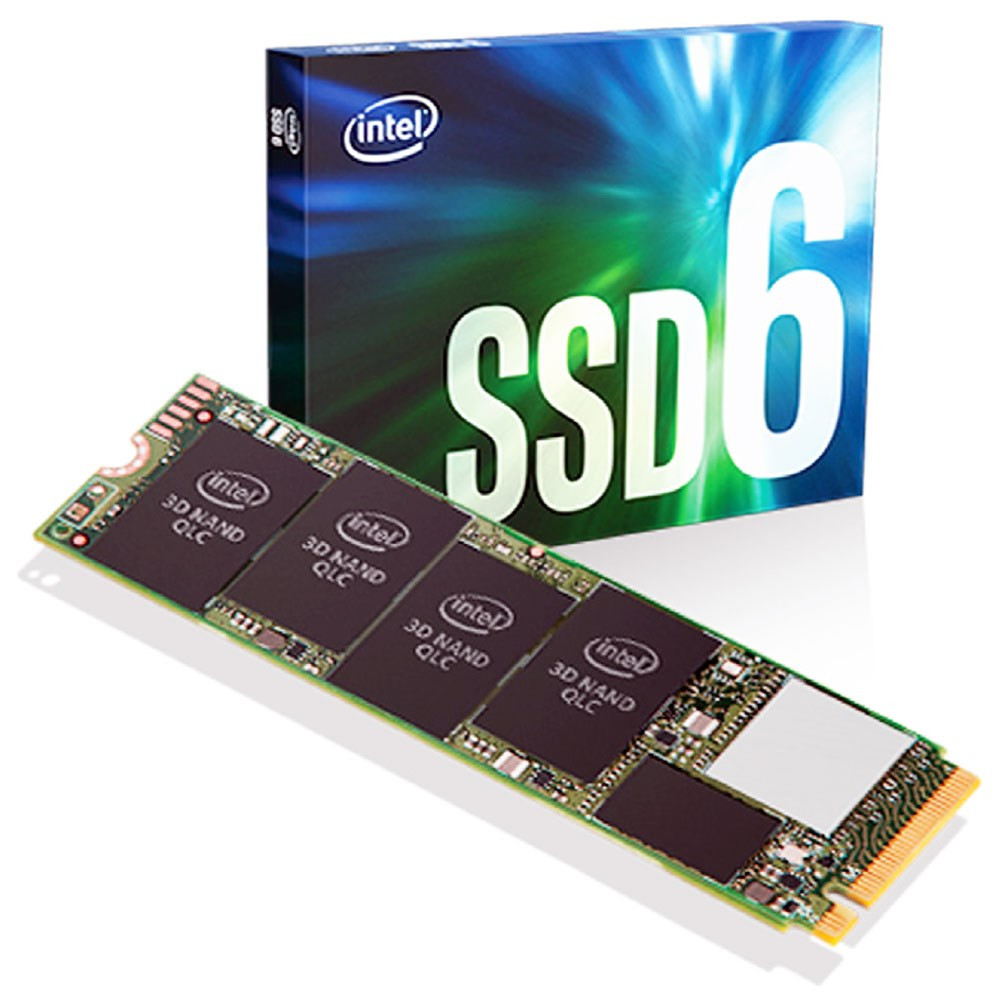
Intel Intros 660p Series M.2 NVMe SSDs with QLC NAND Flash

Intel Tuesday introduced the new SSD 660p series M.2 NVMe solid state drives. At the heart of these drives is the new 64-layer 3D QLC (quadruple level cell, or 4 bits per cell) NAND flash memory by IMFlash Technology (an Intel and Micron joint-venture). This memory is mated with a SIlicon Motion SMI 2263 controller. This chip is a derivative of the popular SMI2262EN, built on a newer process, with support for QLC NAND flash, compacted to have a smaller PCB footprint, and is driven by a custom firmware by Intel. The drives use over 10% of the QLC NAND flash area as SLC cache. The 660p series comes in three variants based on size - 512 GB, 1 TB, and 2 TB. The prices are the biggest dividend of QLC: the 512 GB variant goes for USD $99.99, the 1 TB variant at $199.99, and the 2 TB variant for $399.99.

Built in the M.2-2280 form-factor, the SSD 660p series drives feature PCI-Express 3.0 x4 interface. Intel's pricing puts these drives close to competing drives with PCIe x2 interface, but offering higher transfer rates thanks to the wider bus. It's also interesting to note here that the controller is cushioned by a DRAM cache (something PCIe x2 drives tend to lack, to keep costs down). Performance numbers differ by variant, and the 512 GB drive is the slowest, sequentially reading at speeds of up to 1500 MB/s, with up to 1000 MB/s sequential writes; up to 90,000 4K random reads, and up to 220,000 IOPS 4K random writes. The 1 TB and 2 TB variants both sequentially read and write at up to 1800 MB/s. The 1 TB variant offers 150,000 IOPS 4K random reads, and up to 220,000 IOPS random writes; while the 2 TB variant has 4K random reads/writes numbers of 220,000 IOPS.

Samsung starts Mass Production of QLC Consumer SSDs, 1 TB, 2 TB, 4 TB with over 520 MB/s Read/Write

Samsung Electronics, the world leader in advanced memory technology, today announced that it has begun mass producing the industry's first 4-bit (QLC, quad-level cell) 4-terabyte (TB) SATA solid-state drive (SSD) for consumers.

Based on 1-terabit (Tb) V-NAND with outstanding performance equivalent to the company's 3-bit design, Samsung's QLC SSD is expected to bring a new level of efficiency to consumer SSDs.

Yangtze Memory Technologies to Debut New, Ultra-Fast 3D NAND Architecture and Deliver Keynote at Flash Memory Summit 2018

Yangtze Memory Technologies Co., Ltd (YMTC), a new player in the NAND industry, will be joining Flash Memory Summit this year for the first time, delivering a much-anticipated keynote address to reveal its ground-breaking technology - Xtacking. YMTC is the first Chinese company to take part in the high-entry-barrier NAND flash memory industry with its new architecture for unprecedented performance, higher bit density, and faster time-to-market.

Simon Yang, YMTC CEO, will deliver a keynote address, Unleashing 3D NAND's Potential with an Innovative Architecture, on August 7th, from 3:00 p.m. at the Mission Ballroom in the Santa Clara Convention Center, where he will illustrate how the company's new technology can increase NAND I/O speed up to DRAM DDR4 while delivering industry-leading bit density, marking a quantum leap for the NAND market.

Panasonic Improves Its Most Popular Fully Rugged Tablet, the Toughpad FZ-G1

Panasonic today announced it is doubling the RAM and storage in the latest version of its popular Panasonic Toughpad FZ-G1 tablet and upgrading to the latest 7th generation Intel Core i5 processor. The addition of an optional high resolution thermal camera, combined with the powerful fully rugged Panasonic tablet and its versatile configurable set-up also makes it ideal for an even wider range of business sectors and applications.

The 5th generation of the fully rugged Panasonic Toughpad FZ-G1 delivers more performance for less power with an upgraded Intel Core i5-7300U vPro processor. It has also doubled the RAM to 8GB and storage to 256GB SSD.

QLC NAND Flash Based Intel SSD 660p Could Lower Prices of PCIe x4 NVMe SSDs

Intel debuted its 3D QLC NAND flash memory on new SSD DC series 2.5-inch U.2 PCIe drives. Its technology partner Micron, too gave its 3D QLC an enterprise debut with the 5120 ION. The first client-segment debut from the IMFlash combine could be the Intel SSD 660p series of M.2 NVMe SSDs. Slotted between the 700p and the 600p, the new 660p implements homebrew 64-layer QLC NAND flash memory, and a new controller. It comes in sizes of 512 GB, 1 TB, and 2 TB.

The best part about the 660p is its performance numbers. The drive takes advantage of PCI-Express 3.0 x4, and offers (at least on paper), performance numbers identical to those of the pricier 700p. The drives read at speeds of up to 1800 MB/s, with up to 1100 MB/s writes. The 600p, in comparison, capped out at 560 MB/s sequential writes, while the 700p is only slightly higher, at 1200 MB/s. Random access speeds are up to 150,000 IOPS (both reads and writes). QLC pays off rich dividends to consumers by way of price/GB. The 660p 512 GB is expected to be priced at 113.90€ (0.22€/GB), the 1 TB variant at 197.75€ (0.20€/GB), and the 2 TB variant at 391.43€ (0.20€/GB). Not bad for launch prices, considering these are PCIe NVMe drives priced competitively with SATA SSDs.

Western Digital Introduces Ultrastar DC SS530 Dual-port SAS SSD

Western Digital Corporation, a data technology leader, today introduced the new Ultrastar DC SS530 SAS SSD, the company's highest-density drive and the fastest dual-port SAS SSD in the market¹, enabling server and storage array manufacturers to offer customers substantially lower data center TCO for Fast Data applications. By doubling maximum capacity of the previous generation to 15.36TB within the same 2.5-inch 15-mm form factor, drive storage density also doubles, giving IT managers the potential to reduce the number of drives deployed, consolidate servers and open up valuable rack space for improved CapEx and OpEx costs.

Developed in partnership with Intel , the Ultrastar DC SS530 is based on a trusted third-generation platform that has been previously qualified at most major OEMs worldwide. It offers consistent performance and reliability to meet the rigorous demands of today's toughest data center workloads. Designed with a 12Gb/s SAS interface, and available in capacities from 400GB to 15.36TB, the Ultrastar DC SS530 delivers up to 440,000 random read and 320,000 random write IOPS - providing rapid access to "hot" enterprise data for higher productivity and operational efficiency.

Toshiba Intros XG6 Series M.2 NVMe SSDs

Toshiba today introduced the XG6 series SSDs. Built in the M.2-2280 form-factor with PCI-Express 3.0 x4 interface, the drives take advantage of the NVMe 1.3a protocol, and succeed the XG5 series from 2017. The drives implement Toshiba's new 96-layer 3D TLC NAND flash dubbed BiCS Flash, which went into mass-production in Q1-2018. Available in 256 GB, 512 GB, and 1 TB capacities, the drives offer sequential transfer rates of up to 3,180 MB/s reads, with up to 2,960 MB/s writes. Also on offer are 4K random access transfer rates of up to 355,000 IOPS reads, with up to 365,000 IOPS writes. The drives are expected to be backed by 5-year warranties, when they go on sale at prices competitive with the likes of Samsung's 970 EVO series.

Western Digital Releases 96-layer 3D QLC NAND with 1.33 Tb Capacity

Western Digital Corp. today announced successful development of its second-generation, four-bits-per-cell architecture for 3D NAND. Implemented for the company's 96-layer BiCS4 device, the QLC technology delivers the industry's highest 3D NAND storage capacity of 1.33 terabits (Tb) in a single chip. BiCS4 was developed at the joint venture flash manufacturing facility in Yokkaichi, Japan with our partner Toshiba Memory Corporation. It is sampling now and volume shipments are expected to commence this calendar year beginning with consumer products marketed under the SanDisk brand. The company expects to deploy BiCS4 in a wide variety of applications from retail to enterprise SSDs.

Intel Starts Producing 3D QLC NAND Flash Based PCIe SSDs for Data-Centers

Intel announced that it started mass-production of PCI-Express SSDs for data-centers that implement the latest-generation 3D QLC NAND flash memory. The new QLC (4 bits per cell) NAND flash memory enables 33% increases in densities over TLC NAND flash, and with 3D (stacks), the density per chip is further multiplied. Built in the 15 mm-thick 2.5-inch form-factor with U.2 interface, the drive is built for the rigors of "warm storage" (data that isn't hot, but isn't cold/archival, either). Such drives can be slower than "hot data" drives based on faster MLC or even SLC NAND flash, but almost always up; and faster than HDDs. The first 3D QLC NAND-based SSD, which probably uses the same chips as this drive, is the Micron 5210 ION, which was launched in May.

Western Digital Shuts Down Hard Drive Factory - Just not Enough Demand

With the advent of solid-state storage in pretty much every device you can think of, demand for mechanical HDDs has gone down, because users prefer fast and compact SSD storage over the mechanical dinosaurs. HDD manufacturers have been trying to stop the inevitable by coming out with new technologies to increase capacity - faster than SSD pricing can drop, but it seems they can't prevent the inevitable.

Now The Register UK reports that Western Digital will close its HDD factory near Kuala Lumpur, Malaysia. This is one of the company's first factories, operating since 1973. After the shutdown of the Malaysia plant, WD will be left with only two factories in Thailand, and is now trying to gain more share in the SSD market.

GIGABYTE Readies a Pair of Aorus Branded AMD B450 Motherboards

GIGABYTE is ready with two Aorus branded motherboards based on the upcoming AMD B450 mid-range socket AM4 chipset. These include the B450 Aorus Pro in the ATX form-factor, and the micro-ATX B450 Aorus M. The B450 Aorus Pro packs many of the features you'd expect from a more expensive board based on the pricier X470 chipset. The board draws power from a combination of 24-pin ATX and 8-pin EPS connectors, conditioning it for the AM4 SoC using a 11-phase VRM with high-current chokes. The AM4 SoC is wired to four DDR4 DIMM slots, and the board's sole reinforced PCI-Express 3.0 x16 slot. The second x16 slot is physically gen 3.0 x4 and shares its lanes with the top M.2-22110 slot; which is wired directly to the AM4 SoC. With an M.2 SSD installed, auto-switching gates the second x16 AIC slot. The third x16 slot is gen 2.0 x4, and wired to the chipset. The second M.2-2280 slot is gen 2.0 x4, too. A single PCIe x1 slot makes for the rest of the expansion.

Both M.2 slots on the B450 Aorus Pro feature heatsinks. Six SATA 6 Gbps ports, from which two come from the AM4 SoC, make for the rest of the storage connectivity. As part of the "gamer-grade" varnishing, this board gets rather high-end onboard audio, including a Realtek ALC1220 (120 dBA SNR) codec with EMI shielding, audio-grade WIMA and Muse capacitors, and ground layer isolation. USB connectivity includes two USB 3.1 type 2 ports (one each of type-A and type-C); and six USB 3.1 gen 1 (four on the rear panel, two by headers). Display outputs include DVI and HDMI. The sole networking connectivity is a 1 GbE interface. Its controller is unknown. You get RGB LED illumination and headers, and an integrated rear I/O shield.

COLORFUL Announces Limited Summer Edition SL500 SSD

Colorful Technology Company Limited, professional manufacturer of graphics cards, motherboards and high-performance storage solutions is proud to announce the availability of its latest limited edition seasonal release for its solid-state drive product line. The COLORFUL SL500 640G Summer LE SSD marks the celebration of summer with a brand new color model for its SL500 SSD. Coming in at a bright Glacier Blue color, this limited edition joins the previously released Spring LE back in March. The seasonal Limited Edition release from COLORFUL are a special way of bringing users different visual experiences from their products.

Based off the highly successful SL500 series from COLORFUL, this special release is a high-performance, high-capacity model intended for power-users and gamers that need both speed and storage. The Limited Edition Glacier Blue color adds a touch of vibrance especially for users looking to build around a theme.

Seagate Launches the New Barracuda SSD Lineup - 250 GB Through 2TB Capacities

Seagate, who are making strides in both storage density and performance of traditional HDDs with their HAMR and Multi-actuator technologies aren't going to let themselves be left dry in the SSD race. To that effect, the company, via a blog post, has just announced the introduction and availability of their barracuda SSDs, available in capacities up to 2 TB (in 250 GB, 500 GB and 1 TB additional tiers).

Like most recent SATA III SSDs, the Barracuda SSDs max out the data channel with maximum sequential read and write speeds reaching 540 and 520 MB/s respectively. There's a five-year warranty on these SSDs, which is in line with industry standards, and Seagate is asking $74.99 for the 250 GB SSD; $119.99 for the 500 GB one; and $229.99 for the 1 TB capacity. The 2 TB model will be available at a later date.

ADATA Intros SR2000CP PCI-Express 3.0 x8 AIC SSD

ADATA introduced the SR2000CP a new enterprise SSD for when you absolutely, positively, need to push data at 6 gigabytes per second. Built in the half-height add-on card form-factor with PCI-Express 3.0 x8 interface, the drive ships in capacities of 2 TB, 3.5 TB, 4 TB, 8 TB, and 11 TB. The drives use 3D "eTLC" NAND flash. This type of memory has the 3 bits per cell characteristics of TLC, but endurance (P/E cycles) comparable to MLC NAND flash, which lends it endurance of 1~3 DWPD under a 5-year warranty.

The 4 TB variant tested by ADATA, churns out some impressive performance numbers - up to 1 million IOPS 4K random reads, up to 150,000 IOPS 4K random writes; and sequential transfer speeds of up to 6 GB/s reads, with up to 3.8 GB/s writes. You also get enterprise essentials such as user-configurable overprovisioning, power-loss protection, native 256-bit AES encryption, and up to protection against 95% relative humidity and 55°C ambient temperature (Google's datacenters). The company didn't reveal pricing as the drives could be served up to enterprise customers.

Samsung Receives the Environmental Product Declaration Certificate for 512Gb V-NAND and 860 EVO 4TB SSD

Samsung Electronics, the world leader in advanced memory technology, today announced that it is being recognized for its environmental reliability by receiving the industry's first Environmental Product Declaration (EPD) certificate in Korea with its 512Gb 64-layer 3bit V-NAND and 860 EVO 4TB SSD.

The Environmental Product Declaration is a national certification system in Korea which recognizes a product's performance according to seven key environmental metrics including carbon footprint, resource footprint, ozone depletion, acidification, eutrophication, photochemical smog, and water footprint.

Realtek Intros RTS5762 NVMe SSD Controller Capable of 3500 MB/s Reads

Realtek, known more for its cheap Ethernet PHYs and audio CODECs, entered the SSD controller market in 2017, with mainstream SSD controllers. This year, the company plans to take on giants such as Silicon Motion, Phison, Intel, and Samsung, with its own high-performance controller, the RTS5762. The PCI-Express 3.0 x4 interface provides 4,000 MB/s of raw bandwidth per direction, and while it's technically impossible for any device to transfer its payload data at that speed (on account of various protocol overheads), very few PCI-Express 3.0 x4 SSDs get within 80th percentile of it (3200 MB/s per direction transfers). It's only recently that 3400 MB/s became the gold-standard of high-end M.2 NVMe SSDs, but Realtek plans to change that.

The RTS5762 is capable of up to 3,500 MB/s reads, or 87.5% saturation of the PCI-Experss 3.0 x4 bus. It supports up to 8 NAND flash channels, 3D TLC and 3D QLC NAND flash memory, and takes advantage of the newer NVMe 1.3 protocol. The only other controller right now that's capable of 3,500 MB/s reads is Samsung "Phoenix," found exclusively on the 970 Pro series (and no other brand's products). Sequential write performance is where this Realtek chip edges past Samsung, with the company showing CDM performance of up to 3,000 MB/s writes, whereas the 970 Pro is only specified to write up to 2,700 MB/s. Realtek also beefed up its mainstream NVMe controller portfolio with the new RTS5763DL. If drives based on this chip are priced right, it could carve out a new market segment between cheaper PCIe 3.0 x2 drives, and "upper mainstream" x4 drives such as the Samsung 970 EVO. Armed with just 4 NAND flash channels and no DRAM to cushion it, the RTS5763DL reads at up to 2150 MB/s, and writes at up to 1475 MB/s (as tested on CDM), making it faster than PCIe 3.0 x2 drives, at least in the sequential reads test.

BIOSTAR Unveils M500 M.2 2280 PCI-Express NVMe SSD

BIOSTAR unveils its newest solid-state drive featuring 3D TLC NAND flash - the M500 M.2 PCIe NVMe SSD. The BIOSTAR M500 uses the compact M.2 2280 form factor that is compatible with latest-generation motherboards, laptops, and mini PCs. It supports the ultra-speed PCI-express Gen3x2 interface which offers builders greater compatibility. The BIOSTAR M500 SSD is NVMe (Non-Volatile Memory Express) 1.2 compliant delivering high-performance speeds of up to 1700MB/s sequential read and 1100MB/s sequential write and random read/write IOPS of up to 200K/180K.

Smart Temperature Display
The BIOSTAR M500 Series SSD features visible smart LED indicators on its heatsink cover for temperature and data activity. The LED Smart Temperature display delivers real-time temperature status of the solid-state drive in three different levels: green for temperature below 50°C, yellow for temperature between 50°C to 65°C, and red for temperature above 65°C. The LED Data Transmission display data transmission status: blue light for access status and a green light for PCIe transmission mode (Gen 2 / Gen 3).

Transcend Releases JetDrive 855/850 PCIe NVMe SSD Upgrade Kit for Mac Computers

Transcend Information Inc. (Transcend ), a leading manufacturer of storage and multimedia products, is proud to announce the release of the JetDrive 855/850 PCIe Gen3 x4 NVMe solid-state drive (SSD) upgrade kit for Mac computers. The JetDrive 850 features read and write speeds of up to 1,600MB/s and 1,300MB/s, and is made of the latest 3D NAND flash. The JetDrive 855 includes a sleek aluminum Thunderbolt enclosure for a simple upgrade experience. Both models are the perfect upgrade for a MacBook Pro , MacBook Air , Mac mini , or Mac Pro .

PCIe Gen3 x4 NVMe interface allows transfer speeds of up to 1,600MB/s
Transcend's JetDrive 850 features the PCIe Gen3 x4 NVMe interface, meaning four lanes are used to transmit and receive data simultaneously. The result is compelling performance of up to 1,600MB/s read and 1,300MB/s write. Crafted of 3D NAND flash memory, the JetDrive 850 is reliable, highly compatible, and brings a whole new level of performance to Mac computers.

Micron Ready With 96-Layer Flash & 1Y nm DRAM in 2H 2018

In their recent earnings call, Micron commented that they have 96-layer 3D NAND technology on track for volume shipments in the second half of 2018. Most of today's SSDs typically use 32-layer technology, with 64-layer flash chips used in some recent releases like the Crucial MX500. 96-layer is the third generation of 3D NAND and increases storage capacity per chip even further which allows smaller and more energy efficient mobile devices to be built. Of course it will be cheaper too, compared to current-generation 64 layer NAND, which should bring SSD pricing down even more, and of course generally help pricing of consumer products which use flash memory.

The second important note from the presentation is that Micron expects 1X nm (18 nm) DRAM production to exceed that of previous generations before the end of this year. Their next-generation 1Y nm (15/16 nm) DRAM is on track to begin production shipments in the second half of 2018, too. As they noted in a previous event, their product and process roadmap for DRAM 1z looks solid and 1-alpha development programs already under way.

Samsung Introduces 8 TB NVMe SSD For Data Centers

Samsung Electronics, the world leader in advanced memory technology, today announced that it has launched the industry's highest capacity NVMe solid state drive (SSD) based on the incredibly small Next-generation Small Form Factor (NGSFF) - an eight-terabyte (TB) NF1 SSD. The new 8TB NVMe NF1 SSD has been optimized for data-intensive analytics and virtualization applications in next-generation data centers and enterprise server systems.

"By introducing the first NF1 NVMe SSD, Samsung is taking the investment efficiency in data centers to new heights," said Sewon Chun, senior vice president of Memory Marketing at Samsung Electronics. "We will continue to lead the trend toward enabling ultra-high density data centers and enterprise systems by delivering storage solutions with unparalleled performance and density levels."
Return to Keyword Browsing
Nov 19th, 2026 00:14 PST change timezone

New Forum Posts

Popular Reviews

TPU on YouTube

Controversial News Posts