News Posts matching #thin

Return to Keyword Browsing

Chieftec Launches Two New Compact CPU Coolers

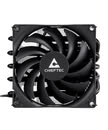
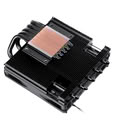
Chieftec has launched two compact CPU coolers, the CAC-S90PWM-T120 tower cooler and the CAC-S92PWM-LP45 low-profile model. Both were first previewed at Computex 2026, as we reported earlier. They follow the recent release of the taller CAC-S120PWM-T150 tower cooler, which stands 148 mm tall and features an all-black matte finish. The CAC-S90PWM-T120 measures 80 x 92 x 117 mm and uses four 6 mm heat pipes with an aluminium fin stack. Do not let yourself be fooled by the T120 suffix into thinking it uses a 120 mm fan. It instead uses a smaller 90 mm PWM model running at 800-2,400 RPM, with 40.48 CFM, 2.73 mm H₂O static pressure, and a noise level of 29.79 dBA.

For even more compact systems, the low-profile CAC-S92PWM-LP45 measures 110.8 x 93 x 45 mm. This model has five 6 mm heat pipes and a slim 92 mm x 92 mm x 15 mm PWM fan with 11 blades. The fan runs at 2,300 RPM, delivering up to 36 CFM of airflow, 3.2 mm H₂O of static pressure and a 38 dBA noise level. Both coolers have an all-black finish, support Intel and AMD CPU platforms and come with a 24-month warranty. Chieftec has not announced pricing or exact retail availability. More pictures and full specifications follow.

Akasa Announces Fermi CM5 Fanless Case for Raspberry Pi Compute Module 5

Akasa, a leading provider of thermal solutions, announced the Fermi CM5, a slim 1U fanless aluminium case designed for the Raspberry Pi Compute Module 5 (CM5) with the CM5 IO Board. At 43.6 mm high, it fits within 1U of rack height, measuring 185 x 93 x 43.6 mm (W x D x H) with a compact volume of 0.8L. The case is designed to support up to 10 W TDP, with openings for the main CM5 IO Board interfaces. With its compact form factor and silent operation, the Fermi CM5 is ideal for digital signage, kiosks, edge AI gateways and industrial automation, as well as vision and sensor deployments.

Heat from the CM5 SoC and M.2 NVMe SSD is conducted into the all-aluminium chassis through dedicated custom aluminium thermal modules and high-performance thermal pads. The chassis acts as a heatsink and dissipates heat passively through its external fins. With no fans and no moving parts, the Fermi CM5 removes fan noise, fan wear and fan-driven dust intake, making it suited for applications requiring stable operation under 24/7 continuous use.

SP Industrial Introduces Six New Enterprise SSD Solutions

SP Industrial introduces six new Enterprise SSD solutions designed for AI, data center storage, and boot drive applications. Built with 3D eTLC Flash, advanced controllers, DRAM, and Power Failure Protection (PFP), and spanning E1.S, U.2, M.2 2280, and 2.5" SATA form factors, the new lineup delivers high performance, data protection, and reliable operation for demanding workloads.

E1.S: Optimized for High-Density Data Center Storage
The EE1S3F0 E1.S SSD is designed for AI and data center storage environments where performance, density, and thermal deployment are important considerations. Featuring a PCIe Gen 5 interface, 3D eTLC Flash, DRAM, PFP, and namespace support, the drive offers capacities of up to 7.6 TB, with both 1 DWPD and 3 DWPD endurance options available. The E1.S form factor is well suited to 1U data center architectures, supporting efficient airflow and flexible thermal deployment.

Sony Gives Up on VR: Patents Sold to Meta

Sony is seemingly pulling away from its XR ambitions, as the company has reportedly transferred 43 patents it holds in the United States to none other than Meta. In a large transfer between June and September this year, Sony's patents revolving around virtual, augmented, and mixed reality headsets have been transferred to Meta to strengthen its internal hardware team. These patents reportedly include things like head-mount displays, XR glass types, and much more that Sony has been working on since 2010 up until 2022.

However, not only patents in the United States are at stake here, as there are a total of 419 global patents that Sony will transfer to Meta. Around 180 patents out of these 419 will be those held in the United States, while the remaining 239 were filed in different countries where Sony has research and development teams like in Japan, China, Korea, Europe, and other regions.

TDK Demonstrates New Direct Retinal Projection Display Technology for Smart Glasses

TDK Corporation (TSE:6762) has successfully demonstrated, for the first time in the world, a direct retinal projection (DRP) display for smart glasses using a meta-optic mirror. The flat mirror uses nanoscale reflectors, measures just 150 nm thick and can be embedded directly into a lens. With a visible-light transmittance of approximately 80 percent, it enables smart glasses with transparency equivalent to that of ordinary eyeglass lenses, giving them a natural appearance suitable for everyday use. TDK will exhibit a prototype at CEATEC 2026, beginning on October 13, 2026, and at electronica, November 10-13, 2026.

TDK has established technologies for an ultra-compact full-color laser module (FCLM), one of the smallest of its kind in the world, and a visible-light full-color laser control device capable of achieving 4K resolution. The company has also been developing the key devices required for DRP in smart glasses. Conventional DRP systems used a curved mirror mounted in front of the user's eye to project images onto the retina, making it difficult to achieve smart glasses with a natural appearance. By arranging unique nanoscale reflectors on a plane and creating a structure that changes the angle of light reflection depending on the position of the mirror, it is possible to reflect laser light incident from various angles at the reflection angle necessary for DRP. Therefore, it is possible to replace conventional curved mirrors.

Raspberry Pi Announces Availability of Its Smart Display Module

Back in January, we introduced the Raspberry Pi Smart Display Module, an adapter board for Raspberry Pi Compute Module 5 that is designed to deliver high-quality, low-power display experiences for digital signage and other visual applications. Today, we are delighted to announce that the Smart Display Module is available to buy now from our global network of Approved Resellers.

The Raspberry Pi Smart Display Module was developed in collaboration with Sharp Display Solutions Europe and works with any display or device that supports products conforming to the Intel Smart Display Module (SDM) specification. It provides cost-effective performance with 4K video playback and is fully compatible with numerous content management systems that already support Raspberry Pi 5 or Compute Module 5.

AAEON Launches Panther Lake Edge Mini PC With AirJet Active Cooling

AAEON (Stock Code: 6579) today announced the release of the UP Xtreme PTL Edge Air, a Panther Lake-powered Mini PC featuring Frore Systems' AirJet solid-state active cooling technology.

With this innovative thermal management, the Mini PC replaces conventional fan-based cooling with ultrasonic-frequency membrane vibration technology to generate high-speed pulsating airflow to provide high-capacity heat dissipation without the added height that comes with a heatsink.

Mobile Intel 12 Xe "Nova Lake" May Support Upgradeable DDR5-8000 Memory

Intel's next-generation Nova Lake mobile chips with 12 Xe-core graphics may support DDR5-8000 memory through CSODIMM modules, according to leaker Golden Pig Upgrade Pack on Weibo. If that pans out, it would be the first mobile Nova Lake variant to officially support DDR5, a notable departure from the soldered LPDDR memory that dominates thin-and-light laptops right now. Current Panther Lake systems with 12 Xe cores, like the Core Ultra X7 358H, don't officially list DDR5 support, though ASRock Industrial already ships mini PCs with two DDR5 SO-DIMM slots running at DDR5-7200 on that platform, and Intel itself includes this configuration among its Core Ultra Series 3 developer systems.
Nova Lake-S, the desktop version, has already been tied to DDR5-8000 through leaked B960 chipset details and platform documents, so Intel appears to be pushing that same memory ceiling down into at least part of the mobile lineup too. Unlike soldered LPDDR5X, CSODIMM support would let OEMs offer upgradable RAM again in these systems, an option that's grown rare in slimmer laptop designs built around battery life and board space. Despite the leaker's solid track record, this is still a single leak rather than anything Intel has confirmed, so I'd hold off treating the exact speeds as final. If it checks out, it suggests Intel is willing to give at least some mobile Nova Lake configurations more memory flexibility, even as most of the market keeps drifting toward soldered memory for efficiency.

China's Single-Slot RTX 3060 Runs Off PCIe Power Alone, Loses to a GTX 1060

Someone in China has taken the GeForce RTX 3060 and stripped it down to run entirely off the PCIe slot, with no 6-pin or 8-pin connector in sight. A Bilibili creator going by WestmereX shared the card, first spotted by UNIKO's Hardware, showing a single-slot, low-profile design about the size of a smartphone, with just one HDMI and one DisplayPort output. The card uses a blower-style cooler with a single fan that's pushing hot air out the back. The shroud itself is a thin metal sheet handling all the heat dissipation, with no fin stack, no backplate, and only a basic heatsink in the middle.

The PCIe slot tops out at 75 W, well under the RTX 3060's stock 170 W TDP, so apparently getting there required a shunt mod to fool the card's power-sensing circuit into accepting the lower limit. The results aren't pretty at all. Clock speeds barely creep past 900 MHz despite a rated 1,777 MHz boost, and the card posted just 4,821 points in 3DMark Time Spy. That's well behind the roughly 9,000 a standard RTX 3060 manages, and even below older cards like the GTX 1060 and RX 580.

Jackery Launches FridgeGuard Slim Backup Battery Globally At IFA Berlin

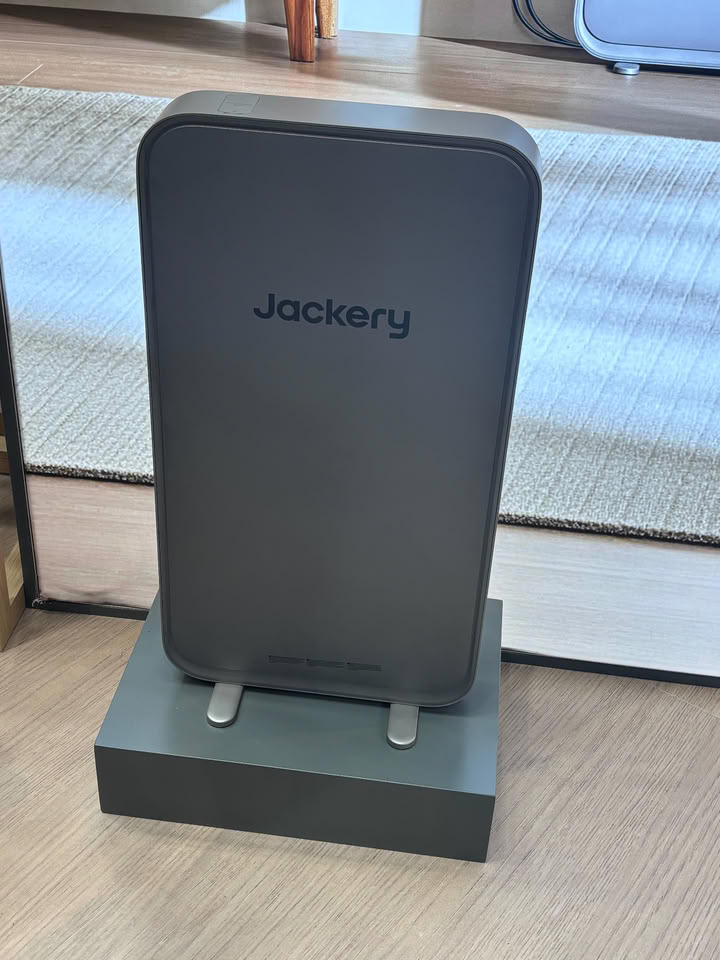
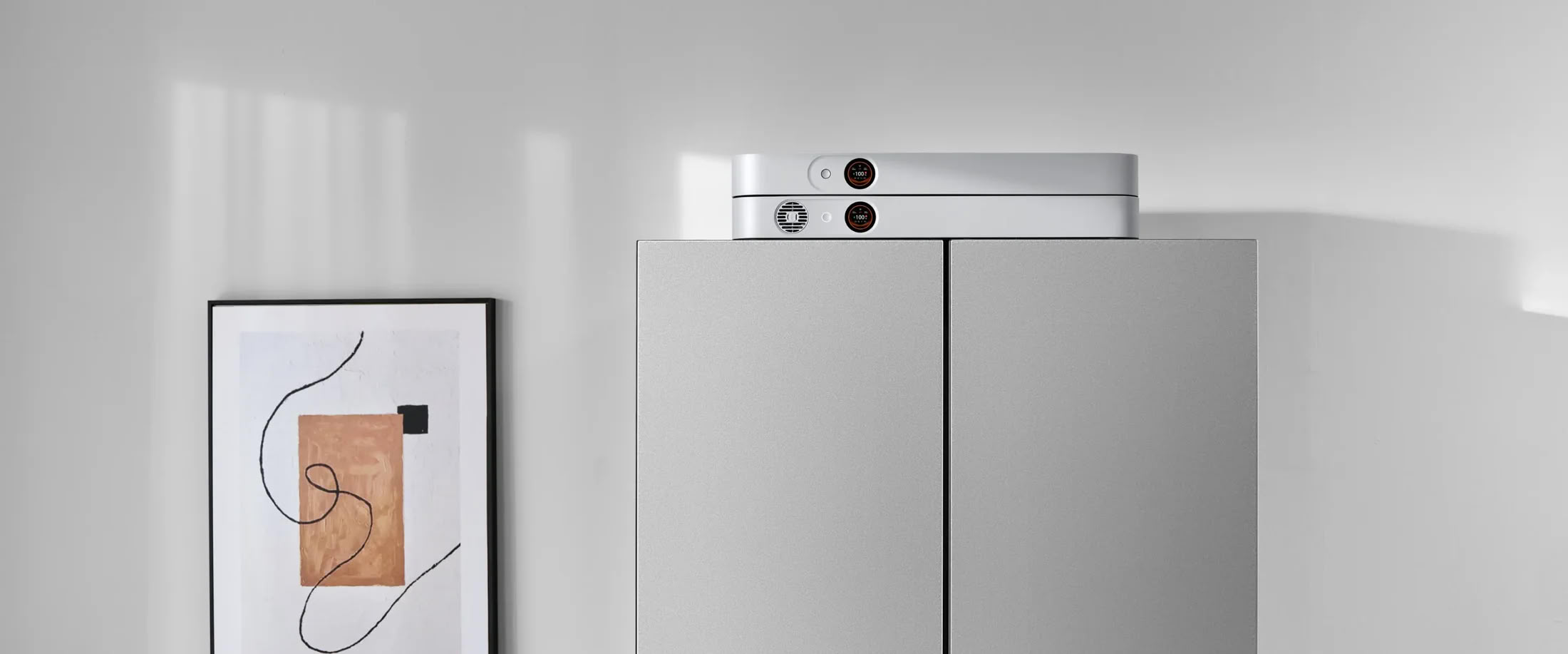
Alongside the new Explorer 2000Plus v2, Jackery is also showing off its slim FridgeGuard UPS at IFA Berlin 2026, simultaneously announcing the FridgeGuard's official international release. As the name suggests, the Fridge Guard is designed to power a home refrigerator during a blackout, and Jackery says that it is capable of keeping a fridge going for up to 15 hours. The FridgeGuard has a nominal output of 800 W but is capable of up to 1,600 W peak output.

The FridgeGuard measures just 67 mm thick, and Jackery claims it's the world's thinnest smart fridge backup, but like Jackery's other products, the FridgeGuard is expandable with a stacking system. The base capacity is 1,024 Wh, but the expansion module allows for up to 2,048 Wh. The FridgeGuard is intended to serve as a backup solution for your whole kitchen, not just your fridge, and Jackery claims that it is good for up to 18 pots of coffee and "17 breakfasts toasted." Pricing on the Jackery FridgeGuard starts at $799 in the US, but international pricing is yet to be revealed.

Lexar Shows Off Muse Portable SSD, Claims World's Thinnest at IFA 2026

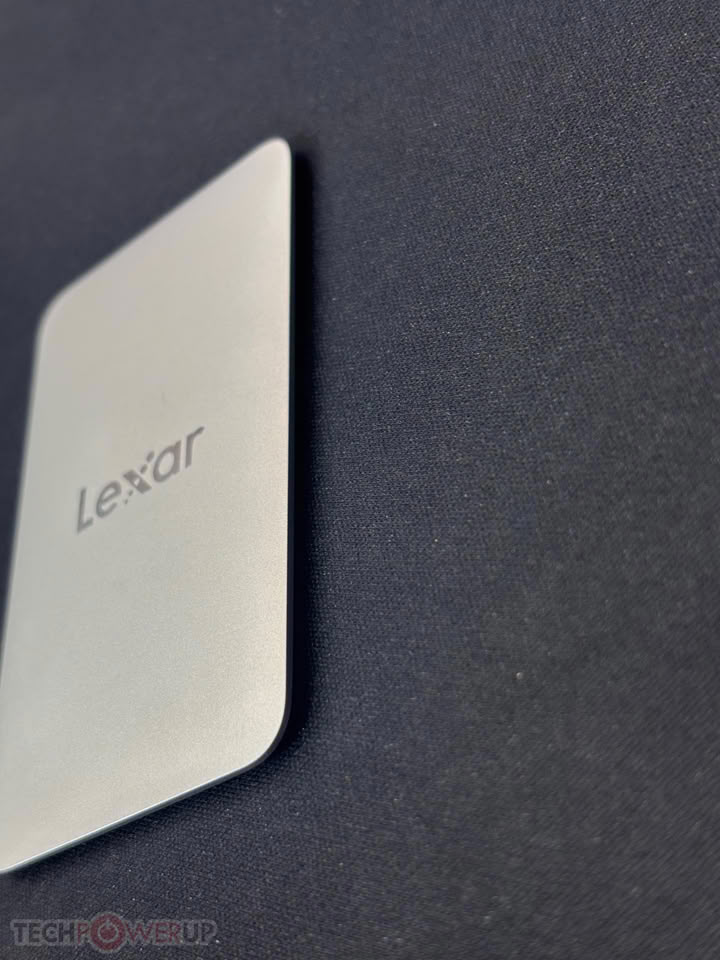
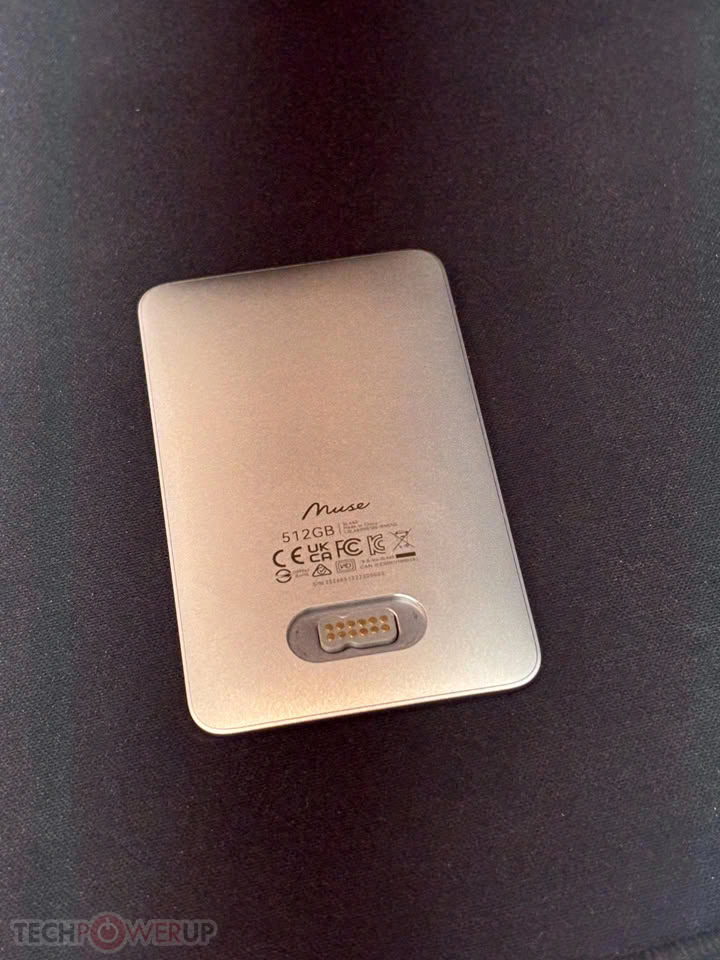
We are on the ground at IFA 2026 in Berlin, and Lexar used the floor to show off the Muse, a portable SSD the company is calling the world's thinnest. It measures just 3.8mm at its thickest point, tapering to about 1mm at the edges. That's closer to a credit card than the SSD bricks most people are used to carrying. However, getting there meant losing the USB-C port entirely. The Muse instead uses SnapLink, a proprietary pogo-pin connector held in place by N52-grade neodymium magnets, paired with a separate magnetic cable that terminates in USB-C. That also means that if you lose the SnapLink cable, the Muse is pretty much dead weight, since there's no standard port to fall back on.

The speeds are unremarkable for this class of drive, with up to 1,050 MB/s reads and 1,000 MB/s writes, and support for 4K ProRes recording at up to 120 FPS on compatible iPhones. Lexar also throws in a magnetic sleeve so the drive can sit on the back of a MagSafe-compatible iPhone. It launches in 512GB and 1TB capacities in Q4 2026, but there's no word on pricing yet. Lexar also hasn't shared sustained write or thermal numbers, so it's not clear yet how that thin aluminium shell handles heat during a long video dump. Lexar showed the Muse alongside its AI Storage Core lineup at the show, marking the company's 30th year in the memory business.

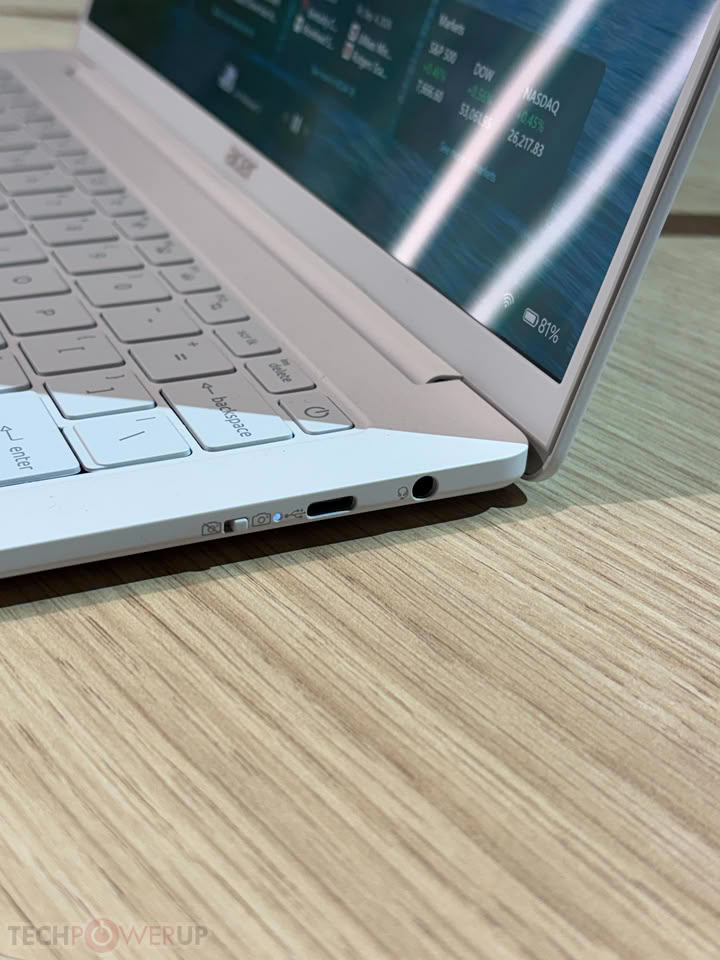
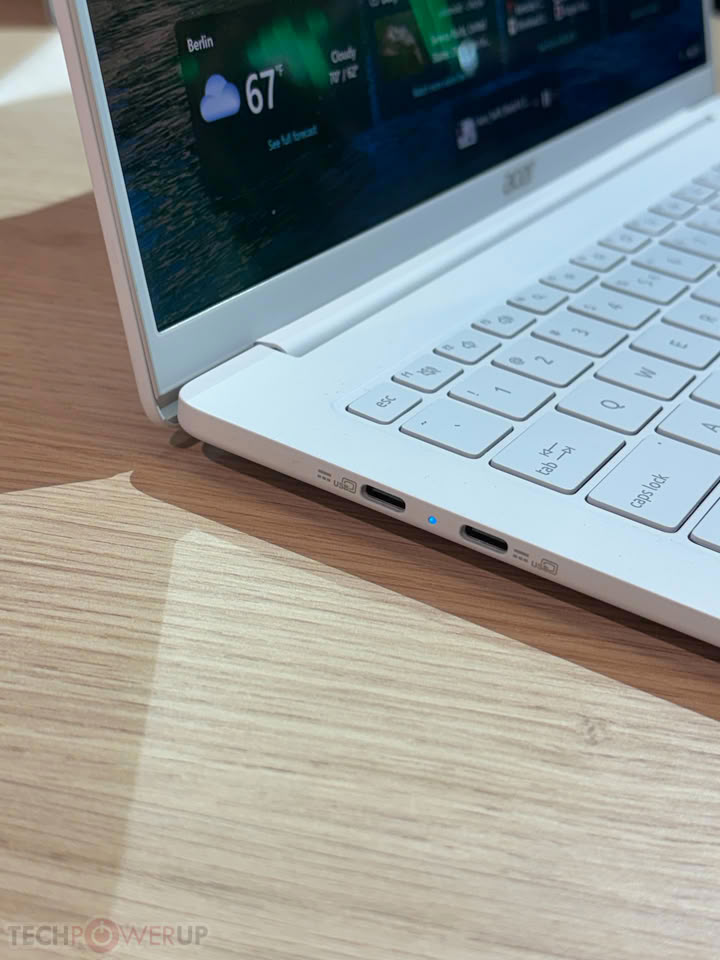
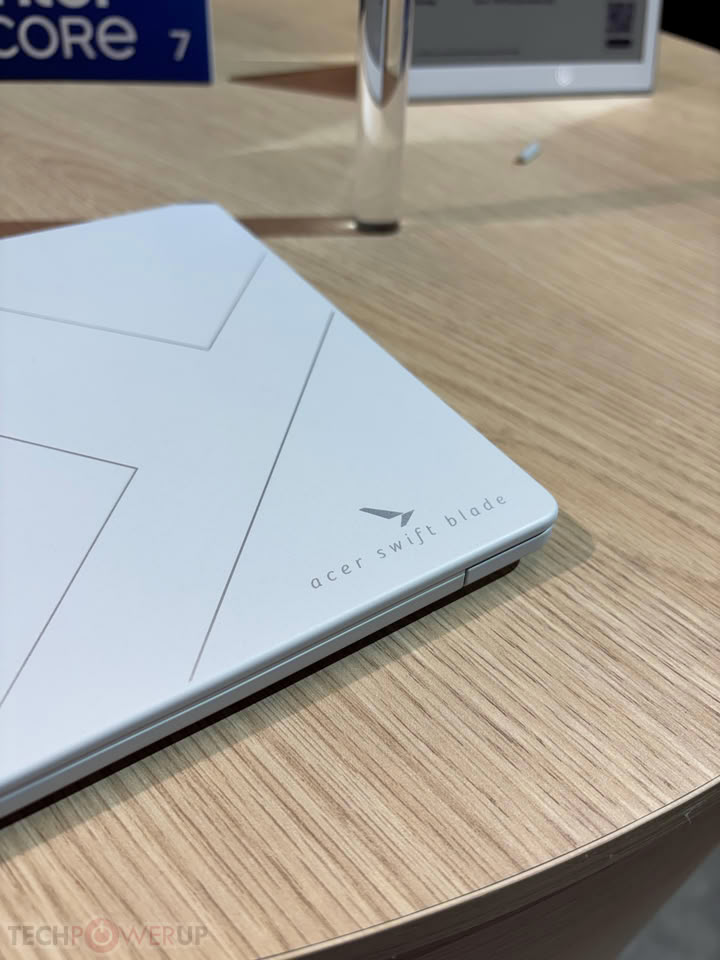
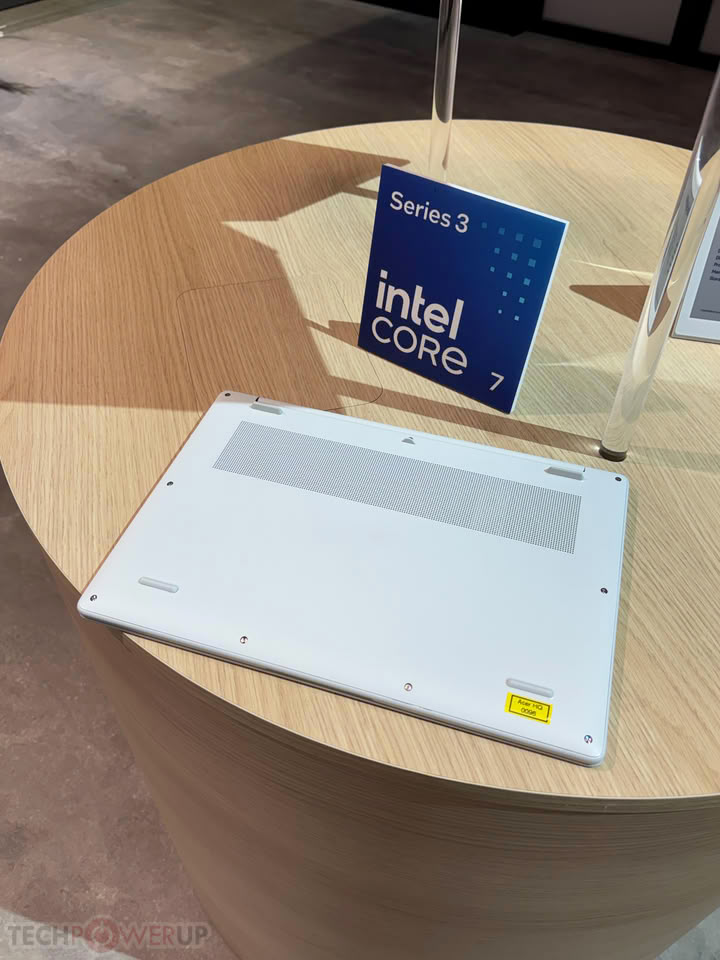
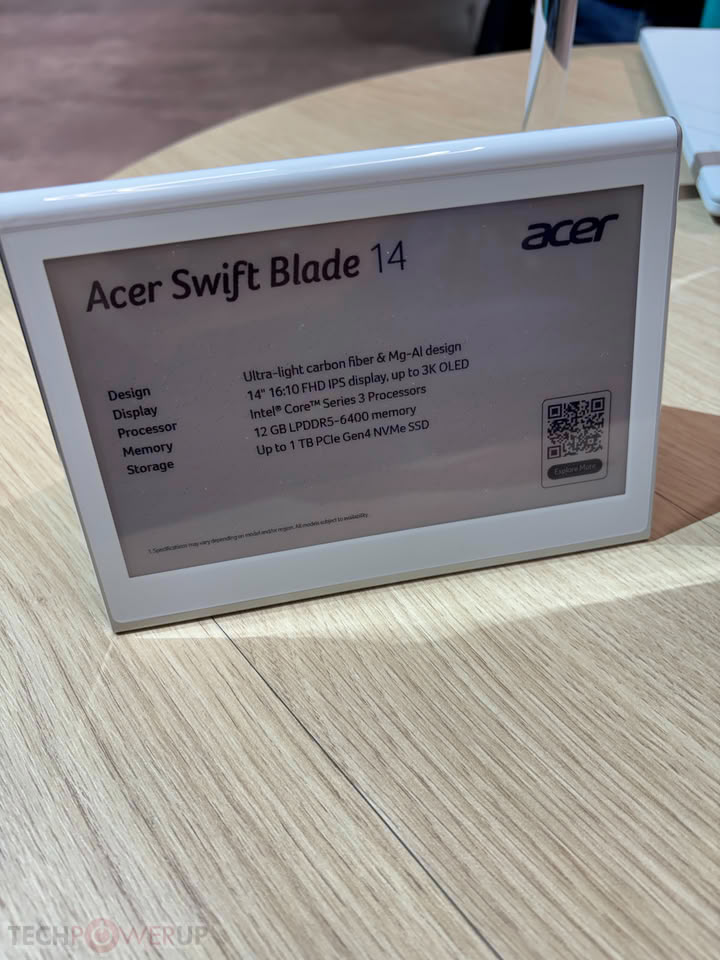
Acer Shows Off the 799g Swift Blade 14 at IFA

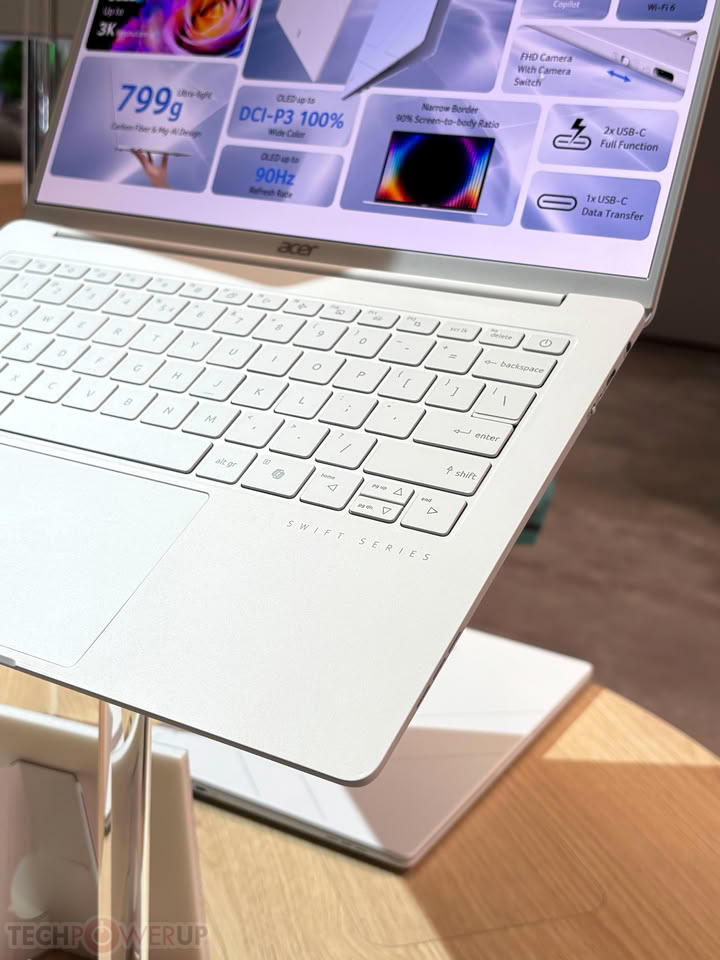
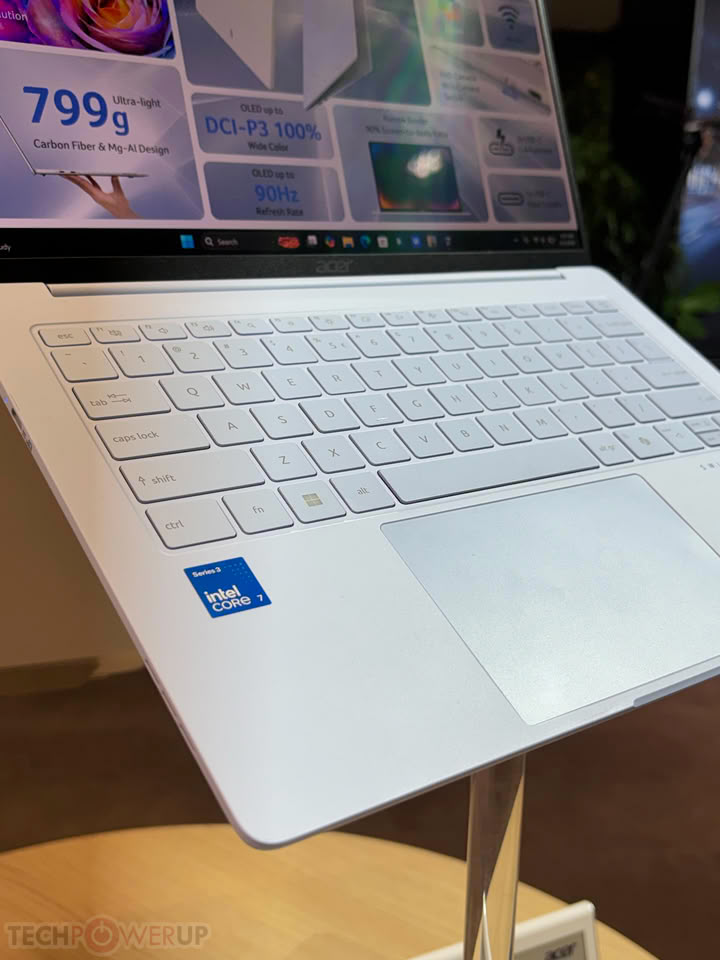
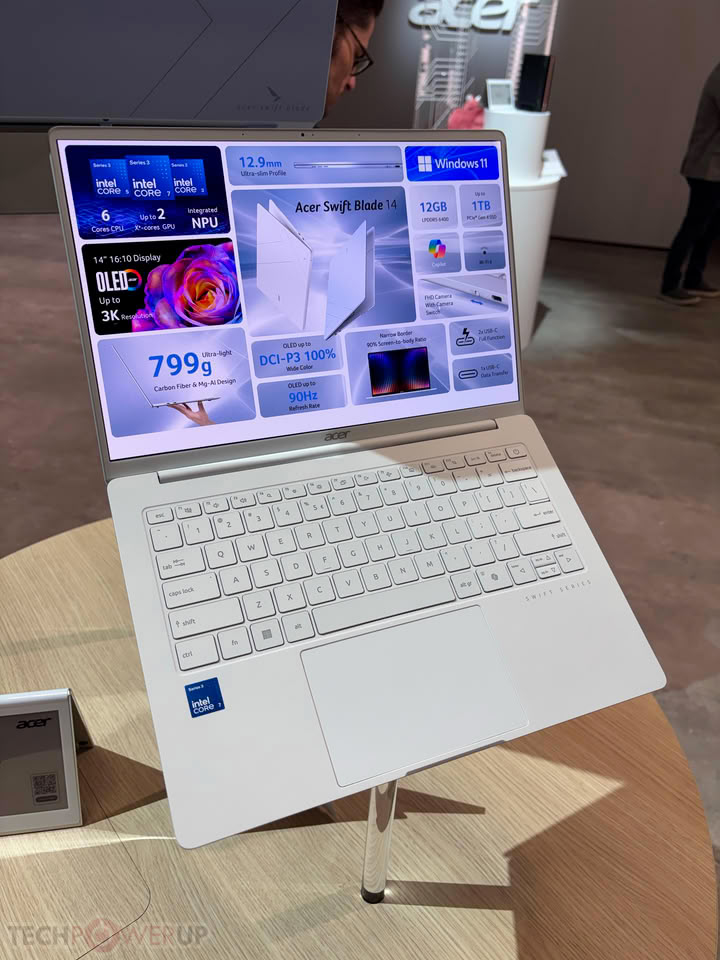
We're on the ground at IFA in Berlin this week, and one of the more interesting machines we walked past on the show floor was the Acer Swift Blade 14. It's a new sub-brand under Acer's Swift lineup, and the first thing you notice picking it up is just how little of it there is to hold. Acer built the Swift Blade 14 to weigh just 799 grams (1.76 pounds), making it one of the lightest 14-inch Windows laptops we've come across. The chassis pairs carbon fiber on the top and bottom covers with a magnesium-aluminum alloy keyboard deck, keeping the weight down without the machine feeling flimsy in hand. It measures 12.9mm thin on the base configuration and 13.5mm on OLED models. That's not quite as thin as a 13-inch MacBook Air, but it is significantly lighter.

Inside, the laptop runs on Intel's Wildcat Lake platform, scaling up to a Core 7 350 CPU alongside 12GB of onboard LPDDR5-6400 memory and up to 1TB of PCIe Gen 4 NVMe storage. The display comes in three tiers, topping out at a 3K OLED WQXGA+ panel running at 90Hz with 400 nits and full DCI-P3 coverage, packed into a 90% screen-to-body ratio with 4.3mm bezels. A 50Wh battery, three USB Type-C ports, Wi-Fi 6, and Bluetooth 5.3 round out the spec sheet. Of course, thermal performance will be a concern in a chassis this thin, so we'll have to wait for independent testing to comment on that. Acer confirmed the Swift Blade 14 launches across EMEA in December, though pricing hasn't been announced yet.
Return to Keyword Browsing
Nov 11th, 2026 06:14 CST change timezone

New Forum Posts

Popular Reviews

TPU on YouTube

Controversial News Posts