Thursday, October 8th 2026

Sony Gives Up on VR: Patents Sold to Meta
Sony is seemingly pulling away from its XR ambitions, as the company has reportedly transferred 43 patents it holds in the United States to none other than Meta. In a large transfer between June and September this year, Sony's patents revolving around virtual, augmented, and mixed reality headsets have been transferred to Meta to strengthen its internal hardware team. These patents reportedly include things like head-mount displays, XR glass types, and much more that Sony has been working on since 2010 up until 2022.
However, not only patents in the United States are at stake here, as there are a total of 419 global patents that Sony will transfer to Meta. Around 180 patents out of these 419 will be those held in the United States, while the remaining 239 were filed in different countries where Sony has research and development teams like in Japan, China, Korea, Europe, and other regions.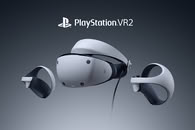 For Sony, this means that the likelihood of a next-generation VR headset, successor to the current PSVR 2, is very unlikely. When it launched in 2023 to accompany the PlayStation 5 and PlayStation 5 Pro, the PSVR 2 headset was a console exclusive. Later on, Sony introduced an adapter for PC that allows anyone to use the VR headset on their own. However, for Meta, this is a significant patent IP that the company is gaining, as Sony's hardware has been proven in gaming scenarios, which Meta VR headsets might eventually target as well.
Source:
ZDNet Korea
However, not only patents in the United States are at stake here, as there are a total of 419 global patents that Sony will transfer to Meta. Around 180 patents out of these 419 will be those held in the United States, while the remaining 239 were filed in different countries where Sony has research and development teams like in Japan, China, Korea, Europe, and other regions.

11 Comments on Sony Gives Up on VR: Patents Sold to Meta
I was under the false idea that registering an invention didn’t cost much and was safe for 20 years or something.
It’s not, it’s 10k for a couple of years and needs renewal which costs the same and that just the us not the rest of the world.
Getting rid of them saves Sony tens of millions a year and no one is making serious money on it so…
The decision was probably made then when they realised how screwed they could be.
Thankfully it's still a great headset for the pc and worth grabbing on sale and with the work of 3rd party Devs its getting better all the time.
Meta is only interested in destroying VR and even the video glasses they recently released, themselves. They only care about glasses and being equal to Android, Apple.
-The price of the Quest 3 destroyed competition in VR.
-Meta buys VR competitors, patents and doesn't use any of it.
-The AR Alliance (Meta is a primary member of) is organising technology for glasses targeting 70 degree FOV Laser-LCOS, replacing current video glasses.
VR belongs to Pimax, Bigscreen, Steam/Valve, and a few others.. A big market remains for 120 degree FOV full immersion headsets.
2)
Samsung is planning on spending 300B Won ($220m USD) on a micro OLED plant (mass production 2028), one display of which is a 1.3" 4k with 40k nits, replacing Sonys similar display at 5k nits brightness.
The Apple Vision Pro used these Sony displays. Video glasses also use these types of displays (lower res).
The three market segments VR, MR video glasses, AR glasses have millions of customers.
3)
VR games today aren't typically purpose built with a large budget, they're mostly Unreal/Unity flatscreen to VR conversions. Maybe Sony can't make all their games VR compatible, but it does work on PC.