 12
XPG Pylon 750 W Review
(12 Comments) »Introduction

We would like to thank XPG for supplying the review sample.

XPG is going strong in the PSU segment because of their great Core Reactor PSUs, two of which (850 W and 750 W) I have reviewed. XPG now also has a more affordable line for those seeking less expensive but still reliable power supplies. The Pylon series consists of four models with capacities ranging from 450 W to 750 W. In this review, I will take a look at the strongest of these, the XPG Pylon 750 W.
It uses a CWT platform (CSB-A), which offers good performance for the price. With the part upgrades XPG had the OEM implement, the platform has also improved in performance and reliability. I will go through these part upgrades in the components section of this review. To keep cost low, the modular cables were the first to go since they would have notably increased the price. So if you don't like native cables, this PSU is not for you.
With the 80 PLUS Bronze and Cybenetics Silver efficiency certifications, platform efficiency is sufficient for those on tight budgets. Because of the current situation, shipping cost has skyrocketed as well, and while stock isn't high, prices are. $100–$110 would have gotten you a Gold 750 W PSU before. As such, many buyers are turning to 80 PLUS Bronze/Cybernetics Silver certified PSUs instead. Hopefully, the situation will normalize soon.
Specifications
| Features & Specifications | |
|---|---|
| Max. DC Output | 750 W |
| PFC | Active PFC |
| Efficiency (230 V) | 80 PLUS Bronze, Cybenetics Silver (87%–89%) |
| Noise (230 V) | Cybenetics Standard++ (30–35 dBA) |
| Modular | No |
| Intel C6/C7 Power State Support | Yes |
| Operating Temperature | 0–40 °C |
| Protections | Over Voltage Protection Under Voltage Protection Over Power Protection Over Temperature Protection Over Current Protection Short Circuit Protection |
| Cooling | 120 mm fluid dynamic bearing fan (HA1225H12F-Z) |
| Semi-passive Operation | No |
| Dimensions (W x H x D) | 150 x 85 x 140 mm |
| Weight | 1.94 kg (4.28 lb) |
| Compliance | ATX12V v2.53, EPS 2.92 |
| Warranty | 3 years |
| Price at Time of Review (excl. VAT) | $93.33 |
| Power Specifications | |||||||
|---|---|---|---|---|---|---|---|
| Rail | 3.3 V | 5 V | 12 V | 5 VSB | -12 V | ||
| Max. Power | 20 A | 20 A | 62.5 A | 2.5 A | 0.3 A | ||
| 120 W | 750 W | 12.5 W | 3.6 W | ||||
| Total Max. Power | 750 W | ||||||
Photos


The Pylon 750 comes in a red box with a photo of the PSU with its fan grille on top. Around the back, you will find a scheme of the PSU's dimensions and information on the cable configuration, as well as the power specifications.


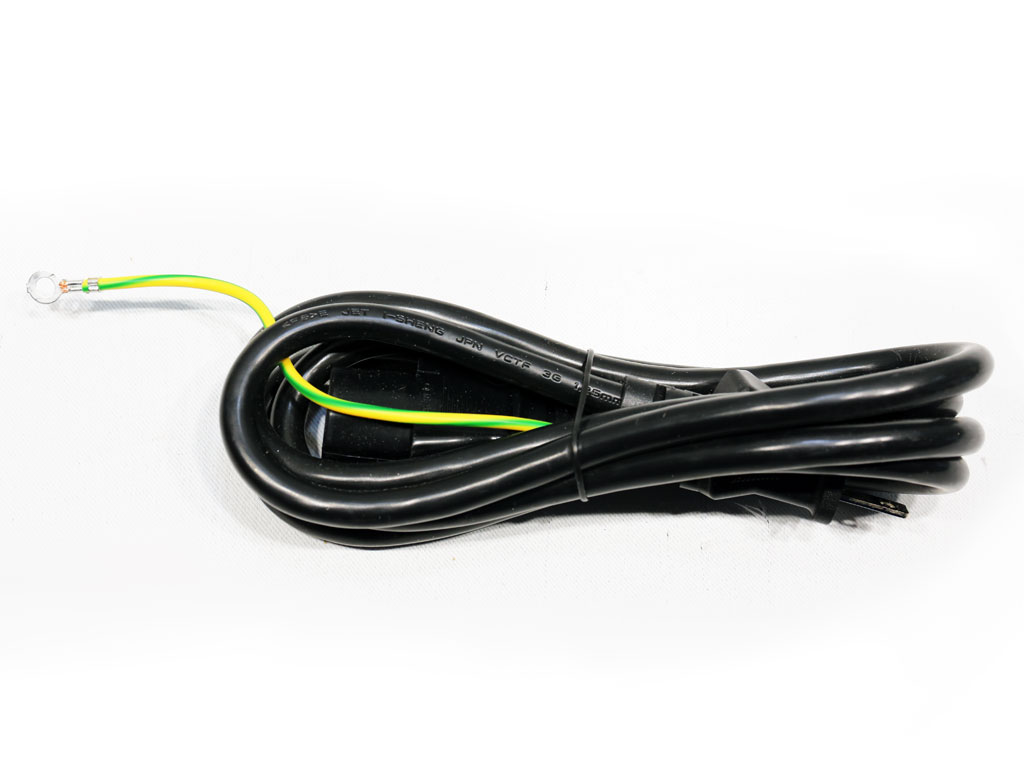
XPG used eco-friendly packaging protection, which is a nice move. The bundle includes a quick-start guide, some stickers, and screws for mounting the PSU onto the chassis. You will also get a power cord with a grounding wire.


As per usual, you will find the power switch and AC receptacle at the front.


The power specifications label is on the bottom. The stickers on the sides don't look nice at all.


This is a non-modular PSU, but all the cables are sleeved black; it would have been nice if they were flat, too.


Measuring 140 mm deep, this is a compact PSU.


Some more photos of the product.
Cables and Connectors
| Fixed Cables | ||||
|---|---|---|---|---|
| Description | Cable Count | Connector Count (Total) | Gauge | In-Cable Capacitors |
| ATX Connector 20+4 pin (660 mm) | 1 | 1 | 18–22AWG | No |
| 8 pin EPS12V (650 mm) / 4+4 pin EPS12V (+150 mm) | 1 | 1 / 1 | 18AWG | No |
| 6+2 pin PCIe (560 mm+150 mm) | 2 | 4 | 18AWG | No |
| SATA (560 mm+150 mm+150 mm) / 4-pin Molex (+150 mm) | 2 | 6 / 2 | 18AWG | No |
| SATA (560 mm+150 mm) / 4-pin Molex (+150 mm) / FDD (+150 mm) | 1 | 2 / 1 / 1 | 18–20AWG | No |
| Modular Cables | ||||
| AC Power Cord (1420 mm) - C13 coupler | 1 | 1 | 17AWG | - |
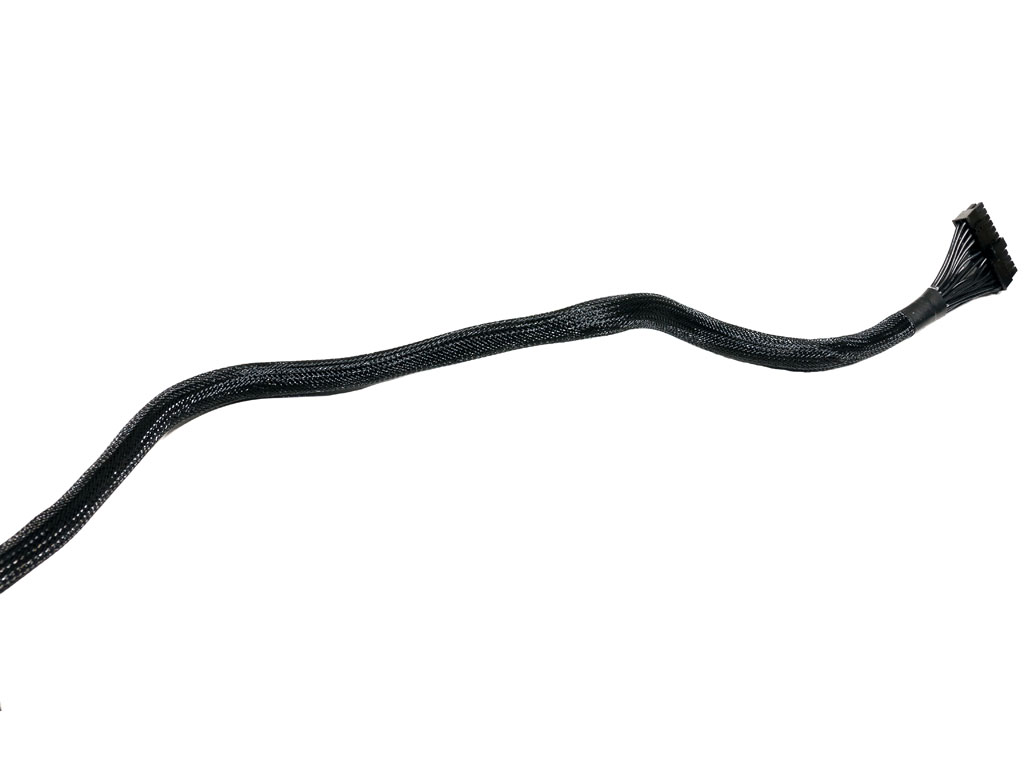


While there are many cables, there is a problem with these EPS connectors as both are installed on the same cable, which can be dangerous if the motherboard pushes both hard. The good thing about there being no modular connections is that it would impact cable resistance, subsequently increasing operating temperatures. That said, the EPS cable should still at least be 16AWG for more headroom.

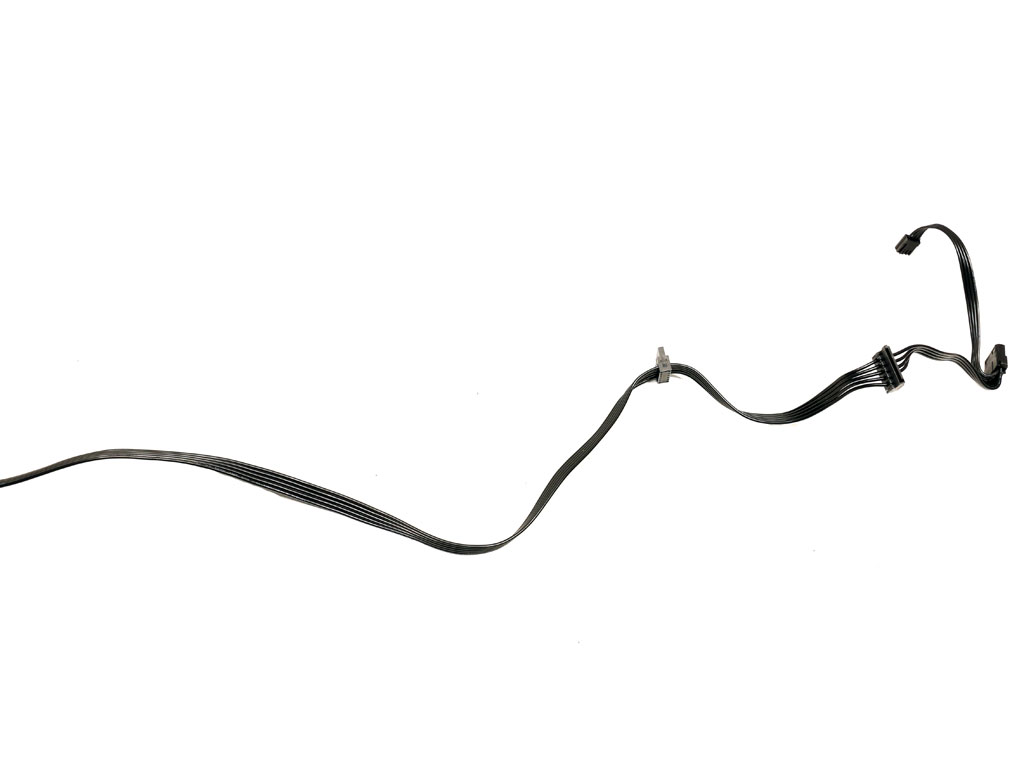
All cables are long enough, and the distance between peripheral connectors is adequate at 150 mm. Finally, there is no need for a berg adapter. XPG could install an additional 4-pin Molex connector in its place.
Component Analysis
Before reading this page, we strongly suggest a look at this article, which will help you understand the insides of a PSU better.| XPG Pylon 750W Parts Description | |
|---|---|
| General Data | |
| Manufacturer (OEM) | CWT |
| PCB Type | Single-sided |
| Primary Side | |
| Transient Filter | 4x Y caps, 2x X caps, 2x CM chokes, 1x MOV, 1x CAP200DG (discharge IC) |
| Bridge Rectifier(s) | 1x GBU1506 (600 V, 15 A @ 100 °C) |
| Inrush Current Protection | NTC Thermistor (SCK - 2R58) (2.5 ohm) |
| APFC MOSFETs | 2x Great Power GP28S50G (500 V, 28 A, Rds (on): 0.125 ohm) |
| APFC Boost Diode | 1x On Semiconductor FFSP0665A (650 V, 6 A @ 153 °C) |
| Bulk Cap(s) | 1x Nippon Chemi-Con (400 V, 470 uF, 2,000 h @ 105 °C KMW) |
| Main Switchers | 2x Great Power GP23S60HX |
| PFC / PWM Combo Controller | Champion CM6800TX & Champion CM03X |
| Topology | Primary Side: APFC, double-forward Secondary Side: semi-synchronous rectification (12V) & DC-DC converters (5V & 3.3V) |
| Secondary Side | |
| +12 V | 2x PFC PFR40V60CT SBR (60 V, 40 A) |
| +5 V & +3.3 V | DC-DC Converters: 4x Sync Power SPN3006 (30 V, 57 A @ 100 °C, Rds (on): 5.5 mOhm) PWM Controllers: ANPEC APW7159C |
| Filtering Capacitors | Electrolytic: 5x Elite (2–5,000 h @ 105°C, ED) 4x Elite (2–5,000 h @ 105°C, EK) 3x Elite (4–10,000 h @ 105°C, EY) 2x Elite (3–6,000 h @ 105°C, EV) 1x Elite (3–6,000 h @ 105°C, EG) 2x Elite (2,000 h @ 105°C, PF) Polymer: 2x Elite |
| Supervisor IC | IN1S429I - DCG |
| Fan Model | Hong Hua HA1225H12F-Z (120 mm, 12 V, 0.58 A, fluid dynamic bearing fan) |
| 5VSB Circuit | |
| Standby PWM Controller | Power Integrations TNY287PG |


This is CWT's CSB-A platform; it uses a double forward topology on the primary side. On the secondary side, we find FETs and SBRs, which regulate the +12 V rail, and a pair of VRMs for the generation of the minor rails. This is a budget platform with small heatsinks and a clean design for increased airflow.
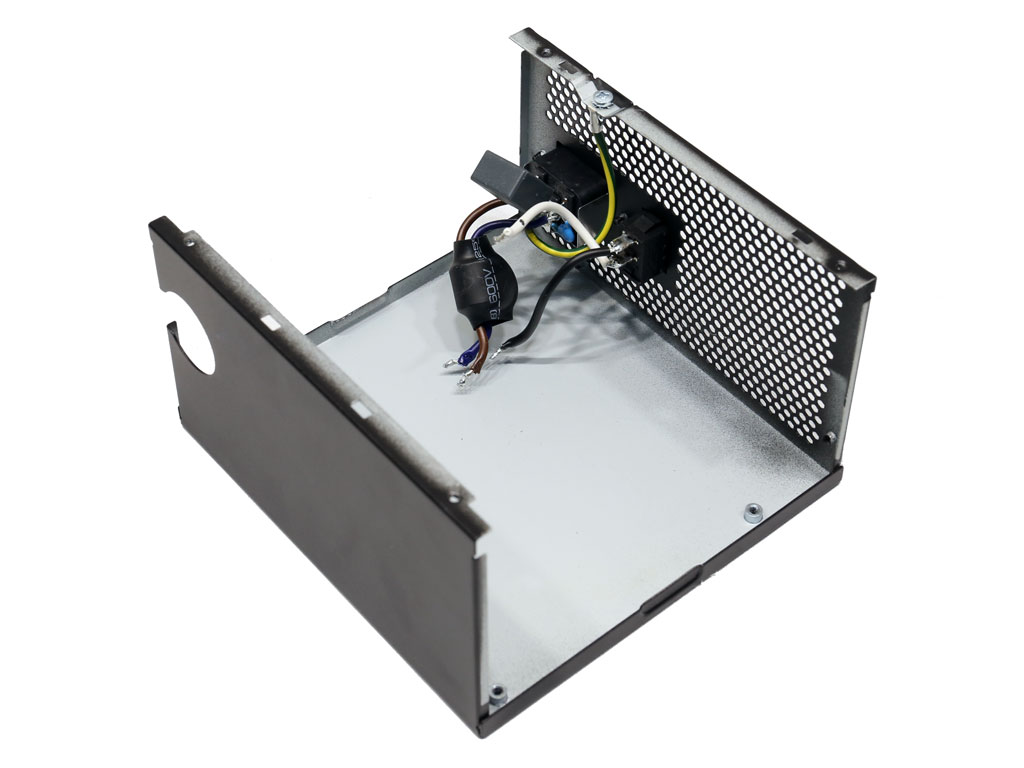
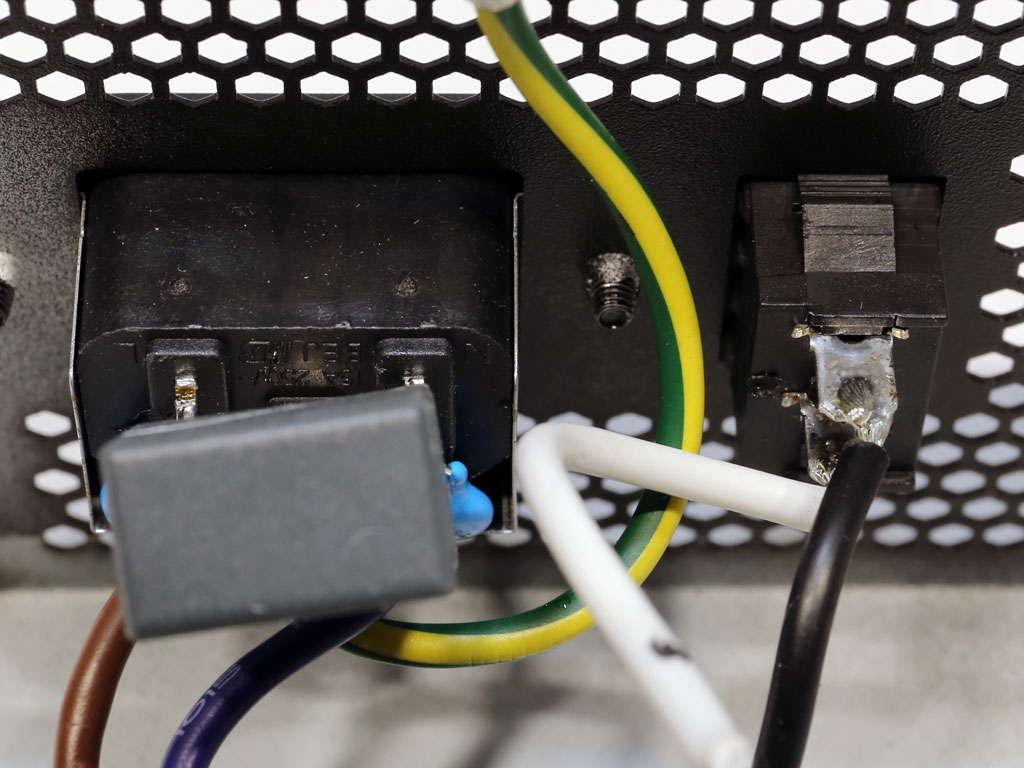
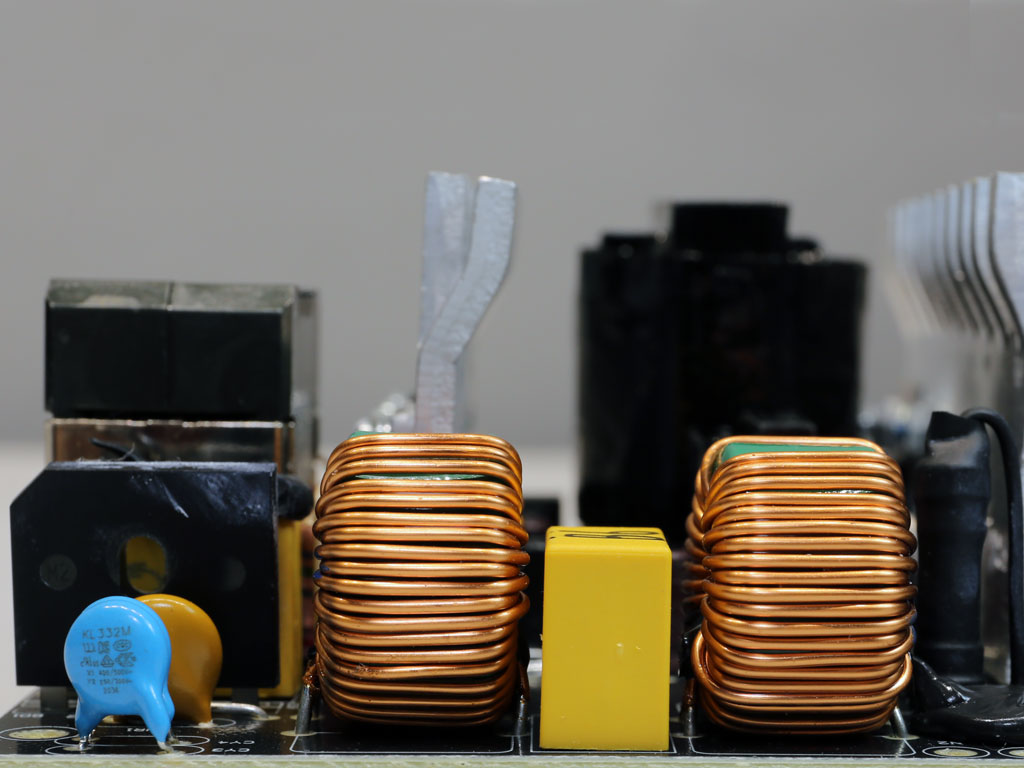
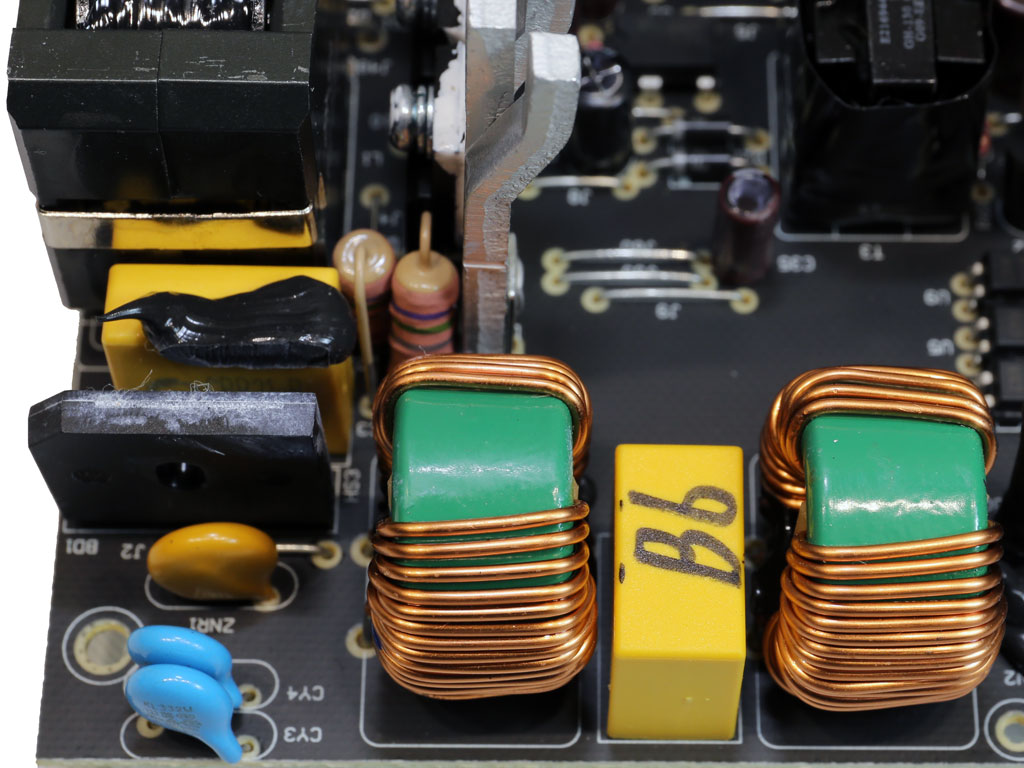

The transient filter has all the necessary components to effectively filter conducted EMI emissions.

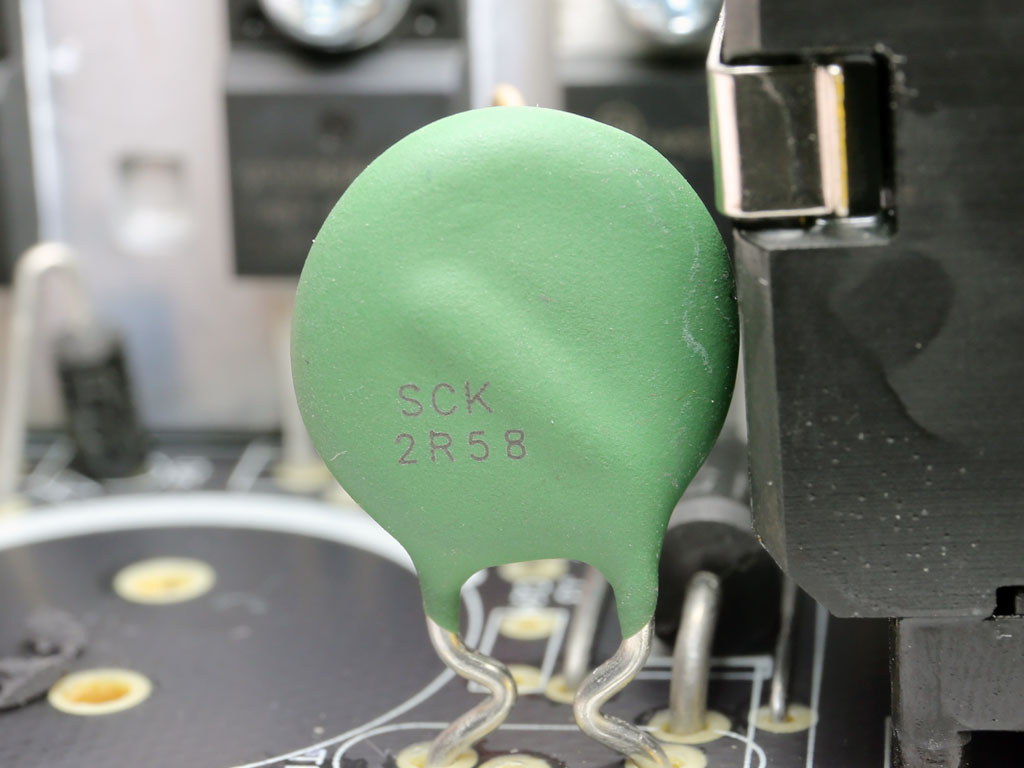
An MOV handles voltage surges, while an NTC thermistor keeps inrush currents under control. There is no bypass relay for the thermistor because it would affect the price.
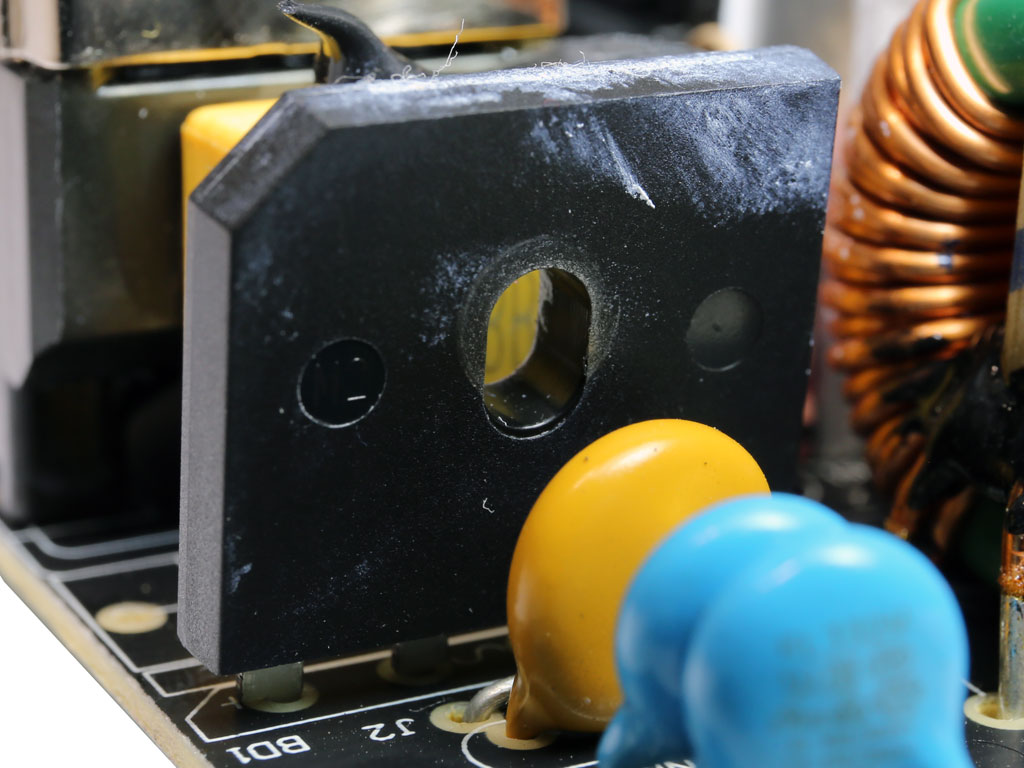
The single bridge rectifier is bolted to a heatsink, which allows it to handle more amperes.


The APFC converter uses two Great Power FETs and a single boost diode, which can handle 6 A. The bulk cap is by Chemi-Con and has the maximum capacity this platform can support (a higher capacity bulk cap wouldn't fit inside this platform without a re-design).


The combo APFC/PWM controller is a Champion CM6800, and the CM03X by the same manufacturer is also used to restrict vampire power.

The main FETs are two Great Power GP23S60HXs arranged into a half-bridge topology.

The main transformer of the PSU.

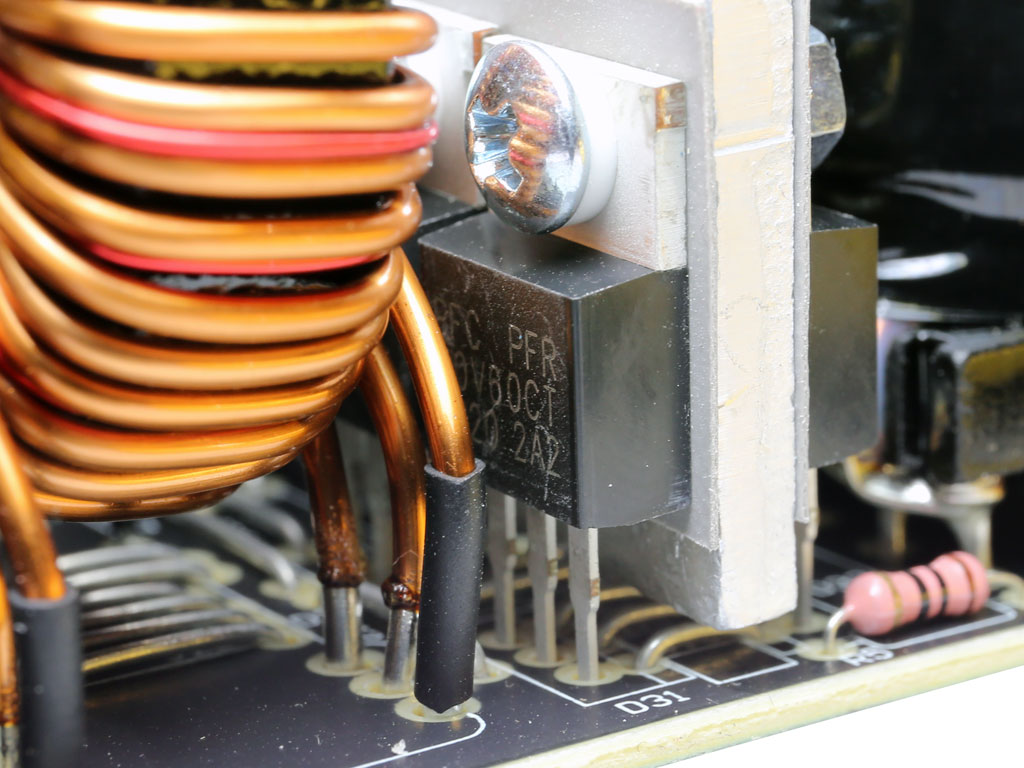
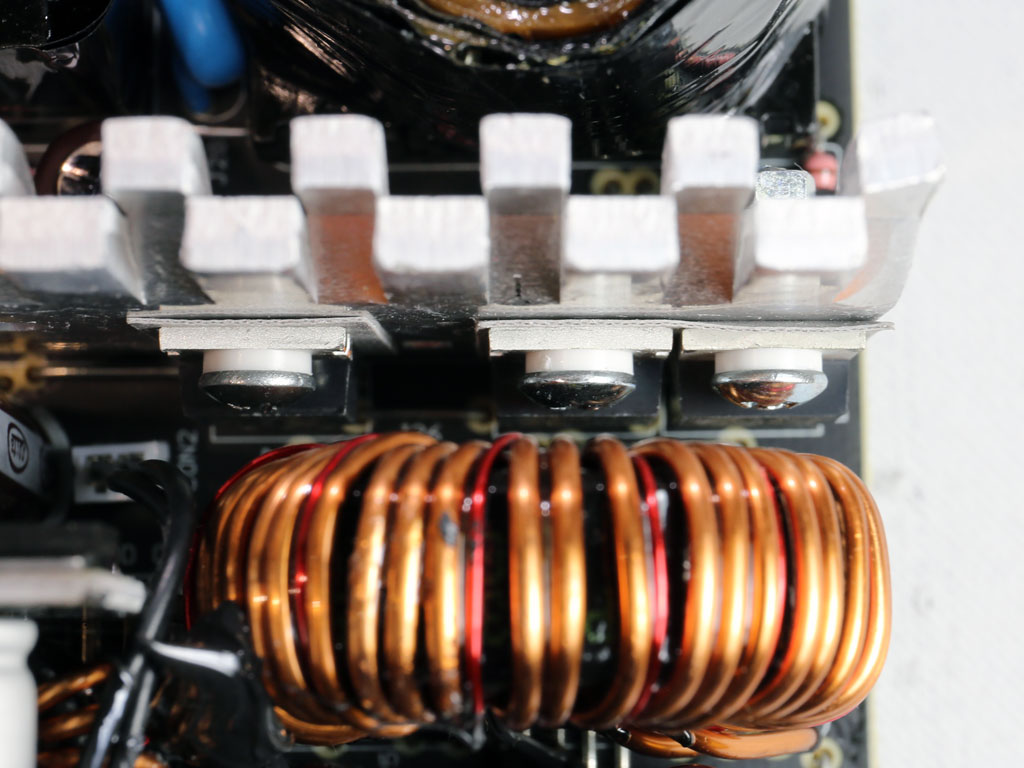

A combination of FETs and SBRs are used to regulate the +12 V rail.


XPG managed to find Elite caps for its Pylon units, which are the best alternative to Japanese caps.


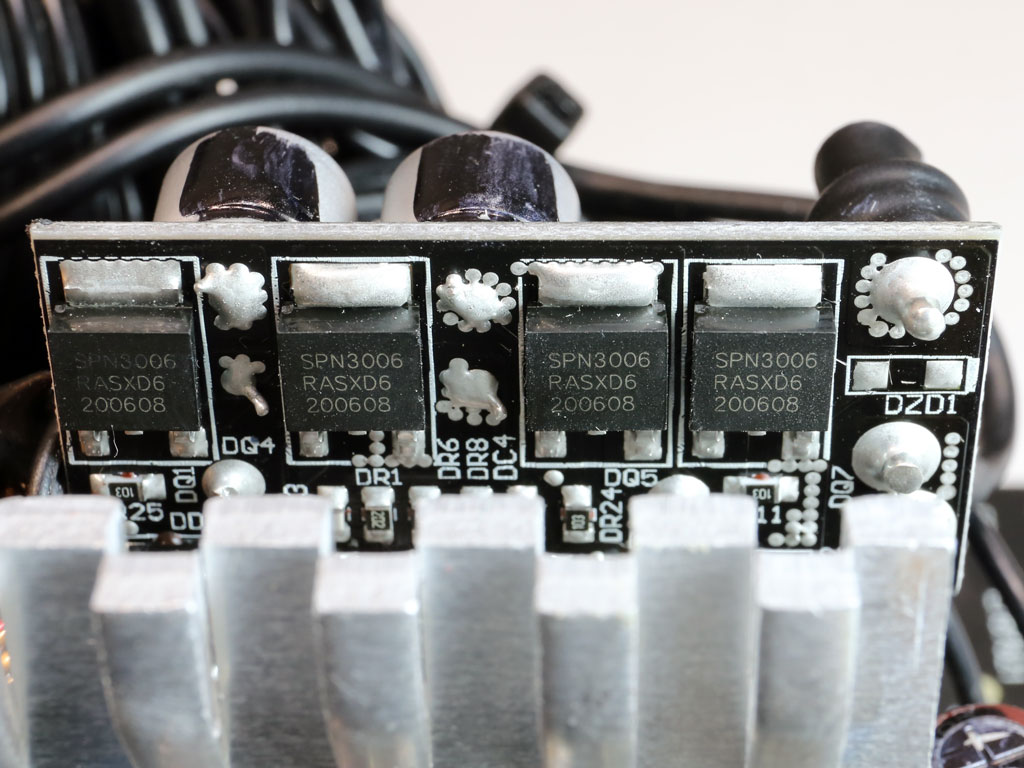

Two DC-DC converters generate the minor rails. The joint PWM controller is an ANPEC APW7159C.
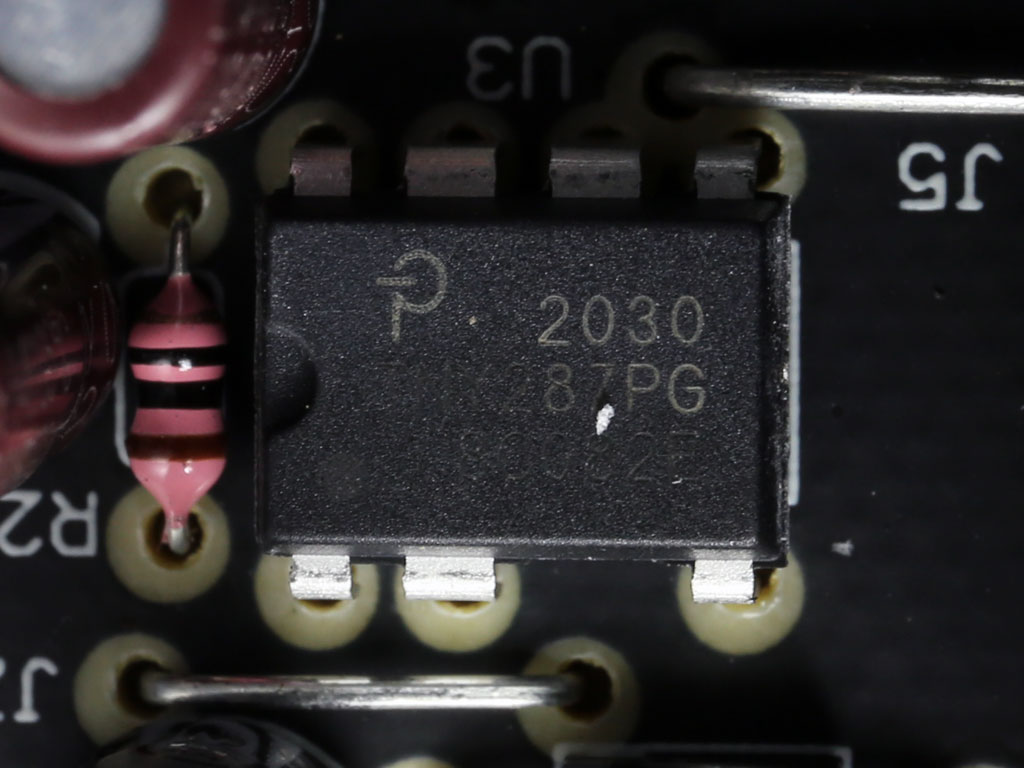

The standby circuit uses a Power Integrations TNY287PG PWM controller.
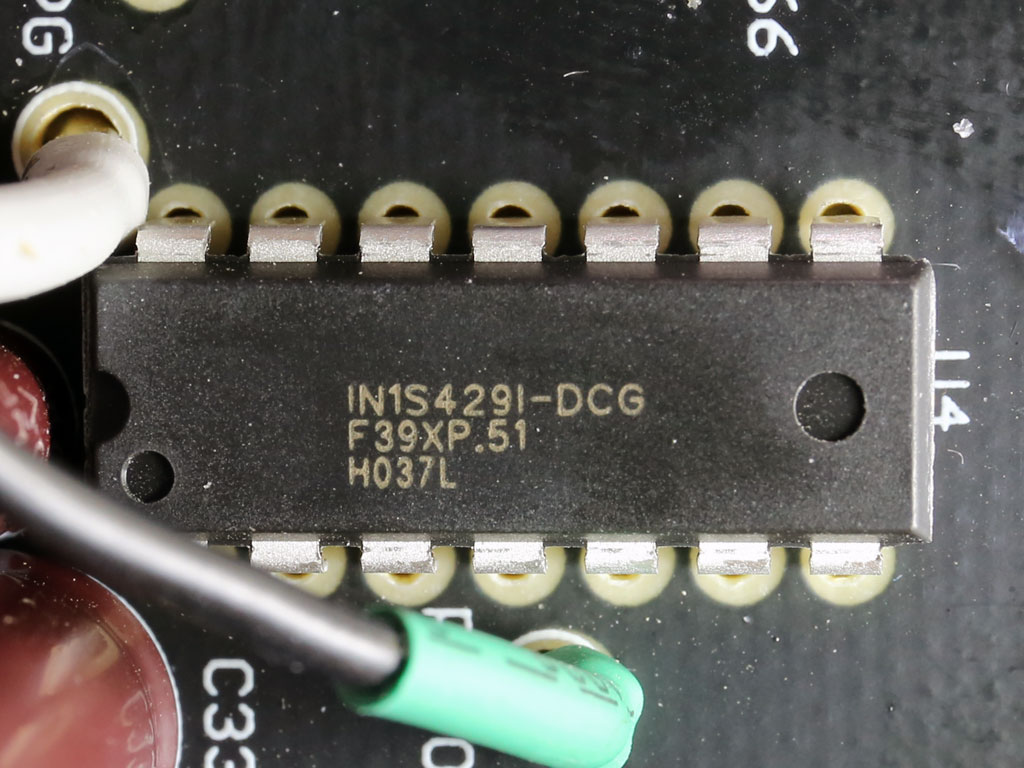
The supervisor IC is an IN1S429I - DCG, for which there is no data available on the internet.


Soldering quality is good.


The cooling fan is provided by Hong Hua and uses a fluid dynamic bearing. It is nice to see an FDB fan used in this category.
Our Patreon Silver Supporters can read articles in single-page format.
Nov 13th, 2026 23:08 CST
change timezone
Latest GPU Drivers
New Forum Posts
- no "PhysX" workable (9)
- What are you playing? (26215)
- Tell me about your favourite graphics card (32)
- AI generated images... (224)
- Crimson Desert (31)
- RenoDX HDR - how to view the differnce Before&After in game? (0)
- Displayport DP80 3M (10ft) cable that can achieve 80gbps stable? (5)
- I'll flash a ASUS ROG Strix RX480 O8G in Cause of Code 43, as a Newbie (1)
- Opinion on Monitor Replacement (6)
- TMOG - post your benchmark results here (16)
Popular Reviews
- AMD Zen 6 Technical Deep Dive
- Corsair HX1000i Shift Crystal Review
- NZXT C1200 Platinum Review
- Upcoming Hardware Launches 2027 (Updated Nov 2026)
- ASUS ROG Strix B850-I Gaming Wi-Fi7 W Review
- Montech King 95 3D PRO Review
- NZXT H7 RGB+ Review
- NZXT H5 Review
- Phantom Blade Zero Performance Benchmark Review - 35 GPUs Tested
- XPG NIMBUS PLUS Review - Mid-range Chair With Strong Competitors
TPU on YouTube
Controversial News Posts
- NVIDIA Co-Founder and CEO Jensen Huang Officially Resigns (380)
- OpenAI CEO Argues Home PCs Waste the World's Limited DRAM Supply (152)
- NVIDIA Launches Investigation Into Jensen Huang's Relationship With Suspected Chinese Spy (136)
- Intel "Raptor Lake Next" 16-Core and 20-Core CPUs Surface (130)
- Legendary Game Studio BioWare Shuts Down Following EA Layoffs (104)
- Dell CEO Says the Memory Shortage Will Get Worse in 2027 (95)
- NVIDIA GeForce RTX 50-Series Scheduled for up to $500 Price Hike This Week (89)
- Modder Fits RTX 5090 With Four 8-Pin Connectors, Halving Current per Wire (80)