 4
GMKtec M6 Ultra Review
Packaging & Contents »Introduction

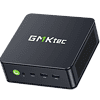
The GMKtec M6 Ultra is built around AMD's Ryzen 5 7640HS and DDR5 memory, with hardware that feels more like a higher-priced Mini-PC, including dual 2.5 GbE networking and USB4. With the 32 GB configuration coming in at around $510, it offers strong desktop performance in a compact chassis, without the premium price tag.

AMD's Ryzen 5 7640HS is a 6-core, 12-thread processor manufactured on TSMC's 4 nm process and paired with Radeon 760M integrated graphics. This setup delivers plenty of CPU headroom for productivity tasks, media playback, and multitasking. The RDNA 3-based Radeon 760M still holds up as a current-generation iGPU, making the system great for casual gaming and lighter graphics work, even though it trails Mini-PCs equipped with Radeon 780M, let alone the newer 890M or Arc 140V graphics.
Connectivity includes dual 2.5 GbE LAN ports, Wi-Fi 6E, and a USB4 port with DisplayPort Alt Mode support, alongside full size HDMI and DisplayPort for multi-monitor setups. USB4 also enables higher-resolution displays, adding flexibility depending on how the system is used. Inside, GMKtec leaves room for upgrades, with dual DDR5 SODIMM slots and two M.2 NVMe bays available for memory and storage expansion.
The configuration tested here includes 32 GB of DDR5 memory running at 4800 MT/s, paired with the bundled generic PCIe 3.0 SSD. GMKtec also offers a barebones option at $270 USD without memory, storage, or a pre-installed copy of Windows 11, for users who prefer to use their own components.
I will get into the details later in the review, but after spending time with the M6 Ultra, it feels like the kind of Mini-PC that fits well into a lot of setups. It is quick enough for daily work, handles multitasking easily, and offers more connectivity than many systems in this price range. The integrated graphics are strong enough for casual gaming and lighter creative tasks. A few compromises show up, such as the entry level bundled SSD and higher power draw under load, but at around $510, the overall package feels very competitive, especially for anyone looking for a compact Ryzen system with upgrade flexibility and dual 2.5 GbE networking.
That said, let's dig into it.
| Specifications | |
|---|---|
| CPU | AMD Ryzen 5 7640HS 6 cores/12 threads TSMC 4 nm process Up to 5.0 GHz 35–50 W TDP |
| GPU | AMD Radeon 760M RDNA 3 architecture 8 CUs up to 2.6 GHz |
| Memory | Dual-channel DDR5 SODIMM 4800 MT/s Up to 128 GB supported |
| Storage | 2× M.2 2280 SSD slot, NVMe (supports PCIe 4.0, ships with PCIe 3.0) |
| Display Outputs | HDMI 2.0 (4K @ 60 Hz) DisplayPort (4K @ 60 Hz, supports up to 8K) USB4 (DP Alt Mode, supports up to 8K) |
| I/O Ports | Front: 2× USB 3.2 Gen 2 Type-A (10 Gbps) 1× USB4 Type-C (40 Gbps, DP/PD) 3.5 mm audio jack (CTIA) Rear: 1× USB 3.2 Gen 2 Type-A (10 Gbps) 1× USB 2.0 Type-A (480 Mbps) 1× HDMI 2.0 1× DisplayPort 2× 2.5 GbE Ethernet DC power input |
| Networking | Wi-Fi 6E (RZ616) Bluetooth 5.2 Dual 2.5 GbE Ethernet |
| Operating System | Windows 11 Pro |
| Power Adapter | 19 V/120 W |
| Weight | 528 g (bare unit) 1,386 g (full package) |
| Included Accessories | Power adapter HDMI cable VESA mount Documentation |
| Price | $510 USD (32 GB/1 TB configuration, at time of testing) |
Nov 13th, 2026 18:48 PST
change timezone
Latest GPU Drivers
New Forum Posts
- I'll flash a ASUS ROG Strix RX480 O8G in Cause of Code 43, as a Newbie (1)
- Opinion on Monitor Replacement (6)
- Tell me about your favourite graphics card (25)
- TMOG - post your benchmark results here (16)
- no "PhysX" workable (7)
- Microsoft Exchange/365 outages? (61)
- Unallocated space in ssd , is it normal? (18)
- Last game you purchased? (1401)
- Game Soundtracks You Love (1286)
- WarpCoreBench scores! (28)
Popular Reviews
- AMD Zen 6 Technical Deep Dive
- Corsair HX1000i Shift Crystal Review
- NZXT C1200 Platinum Review
- Upcoming Hardware Launches 2027 (Updated Nov 2026)
- ASUS ROG Strix B850-I Gaming Wi-Fi7 W Review
- Montech King 95 3D PRO Review
- NZXT H7 RGB+ Review
- NZXT H5 Review
- Phantom Blade Zero Performance Benchmark Review - 35 GPUs Tested
- XPG NIMBUS PLUS Review - Mid-range Chair With Strong Competitors
TPU on YouTube
Controversial News Posts
- NVIDIA Co-Founder and CEO Jensen Huang Officially Resigns (378)
- OpenAI CEO Argues Home PCs Waste the World's Limited DRAM Supply (152)
- NVIDIA Launches Investigation Into Jensen Huang's Relationship With Suspected Chinese Spy (136)
- Intel "Raptor Lake Next" 16-Core and 20-Core CPUs Surface (130)
- Legendary Game Studio BioWare Shuts Down Following EA Layoffs (104)
- Dell CEO Says the Memory Shortage Will Get Worse in 2027 (95)
- NVIDIA GeForce RTX 50-Series Scheduled for up to $500 Price Hike This Week (89)
- Modder Fits RTX 5090 With Four 8-Pin Connectors, Halving Current per Wire (80)