 126
Intel Panther Lake Technical Deep Dive
Core Counts & Tile Configs »Panther Lake in Intel's Lineup


The roadmap slide outlines Intel's recent mobile client CPU progression from Meteor Lake through Lunar Lake and Arrow Lake, to Panther Lake. Meteor Lake introduced the first disaggregated, tile-based client SoC, Lunar Lake pushed that model toward lower power and integrated memory, and Arrow Lake focused on higher performance with larger tiles. Panther Lake takes the next step by combining both efficiency- and performance-oriented cores into a single design that is able to scale across multiple notebook segments.

Intel Panther Lake is the company's first processor to use its new Intel 18A process for the compute tile with GPU tiles built on Intel 3 or TSMC N3E, all paired with externally manufactured tiles produced by TSMC. This mix of in-house and external manufacturing marks a shift toward a hybrid supply strategy where Intel Foundry Services focuses on core logic, while other tiles continue to come from outside partners.

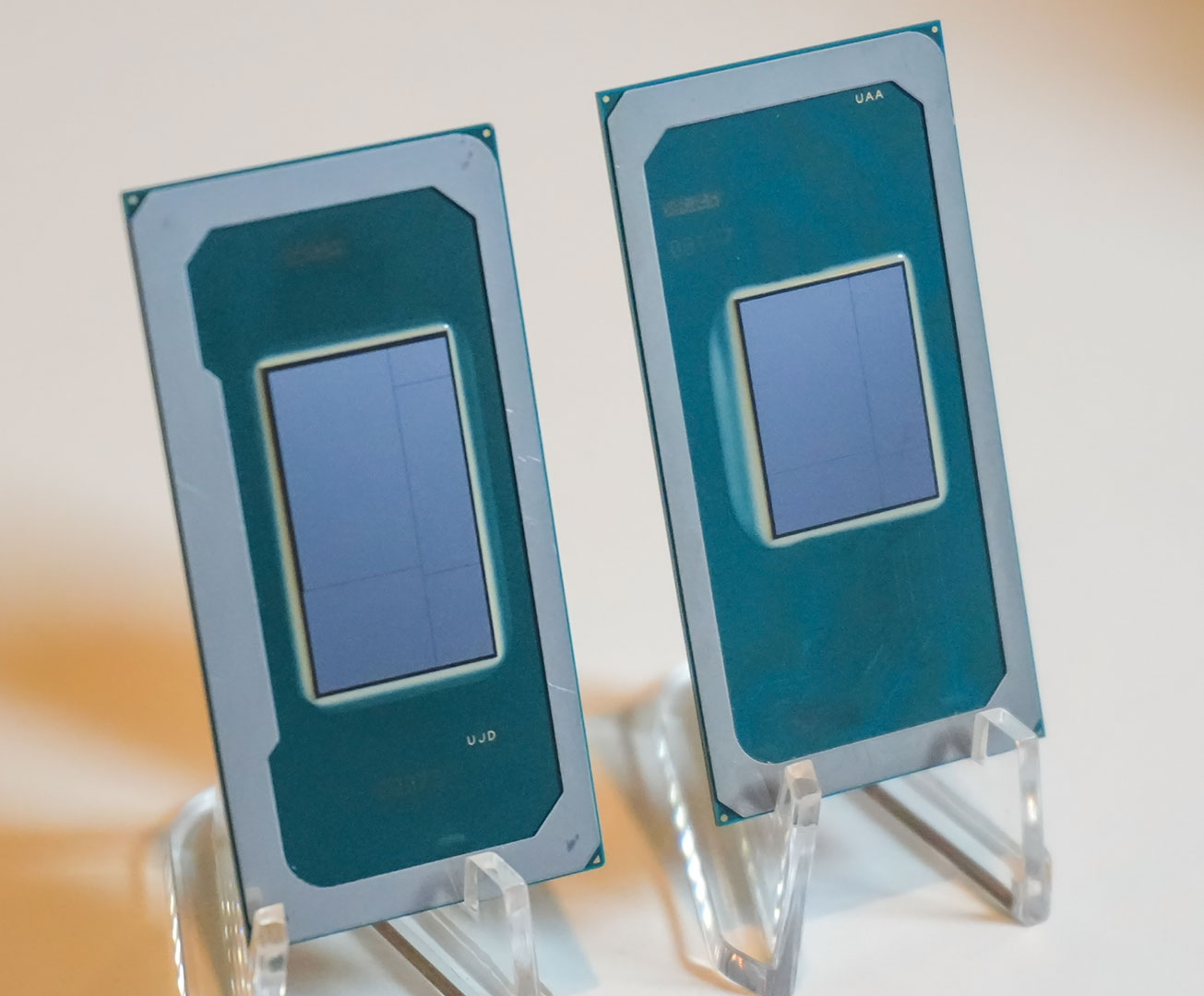
Above, we have a photo of an Intel 18A wafer for Panther Lake that I took at the event, and next to it, two Panther Lake configurations—you can see the individual tiles very well.

Panther Lake is available in three configurations, consisting of a mix of various dies, but all following the same underlying combination approach. Each Panther Lake SoC consists of a compute tile, GPU tile, and platform controller tile connected through Intel's second-generation scalable fabric. This approach allows Intel to reuse building blocks while varying configurations for different product targets.


Panther Lake sits between Lunar Lake and Arrow Lake in both performance and power range. It extends the efficiency characteristics of Lunar Lake into higher-performance systems and overlaps with Arrow Lake in the mainstream notebook space. Intel did not clarify what happens to Arrow Lake mobile once Panther Lake launches. It remains unclear whether both product lines will coexist or whether Panther Lake will completely replace Arrow Lake in Intel's laptop lineup.
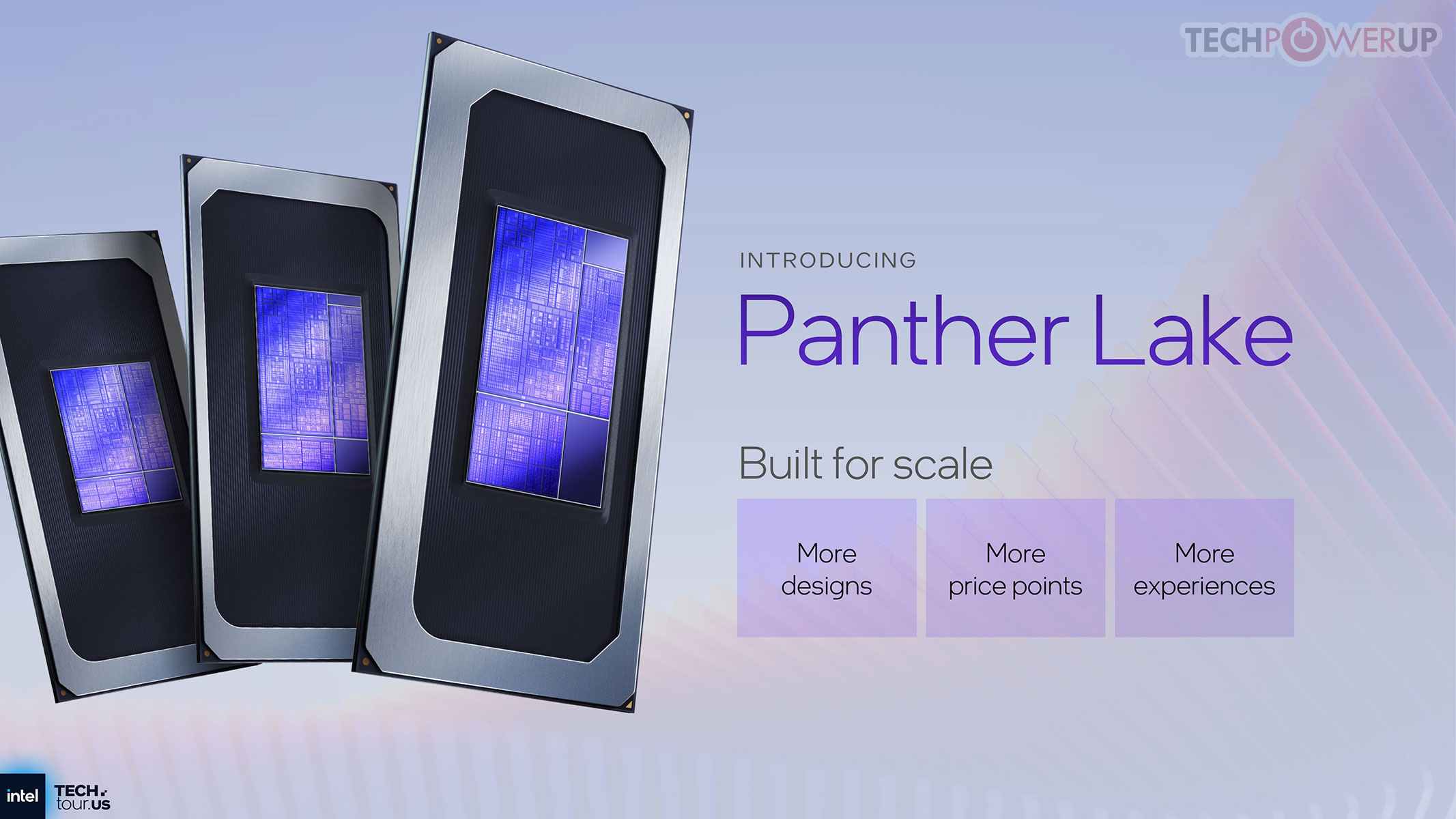
Intel's messaging frames Panther Lake as the architecture that unifies its mobile portfolio under one design. The platform follows three guiding principles: improve performance per watt, scale compute and graphics performance across a wide power range, and increase configurability. No desktop variant was mentioned during the presentations, suggesting that Panther Lake will remain a mobile-only platform. For now, it represents Intel's effort to merge efficiency-focused and performance-focused client products into a single scalable roadmap centered on notebook platforms.
Nov 13th, 2026 07:17 PST
change timezone
Latest GPU Drivers
New Forum Posts
- To AiO CPU Cooler users? (3)
- Microsoft Exchange/365 outages? (35)
- I won't download games that are larger than 30–40 GB. (107)
- Slow SSD read speeds - help! (2)
- Any other old-timers here planning to play WoW Forever? (150)
- Requesting original VBIOS for Gigabyte RX 5700 XT GAMING OC 8G Rev 2.0 (Micron) (0)
- Home page search by category (6)
- Windows 11 General Discussion (7727)
- Warning for Windows 10 and 11 users running newer AMD GPU drivers (58)
- TPU's Nostalgic Hardware Club (22150)
Popular Reviews
- AMD Zen 6 Technical Deep Dive
- Corsair HX1000i Shift Crystal Review
- NZXT C1200 Platinum Review
- Upcoming Hardware Launches 2027 (Updated Nov 2026)
- Montech King 95 3D PRO Review
- NZXT H7 RGB+ Review
- NZXT H5 Review
- Phantom Blade Zero Performance Benchmark Review - 35 GPUs Tested
- XPG NIMBUS PLUS Review - Mid-range Chair With Strong Competitors
- Gigabyte Z890I Aorus Ultra Review
TPU on YouTube
Controversial News Posts
- NVIDIA Co-Founder and CEO Jensen Huang Officially Resigns (351)
- OpenAI CEO Argues Home PCs Waste the World's Limited DRAM Supply (152)
- NVIDIA Launches Investigation Into Jensen Huang's Relationship With Suspected Chinese Spy (136)
- Intel "Raptor Lake Next" 16-Core and 20-Core CPUs Surface (130)
- Legendary Game Studio BioWare Shuts Down Following EA Layoffs (104)
- Dell CEO Says the Memory Shortage Will Get Worse in 2027 (95)
- NVIDIA GeForce RTX 50-Series Scheduled for up to $500 Price Hike This Week (89)
- Modder Fits RTX 5090 With Four 8-Pin Connectors, Halving Current per Wire (80)