 10
Sandisk DC SN861 7.68 TB Review
Power Consumption & Efficiency »Thermal Stress Test
We will now perform thermal stress tests to determine whether the SSD suffers from thermal throttling. In this benchmark, the drive is repeatedly filled using sequential 1 MiB block writes at a queue depth of 32. Temperature data is collected every 3600 seconds (60 minutes) through its internal sensors, along with external readings from a thermal camera. To better simulate a real-world server environment—where active airflow is typically present—we also ran the test with a fan blowing air directly over the SSD to observe any differences in thermal behavior.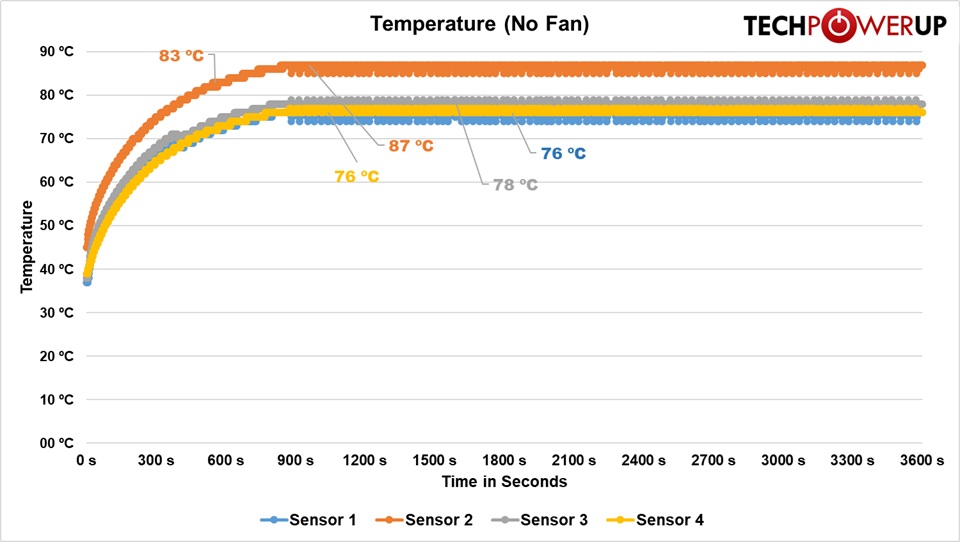
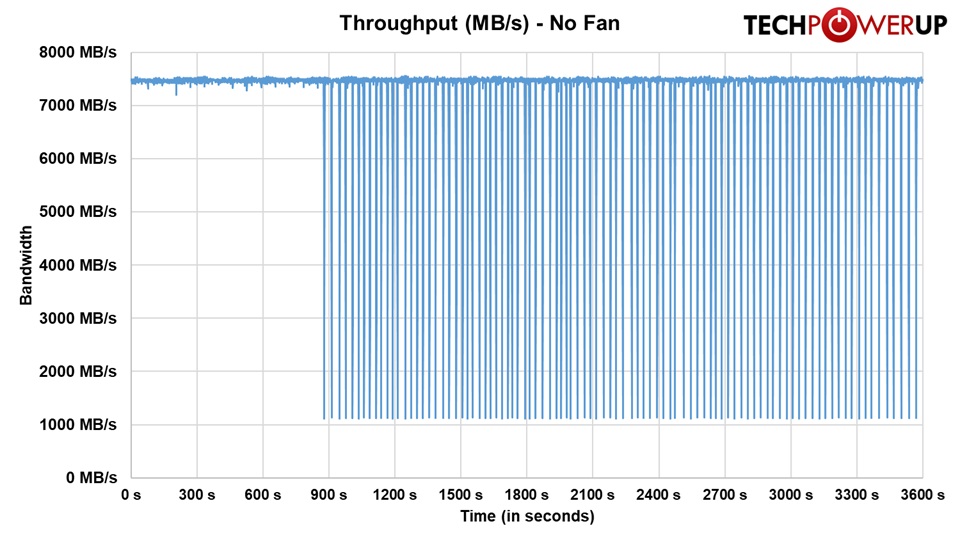
After just over 15 minutes of sustained sequential writes, the SSD reaches its thermal limit of approximately 85°C and begins to throttle. Rather than dropping immediately to a lower sustained speed, the controller briefly oscillates between performance states, resulting in the spikes observed in the graph. During these intervals, sequential write throughput fluctuates from approximately 7.5 GB/s down to around 1.2 GB/s before recovering, repeating this behavior as the drive attempts to maintain its thermal limits.
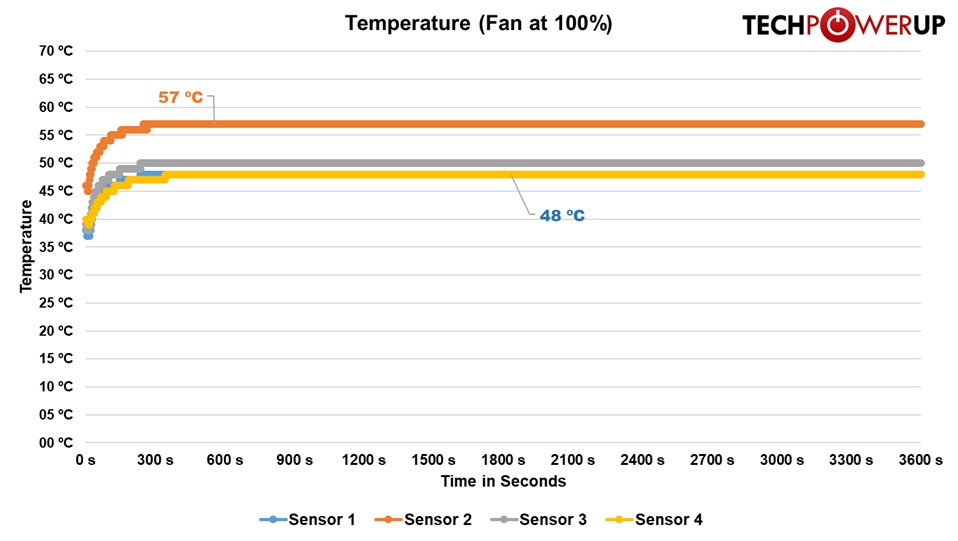
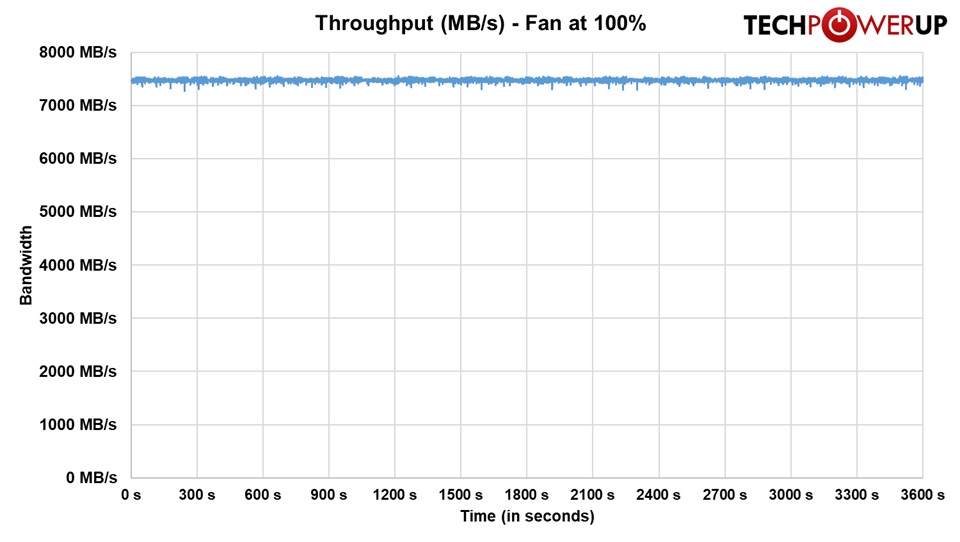
When operating with active airflow, as intended by the manufacturer, since this SSD is designed for use in server racks or systems with proper cooling, the performance remained stable, consistently reaching its rated speeds above 7.5 GB/s. The highest recorded temperature was below 57°C, which is well under the thermal limit set by the manufacturer, ensuring safe and reliable operation.
Thermal Imaging
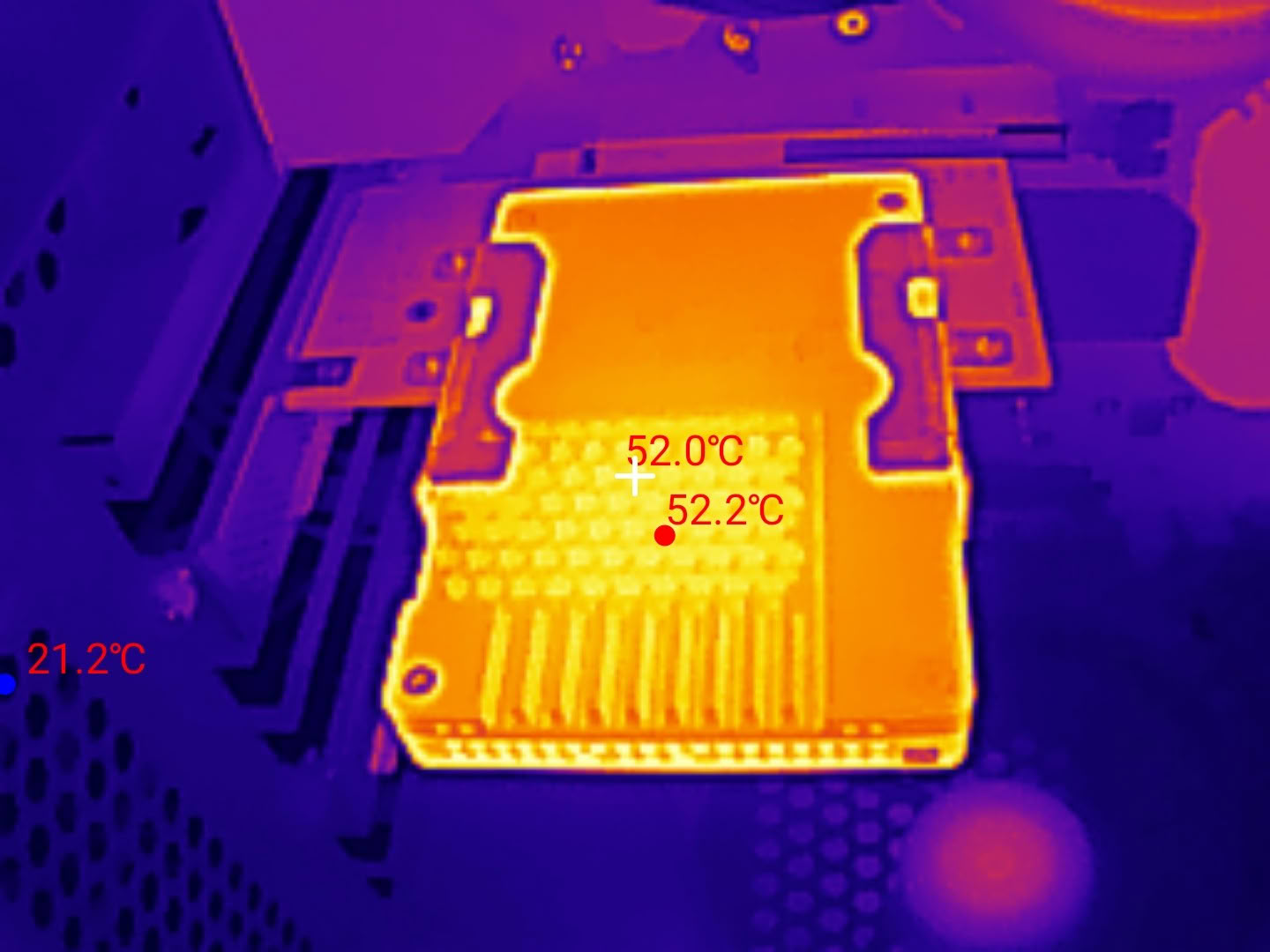
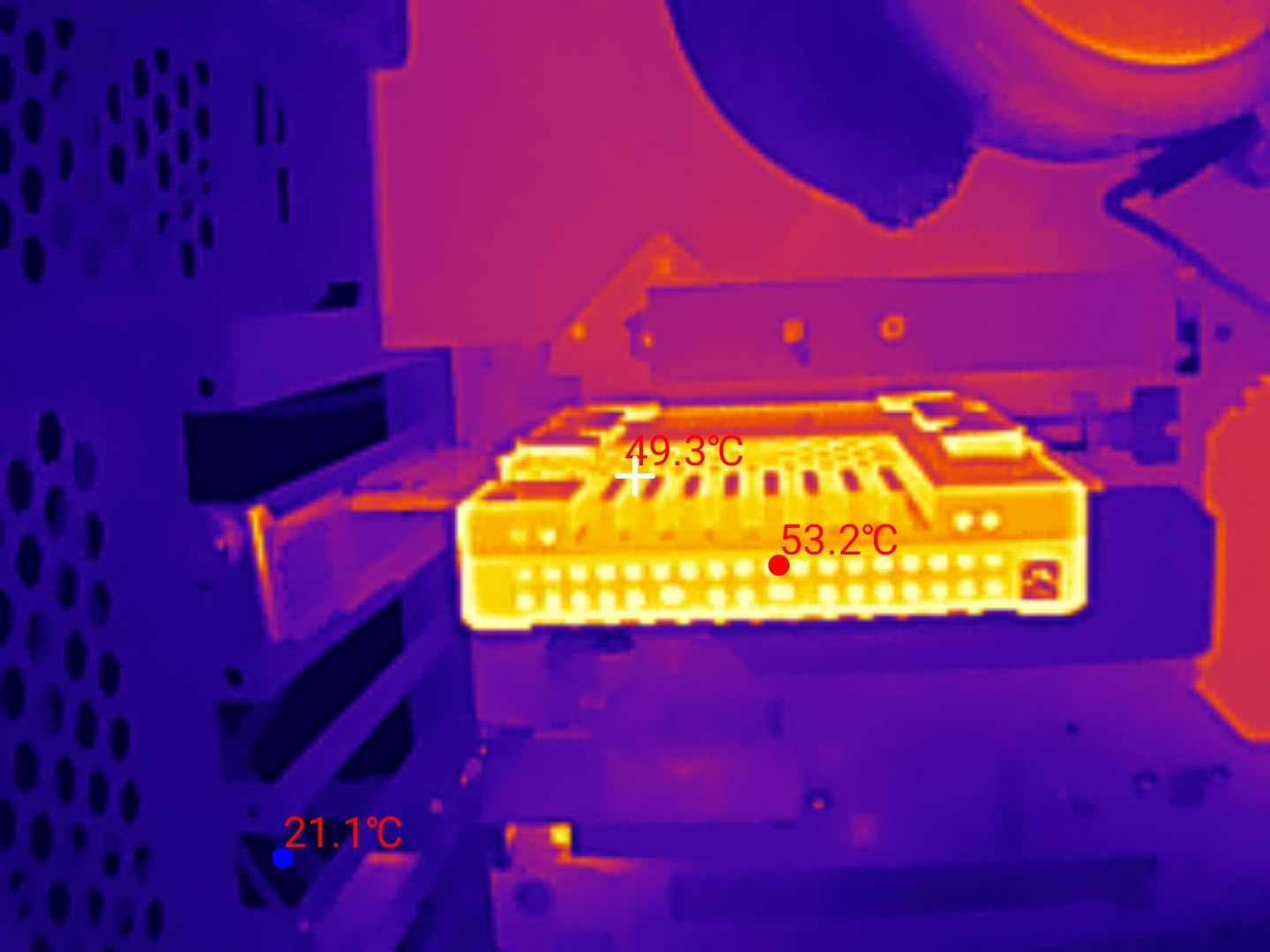
Here you can see a FLIR thermal image of the SSD during testing at full load. The external aluminium housing reached a temperature above 54°C, while internally the temperatures were higher. This SSD requires airflow to function without throttling.
Nov 15th, 2026 21:27 CST
change timezone
Latest GPU Drivers
New Forum Posts
- GPU Temperatures Rise Very Quickly in FurMark – Is This Normal? (7)
- Will zen 6 mobos have anything extra vs current ones? (46)
- Your PC ATM (36435)
- It’s been fascinating times in Retro agian r36s isn’t even worth 50-65 dollars no more and newly listed Rm36 64gb 4in IPS models for only 34 dollars. (6)
- Power supply noise stops when I move the mouse (10)
- Can you guess Which game it is? (320)
- What is the latest game you finished or 100% (203)
- HP Office Jet 7740 Pro - Supply system problem with replacement cartridge (4)
- What are you playing? (26224)
- WarpCoreBench scores! (55)
Popular Reviews
- ASUS ROG Strix B850-I Gaming Wi-Fi7 W Review
- Corsair HX1000i Shift Crystal Review
- AMD Zen 6 Technical Deep Dive
- Upcoming Hardware Launches 2027 (Updated Nov 2026)
- Montech King 95 3D PRO Review
- NZXT C1200 Platinum Review
- Phantom Blade Zero Performance Benchmark Review - 35 GPUs Tested
- AMD Ryzen 7 9800X3D Review - The Best Gaming Processor
- NZXT H5 Review
- NZXT H7 RGB+ Review
TPU on YouTube
Controversial News Posts
- NVIDIA Co-Founder and CEO Jensen Huang Officially Resigns (430)
- Open Letter Asking NVIDIA to Reinstate Jensen Huang Passes 115,000 Signatures (184)
- OpenAI CEO Argues Home PCs Waste the World's Limited DRAM Supply (152)
- NVIDIA Launches Investigation Into Jensen Huang's Relationship With Suspected Chinese Spy (136)
- Intel "Raptor Lake Next" 16-Core and 20-Core CPUs Surface (130)
- Legendary Game Studio BioWare Shuts Down Following EA Layoffs (104)
- Dell CEO Says the Memory Shortage Will Get Worse in 2027 (95)
- NVIDIA GeForce RTX 50-Series Scheduled for up to $500 Price Hike This Week (89)