Friday, May 11th 2012

TIM is Behind Ivy Bridge Temperatures After All
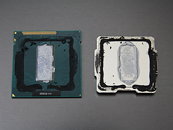
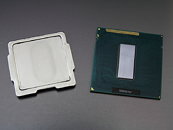
It's proven: the thermal interface material (TIM) used by Intel, inside the integrated heatspreader (IHS) of its Core "Ivy Bridge" processors are behind its higher than expected load temperatures. This assertion was first made in late-April by an Overclockers.com report, and was recently put to test by Japanese tech portal PC Watch, in which an investigator carefully removed the IHS of a Core i7-3770K processor, removed the included TIM and binding grease, and replaced them with a pair of aftermarket performance TIMs, such as OCZ Freeze and Coolaboratory Liquid Pro.
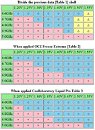
PC Watch findings show that swapping the TIM, if done right, can shave stock clock (3.5 GHz, Auto voltage) temperatures by as much as 18% (lowest temperatures by the Coolaboratory TIM), and 4.00 GHz @ 1.2V temperatures by as much as 23% (again, lowest temperatures on the Coolaboratory TIM). The change in TIM was also change the overclockability of the chip, which was then able to sustain higher core voltages to facilitate higher core clock speeds. The report concluded that Intel's decision to use thermal paste inside the IHS of its Ivy Bridge chips, instead of fluxless solder, poses a very real impact on temperatures and overclockability.
Source:
PC Watch
PC Watch findings show that swapping the TIM, if done right, can shave stock clock (3.5 GHz, Auto voltage) temperatures by as much as 18% (lowest temperatures by the Coolaboratory TIM), and 4.00 GHz @ 1.2V temperatures by as much as 23% (again, lowest temperatures on the Coolaboratory TIM). The change in TIM was also change the overclockability of the chip, which was then able to sustain higher core voltages to facilitate higher core clock speeds. The report concluded that Intel's decision to use thermal paste inside the IHS of its Ivy Bridge chips, instead of fluxless solder, poses a very real impact on temperatures and overclockability.


219 Comments on TIM is Behind Ivy Bridge Temperatures After All
As far as the TIM, people who have IVB already have it so a stepping won't do them any good. Going on, if Intel is planning on releasing another stepping, replacing the TIM might not be a bad idea, but honestly, if an enthusiast want to OC higher, the user might just try replacing the TIM them-self.
Would Ivy have better thermals with a soldered IHS? Sure. But do bad thermals impair the OCability of the chip?
That's a question for the lawyers. I'll bet you dollars to donuts they'll argue that electromigration is more damaging to Ivy Bridge than heat. So:
Intel put the paste on because it was good enough.
The paste is good enough because Ivy can't handle high voltages.
End of story. According to Intel's lawyers. I don't know how it works in reality, but I'm satisfied getting my 3570k up to 4.7.
So the change was from (61-24) 37°ΔC to (50-24) 26°ΔC , or a change of 29.7%
They could have at least place TIM under the non K chips.
big question is what they will put in Xeon parts (which have HT, no vga, and better priced)
we will know after 14th may 2012 (xeon ivy release date)
I just bought an IB CPU.... serves me right for adopting early. Well I can sell this and my SB and buy a SB-E setup!
ivy i5/i7 is useless for everyone except fans of intel gpu
sandy for overclockers
xeon ivy to take advantage of new tech - for stability performance and temperatures
b) Where did you get 62°C from?The article text references temperatures rather than temperature deltas, but as it happens I think you make a good point. 29.7% should probably be the headline figure.
I sucessfully shaved IHS off from my 3570k.
Removed socket holder and directly mounted the Heatkiller waterblock on it !
I now have 15 °C better Temps !
Before i had 4,6 Hhz @ 1.32 V @ 80°C
Now i have the same config @ 65 °C.
So its a nice drop !!!:)