Thursday, December 7th 2017

AMD Issues Official Statement Regarding RX 560 Silent Downgrade
AMD has come forward with a statement regarding the state of things as it purports to the recent RX 560 downgrade issue, which has been covered extensively by media outlets just this week. The issue stems from the fact that there was no clear differentiator between two different versions of AMD's RX 560 graphics card, which could ship with two different levels of performance: one with 14 CUs (Compute Units) enabled (896 stream processors) or 16 (1024 stream processors, the original specification for the card).
"It's correct that 14 Compute Unit (896 stream processors) and 16 Compute Unit (1024 stream processor) versions of the Radeon RX 560 are available," stated a company representative. "We introduced the 14 CU version this summer to provide AIBs and the market with more RX 500 series options. It's come to our attention that on certain AIB and e-tail websites there's no clear delineation between the two variants. We're taking immediate steps to remedy this: we're working with all AIB and channel partners to make sure the product descriptions and names clarify the CU count, so that gamers and consumers know exactly what they're buying. We apologize for the confusion this may have caused."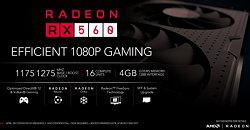
 While it's true that AMD is now dealing with the situation openly, the company itself isn't completely blameless on the issue. AMD's own RX 560 product page lists the two possible configurations (14 and 16 CU) absent of any further differentiation in product name. At the same time, AMD could have better enforced differentiation opportunities with its AIB partners upon supplying them with both versions of the GPU. As it stands, some users have been unwittingly buying a lower performing part than what was initially advertised by AMD. While this new transparent stance from AMD is refreshing, it doesn't do much regarding already affected customers. Of course, if users suspect or want to check whether or not they have purchased the higher performance version of the card (16 CUs), they can perform a GPU verification with TechPowerUp's GPU-Z tool.
Source:
Tom's hardware
"It's correct that 14 Compute Unit (896 stream processors) and 16 Compute Unit (1024 stream processor) versions of the Radeon RX 560 are available," stated a company representative. "We introduced the 14 CU version this summer to provide AIBs and the market with more RX 500 series options. It's come to our attention that on certain AIB and e-tail websites there's no clear delineation between the two variants. We're taking immediate steps to remedy this: we're working with all AIB and channel partners to make sure the product descriptions and names clarify the CU count, so that gamers and consumers know exactly what they're buying. We apologize for the confusion this may have caused."


95 Comments on AMD Issues Official Statement Regarding RX 560 Silent Downgrade
You can't assume the buyer has access to all the information, the point is AMD and the AIBs have made it impossible to have all the information when buying the card. They don't put the shader count on the box. So someone walking into a store just sees a RX 560, they have no way of knowing which version they are getting. That is the problem! This is also why it is different than the GTX 1060.It is easy. I can look at the box of the card and instantly know which one is which. What is printed on the packaging is enough for me to determine which version I am getting. This is why it is easy. I don't have to buy the card, pray I got the good version, take it home, open the box, plug the card in, and run GPU-Z to figure out which GTX 1060 version I got. But you have to do all that to figure out which RX 560 you got. Do you still not see the difference?
Maybe putting it in bullet point form will help.
- Steps to determine which version of GTX 1060 you are buying.
- Look at box for 3GB or 6GB.
- Done.
- Steps to determine which version of RX 560 you are buying.
- Guess and buy a RX 560.
- Take card home.
- Unbox the card.
- Put the card in your computer.
- Install the drivers.
- Launch GPU-Z and pray you got a good version.
And the problem with that argument is that people that don't bother to look up specs and reviews are the exact same people that immediately assume cards with less memory are slower. And in this one instance, their assumption is actually correct.See the bullet points above.And that is the issue. There is nothing on the packaging of the RX 560 to tell which version the card is. If you are buying online, most reputable retailers will list the card's specs pulled from the manufacturer's website, you have to hope they got the specs right now. However, if you just walk in the store there's no way to tell. There's nothing on the box telling you.Its a cluster from all angles...AMD could shut me up if they simply made a proper entry for the 560D in their specifications. Then, have them smack the AIBs around for ALSO not distinguishing it, and the problem is solved.
Amazing how far down the rabbit hole we travel when it really is such a simple friggin fix. They could have updated their website DAYS ago shortly after this hit. Instead, its still there almost 3 days later...
And that is the thing, they are never going to update their website. It is obvious from their response that they don't intend to change the name of the weaker RX 560 or stop selling it. They are putting the blame on the AIBs for not making it easy to distinguish which version is which, and the fix for that I bet is going to be nothing more than burying the shader count in the small print on the back of the box.
First, I don't think that the money a consumer is paying for a GT 730 have less value than those payed from another for an RX 560, as the money payed for an RX 560 don't have less value for those payed for a GTX 1070 for example. I could also say that "Hey, RX 560 is not as good as a GTX 1070, so scr3w those poor people buying RX 560 for gaming". I am not trying to put words in your mouth here, just pointing to the fact that this "it's a low end card" excuse, in fact is NOT an excuse.
The GT 730 is not the bottom of the barrel. You can play games with that card, just at 720p and medium/low settings in most cases. The bottom of the barrel is the integrated graphics in Intel processors and many people who like to improve at least a little their gaming experience, or don't have money/don't wont to pay much for a graphics card, will go for these kind of cards. And when three people buy three GT 730 cards and end up with three totally different cards, that's not something I can excuse. The fact that they where released the same day means nothing really. You might know about these cards. I might know about these cards. Nvidia could have explained the three models in detail in it's press release(I doubt), but most people who will go at a shop to buy a GT 730, don't really know what they get. And reviews, no, haven't really seen any, at least not direct comparisons between the three different models. I would be putting benchmark charts here, not just the spec page, if there where any. It would have been much much more fun and much more obvious of what I am trying to say here.
I do agree that AMD creating a new lower performing model months AFTER the original was released is BAD. REALLY BAD. It reminds me why I am NOT buying Kingston SSDs(and microSD cards for their pathetic 4K writing speeds). But selling three totally different cards under the same name from day one and adding one worst version of a model latter, in 9 out of 10 cases is the same. Because 9 out of 10 consumers will never read reviews, 9 out of 10 consumers will buy the 4GB, DDR3 64bit version of the card, because the 64bit GDDR5 version comes only with 2GB memory, so it is half as fast. By the way. All DDR3 models of low end Nvidia cards come out almost always with 1800MHz DDR3 memory. Latter models usually come with much slower memory. The GT 620 I have (bought it at a really low price) was coming with DDR3 at 600MHz. I have even seen models with 533MHz DDR3. We are talking about the same memory bandwidth as a Geforce 210 with DDR3 memory.
Would you point to some examples with AMD doing the same in the past? Don't really remember any. Maybe you confuse it with models like the HD4830 and HD5830 or something.
Do you want an example where AMD did something bad? The transition from HD 7770, HD 7750 and HD 7730 to R5 240, R7 250 and R7 250X. It was a downgrade.I am pretty sure if this was about Nvidia, AMD's name wouldn't have been mentioned by anyone. Right?
Also I can see in my little screenshot all the specs because I know that there are three different models(by the way, the memory speed for the DDR3 models is NOT guaranteed). Did you knew about those different models? Would you ever thought you need to go to Nvidia's site and double check that there is only one version of the card in the market? Is the average consumer going to do it? Would the average consumer go to AMD's site and double check if there are in fact two models available under the same name? Are those cases any different really?
And by the way, did you really avoided reading those two first lines of my post to have an excuse to make your post, or just missed them?
Let me help you with that
If you want an example of AMD doing this in the past, look no further than the HD4850. It came out in GDDR3, GDDR4, and GDDR5 models. Each one with a difference performance. Oh, and a few months after launch, after all the reviews were out of course, AMD released a driver that intentionally throttled performance when the card was under high load because AMD discovered the reference cooler wasn't good enough and too many cards were dying after only a few months use. Sneaky sneaky...
For the consumer who gets a GT 730 is much worst what Nvidia is doing, because the 3D performance of a card having 40GB/sec bandwidth(GDDR5) with a card having 14GB/sec(DDR3, 64bit) or much less(slower DDR3 memory), will be significant at least. And until Nvidia finally gave that half baked DX12 support for the Fermi series, those Fermi GT 730 cards where inferior in features also. AMD's case is also bad as a case of bait and switch, but the person who will get the 14CUs model will not suffer much performance loss. But they do get something infirior, and that's not acceptable.
I disagree about the gaming experience. The gaming experience is different when the visual quality is much different, but for people who enjoy the game and haven't been spoiled with mid/high end graphics cards, but the FUN they get from a 720p medium settings game A, will be the same as the one someone else gets playing it at 4K with high settings. I greatly enjoyed Borderlands with a 9800GT as the main card at 720p with medium/high settings and the GT 620 as a PhysX card. It was huge fun and while it would be much better looking at 1080p with a hi end card, the FUN would have been probably the same.
The AIBs not adhering to nVidia's specs is another issue entirely, and on the AIBs.
The chip maker has the responsibility of having a clear naming scheme, so no safe passes here.
So yeah, you're right. These are different situations. NVidia was far less responsible and tried to make excuses for their deceptions. AMD is being responsible and owning the problem.
I'm siding with AMD's actions in this situation because they are correct and appropriate. NVidia's track record isn't good by comparison. That doesn't make me a fanboy one way or the other. It means that I look at facts for what they are, not for what I want them to be. Now use that same idealistic mirror and take a good look for yourself, at yourself.
And at the same time you're willing to give AMD a pass on silently releasing a weaker card under the same name without any way for the consumer to tell from the packaging what version they are getting and simply a miscommunication and a marketing mistake, but you're not willing to give nVidia the benefit of the doubt that the GTX970 was a miscommunication and a marketing mistake. You say nVidia is bad because they tried to make excuses, but AMD is doing the exact same thing. They're excuse is they were just trying to make more RX 500 series options for the AIBs. That's completely bullshit. Wanting more RX 500 options doesn't mean releasing cards under the same name! You want more model names. And they are just trying to shift blame to the AIBs. You say nVidia only offered a remedy because of public outrage, well what do you call what AMD is doing here? These cards have been on the market for months. Do you think AMD was going to do anything about them if this didn't hit the news and there wasn't public outrage? Give me a break... You say AMD are actively correcting the problem, I don't see that happening. Their statement was they are going to work with the AIBs to make the versions more clear. That isn't correcting the problem. The cards and their poor packaging are still out there on the shelves, and will be for months until new stock with new packaging comes in. They are literally doing the least amount of work possible to appease the angry people. They should be recalling the cards, renaming this weaker RX 560 to the RX 555, reflashing all the recalled cards to RX 555, repackaging them and then redistributing them. But instead they just said "we'll ask the AIBs to make their packaging more clear, if they want, we might even say please."
So, I do look at the facts. And the fact is nVidia has done wrong, I'm not saying they haven't. I didn't say the GTX970 issue wasn't bad. But the fact is what AMD has done with the RX 560 is worse. The fact is AMD's action is worse, and their response is just as bad. That makes the RX 560 fiasco worse. Period. When you objectively look at the facts, that is the conclusion you get.
You make valid points, and I can see your perspective. Let's agree to disagree on the finer points and agree that both companies have made mistakes and bad choices.
About that "1GB DDR3 = Fermi, 2GB DDR3 = Kepler, 1GB DDR5 = Kepler"...
What can I really say here? If you came to such a wrong conclusion, what should someone expect from another person with less knowledge about computer hardware? Even if we where assuming that all 1GB DDR3 cards where Fermi and all 2GB DDR3 cards where Kepler, the average consumer could never really know or even understand what that detail means. That's why companies have to offer ONE standard base model, from where the AIBs can create and offer whatever they like. When a company creates three different cards and put the same name outside their boxes, in my opinion, it just tries to scam people from day one, instead of waiting a few months and trying to scam them latter.
Everyone has been giving AMD the pass for years. They have only recently started really calling them on their crappy moves.What wrong conclusion? They made it so you can identify what card you are getting before you buy just by looking at the front of the box. Yes, you have to know the different versions exist. The GT730, I've said and I guess I have to say again, is still bad but the RX 560 is a worse situation.
No matter how much memory on the card, 1GB, 2GB or 4GB, the card can be any of the three versions. You have to know to combine data bus and type of memory to know what version the card is. For me this is easy, for you I guess not. For the average consumer it's much worst than the RX 560 fiasco. Because if he buys the wrong RX 560, he will get maybe 85-90% of the performance of the good version. That's not the case with GT 730.
This is the case with GT 730.
GT 730 FPS issue (underperforming) | TechPowerUp Forums
Check the posts where they talk about the different versions, not just the first one, or those "0 seconds though, 10 seconds reply"
"What did you expect, it's a slow card"
type of posts.
@silentbogo 's post explains it better, if you think that my posts are just biased
www.techpowerup.com/forums/threads/gt-730-fps-issue-underperforming.220256/#post-3420815I am always suggesting the GDDR5 version of GT 730 to people searching for low end cards. AMD has nothing to offer really.But I always insist in caution them to never ever be persuaded by others to get a DDR3 version. It will be their fault doing so.
Instead of "downgrading", they were slowly replacing old Fermi chips with Kepler (which is more of a "silent upgrade"). At least that was their intention, which did not account for OEMs hoarding older GPU ICs.
While VRAM type and size was on the box all the time, some OEMs failed to include how many CUDA cores the card has. The only distinct feature that gave up Kepler from Fermi was a 64-bit bus width.
If I am not mistaken, AMD is not replacing the better version, it's adding a worst version also. So, it's not a downgrade. It's bad, but not what we would call a downgrade. If they are replacing all the good cards or the majority of them, if their intentions where to flood the market with 896 cards keeping the good GPUs with all 1024 functioning cores for their RX 660, then yes, it's really bad. Worst than what I thought.
In the case of GT 730, all cards came out at the same time and all cards are in the market at full availability years later from their release. I don't see any kind of replacement or silent upgrade really. Just a mess that will continue until the card's EOL.
Stop spinning it around in a million ways and repeat the same thing over and over. Should a random person just simply walk up to a store they would have no idea which of the GT 730 they are buying without doing some prior research just how they wouldn't know in the case of a 560. It's the same damn issue and it's equally bad.
Both AMD and Nvidia have been doing this forever and make no mistake they will keep doing it. Let's just agree that's how it is and stop trying to rank them on how one did something worse or better than the other.
Like this puppy:
www.techpowerup.com/vgabios/188957/188957