Friday, December 15th 2017

SAPPHIRE Launches Their RX Vega Nitro+ Series of graphics Cards

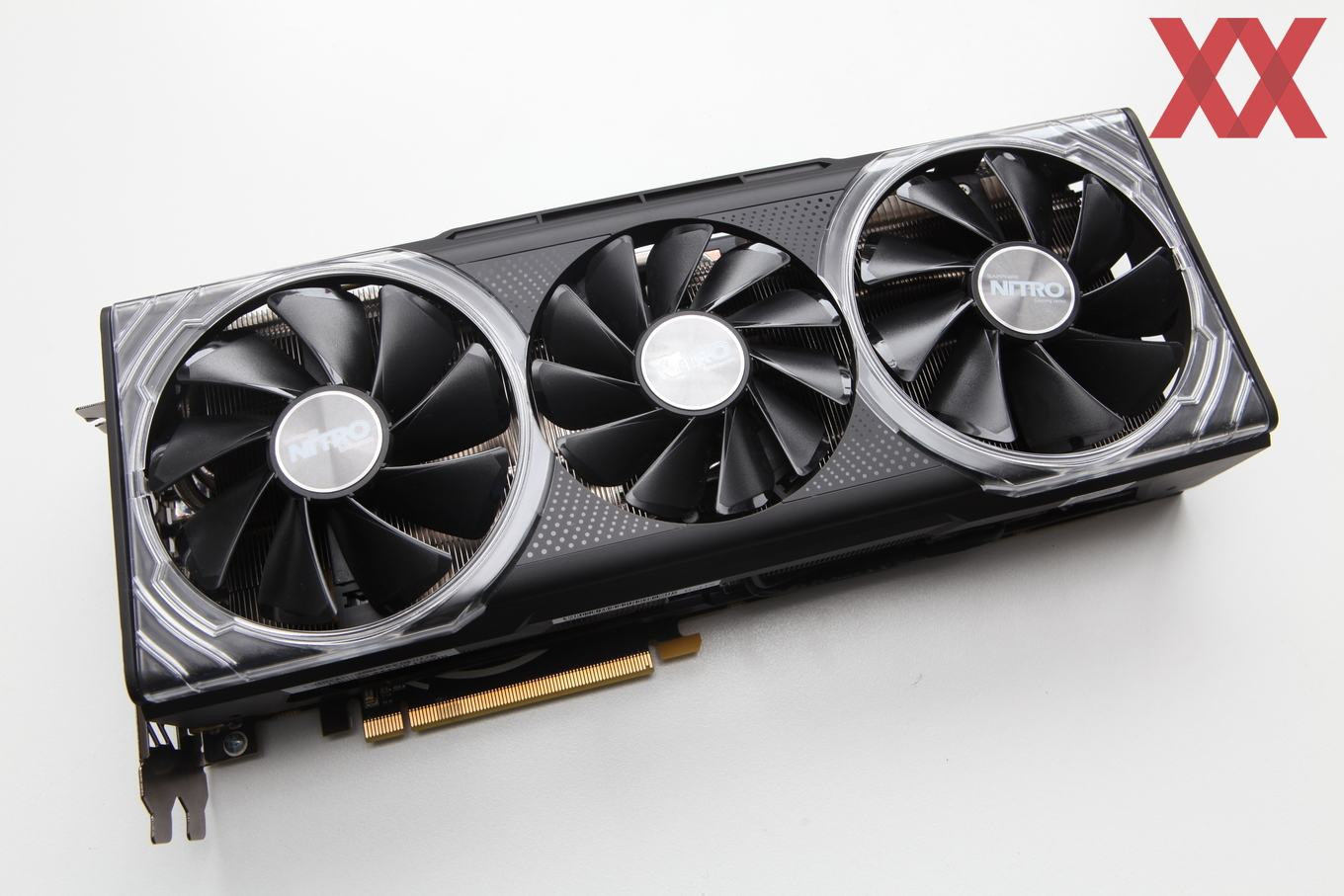
After aeons of waiting, one of AMD's foremost AIB partners, Sapphire, has come out with a fully custom edition of AMD's RX Vega flagship graphics cards. The new RX Vega 64 Nitro+ and RX Vega56 Nitro+ graphics cards bring Sapphire's engineering to the RX Vega table, offering much better thermal, acoustic, and performance characteristics than AMD's air-based reference models.

The Sapphire RX Vega Nitro+ series of graphics cards feature a triple-fan, 2.5 slot design and a whopping 3x 8-pin power delivery system - and yes, you read that right, this applies to both the Vega 64 and Vega 56 models. The increased thermal headroom provided by the substantial cooling solution, and the beefed-up power delivery system, mean Sapphire are shipping these graphics cards with a hefty 12-14% base-clock increase over AMD's reference models, making these the fastest (in frequency) factory-overclocked RX Vega graphics cards money can buy. The cards also ship with dual-BIOS, a fan header for either a side-panel or front-panel fan whose speed you want to be under the graphics' card control, and a VGA support plate - a smart move by Sapphire, considering the RX Vega 64 Nitro+ comes in at almost 1.6 kg.
Sources: Hardware Luxx, via Videocardz
Add your own comment

93 Comments on SAPPHIRE Launches Their RX Vega Nitro+ Series of graphics Cards

#26
Jism
SasquiBased on supply and price volatility, it sure has. Otherwise, I'm in love with my Vega 64 that I managed to find at retail


So does Toms (disclaimer - I did NOT go to Tom's and find it, I got a pop up and took the bait lol)... Interesting thing is the stock Vega 64 beat it in some games but not others, pretty odd
Install an adblocker on both your PC & mobile, and those popups are history. Toms is the only one detailling out as much as they can on reviews, which i like reading.

However, that chip is pretty much on it's latin end with OC'ing. The good part is the lower power consumption compared to AMD's reference card. But it's a beefy card with that cooling!
Posted on Reply
#27
nguyen
HD64GReference Vega gpus aren't made any more in order to be enough chips available for the AIBs to make the custom ones as this Nitro. That is known for over a week now.

As for the efficiency increase by tuning being the same for both Vega and nVidia gpus, in Vega's case you will get MORE performance for LESS power draw when tuned properly. While for nVidia you LOSE performance when you lower the consumption. So, while Vega isn't well optimised from AMD and has more potential than in stock settings, nVidia is very close to optimal efficiency already. Big difference imho due to their R&D money available. I wonder how many times is that needed to be explained...
Basically Pascal still has more overclocking potential left in the tank, but Nvidia has locked it via multiple layers of protection. First is power limit, doing a shunt mod will instantly give a 5-10% performance uplift on top of a maximum overclock (10-15% over stock) but power consumption will increase ~ 20-30%. That means had Nvidia let people push +50% power limit gtx 1080ti can be overclocked another 20% compare to measly 5% of vega 64 and 11% vega 56
Posted on Reply
#28
Jism
AMD was always the more fun part when it comes to oc'ing in both CPU's and GPU's. They simply offer a better experience even the performance is not on par with Nvidia GPU's. How many days i was tweaking the shit out of AMD hardware to get the best possible performance. That Intel nor Nvidia cant offer.
Posted on Reply
#29
HD64G
cucker tarlsonlol what ? more performance ? proof ?
Many previous testers claim exactly what I wrote but I found a new video with the Strix 56 tested. Start watching carefully:
nguyenBasically Pascal still has more overclocking potential left in the tank, but Nvidia has locked it via multiple layers of protection. First is power limit, doing a shunt mod will instantly give a 5-10% performance uplift on top of a maximum overclock (10-15% over stock) but power consumption will increase ~ 20-30%. That means had Nvidia let people push +50% power limit gtx 1080ti can be overclocked another 20% compare to measly 5% of vega 64 and 11% vega 56
But efficiency goes down for Pascal when doing that while Vega's going up. And Vega 56 can go up in performance by 10-20% depending on the game or application. Search and you will find that around the web. Why do you make me write again and again and again the same things? I am sure you can understand what I write. Truth won't change just because one person prefer a company's product over another's.
Posted on Reply
#30
cucker tarlson
Doing what ? Efficiency goes down for Pascal when it's undervolted ? How's that possible ?

I'm able to get the same performance as the card comes with out of the box on my gtx 1080 by setting the power limit at 65% 0.8v and then just adding 130MHz to the core speed .

I'm not saying Vega isn't going to get better efficiency when tweaked, but some ppl need to get that ANY card can be power/voltage tweaked, not just Vega.

Also, it's a bold claim that vega can achieve better efficiency AND gain performance at the same time since the reviews tell a different story

The efficiency goes up with power saving bios


but performance goes down


Other reviews that showed undervolted Vega gain performance had HBM2 overclocked, hence the performance uplift.

I'm not buying those sensationalist claims, they belong on YT red team fanbase channels.
Posted on Reply
#31
the54thvoid
Super Moderator
Without deep diving, the efficiency argument may be based on relative efficiency. In other words, if you decrease power by 20%, the FPS drop is only 10%. In that sense, the efficiency is improved. But yes, you won't get higher FPS for less power, except in outlying cases.
Posted on Reply
#32
cucker tarlson
the54thvoidWithout deep diving, the efficiency argument may be based on relative efficiency. In other words, if you decrease power by 20%, the FPS drop is only 10%. In that sense, the efficiency is improved. But yes, you won't get higher FPS for less power, except in outlying cases.
You can get more performance but only if the card can undervolt and overclock at the same time, which is not uncommon. Stock voltage is 1.06v on my 1080 and stock clock is 1974MHz.If the card can do 2150Mhz at stock voltage then it wouldn't be difficult to set the voltage at 0.95v but still achieve +2000MHz, so in that case both efficiency and performance go up. Lol at those who claim pascal only loses performance when undervolted, have they never had a GPU before Vega ? All cards can do this, nvidia or amd, and it depends on the silicon lottery.
Undervolting alone is gonna give you basically what you wrote, slightly less fps with more power savings.
Posted on Reply
#33
HD64G
Last explanation from my side for anyone willing to try and comprehend: Vega have MUCH more voltage than needed (AMD or low yields to be blaimed) which keeps them from overclocking high when power limit is increased. So, it happens to get more FPS and less power draw when undervoltaged and oced by increasing the power limit. There are reviews about that in the previous months and the video I posted refers to that thing exactly. Pascal won't increase performance and efficiency too by doing the same thing. Rewatch the video or go to the review of the same guy for the numbers (+100MHz and -46W when oced vs stock settings).

Posted on Reply
#34
cucker tarlson
50W less and 90MHz more is better. Not any significant difference though. 80W more than 1080Ti Aorus is pretty ridiculous for a card that's 1070Ti direct competitor.

And for the last last time for those willing to comprehend, what you're describing depends on silicon lottery, not every Vega will downvolt the same, some of them will hardly downvolt at all. You got any proof other than a few samples they send for reviews ? That measly 90MHz might be best case scenario.
Posted on Reply
#35
trog100
when one side is struggling to keep pace with the other it dosnt come clocked lower with plenty of overclocking headroom it comes clocked near its max with very little over clocking headroom ..

amd struggle to keep up.. Nfvidia cruises.. its been this way for a long time..

trog
Posted on Reply
#36
Assimilator
cdawallI mean that's what Nvidia did.
And it's one thing I'll never give them a pass for, because they are taking the best GPUs and coupling them with the worst coolers, when we could have those same top-clocking chips coupled with fantastic third-party designs instead. No, the Founder's Edition cards are utter profiteering horses**t that make me think less of NVIDIA.
Posted on Reply
#37
Unregistered
cucker tarlson50W less and 90MHz more is better. Not any significant difference though. 80W more than 1080Ti Aorus is pretty ridiculous for a card that's 1070Ti direct competitor.

And for the last last time for those willing to comprehend, what you're describing depends on silicon lottery, not every Vega will downvolt the same, some of them will hardly downvolt at all. You got any proof other than a few samples they send for reviews ? That measly 90MHz might be best case scenario.
From what I gathered it seems the latest 17.12.1 driver applied accross the board VID increase for all Vega cards

Amd/comments/7je0vn
One of the reply suggests AMD maybe purchasing lower tier of silicon wafter to save Vega chip production cost. If that is the case then future AIB custom Vega may not even be able to under volt at all.
Posted on Edit | Reply
#38
chaotic_uk
I want one ,anybody want a week old gtx1080 lolz
Posted on Reply
#39
gmn17
... Trollin’ Trollin’ Trollin’
Raw Hide
Posted on Reply
#40
cucker tarlson
xkm1948From what I gathered it seems the latest 17.12.1 driver applied accross the board VID increase for all Vega cards

Amd/comments/7je0vn
One of the reply suggests AMD maybe purchasing lower tier of silicon wafter to save Vega chip production cost. If that is the case then future AIB custom Vega may not even be able to under volt at all.
well if they upped the voltage from 1.2v to 1.25v then lowering it to 1.2v isn't really downvolting unless you go 1.1-1.15v
Lol V64 LC was already drawing like 500W, now it's even more ?
Posted on Reply
#41
the54thvoid
Super Moderator
The new iMac uses Vega. Maybe they're binning for Apple.
Posted on Reply
#42
Vayra86
So... bottom line, 'balls to the wall'-Vega 64 iterations can just touch on the scores of a 1080 vanilla.

Well played!
Posted on Reply
#43
Vya Domus
cucker tarlsonYou can get more performance but only if the card can undervolt and overclock at the same time
Simply not true , undervolting is enough to increase the performance ever so slightly while decreasing power consumption equaling better efficiency.
Posted on Reply
#44
cucker tarlson
Vya DomusSimply not true , undervolting is enough to increase the performance ever so slightly while decreasing power consumption equaling better efficiency.
how can you have better performance without increasing the clock ?
unless the card comes with lower than advetised clocks due to too vigh voltage and power limit, then I guess you're right.
dam those vega cards are weird.
Posted on Reply
#45
Vayra86
cucker tarlsonhow can you have better performance without increasing the clock ?
Lower volts = higher temp headroom = higher boost clock. Pascal is capable of doing something similar, in edge cases, depends on silicon and stock volts.
Posted on Reply
#46
Vya Domus
cucker tarlsonhow can you have better performance without increasing the clock ?
Dynamic clocks on AMD cards take the power limit into account just how Pascal does. Less voltage = less power consumption resulting in more headroom for higher sustained clocks.

Why are you arguing about something you don't understand ?
Posted on Reply
#47
cucker tarlson
Vya DomusDynamic clocks on AMD cards take the power limit into account just how Pascal does. Less voltage = less power consumption resulting in more headroom for higher sustained clocks.

Why are you arguing abut something you don't understand ?
like I said in my edited post, that's cause the card comes with lower than advertised clocks due to higher voltage.
Posted on Reply
#48
Vya Domus
No it doesn't , the clocks have a maximum on AMD cards other than that they are dynamic based on power consumption and temperature. Pascal works pretty much in the same way except it doesn't have a maximum clock (or at least it's not very explicit).
Posted on Reply
#49
Vayra86
cucker tarlsonlike I said in my edited post, that's cause the card comes with lower than advertised clocks due to higher voltage.
What? No. You need some practical experience instead of reading benches, forums and reviews, so you can see this in action. You have a 1080. Go monitor your temperatures and accompanying boost clocks. As your temps go up, your max volts drop down a notch, and boost freq stabilizes. As temps lower, you gain boost bins at the same voltage.

Vega cards aren't weird or different in that sense, you just seem a bit stubborn on the subject. It is well known Vega wasn't very well optimized around efficiency and the implementation of dynamic clocking isn't as tight as Nvidia's on Pascal. So, the fact you can do things like this manually shouldn't come as a surprise.
Posted on Reply
#50
Dave65
HD64GMany previous testers claim exactly what I wrote but I found a new video with the Strix 56 tested. Start watching carefully:


But efficiency goes down for Pascal when doing that while Vega's going up. And Vega 56 can go up in performance by 10-20% depending on the game or application. Search and you will find that around the web. Why do you make me write again and again and again the same things? I am sure you can understand what I write. Truth won't change just because one person prefer a company's product over another's.
I just can't watch that guy, he takes so long to get to the point.
Posted on Reply
Add your own comment
Nov 17th, 2026 18:41 CST change timezone

New Forum Posts

Popular Reviews

TPU on YouTube

Controversial News Posts