Wednesday, January 16th 2019
AMD's Initial Production Run of Radeon VII Just 5,000 Pieces, Company Denies it
More news coming in on AMD's upcoming high-end graphics card, the Radeon VII, with Chinese media reporting that AMD's initial production run for the card is set to ship just 5,000 pieces worldwide. This comes hot on the heels of another report that the Radeon VII won't come in custom-designs by AMD's add-in board (AIB) partners, and that only the reference design will be repackaged and sold by them. What's worse, the source which leaked this production size also revealed that AMD is selling the card below cost-price, i.e., with each card sold, AMD is losing money. This probably explains Wall Street's cold response to the Radeon VII launch, but with a batch size of just 5,000 (roughly $3.5 million in sales at $699 a piece), this card has a negligible impact on AMD's bottom-line.
AMD posted a swift denial to both pieces of news, the size of its production run and the product's profitability. In a statement to MyDrivers, AMD said (translated): "We will not release production figures, but when released on February 7, AMD.com official website and AIB vendor partners will have products on sale, and we expect the supply of Radeon VII to meet the needs of gamers." In short, Radeon VII is shaping up to be the card you'd want to buy if you've sworn a blood-oath never to buy an NVIDIA product, and you need something to play games in 2019 at 4K with.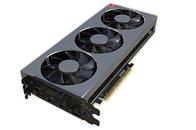
Sources:
MyDrivers, MyDrivers (2)
AMD posted a swift denial to both pieces of news, the size of its production run and the product's profitability. In a statement to MyDrivers, AMD said (translated): "We will not release production figures, but when released on February 7, AMD.com official website and AIB vendor partners will have products on sale, and we expect the supply of Radeon VII to meet the needs of gamers." In short, Radeon VII is shaping up to be the card you'd want to buy if you've sworn a blood-oath never to buy an NVIDIA product, and you need something to play games in 2019 at 4K with.

124 Comments on AMD's Initial Production Run of Radeon VII Just 5,000 Pieces, Company Denies it
People claim GCN is starved of memory bandwidth, computational performance and fillrate (ROPs), but neither is true. GCN have plenty of memory bandwidth and computational performance compared to their Pascal and Turing counterparts, and fillrate is sufficient.
We all know what the problem with GCN is; utilization of resources. We have been over this many times before. The efficiency gap between Nvidia and AMD have increased with every generation since the initial GCN, and is also the cause of AMD's thermal problems, as they have to throw more and more "brute force" resources at it to achieve performance. If Vega had close to the level of resource utilization of Turing, it would have been able to compete, even without 7nm.
AMD is not going to make significant improvements until they have a new architecture. Still, Navi can do smaller improvements, like low hanging fruit such as tiled rendering. Tiled rendering would help memory bandwidth a little bit, but much more importantly it eases the GPU's task of analyzing resource dependencies, which is one of key causes of GCN's problems. So in the end, AMD might get greater benefits from tiled rendering than Nvidia.
Either way, I dont see it as the future until others adopt it, and its bandwidth becomes worthwhile for the masses.
My comment comes from this originally:If you got lemons you make Lemonade.
Also, if both of you claim you're smarter than buildzoid....feel free to make vidoes about it.
I thought we were talking consumer and gaming... dont move the goal posts!
We all know it's only a matter of time before it's on CPUs and used for more than vram.
I just think it has no business in the consumer/gaming segment for the reasons listed... what it excels in doesnt mean much at all for gaming.
GDDR memory controllers become more challenging with newer GDDR memory standards. As GDDR pushes beyond GDDR6 with higher and higher effective clocks, I assume even 384-bit controllers will become challenging at some point.
And since you were too lame to fall for the bait about die size increasing from more mem controllers...well there ya go. Another win for HBM.
580 vs 1060, similar chip size, similar perf, vastly more FLOPS PER DIE AREA on AMD side.
If AMD would be "as efficient", 580 is supposed to beat 1080.
AMD simply crams more CUs per die area than nVidia, both have reasons to.They couldn't know what comes out of it, before it comes out of development.
And once it does, I doubt it's so easy to jump from mem type to mem type, unless it was planned upfront.
Oh, and given Huang's claim Volta development eat 4 billion of R&D, that thing never paid off.
Also, as AMD sells the complete interposer package, isn't their bottom-line showing a "final sale" price of assembly. Wouldn't that have a better profit margin when selling the complete and tested package, than just a GPU chip to an AIB? AMD removes risk from the AIB's in a deliverable package, and in a way streamlines the AIB's production process that has "value" also. AMD might have some financial at advantage in get more cash flow from these High-end markets.
I was addressing "flops efficiency" myth. It's different architectures, those transitors that nvidia didn't use to cram more CUs, went somewhere. Had there been no compromise, 480 would be on 1080's levels, a 1.5 times bigger chip.
I agree that AMD can't get Tiled based rendering fast enough. That alone could make their cards instantly 20-30% power efficient. Nvidia did that with Maxwell first and that was their secret sauce to big efficiency gains. AMD really needs to get on it lol! Even intel is going to have it with their discrete GPUs I think. I do think Navi might be the first one to use Tiled base rasterizer. Well atleast I hope so. May be that is one of the reasons it was reported to be better then they had hoped.
Those CUs went nowhere, they are sitting there waiting for new input while guzzling power. That is what's going on. Efficiency is efficiency, you've made that into 'Flops' efficiency, but the vast majority is simply talking about perf/watt. It was never a good idea ever anywhere to compare GPUs based on FLOPS. Sure, its nice marketing I suppose for those who are clueless but it says nothing. Its a bit like describing the mileage of a car by saying 'the tank contains 40 litres' without any additional info. Or comparing Ghz across different architectures to measure performance.
You say 'had there been no compromise' as if AMD can simply 'not compromise' and make a faster chip. If that was the case, I think they'd have done so five to eight years ago. They already tried their hand at efficiency / 'less compromise' and what they've got is an archaic boost technology, some weak delta compression and some slight handicapped GPGPU. I mean, they don't even bother buying into GDDR5x or -6 as of yet. Its easier to compromise on HBM o_Oo_Oo_O There is so much low hanging fruit here, its unreal, and its nearly rotting away on the tree already.
Your saying 'had there been no compromise' really means 'had AMD used the exact same architecture'... well no shit sherlock!
And your 20-30% efficiency gain might be a little on the optimistic side.
As to Navi IDK... As much as we want it, I think if we see a release sometime Q3 we'll be lucky.