Tuesday, February 19th 2019

Intel Rolls Out the 4 GHz Pentium Gold G5620 Processor
Intel rolled out its first Pentium-branded processor with 4.00 GHz clock-speed, the Pentium Gold G5620 (retail SKU: BX80684G5620). The chip replaces the G5600 on top of the entry-level product stack. Based on the 14 nm "Coffee Lake" microarchitecture, it packs a 2-core/4-thread CPU clocked at 4.00 GHz without Turbo Boost. 256 KB of L2 cache per core and 4 MB of shared L3 cache are also offered. The integrated graphics solution is Intel's workhorse UHD Graphics 630, with 24 execution units. The dual-channel DDR4 integrated memory controller supports up to 64 GB of DDR4-2400 memory. The chip's TDP is rated at 65W. Pricing is up in the air, with retail channel shortages expected to swing the chip on both sides of the $100-mark. Availability is slated for early-March, 2019.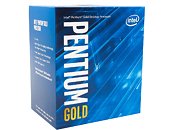
Source:
Anandtech

63 Comments on Intel Rolls Out the 4 GHz Pentium Gold G5620 Processor
I have a full gaming desktop now, but if I were to redo it, I would get a pentium like this, which is more then fast enough for normal tasks and can play older games with no issue. Not everyone plays the latest and greatest or most demanding games.
If one wants to make a sub $500-600 desktop that can play games like Civ V, GoG games, and normal tasks, but wants the additional power over a tiny iGPU, the pentium is a great chip. The AMD chip makes sense if you want AMD graphics and are OK with toning details down, but the pentium fills in the space between that and ryzen5 style builds.
Reality check.
I don't even know why people are putting the Athlon 200GE as the competitor. It's absolute shit. This chip will be way faster. The Ryzen 2200G is a better choice as a competition.
How is vega's current video codec support? Intel igpus have had upper hand on video codecs compared to amd igpus and I don't think there's enough compute power for madVR with any igpus out there.
Intel iGPUs have better video codec for sure. Just by looking at Plex, it even prefers the Intel iGPU transcoder over the nVidia encoder.
Other possibilities? For example: "hey, we have too many TDP values, let's rename everything to 35, 65 or 95 Watts"
Anyway, TDP of this Pentium is only important in case some OEM wants to put them into a USSF case with limited cooling.
In most SI PCs it will be cooler by the Intel's stock cooler anyway.I don't see the point of arguments like that one.
It will be faster, so why shouldn't it cost more? Anyway, Intel can sell stuff for more than AMD can. We all know this.
If Intel and AMD today decided to sell bananas, AMD could ask $0.50 and Intel could ask $1. And Intel would sell more. That's the whole point of having a stronger brand.Yeah, looking at the reviews, it's a lot like the old FX or weak ULV mobile chips. So it's really slow by today standards. Apps will take long to open, but more importantly: it will really affect web browsing, which is possibly the most important use for such PCs today.
Honestly, I don't know why AMD made this CPU so slow. Ryzen may not be shining in single-thread, but is better than this thing. Weird decision. They could have made it better without risking Ryzen 3 sales.AVX really doesn't matter in this CPU. Anyway, I wasn't talking about performance. I meant what clients want. And if you think they'll know what AVX is, you must have skipped a dose.
Seriously, I'd me amazed if half of Penium buyers understand what HT/SMT is.
And what about you? Do you undestand how AVX works?
We should also only support .mp3 on Windows, why do you need anything else?
Your argument is valid for Atom based CPUs (Celeron and Pentium "Silver" ones), not for main desktop ones.
Also, $100 for a cut-down 65W dual core, this is no longer 2007.
Intel only has two advantages: mindshare, and superior per core performance on their top end CPUs... and I feel like they're about to lose the latter advantage when Ryzen 2 hits, unless they work out their 10nm issues very quickly and it's significantly better than their current 14nm node. Without that, AMD is set to knock them back down to where they were in the Netburst era... you know, when their product was so inferior they had to bribe OEMs to carry it exclusively so they could maintain good sales figures.
Average Joe may not know AMD as well as they know Intel (even if they just don't recognize AMD at all and they remember hearing Intel somewhere before), but Dell, HP etc are not run by Average Joes, and they're likely to choose the better hardware for their product. Average Joe also doesn't care about AVX, but for those of us who do (like... TPU forum members), we might list that as a con, and being that we are indeed discussing it on TPU, I find it a valid con.
One thing Average Joe does care about is price. I have built a few systems for a few people in my time, and not one of them has ever been Intel, unless I already had Intel hardware laying around that I wasn't using. And nobody has ever told me that the computer I built for them sucks, or they hate it because it doesn't say Intel. Instead, I heard about how they were happy that I saved them money by building a computer compared to what they would have had to pay for a Dell or something at the time... and price is one area where this product definitely fails. Doubly so that it's a dual core in the year 2019, and even more so (to a lesser degree) that it doesn't even support instruction sets that have been common for years, and present in the competition's cheap products.
I feel bad for this chip, actually. It's so bad compared to what it could have been. I'd consider it for $50, but at $100, I'd feel like an idiot for not buying the 2200g.
We *know* 200GE is slow in single-thread stuff. This is what benchmarks are for.
We know it performs more or less like a desktop 1st/2nd-gen Intel Core (or 4th/5th mobile Core).
That was a long time ago.
It doesn't mean the CPU is unusable.
But with a slow single-thread CPU, everything takes a little longer. The overall experience is that the PC gets a bit more laggy and less comfortable.
No one says you can't use a 200GE for casual computing. And if you're used to this kind of performance, you may not even see it as a problem. But many people will.
At the end of the day, people even use Atom-based tablets for basic stuff we're talking about (browsing, Ms Office, watching movies etc). I do as well.
My Atom x5 is maybe half as fast as 200GE in single-thread in best case scenario. Is using it comfortable? No. But knowing this limitations, can I accept it? Of course I can. I even use it for SAS, R and Visual Studio. I bought it because I wanted that particular size and battery life. And getting something faster meant spending 3x more (e.g. Surface Pro).
Do people buying CPUs understand these limitations? Most don't. For them a PC will simply be less responsive than what they may be used to (even in their phones).
And getting a Pentium G in this case, while adding a few dozen $ to the price, is relatively how much? 10%?