Tuesday, March 5th 2019

Spoiler Alert: New Security Vulnerability Found Affecting Intel CPUs
A new security vulnerability has been found that only affects Intel CPUs - AMD users need not concern regarding this issue. Dubbed Spoiler, the newfound security vulnerability was discovered by the Worcester Polytechnic Institute in partnership with the University of Lübeck, and affects all Intel CPUs since the introduction of their Core architecture. This vulnerability too affects Intel's speculative execution design, and according to the researchers, works independent of OS, virtual machine, or sandboxed environments.
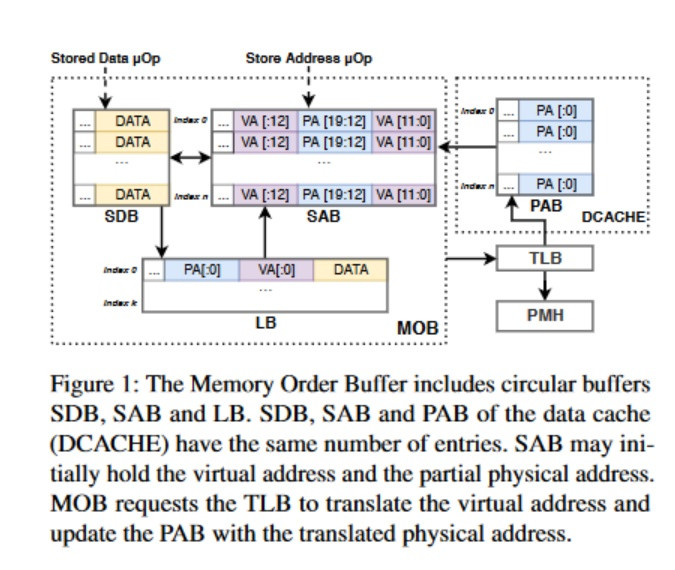
As the researchers explain, Intel's speculative execution of certain memory workloads requires the full physical address bits for the information in memory to be known, which could allow for the full address to be available in user space - allowing for privilege escalation and other microarchitectural attacks. According to the researchers, a software solution to this problem is impossible, which means this is yet another silicon-level bug that needs to be addressed in future processor designs.
Source:
White Paper
As the researchers explain, Intel's speculative execution of certain memory workloads requires the full physical address bits for the information in memory to be known, which could allow for the full address to be available in user space - allowing for privilege escalation and other microarchitectural attacks. According to the researchers, a software solution to this problem is impossible, which means this is yet another silicon-level bug that needs to be addressed in future processor designs.

114 Comments on Spoiler Alert: New Security Vulnerability Found Affecting Intel CPUs
To add to that, most companies don't know exploits exist. When they find out, they get run through an RMF to determine what they need to do. In this case, Intel's only option is a new architecture as I don't even think microcode can adjust how specex works. To be honest, this is outside any sort of 'expertise' I may have.
However, new architectures aren't quick fixes so there is not much they could do. They also didn't want to announce it to the world because, well, then everyone knows what to do. Considering it took nearly a decade for this to come to light (at least publicly), I don't hold a grudge on Intel for this.
And yes, there are people outside of Intel that are smarter than people at Intel. Reverse engineers are some of the smartest people in the software world. You have to have a totally different mindset than a traditional programmer.