Wednesday, April 27th 2022

NVIDIA Allegedly Testing a 900 Watt TGP Ada Lovelace AD102 GPU
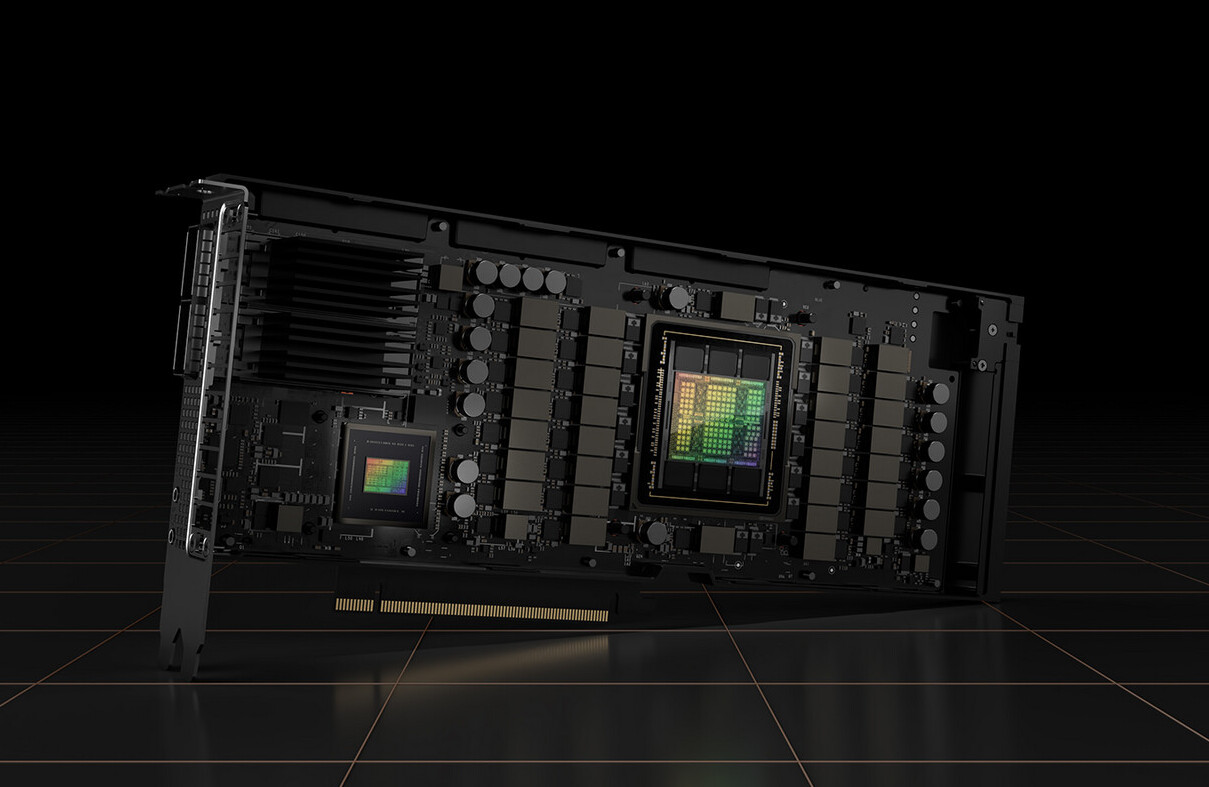
With the release of Hopper, NVIDIA's cycle of new architecture releases is not yet over. Later this year, we expect to see next-generation gaming architecture codenamed Ada Lovelace. According to a well-known hardware leaker for NVIDIA products, @kopite7kimi, on Twitter, the green team is reportedly testing a potent variant of the upcoming AD102 SKU. As the leak indicates, we could see an Ada Lovelace AD102 SKU with a Total Graphics Power (TGP) of 900 Watts. While we don't know where this SKU is supposed to sit in the Ada Lovelace family, it could be the most powerful, Titan-like design making a comeback. Alternatively, this could be a GeForce RTX 4090 Ti SKU. It carries 48 GB of GDDR6X memory running at 24 Gbps speeds alongside monstrous TGP. Feeding the card are two 16-pin connectors.
Another confirmation from the leaker is that the upcoming RTX 4080 GPU uses the AD103 SKU variant, while the RTX 4090 uses AD102. For further information, we have to wait a few more months and see what NVIDIA decides to launch in the upcoming generation of gaming-oriented graphics cards.
Sources:
@kopite7kimi (Twitter), via VideoCardz
Another confirmation from the leaker is that the upcoming RTX 4080 GPU uses the AD103 SKU variant, while the RTX 4090 uses AD102. For further information, we have to wait a few more months and see what NVIDIA decides to launch in the upcoming generation of gaming-oriented graphics cards.
102 Comments on NVIDIA Allegedly Testing a 900 Watt TGP Ada Lovelace AD102 GPU
Do you think AMD will give HBM a shot again? They have GPU's competitive with Team Green now maybe a modern GPU using HBM would push them over the top and give them the clear cut lead in 4K-8K gaming/mining perf?
Maybe you could vent the 900 Watts of heat into a clothes drier or central furnace heating system or a water heater?
So let say you have a 900w GPU, a 170w+ CPU(i doubt you would run that card on a low end cpu), plus 30w for the rest of the system, you are at 1100w. PowerSupply aren't 100% efficient so you can add another 100w of loss on top of that. Then you have monitor. some can easily use more than 50w per monitor. if you have more than 1, you can start to get closer to the circuit breaker.
And you haven't plug anything else. Normally, for kitchen, they design it so that each socket have it's own circuit, if that trend continue, we might have to design home office to get the same treatment.
But before we get there, we need to consider how much heat those kitchen appliance output. I mean, that PC would have more heat output than the heating system of the room i would put it in.it all depend where you live.
let say you are not a hardcore gamer, but you still play 4 hours per day in average, a bit much on the weekend, a bit less during week, etc. Something normal for someone spending that much in equipment, if you live in an area where the electricity is around 0.20$ per KwH, it would cost you around 146$ per year more.
where i live, it still almost 60 buck. I mean it's not that much, but way more than 5-6 $ diff.
And it depend, some area have peek hour rate that are much higher, some have different tariff based on their consumption.
But still, my main concern would be that additional 500w of power that it would dump in my room. it would be the equivalent of having the other computer + this running at maximum power while I game:
Actually not that dissimilar besides it Could play Crisis.
Would there be any advantage to crypto-miners to having a 48 GiB VRAM footprint?
EDIT: I do know that after 17 Kwh per day, I incur an addition rate to the base rate. Rates also change for peak hours.
The way inflation is increasing, by the time a 900watt card is bought, electricity will likely cost much more. The Ferrari owner will be paying $8 a gallon (by the time this card comes out), but when he bought it was $3, $50 might mean something to some people.
I'd just like to caution that testing a 900W card doesn't mean the final product will take 900W. Especially knowing what we know about this chip, that it uses a Samdung node and die size is near the reticle limit, you're way up the (presumably terrible) v/f curve there. I would expect the final product to slot in between 500-600W. Still unacceptable for most, but a lot more reasonable and practical. I personally don't have much issue with it as long as the performance justifies it and efficiency is still improved. Back in the day people who wanted the best ran 2 or 3 GPUs at 200-300W+ in CFX/SLI. Now that's dead and you get your half-kilowatt, $1500 monsters instead, I have more of a problem with the price honestly.Many people in the US would probably encounter issues. I get the impression most homes/buildings haven't had electrical work done since the 1970s. Standard outlets here deliver a maximum of 1800W, which is enough, but definitely cutting it close for a full system with such a card. But if you ran the PC and another appliance on the same fuse, it'd blow nonetheless... it's not just the individual outlet that needs to be considered.
Anyways as the owner of an RTX 3090ti I seriously question how this will even work in a PC case...
If you need 4 slots for 450 Watts can any shroud handle that kind of size would a 900 watt card be?
Seriously though, to cool the thing must take a custom loop and an outdoor chiller.
Could they use a thermosiphon to cool it? Or maybe some new NASA tech like the oscillating heatpipe?
You can glean this information by the rumour that 4080 is based on AD103, as opposed to 3080 that was last minute carved out of GA102 instead to be able to compete with 6800 XT in 4K. a full GA103 would be 5-10% slower so nvidia so it got canceled. And usually 4070 would contain exactly 7680, as 3080 was supposed to be. just like 3070 and 2080, is the same 2944, and doubles to 5888.
So nvidia must be pretty confident that a narrow 192 bit 7800 XT is a AD103 counterpart. For all weknow AMD may be counting the GPU cores differently now. so a 7680 core part is actually shown as 15360, and performs like 10240.
And the beefy GPU is being developped just for the hell of it, just because they can. The sky is the limit.
Moving data through cores, caches, dies or chiplets is arguably the biggest power hog these days & that's where AMD excels with IF, this is especially evident in processors with over 12~16 cores.