Sunday, December 18th 2022

NVIDIA is Ending GameStream Feature for its Shield TV Products
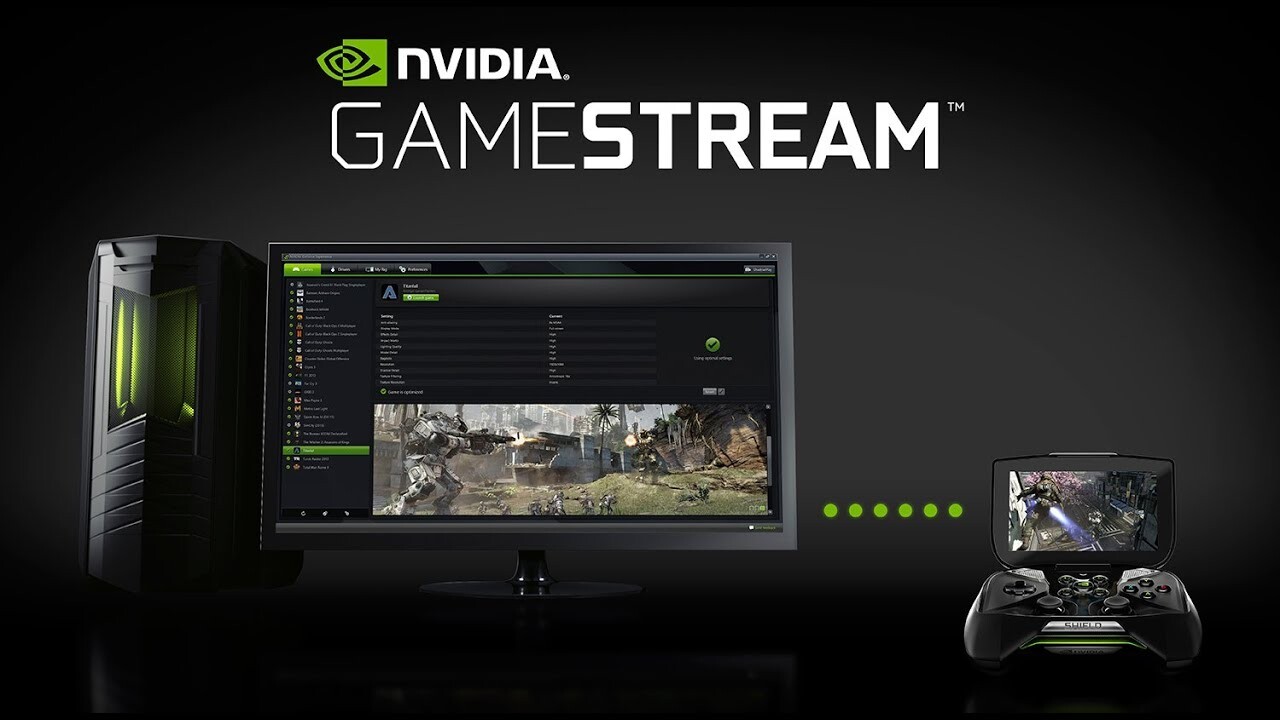
Come mid-February 2023, NVIDIA will be ending its GameStream feature on its Shield TV products. The GameStream feature has allowed owners of the Shield TV to stream games from their PC to their Shield TV. It might not have been the flagship feature of the Shield TV, but it has been popular enough that the cancellation has caused quite some stir on the internet. NVIDIA didn't provide any reason as to why the company is ending the GameStream feature, but one could potentially imagine that the company wants to push its customers to use its GeForce NOW paid streaming service instead.
However, NVIDIA does suggest that users could use Steam Link instead, to stream games from their PC to the Shield TV. That said, this would limit users to games found on Steam, which doesn't seem like a great compromise. For those that stream their games, NVIDIA Share is compatible with Steam Link, so there shouldn't be any problem continuing to stream games when playing on the Shield TV.
Source:
NVIDIA
However, NVIDIA does suggest that users could use Steam Link instead, to stream games from their PC to the Shield TV. That said, this would limit users to games found on Steam, which doesn't seem like a great compromise. For those that stream their games, NVIDIA Share is compatible with Steam Link, so there shouldn't be any problem continuing to stream games when playing on the Shield TV.
139 Comments on NVIDIA is Ending GameStream Feature for its Shield TV Products
Happy new year!
Cloud is the future and cassette deck users can't do anything about it.
Adapt or take your place near the dinosaur fossils at the museum.
In maximum ten years time, local gaming will be remembered in YouTube nostalgia videos.
All true and correct
If guys like you would be spreading "the good word" of technology we would still be hitting each others heads with clubs in caves in 2050
Are you laughing at the possibility that you could reason out your argument or are you expecting to have a bad year? Either way :(
It’s crazy that you still think you’re arguing something with me — do you know what the “context” of your dismissing the “validity” of other people’s argument is? Because you seem to agree with all of those claims being made, doubling-down on their validity, even while you call them “incorrect.”Can you share some links about this? Everything I’ve read has shown PC gaming sales going down steadily over the past decade, while consoles have increased and mobile gaming is booking. Sure, there was the 2020 bump, but every 2022 quarter and annual report coming from manufacturers predicts a downturn.
Meanwhile, cloud gaming is growing yoy, with Netflix and EA considering joining the market. Sure, stadia failed, but that was easy to predict (Google investing in new tech as proof of concept and then abandoning it like they are wont to do and expecting devs to port games to Linux).
Jon Peddie a few weeks ago: displaydaily.com/how-far-will-legacy-take-the-pc-industry/
newzoo.com/insights/articles/cloud-gaming-revenues-to-hit-2-4-billion-in-2022-up-74-year-on-year-revenues-will-triple-by-2025
www.ft.com/content/da3f585e-2aa6-4c43-a037-47b066985ef2
www.marketsandmarkets.com/Market-Reports/cloud-gaming-market-62740366.html
www.alliedmarketresearch.com/cloud-gaming-market/amp
www.persistencemarketresearch.com/market-research/cloud-gaming-market.asp
www.spglobal.com/marketintelligence/en/news-insights/research/cloud-gaming-forecast-to-grow-market-share-through-2026
More, GeForce Now appears to be doing fine?
www.pcmag.com/news/nvidias-geforce-now-game-streaming-service-tops-20-million-users
www.fool.com/investing/2022/02/08/nvidia-position-nascent-market-strong-growth/
www.grandviewresearch.com/industry-analysis/cloud-gaming-market
man, you really are out of this world.
stadia was very poor in performance in quality/performance. also google is know for discontinuing things.
sure geforce now is doing poor, nobody wants to pay a subscription to get locked into a limited ecosystem. licensing is the issue, not quality.
as soon as they joing forces, say goodbye to local gaming.
As a buyer of a consumer product such as a game, you're buying digital game licenses. I own these licenses, offered to me through a digital distribution service. The goods are paid for, and must be distributed to me. This includes aftersales support, too.
Basically, GOG, Steam, Uplay and Origin and everything else that offers you a full game license, offers you a product as the license is an indefinite access when you sign the contract. They do NOT offer you a service to access this product, that service was already offered for free. You're buying games. They're yours. The distributor is just a middle man that must uphold a contract in two directions: to keep providing the access to your product (or: deliver it to you, so you can use it as it was sold to you in the contract), and to distribute the money of that paid license minus commission to the publisher/dev of the game. As a customer it isn't my problem some services want me to keep logging in. That's their construct. I just want the game I paid for.
The interesting bit here about GoG: they are the only service, and to a minor degree, Steam as well, that are prepared for trouble. If they sink, they can distribute the last known version of their GoG products (installers) to each customer and close up shop. Contracts fulfilled. It will be an interesting court case (class action for sure) if Steam goes tits up and how those millions of licenses are going to be distributed at that point. Valve's TOS won't hold, for sure; even just by the sheer numbers involved and the backlash in society, some settlement will happen - imagine if it didn't: every other service provider of similar nature would instantly be in danger, as would all connected publishers/devs.
Imagine if it worked any other way... even your energy contract is a subscription service, much like your internet indeed. Where do you stop? You're a person with lost principles as much as anyone else here, we all use connected services. The problem isn't in the connected services, as long as you as a citizen or customer have fair rights in that system, and certain guarantees. That is why you have contracts and basic legalese.
Now, with cloud services, the games aren't the product. The cloud service is the product. So now you're buying temporary access to whatever is behind the gate. You don't control anything other than your login and password, and even that is subject to change if necessary for whatever reason. Guarantees? Zero; they can refund you your last sub period and close the whole thing down tomorrow.Crypto was also going to change how we pay for our stuff, with smart contracts, with PoS, at last, after many years of not doing it.
VR is going to rise above the niche, this year, really!
Meanwhile, its going places at the cost of nothing. The 'gaming is going X' crowds are fed by marketing, not realism. Gaming never went anywhere since 1986. It just got bigger. Crowds move around between devices and popular game types, etc. Only very rarely does something die completely; we have a resurgence of single player oriented stuff now, after a decade of multiplayer focus, for example.
All of this supposed 'disruptive' stuff is tech-startup fantasy forever in beta. What's not? A full, released game. You install it, you run it, it lasts. Some games get sequels, people buy sequels. Some games are offered as a service like an MMO, people play the MMO. But if the deal looks bad, people are just as keen to move on... Cloud deals, look terribad unless they offer full games at heavily discounted subscriptions, and guess what, if you look at Netflix, you know that stuff can't last. That service has shown to 'require' yearly sub cost increases that exceed inflation YoY, for some reason, despite market dominance. That on its own proves the point: its going nowhere. It will saturate part of its market, and it will cap out and exist alongside the myriad of other ways to access entertainment.
PC gaming is a stable factor for the simple fact everything originates from it. Creators work on PCs. It'll never die. The modding scene is a perfect example. 'Paid modding' was tried and is still being tried, some modders do get their donations and light payments, but the amount of free mods heavily outnumber the paid ones. People are just like that and the PC enables them to get their 15 minutes of fame. That's enough, alongside the joy of creating stuff in communities. Some, I dare say, many things, are just more important than money.
The internet is what it is, and will remain so, because of the low barrier to access. Cloud subbing is just a barrier with no benefits. Free stuff is what drives the internet. Paywalls kill its value, disintegrate communities, fragment playerbases, etc.Some facts for you, so you can get through the mist here. Cloud is much bigger in Asia and lower-income countries, a completely different setting from ours in the West.
Cloud gaming today in revenue is literally nothing compared to non cloud, note we are in 2023; the projection is... optimistic, these are based on past years of rampant growth, but we're in recession now or soon.
But what about gaming itself?
30 Billion revenue in the US in 2021. Barely 150M was cloud ;) Its like a fly on the windshield.
And guess what region & device is leading in growth of cloud gaming? Asia, and Mobile. What gamers do we find on mobile? Casuals.
Its important to distinguish target markets. If you're emigrating to China, by all means. I'm not.Estimates of growth (based on the 'free money' economy we've had, too!) versus reality checks: even if cloud grows to 45 billion annual globally in 2030, it still barely covers a quarter of the actual gaming market TODAY (~200 Billion).
Also, there is some strange math at work in the PC gamer space. It has been dying since the year 2000, but somehow, indie devving & E-sports & RT emerged from it and it still is at the forefront of gaming cutting edge, and there are still more players in games than ever historically... What magic is this!?
Probably the magic of the internet where you can find every reality you want to find ;) Just depends in what bubble you're searching. The combined realities state that people flock from one device to the next, as they get bored and need a change. People own multiple devices and have access to them, but don't necessarily spend money on them.
Oh and by the way:
And in case you can't figure it out, I might have a bridge in Brooklyn NYC to sell you...
Serve him with stats, he says all of them are lies and comes with one argument and sells it as "market trends"
@Vayra86 @AusWolf , that’s all good and well, but I’d suggest you get out of your bubbles, too — neither of you actually addressed the cloud gaming trends in a meaningful way. The high-end PC component market is shrinking, mobile and console gamers make up the majority of gamers and are increasing, even in the west, the three GPU manufacturers primarily focus on data center, AI, and compute... vayra argues that there’s no infinite growth then goes on to imply there is with an even if… Casual gamers are, by definition, the majority of gamers… etc
I too loathe the idea of streaming anything, but unlike crypto and VR it’s a proven model. Like other content services, there’ll always be a niche of high-end consumers who hold-out and continue to maintain their own libraries locally (looks at blu-ray and vinyl collections), but a niche is a niche.
It will exist alongside other forms of gaming, as there are tools for every job. What I'm saying here is much like my argument against the people who think RT is here today. It really isn't. It's an upcoming thing, sure. I don't disagree with that. But in its current form, yikes. The model is proven in what way? Streaming services have grown massively, but are currently crashing into walls. Netflix even admitted so recently. Competition on the market grows and with that comes the problem of fragmentation versus content quality and its cost.
We've seen many disruptive things the last years emerge and also die down. Our concept of what is 'proven' really isn't based on sound logic, but short term memory. It is driven by an overload of information we get to read of which only the lesser half is probably true, and the bigger half marketing. That is what marketing intends to achieve: self fulfilling prophecies. We are the economy and its progress. Subscription services over the years are certainly not a proven concept in the sense that they make you stay and that its providers survive. Think about magazines or newspapers. But with streamed services, its actually a whole lot worse: the model includes the idea that these are all-you-can-eat concepts... but the definition of 'all' is subject to change and not under your control. The service itself, is nothing. But you do devote your time and game saves to it.Market trends are stats that include the current numbers. Its nice to combine stats to get an idea of relative size, you should try it some time.
@Vayra86 With all respect, and genuinely appreciating the sentiments you express here, none of that is reason why things won’t change
Latency is analogous to the bitrate arguments everyone was making in the aughts about AV streaming. It’s still a problem, and yet…
Netflix is competing with itself and other streaming services. Where’d the movie theatres go? How come all of the major studios are now owned by three companies? Take a look at blu-ray sales. And that’s a wayyyyyy bigger market than gaming
Magazines and newspapers… Where have you been the past thirty years? Those that survived are all online, have also been consolidated, and rely on subscription models. Even libraries are moving online.
This argument is so weird to me. People are talking about Windows as SAAS (like, the actual OS), office and Adobe already are, most businesses and universities and corporations and yea, even software developers and content creators, are moving to thin-clients running off of a shared server… and yet somehow “over my dead body” is going to win, in a world where most gamers are on consoles and mobile devices?
Just like there are still paper newspapers and magazines, that still have their market...
I don't need to address cloud gaming trends. I don't care that it exists. I don't even care if it gains momentum, as long as local gaming is safe, which it is. The two can coexist, you know.
GeForce Now just came out of beta a year ago. Game Pass is still in beta. Still, both are growing their audience by huge margins yoy.
It took well over a decade to for Netflix to abandon it’s physical business, while dozens of streaming startups tried and failed to shift the market, building the market for them, and now they’re more profitable than all but Disney, who has also moved to a streaming model and consolidated most of its competition under its banner.
I’m not saying it’s going to happen next year, or even in 10 (a lot of hurdles to overcome), just that the cloud is where all tech is attempting to move.I mean, barely. The NYT and WaPo are the two biggest distributors in the US. Both are hemorrhaging money to keep print alive, and one is totally dependent on online subscriptions and micro-services (pay extra for NYT cooking, magazines, etc) to continue its print endeavors, dependent on a huge conglomerate, while the other depends on an independently wealthy billionaire benefactor. Both are behind paywalls, despite being the largest print outlets in the country, and have drastically increased the prices of their physical products.You're the only one who knows what that is… You’re just talking to yourself at this point. Sorry you couldn’t articulate your thoughts. :( I’m sure they were valid, even if incorrect ;)
his biased opinion is as relevant as trump these days.
if only the game industry cared about it...