Friday, April 4th 2025

NVIDIA GeForce RTX 5060 Ti 16 GB SKU Likely Launching at $499, According to Supply Chain Leak
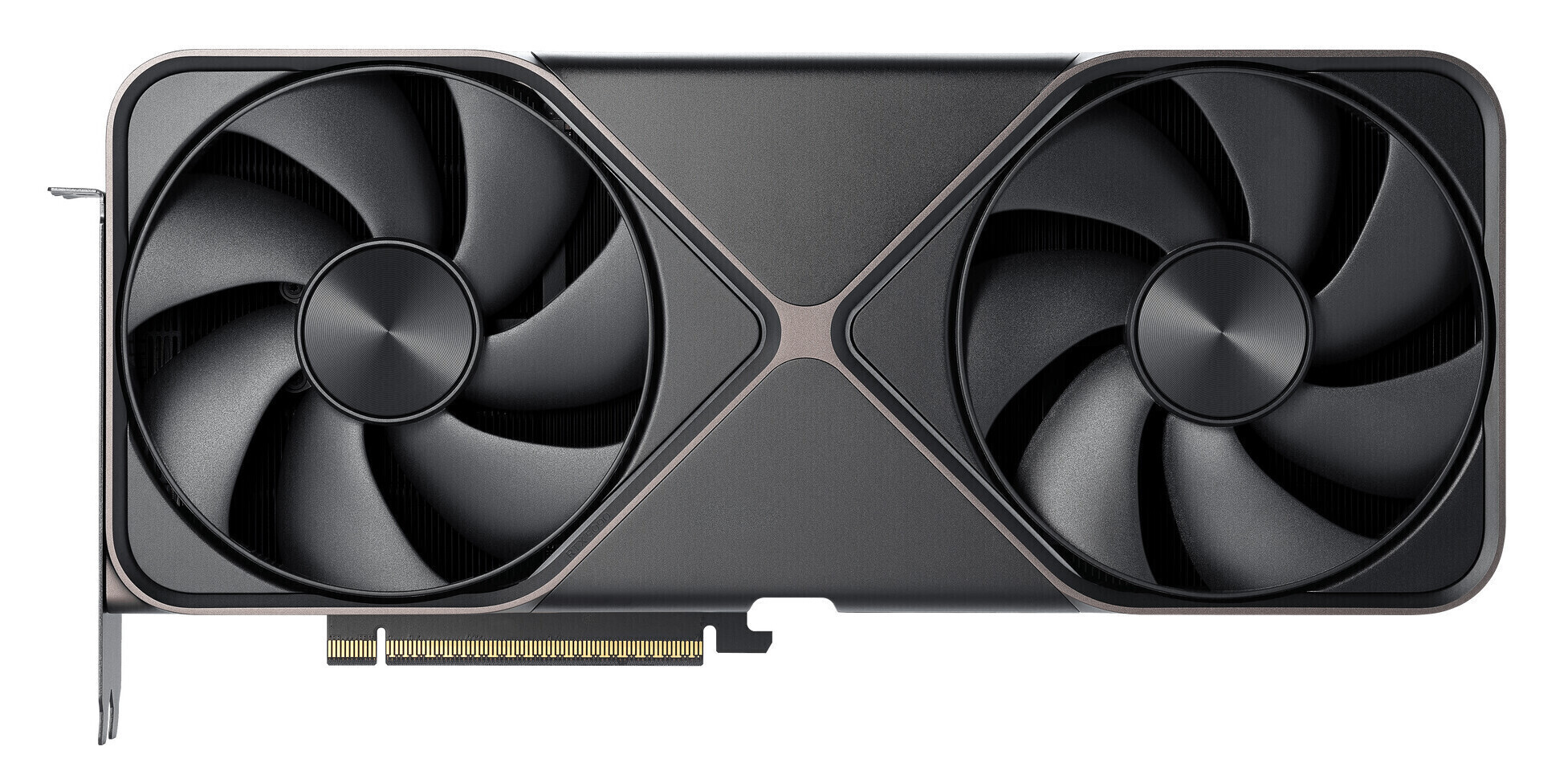
NVIDIA's unannounced GeForce RTX 5060 Ti 16 GB and 8 GB models are reportedly due for an official unveiling mid-way through this month; previous reports have suggested an April 16 retail launch. First leaked late last year, the existence of lower end "Blackwell" GPUs was "semi-officially" confirmed by system integrator specification sheets—two days ago, reportage pointed out another example. Inevitably, alleged launch pricing information has come to light as we close in on release time—courtesy of Board Channels; an inside track den of some repute. The "Expert No. 1" account has alluded to fresh Team Green rumors; they reckon that the company's incoming new model pricing will be "relatively aggressive."
Supply chain whispers indicate that NVIDIA will repeat its (previous-gen) MSRP guide policies, due to the GeForce RTX 5060 Ti cards offering "estimated similar performance" to GeForce RTX 4060 Ti options. Speculative guide price points of $499 and $399 are anticipated—according to industry moles—for the GeForce RTX 5060 Ti 16 GB and RTX 5060 Ti 8 GB SKUs (respectively). Expert No. 1 has tracked recent GeForce RTX 4060 Ti price cuts; intimating the clearing out of old-gen stock. Team Green's GeForce RTX 5060 design is reportedly a more distant prospect—slated for arrival next month—so supply chain leakers have not yet picked up on pre-release MSRP info.


Sources:
Board Channels, VideoCardz, Notebookcheck
Supply chain whispers indicate that NVIDIA will repeat its (previous-gen) MSRP guide policies, due to the GeForce RTX 5060 Ti cards offering "estimated similar performance" to GeForce RTX 4060 Ti options. Speculative guide price points of $499 and $399 are anticipated—according to industry moles—for the GeForce RTX 5060 Ti 16 GB and RTX 5060 Ti 8 GB SKUs (respectively). Expert No. 1 has tracked recent GeForce RTX 4060 Ti price cuts; intimating the clearing out of old-gen stock. Team Green's GeForce RTX 5060 design is reportedly a more distant prospect—slated for arrival next month—so supply chain leakers have not yet picked up on pre-release MSRP info.


182 Comments on NVIDIA GeForce RTX 5060 Ti 16 GB SKU Likely Launching at $499, According to Supply Chain Leak
A 4080 or 5080 at the same 80ish% cut of the flagship die would've been phenomenal. Ada and now Blackwell could've both had nearly Pascal-tier 80 class cards. Instead we get half the halo product at half the halo product's price, and people seem to just be okay with that.
Tax or $4000 by getting scalped lol.
Nvidia are making the x90 GPUs almost impossible to get for most people whereas the 1080 Ti was almost a TITAN (slightly lower core count and just 1GB VRAM less), and was very accessible comparatively... The 5080 having half of the 5090 die for $1000 is an absolute joke too.
But Nvidia has always done so shady stuff, like with Kepler for example they sold the GTX 680 for a pretty hefty price even though it was hugely cut:
GTX 680: 1536 CUDA Cores + 256-bit bus and 4Gbps chips : $500 (released March 2012)
GTX 780: 2304 CUDA Cores + 384-bit bus and 6Gbps chips : $650 (released May 2013)
GTX 780 Ti: 2880 CUDA Cores + 384-bit bus and 7Gbps chips : $700 (released Nov 2013)
$696 USD for a 8 SM 294mm2 full die. (GK100 was never released till 700 series, had to be revised as GK110)
$900 USD for a 12 SM 561mm2 die cut down to 80% 12/15 SM.
$960 USD for a 15 SM 561mm2 full die.
Only difference now is that EE cost more, along with requiring a higher PCB layer count for signal integrity (also adds $).
780TI peaked out at 250W and used high low side VRM components. Modern 5080 is like 15 count SPS and draws 360W (Spikes to 500W 1ms per igor's mesurments) due to dense and significantly higher SM counts.They could prob sell the FE 5080 for like $750, but they've always pushed margins as you can see with older cards. I'll agree that current AIB pricing is absolutely ridiculous.
I don't think 5080 @ MSRP is too far off from legacy NVIDIA, all things considered..
I mean, they were selling a 314mm2 full die 20 SM GTX1080 in 2016 for $600 ($800 adjusted) and no one cared because performance shot up significantly.
TSMC 4N seems to favor larger dies for SM ratio. The problem is, Nvidia also wants to make money and move more cards. Yield on a 750mm2 flagship is gonna be much lower.
I get it.. you want top end performance for a lower price.. Market shifted. Isn't 2000-2017 anymore.
Nobody would complain about GTX 10 GPUs because they had amazing Performance, Efficiency and Price! The price/performance ratio was insane compared to what we have today... Mostly when all modern games struggle to run properly with UE5 and with Heavy RT or PT. And back then we didn't even need DLSS nor Frame Generation!
And yes they could have made the same GPUs with the same pricing on TSMC 3nm but they chose not to because they want and love their huge margins (and their investors too..).
20 series was actually quite shitty per SM increment generationally.. CUDA was halved or something like that.. 30 series was a bit better (went back to GTX10 CUDA layout), but SM count was skewed in a way that shifted an entire product stack. These two generations are responsible for why things are the way they are today. You can also blame GPU mining.
Theres also misconception here. If the die is the same size as a previous generation (ie 400mm2), the wafer metics are similar until the point of yield rate. You get more dies on the lower end when you're able to shrink stuff.
TSMC 12nm and 5nm are both 300mm or 12inch wafers. The dies are legitimately more expensive.
For example: 4060TI uses a 36 SM 188mm2 die with 2 SM disabled (34 enabled). Previous generation full enabled GA106 was 30 SM @ 276mm2 and GA107 was 20 SM @ 200mm2. I do think you're looking at the whole concept backwards, hence why we disagree a bit.
I agree on the notion of competition. NVIDIA has abused a lead for too long.
Edit: To clarify.. There are generational performance uplifts per SM count with 40/50 series. but they're much smaller than the GTX680 to GTX1080 run.
GTX1080 with full 20 SM performed super close to a GTX2060 with 30 SM (disabled from 36)... This generation was dictated by overly large TSMC 12 dies.
30 series was more linear to 10 series. IE: 3060 12GB with 28 SM being closer to a 1080 TI, also 28 SM, but on a flagship die.. Same -2SM disabled from 30 full. 276mm2 (Samsung 8) vs 471mm2 (TSMC 16). 3060 has half the TMUs, little over half the rops, and around 75% of potential bandwidth, which is going to reflect how they perform side by side.
You can say NVIDIA regressed in a way, at least on raster/SM level via 20/30. they used die shrinks and SM increments as a bandaid. (increased TDP).
This is also the reason AMD looks better today with the 9070's. They're more or less matching NVIDIA at SM/CU and thermal package via monolithic die. I haven't seen competition like this since HD58XX series, where AMD/ATI had a 300mm2 competing vs a flagship 500mm2 fermi.
AMD unfortunately has no plans for a true GB205 (5070) competitor.. which means they're just gonna cut the larger 357mm2 Navi48 for a 12GB lower CU count model. The smaller NAVI is basically half the size (<200mm2).. 32 CU/2048 SP. Competition for 5060 TI, but slightly worse just looking at the bigger variations.
tl;dr. I still dont think MSRPs are too far off from legacy... especially considering modern EE design. It's just NVIDIA doing NVIDIA things. AMD competing will drive price lower. (ignoring inflation and global econ.)