Monday, July 21st 2025
AMD's Upcoming UDNA / RDNA 5 GPU Could Feature 96 CUs and 384-bit Memory Bus

According to one of the most reliable AMD leakers, Kepler_L2, AMD's upcoming UDNA (or RDNA 5) GPU generation will reintroduce higher-end GPU configurations with up to 96 Compute Units (CUs) in the top-end Navi 5X SKU, paired with a 384-bit bus for memory. We still don't know what type of memory AMD will ultimately use, but an early assumption could be that GDDR7 is on the table. When it comes to the middle of the stack, AMD plans a GPU with 64 CUs and a 256-bit memory bus, along with various variations of CUs and memory capacities around that. For the entry-level models, AMD could deliver a 32 CU configuration paired with a 128-bit memory bus. So far, memory capacities are unknown and may be subject to change as AMD finalizes its GPU lineup.

After the RDNA 4 generation, which left AMD without a top-end contender, fighting for the middle-end market share, a UDNA / RDNA 5 will be a welcome addition. We are looking forward to seeing what UDNA design is capable of and what microarchitectural changes AMD has designed. Mass production of these GPUs is expected in Q2 2026, so availability is anticipated in the second half of 2026. A clearer picture of the exact memory capacity and type will emerge as we approach launch.
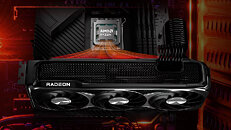
Source: Kepler_L2
Add your own comment

201 Comments on AMD's Upcoming UDNA / RDNA 5 GPU Could Feature 96 CUs and 384-bit Memory Bus

#126
john_
rjc34The Radeon division was in a much stronger spot 15 years ago compared to the CPU division. It was Nvidia's Maxwell that really started turning the screws on them, and then Pascal pretty much wiped them out from mid/high-end relevance. Nvidia's product was just better. Significantly more power efficient, more stable drivers, and priced reasonably well. And just for the sake of mentioning it, back at that point I was still a pretty hardcore team red fanboy, arguing with people about why the R9-290 was a no-brainer compared to the GTX 970.

One thing that often doesn't get brought up in these kinds of discussions though it's how specifically relevant all of those factors are for major OEMs looking to sign supply agreements for dGPUs. If you're a Dell, HP, Lenovo, etc, lower power consumption means cost savings on power supplies and cooling, more stable drivers means lower tech support costs. If you're looking at cards like the 3050 and wondering how it has such a massive install-base lead over something like the 6600, a lot of that is going to be down to OEM choices, because that's where the bulk of those cards are going.
They were, but Nvidia, even 15+ years ago had much stronger marketing and better business model. AMD wasn't doing much, even when they where at 40% market share. Their HD 4000 series was great and their HD 5000 series had an advantage over Fermi. But Nvidia was doing a much better job in promoting it's hardware. They convinced tech press and gamers that PhysX was an important feature and more importantly developers to not just use PhysX, but also make the visual experience much worst without it. They had managed to convince developers to develop and optimize their games on Nvidia hardware, probably because AMD didn't wanted to spent extra money to promote it's GPUs, something to be expected from a company that was still considering themselves a CPU company and probably they still do today, with the exception of Instinct line of cards. On the contrary Nvidia was spending money on developers and also helping them to not just integrate it's proprietary techs, but make them the core of their programming code, by using stuff like Gameworks Libraries. Nvidia was prioritizing software over hardware and that was a huge advantage for them, even back then. AMD on the other hand had almost always better hardware, but was waiting from others to take advantage of it. By working with developers and promoting proprietary techs, by locking PhysX and CUDA , even punishing their own customers who dared to use an AMD card as primary and set the Nvidia card as secondary, by probably buying a more favorable coverage from tech press while AMD was having all those financial problems and still remaining focused on the CPU market, they managed to not only gain market share, but also make AMD cards look inferior and also create all that drama about "AMD bad drivers". R9 290/X cards where mostly refreshes, a result of AMD's financial problems. It wasn't the big jump that someone should expect after the excellent HD 7970. And Nvidia had the clear upper hand even from that period, that's why you couldn't convince others that the R9 290 was better, that's why Nvidia's GTX 970 being a 3.5GB+0.5GB card didn't affected Nvidia's reputation or success in the market. Then another failed refresh in the form of R9 390, then the Fury that was a rushed product trying to take advantage of HBM, the Vega, Polaris. AMD didn't had money for marketing, they definitely didn't had money to pay the press and developers to be more friendly to them, fortunately they had won consoles that helped them with games being optimized on AMD hardware and having much less bugs when released and running on AMD hardware. Pascal was just a huge step for Nvidia, Nvidia was accelerating, AMD couldn't follow, was still focusing on CPUs and with Zen released they had even more reasons to be focusing on CPUs.

As for OEMs, they go with the strong brand that can warranty supply and sales. Intel had the fabs and the name, so AMD was winning in the CPU DIY market, but not the OEMs, Nvidia had the advantage of being the company with the strongest, more premium name in the market, proprietary stuff that tech press was promoting and eventually, with Pascal, clearly the faster hardware. Not always, not in every category, but still they where the premium name that was sitting on the top of the charts. OEMs want premium stickers on their boxes. That's why they are trying so much with Qualcomm. Qualcomm is a premium brand.

But my post you quoted was targeting the audience that for 20+ years plays the same tune. "Please AMD, create good enough and cheap enough hardware so I can spent less when buying hardware from your competitors". And people where always finding excuses to not chose AMD hardware. You see, AMD hardware was considered always for "the poor". We have Threadrippers out there and many still see AMD as the budget option. It is engraved in their minds.
Your argument is basically boiling down to "everyone else seems to be an idiot and I'm the only one seeing clearly here". You treat yourself as thinking rationally about the situation, but judge everyone who comes to a different conclusion as being irrational. Once you re-frame it to see everyone as trying to act in their own rational self interest to the best of their abilities, you might be surprised at how much better all the pieces suddenly seem to fit in.
You are the one who makes that mistake here, painting an image of me like I am an fanatic idiot who thinks he is the only sentient being on the planet. That's how you describe me here. The fact that you were a red fan 10 years ago and then you "seen the light", doesn't make you objective and me blind. You seen the light 10 years ago, congrats. And because you seen the light and I haven't, in your mind, you are doing here exactly what you are accusing me.

You are just missing my point here, because you are biased and you don't care understanding what I wrote in the post you quoted. 10 years ago you might understood. Today, you have seen the light and the others who still haven't, and insist on "coming to a different conclusion are (obviously) being irrational".
Posted on Reply
#127
JustBenching
rjc34The Radeon division was in a much stronger spot 15 years ago compared to the CPU division. It was Nvidia's Maxwell that really started turning the screws on them, and then Pascal pretty much wiped them out from mid/high-end relevance. Nvidia's product was just better. Significantly more power efficient, more stable drivers, and priced reasonably well. And just for the sake of mentioning it, back at that point I was still a pretty hardcore team red fanboy, arguing with people about why the R9-290 was a no-brainer compared to the GTX 970.

One thing that often doesn't get brought up in these kinds of discussions though it's how specifically relevant all of those factors are for major OEMs looking to sign supply agreements for dGPUs. If you're a Dell, HP, Lenovo, etc, lower power consumption means cost savings on power supplies and cooling, more stable drivers means lower tech support costs. If you're looking at cards like the 3050 and wondering how it has such a massive install-base lead over something like the 6600, a lot of that is going to be down to OEM choices, because that's where the bulk of those cards are going.

Your argument is basically boiling down to "everyone else seems to be an idiot and I'm the only one seeing clearly here". You treat yourself as thinking rationally about the situation, but judge everyone who comes to a different conclusion as being irrational. Once you re-frame it to see everyone as trying to act in their own rational self interest to the best of their abilities, you might be surprised at how much better all the pieces suddenly seem to fit in.
Are you new here? Its nvidias fault amd gpus have been mediocre for the past 15 years.

I honestly think people just want nvidia to lower prices so they can buy amd for cheaper.
Posted on Reply
#128
GodisanAtheist
AMD's biggest weakness and NV's biggest strength now is inconsistent execution.

You know you're getting a top to bottom stack from NV every gen, and that the performance ceiling is moving forward every gen (in the case of Blackwell, the cost of that additional performance was an absolutely Titanic 750mm2 die).

AMD waxes and wanes. They have good gens and placeholder gens, you never really know what you're getting out of them. We all thought AMD was back after the surprise of RDNA2, but then they stumbled with RDNA3 and fell with RDNA4 (in terms of pushing the performance boundary).

Will they be back with RDNA5/UDNA? Is it going to be another placeholder? Who knows. But we all know Nvidia is going to bring the heat with Rubin.

So often times AMD users don't really have an option to upgrade to anyone else except NV. When NV doesn't give them a bad experience, they never have a reason to go back to AMD. If you bought a 7900xtx, AMD doesn't really have an upgrade path for you right now. It's been this way for a long time and it shows in AMD's market share.

It's not the only reason, but it's a big one.
Posted on Reply
#129
Colddecked
JustBenchingAre you new here? Its nvidias fault amd gpus have been mediocre for the past 15 years.

I honestly think people just want nvidia to lower prices so they can buy amd for cheaper.
Pretty sure they want nvidia to lower prices so they can buy more nvidia lol
Posted on Reply
#130
john_
GodisanAtheistAMD's biggest weakness and NV's biggest strength now is inconsistent execution.

You know you're getting a top to bottom stack from NV every gen, and that the performance ceiling is moving forward every gen (in the case of Blackwell, the cost of that additional performance was an absolutely Titanic 750mm2 die).

AMD waxes and wanes. They have good gens and placeholder gens, you never really know what you're getting out of them. We all thought AMD was back after the surprise of RDNA2, but then they stumbled with RDNA3 and fell with RDNA4 (in terms of pushing the performance boundary).

Will they be back with RDNA5/UDNA? Is it going to be another placeholder? Who knows. But we all know Nvidia is going to bring the heat with Rubin.

So often times AMD users don't really have an option to upgrade to anyone else except NV. When NV doesn't give them a bad experience, they never have a reason to go back to AMD. If you bought a 7900xtx, AMD doesn't really have an upgrade path for you right now. It's been this way for a long time and it shows in AMD's market share.

It's not the only reason, but it's a big one.
Both companies are targeting AI with their newer architectures. Even in CPUs, AMD's 9000 over 7000 CPUs, seems also like a refresh in desktops, but probably Zen 5 vs Zen 4 is a different case in servers.
Nvidia is enjoying a performance advantage, so they can do these transitions and still own the gaming market, even when newer products don't have real performance advantage, but mostly a feature advantage. I am talking about the sub $1000 market where the biggest difference from 3000 to 4000 is that we get FG and from 4000 to 5000 we get MFG. Nvidia also enjoys a 90% market share meaning even if they release something that is mostly a refresh, a placeholder, they will again sell greatly. That also affects AMD's decisions about "hi end". If they know that the $1000 target group, doesn't pay for an AMD product, they will direct their resources elsewhere. Of course they are making mistakes, they are not perfect. When RX 7000 was out and i was screaming that RT performance is important, at least for marketing reasons and that 7000 will fail, I was called "Nvidia fanboy". We know how it gone for the 7000 series, even when RX 7900XTX is considered a beast and we all see how RX 9070 got positive reception mostly thanks to it's RT performance improvements.
Posted on Reply
#131
JustBenching
ColddeckedPretty sure they want nvidia to lower prices so they can buy more nvidia lol
Well yeah, who doesn't? Who would rather pay more money if they could pay less? :D
Posted on Reply
#132
olymind1
GodisanAtheistWill they be back with RDNA5/UDNA? Is it going to be another placeholder? Who knows. But we all know Nvidia is going to bring the heat with Rubin.
Does it really matter? I mean i understand what you're saying, but if next gen consoles will use a midrange tier RDNA5/UDNA between xx60 XT and xx70, buying that tier will be enough for that console generation, unless you/we want to go for higher resolution and/or higher fps.
Posted on Reply
#133
ARF
rjc34The Radeon division was in a much stronger spot 15 years ago compared to the CPU division.
No one at AMD knows that there is more money in the GPU market, not in the CPU market.
GodisanAtheistAMD's biggest weakness and NV's biggest strength now is inconsistent execution.
They simply stopped using modern lithography, RX 7600 is a 6nm turd in the age when phones already use 3nm chips and are on the road to 2nm chips.
They stopped making pipe cleaners - they lost the initiative, market presence, and slowly but surely are on the road to exiting the market altogether.
Posted on Reply
#134
john_
ARFNo one at AMD knows that there is more money in the GPU market, not in the CPU market.
South Korean news agency Newsis reported Monday that AMD increased the price of its Instinct MI350 AI accelerator from $15,000 to $25,000. Newsis cited an analyst report from investment bank HSBC.
AMD's MI350 can now compete with Nvidia's Blackwell B200 in the market," HSBC said, according to the Newsis report. "AMD's AI chip sales next year will be significantly higher than the previous estimate of $9.6 billion, at $15.1 billion."
AMD Stock Rises As Firm Raises AI Chip Price | Investor's Business Daily
Posted on Reply
#136
Denver
calhauMost games are well optimised for both, Alan Wake 2 is used by AMD fanboys because it's one of the games that most benefit AMD, I used Elden Ring as a much more popular game that benefits Nvidia same as you did, most games will not exhibit this delta in performance over average. Individual use case is what matters for the individual, if you are looking at overall performance you can't discount anything (personally I would discount games like cs2 but if you start picking and choosing to much which games are the ones that should be tested for average pref you might regret it later, as new games come out), that is bias, for your personal choice it's important, for others it's irrelevant.

3K GPUs are not relevant to AMD, unless you think that a hypothetical next gen GPU, being slower at a very favourable game benchmark (that you chose and didn't bother to compare to the 5090 results) compared to this gen 2400€ card is relevant and a good thing.

Personally as I'm interested in buying Radeon cards so I will criticise AMD for being just a crappy Nvidia, instead of the company that gave better products with better support and price than the competition. And please don't come with the "it didn't work for AMD", they used to sell 1/4 -1/5 of the cards Nvidia sold (in Europe more than a third) last time they did this, now not 1/11.


Nope. At launch, Alan Wake 2 ran slightly better on Nvidia, but AMD optimized the game over time to boost performance further. Nvidia didn’t do the same since it had already optimized it. This title is often used to showcase Nvidia' tech. So, clearly a polished game for both, you pointed out a buggy light game that even the 7800XT runs at 4k @ 60fps.

My post is technical and relatively neutral; yours is inflammatory, emotional, and baseless. Do you even understand the difference between spending $500 million and $50 million to develop an architecture? Are AMD’s margins absurd? No, not in products aimed at ordinary consumers. If you have no knowledge to back your opinion, then don’t bother sharing it.
Posted on Reply
#137
JustBenching
Alan wake 2 is nvidia sponsored. Nvidia sponsored games work great on AMD gpus (as is the case with eg. Cyberpunk as well etc.), nvidia makes sure that devs don't do any silly stuff like making the game run bad on their competitors. Hope every company does the same but yeah, tough luck
Posted on Reply
#138
MarkoB88
50% more CUs my ass...

Lets see midrange card should have 256 bit bus and 64 CUs (4096 cores) RX 9070 XT have same 4096 cores so its the same shit, don't think that card with 384 bit bus and 96 CUs will cost as 9070 XT .

So AMD is giving SAME number of GPU cores!!!
Posted on Reply
#139
alwayssts
MarkoB8850% more CUs my ass...

Lets see midrange card should have 256 bit bus and 64 CUs (4096 cores) RX 9070 XT have same 4096 cores so its the same shit, don't think that card with 384 bit bus and 96 CUs will cost as 9070 XT .

So AMD is giving SAME number of GPU cores!!!
In all honesty, the word has long been 144CU for the high-end. First for the cancelled high-end RDNA4, then for RDNA5/UDNA. This has been out there for a very long time (over a year?).

It is implied the reality is something like:

128-bit/48 CUs
192-bit/72 CUs
256-bit/96 CUs
384-bit/144 CUs
512-bit/192 CUs

MLID has covered the 192-bit part (Magnus for Xbox). TPU is covering the 256-bit part. The 384-bit part is implied by MLID (which I think he perhaps got incomplete info) as cut-down 512-bit (idk).

If you piece together everything from the different sources you can kind of make some reasonable assumptions.

Perhaps the PS portable the same as a 64-bit part, the PS6 the 128-bit part, and the xbox the 192-bit part? Granted, I'd like to see Sony use the same part as MS for their television console.

Perhaps the 256-bit part similar to a 4090, 384-bit 5090, and 512-bit 6090? Just a guesstimate, and probably not dissimilar to what nVIDIA may do, although perhaps nvidia more units/lower clock.
Power efficiency vs lower cost...no different than almost any other generation AFAICT.
Posted on Reply
#140
medi01
john_AMD doesn't need 150-200 CUs. 9070XT is performing more or less like a 7900XTX based on TPUs ranking(9070XT 6% slower). So a 9000 series with 96 CUs will be probably between 5080 and 4090. With 128 CUs it will be at 5090 level of performance.
Yep. And AMD is "somehow" gaining GPU market share on steam.

Was at 15.9% in Jan 2024, 17.8% now.

olymind1800€ overpriced monstrums
Where can I buy "800 Euro overpriced monstrum" by AMD?

If such card does exist in your universe (it does not in mine, the 9070XT costs 640 Euro in Germany and that includes 19% VAT and what not), what is the price on the similarly performant card by The Filthy Green?
Posted on Reply
#141
john_
medi01Yep. And AMD is "somehow" gaining GPU market share on steam.
We don't see AMD discreet GPUs in the chart of models. Almost all models are Nvidia.
AMD gaining in GPU Steam survey and Intel having an almost 8%, but with Nvidia dominating the Steam charts at the same time, means that those percentages are AMD APUs and Intel iGPUs mostly. AMD and Intel needs to start selling more discreet GPUs. But for this to happen, people and tech press need to stop worshiping everything Nvidia.
Posted on Reply
#142
olymind1
medi01Where can I buy "800 Euro overpriced monstrum" by AMD?

If such card does exist in your universe (it does not in mine, the 9070XT costs 640 Euro in Germany and that includes 19% VAT and what not), what is the price on the similarly performant card by The Filthy Green?
I dont need to go to an another universe, only look at webshop prices in my country: SAPPHIRE Radeon RX 9070 XT NITRO+ 16GB GDDR6 256bit (11348-01-20G) costs 799€.
ASRock Radeon RX 9070 XT Steel Legend 16GB GDDR6 256bit (RX9070XT SL 16G) is cheapest i can find and it is "only" 730€.

But 730€ or even 640€ is very expensive for a midrange card. And yes, i'm not going to buy NV because they're also expensive and/or slow-ish, the 5070 has only 12 GB vram and starts at 550€, or 5060 TI 16 GB which is expensive, only pcie x8 and slow for what it is and what it costs (450€).
Posted on Reply
#143
medi01
olymind1I dont need to go to an another universe, only
only cherry pick outliers.

That is, convenient.

geizhals.de/?fs=9070xt

I did not know you meant "the highest price I find for GPU" though. Mea culpa.

As for the "too expansive" in general:
1) Inflation is a thing everywhere
2) TSMC keeps posting record profit after record profit. Guess where that is comnig from
john_We don't see AMD discreet GPUs in the chart of models.
I have missed the bit when you explain where does the gain come from.
About .5% is from Steam Deck.
Only 1.4% left to be explained.

And if AMD is somehow getting bigger market share on the laptop front, a place where OEMs are very obviously strongarmed by blue-green, I might have missed that.
Posted on Reply
#144
john_
medi01And if AMD is somehow getting bigger market share on the laptop front, a place where OEMs are very obviously strongarmed by blue-green, I might have missed that.
I think they are. When 6000 series APUs where introduced by AMD, I was looking for a laptop. Ended up with a 5000 series because it was too damn difficult to find ONE model at a reasonable price even months after the 6000 announcement. In fact it was difficult to even find enough models to choose. Today it seems much easier to find AMD laptops with newer APUs in them, instead of older that AMD probably sells with huge discount. It seems that OEMs are doing more serious business with AMD today. Just had a look in a price comparison site here in Greece and there are at least 79 models with AMD AI 300 APU in it. That's a huge change.
Posted on Reply
#145
medi01
john_It seems that OEMs are doing more serious business with AMD today.
And this "today" has started early enough for Steam to show 1.4% on top of deck's 0.5% growth?

And 9000 series with FSR4 and RT gimmick boost has nothing to do with it?

Why do you think so?
Posted on Reply
#146
john_
medi01And this "today" has started early enough for Steam to show 1.4% on top of deck's 0.5% growth?

And 9000 series with FSR4 and RT gimmick boost has nothing to do with it?

Why do you think so?
Because when OEMs or people have to choose their GPU, they go Nvidia. Bigger name, better marketing, better publicity, better advertised features and halo products. When you have the fastest GPUs in the market, people will chose your GPUs, even the low end, to get a little bit of that magic. People see RTX 5090 killing in benchmarks and then pay close to $300 to buy an RTX 5050 to get a little bit of that RTX magic. Some of them might learn that it was a stupid choice next to a $300 RX 9060.

But when going CPU/APU, especially in laptops, it's mostly AMD today. Intel will sell, because of fab capacity and OEMs need Intel's fab capacity, but mostly for that reason today. Intel's financials are so bad that I doubt they can offer big discounts anymore. Especially when they are not the makers of the CPUs, but have to pay TSMC for that. Also their name got trashed last year because of the 14th gen degradation problems and the subpar performance of ARL. On the contrary, all that good publicity that Ryzen gets thanks to X3D models (who ever thought the X3D idea, should get 100 million in bonus and a free house in Hawaii to enjoy the rest of their lines as a "thank you" from Lisa) helps AMD to sell all types of CPUs the same way RTX 5090 helps Nvidia to overprice and keep selling mid range mediocre models. Also Radeon does enjoy a much better name than Intel in GPUs, so that's also a marketing advantage that OEMs will happily take advantage of.
Posted on Reply
#147
medi01
john_Because when OEMs or people have to choose their GPU, they go Nvidia.
Why was there Strix on Radeon 6000 series and G15 on Radeon 6000 series, but then "suddenly" AMD GPU's evaporated.

As if that GPP thing came swinging.

Why is there no Strix version of 9070?
john_But when going CPU/APU, especially in laptops, it's mostly AMD today.
Yet somehow the best screens are still reserved to Intel/Filthy Green only.
Posted on Reply
#148
john_
medi01Why was there Strix on Radeon 6000 series and G15 on Radeon 6000 series, but then "suddenly" AMD GPU's evaporated.

As if that GPP thing came swinging.

Why is there no Strix version of 9070?


Yet somehow the best screens are still reserved to Intel/Filthy Green only.
Absolutely with you. Remember a few years back when OEMs where sabotaging their own laptops with single channel memory on AMD APUs?
ASUS is no better in GPUs than the old DELL in CPUs.
But things have changed at least the last 1-2 years in laptops. Things are much more balanced.
Posted on Reply
#149
medi01
john_But things have changed at least the last 1-2 years in laptops. Things are much more balanced.
Let's agree to disagree here, I guess.
In my POV things have changed:

First - for the better (3080 punching 6800M in high end setups, even though not all OEMs, and even though still with reservations and crippled)
Then - for the worst, almost complete AMD dGPU ban across the board, most OEMs still striking through premium features, such as superior screens, for AMD variant of the same laptop. (with notebookcheck wondering "oh, why is that", well, the answer is obvious, me thinks)
GodisanAtheistAMD's biggest weakness and NV's biggest strength now is inconsistent execution.

You know you're getting a top to bottom stack from NV every gen, and that the performance ceiling is moving forward every gen (in the case of Blackwell, the cost of that additional performance was an absolutely Titanic 750mm2 die).

AMD waxes and wanes.
Oh please.

Did ASUS "ban" Strix cards with AMD chips (the last one was with 6000 series) because they have a time machine and new 9000 series would not have cards meant for the less than 10% of the gamers?

Or is it that wonderful EPP thing in full swing, just covert?
Posted on Reply
#150
john_
medi01notebookcheck
Ah, love that site. Especially that guy who was pushing in the past Intel like he was working for them. I don't know if he still does it. With Intel's financials in ruins, probably some money flows had stopped. I was usually reading only Osthoff's reviews. Much more objective.
medi01Let's agree to disagree here, I guess.
AMD's latest financials do point to much more success in laptops.
Posted on Reply
Add your own comment
Nov 18th, 2026 10:44 CST change timezone

New Forum Posts

Popular Reviews

TPU on YouTube

Controversial News Posts