Wednesday, September 10th 2025

Intel Confirms "Arrow Lake Refresh" Next Year, "Nova Lake" Scheduled for Late 2026
At the Goldman Sachs Technology conference, Intel confirmed its plan to release an "Arrow Lake Refresh" in 2026, and providing reassurance that the next-generation "Nova Lake" desktop processors will arrive in late 2026. According to John Pitzer, Intel's Corporate Vice President of Corporate Planning & Investor Relations, he reassures that Intel's desktop product portfolio is strong and will remain so as the roadmap materializes. "We've got a couple of holes we've got to fill on the desktop front. But quite frankly, we feel confident in the road map," stated John Pitzer. On Arrow Lake Refresh and Nova Lake, he confirmed that "We'll have a refresh of Arrow Lake next year, which will help start the process on the desktop side, and then we'll conclude that with Nova Lake when we launch late next year into 2027."
The plan for Arrow Lake Refresh isn't currently clear. These desktop CPUs will arrive with the same core count, but supposedly tweaked frequency to extract maximum performance. Initial rumors suggested features like an upgraded NPU, but these were later discarded. For now, all we have to hope for is something similar to the Intel IPO, applied out of the box for Arrow Lake Refresh. This includes fine-tuning the P-core and E-core frequencies, ring-bus speeds, the UPI interconnect, D2D links between tiles, and both PL1 and PL2 power limits. For RAM, IPO raises transfer rates and tightens timings, pushing modules beyond their factory XMP or EXPO profiles, thereby elevating overall performance. If these settings are included out of the box, Intel could justify a refresh without significantly changing the silicon configuration. However, we are yet to see what the company plans as we head into 2026.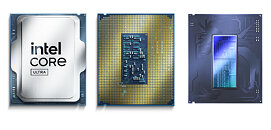
Source:
Intel at Goldman Sachs Conference
The plan for Arrow Lake Refresh isn't currently clear. These desktop CPUs will arrive with the same core count, but supposedly tweaked frequency to extract maximum performance. Initial rumors suggested features like an upgraded NPU, but these were later discarded. For now, all we have to hope for is something similar to the Intel IPO, applied out of the box for Arrow Lake Refresh. This includes fine-tuning the P-core and E-core frequencies, ring-bus speeds, the UPI interconnect, D2D links between tiles, and both PL1 and PL2 power limits. For RAM, IPO raises transfer rates and tightens timings, pushing modules beyond their factory XMP or EXPO profiles, thereby elevating overall performance. If these settings are included out of the box, Intel could justify a refresh without significantly changing the silicon configuration. However, we are yet to see what the company plans as we head into 2026.

82 Comments on Intel Confirms "Arrow Lake Refresh" Next Year, "Nova Lake" Scheduled for Late 2026
Intel has been losing market shares for years.
Nova lake sounds sweet. 16 P cores finally gives AMD some competition. Between that and zen 6, 2026 is gonna be an interesting year for CPUs.
If ARL-R really launches at the beginning on 2026 and NVL already at the end of 2026 then there's zero incentive for anyone to get ARL-R. I doubt even those few people who bought ARL bother with ARL-R and will either keep using ARL until they need something better or upgrade to NVL.
Nova lake would be a lot more interesting if Intel had kept it on LGA1851.
It gave AM4 significant performance bump in games. It was impressive on a 5+ year old platform (at the time of release in 2022).
So much so that even cheaper AM5 based Zen 4 or Zen 5 models are not noticeably faster today.
Only their X3D variants are.
Does anyone here expect ARL-R to be a 5800X3D moment for Intel?
It wont. Just by the fact that LGA1851 itself is shortest lived platform Intel has even made made worse by the least impressive generation Intel has released in a long time. Last time it was this bad was 11th gen before Intel came out with much better 12th gen.
Even OEM's dont like ARL.
Yes most people dont upgrade every gen, but they do upgrade in 4-5 years and here the platform longevity matters.
A person who bought 1700X in 2017 got an amazing upgrade from 5800X3D in 2022 on the same platform.
AM5 came out in 2022, but it was expensive due to DDR5 and not worth it at the time. 7800X3D launched in 2023.
Platform longevity has been a resounding success for AM4 and they seem to want to replicate it with AM5 judging from the leaks.
Leaks suggest even Intel themselves are finally getting the memo and potentially planning on longer support of one socket starting from NVL.
It was cheaper at the time to just buy a brand new mobo + a 12700 than the 5800x 3d cost on it's own. Upgradability is a myth.
www.tomshardware.com/pc-components/cpus/we-tested-intels-unreleased-200s-boost-feature-7-percent-higher-gaming-performance-thanks-to-memory-overclocking-now-covered-by-the-warranty"Vast" is a loaded and numerically vague word. Be careful with such words. On PassMark Intel is 60% in x86 and on Steam Intel is 60% on desktop. The most conservative estimates, from Mercury research, show the following for x86:
Now, Mercury stopped publishing data for consoles ('semi-custom') and never explained to the public reasons for that. In yellow fields, I added the most conservative change at the end of calendar year by taking the percentage change from the upper table 'without semi-custom'. In reality, the change is larger as the shipment of console APUs runs in tens of millions and is not accounted for in the yellow fields.
For the sake of (very conservative) accuracy, we can say that Intel still holds majority of market share, but there is no place for the word "vast". I am sorry, but it's pure nonsense to say that. Vast majority was the case in 2021, over 90% and without console chips. As we can see, changes in PC worlds are rather slow year-on-year, crawling like a snail, but the losing trend for Intel has been relentlessly consistent over last 6-7 years, especially in server and desktop. If we look into Q4 every year, there is no single data point, year-on-year, when Intel regained CPU market share. And that's the food for thought.
So yes, Intel is dominating in a sense that it holds majority of overall share, but this dominance has been slowly, but consistently evaporating over last couple of years. The meaning of the word 'dominance' has been thinning year by year, and it will finally lose its dictionary meaning if and when they hit 49%, which will most likely happen in x86 with semi-custom APUs in 2027/2028 once new consoles hit the market, and in x86 without semi-custom APUs possibly by 2030 if current trend continues as it does right now.Bad analogy. Millions of buyers of 5800X3D prolonged the life span of their AM4 platforms that they already owned, and that chip delivered for them important gaming performance uplift, on par with 12900K. The gaming performance review is on TPU website and elsewhere. Arrow Lake has never been a popular platform to begin with, so ARL Refresh would need to provide an important uplift to make current owners buy a CPU and stay on it, or consider buying an entire refresh rig for the first time, rather than wait a few months next year for Nova Lake or Zen6. Platform longevity is an important feature for sizable part of the market, to that extent that Intel is considering, form the latest rumour mill, offering Nova Lake for at least three if not more generations if they want to stop slowly bleeding market share explained above. Although their working horse is mobility segment, recent PC audit shows that desktop segment is roughly one third of the market, so for every two mobility CPUs, Intel need to sell one desktop CPU to try to turn the game back into its favour. If they want to succeed, they will not only need to offer one-off competitive generation, but other platform features such as longevity. It's not a trivial thing to consider at all, especially now that the US tax payer owns 10% of the company.
And I agree, platform upgradability isn't a bad thing - if it means cost savings. In the case of AM4 and the 5800x 3d example it didn't. The cpu itself cost more than competing mobo + cpu combos at the time, there was no reason to buy that thing for that price. The 12700f + b660 tested by HUB at the time cost less than the 5800x 3d while it offered identical gaming performance (within 4%), faster ST and MT performance and a brand new and upgradable platform.
The 5800x3d sold well because it was a good CPU, not because it was an upgrade.It's also not an excuse for longer support. In fact, it doesnt matter at all.Why? What functional difference does it make? You didnt buy Arrow lake, supposedly nobody is because you cant upgrade it. So it doesnt matter if it is on the same socket, you'll have to buy a mobo anyway.
When you have two platforms that are seemingly evenly matched then every bit of difference starts to matter.
Obviously here in a tech forum people are more likely to own the latest, instead of combining old and new.
Also you think AMD would be at the market share where they are today if Zen 2 and Zen 3 were on AM4+ ?
The fact that most people using 5000 series used a 500 series board is not a sign that platform longevity doesn't matter, or is not important.
These people were likely new to AMD and obviously they bought new 500 series boards instead of buying older 400 or even 300 series boards.
I very much doubt many people swapped their 300 or 400 series boards to 500 series in order to run 5000 series.
Why are people still buying AM4 CPU's today? Because they can and they have somewhere to install those.
Such sales would not exist for AMD without platform longevity.Both, actually. It was a good CPU and as a bonus it was also a massive upgrade for AM4 gamers.
There were other good CPU's for AM4, but none were as big of an upgrade as 5800X3D was.
If that does not matter, then why users of B350 / X370 complained initially about not supporting Zen 3 CPUs for older platforms?
I am one of them who upgraded from 2400G to 5600G with B350.I won't dig deep into financial reports.
Full year revenue (client group, in billion US dollar):
Intel:
2020: 40.1
2021: 40.5
2022: 31.7
2023: 29.3
2024: 30.3
AMD:
2020: 6.4 (with GPU)
2021: 9.3 (with GPU)
2022: 6.2 (13.0 with GPU)
2023: 4.6 (10.9 with GPU)
2024: 7.1 (9.6 with GPU)
If it didn't matter then AM4 wouldn't have sold as well as it did, socket longevity matters quite a bit no matter how much people who upgrade every launch cycle want to deny it.Having socket longevity is a good reason for choosing a platform, Arrow Lake isn't very good for gaming unless tuned and ran with expensive RAM, if Nova Lake were on the same platform then people who bought Intel because they refuse to buy anything else would have an upgrade path while spending less.Oh no, those poor motherboard companies.
The 5800X3D smoked the 12900K, which launched at $600. The AM4 platform had a longer lived socket, not everyone was buying a X570 mobo, an X3D was a drop in upgrade on a cheap B450 mobo.
It made no sense to spend $500-600 on a 12900K, $250 on a mobo, and another $200 on RAM when the 5800X3D was a $450 upgrade to any B350,X370,B450,X470 motherboard.
They were bought in a 4-year time frame.
5800X3D was very popular in every online component retailers and constantly in the first rank.