Wednesday, September 10th 2025

Intel Confirms "Arrow Lake Refresh" Next Year, "Nova Lake" Scheduled for Late 2026
At the Goldman Sachs Technology conference, Intel confirmed its plan to release an "Arrow Lake Refresh" in 2026, and providing reassurance that the next-generation "Nova Lake" desktop processors will arrive in late 2026. According to John Pitzer, Intel's Corporate Vice President of Corporate Planning & Investor Relations, he reassures that Intel's desktop product portfolio is strong and will remain so as the roadmap materializes. "We've got a couple of holes we've got to fill on the desktop front. But quite frankly, we feel confident in the road map," stated John Pitzer. On Arrow Lake Refresh and Nova Lake, he confirmed that "We'll have a refresh of Arrow Lake next year, which will help start the process on the desktop side, and then we'll conclude that with Nova Lake when we launch late next year into 2027."
The plan for Arrow Lake Refresh isn't currently clear. These desktop CPUs will arrive with the same core count, but supposedly tweaked frequency to extract maximum performance. Initial rumors suggested features like an upgraded NPU, but these were later discarded. For now, all we have to hope for is something similar to the Intel IPO, applied out of the box for Arrow Lake Refresh. This includes fine-tuning the P-core and E-core frequencies, ring-bus speeds, the UPI interconnect, D2D links between tiles, and both PL1 and PL2 power limits. For RAM, IPO raises transfer rates and tightens timings, pushing modules beyond their factory XMP or EXPO profiles, thereby elevating overall performance. If these settings are included out of the box, Intel could justify a refresh without significantly changing the silicon configuration. However, we are yet to see what the company plans as we head into 2026.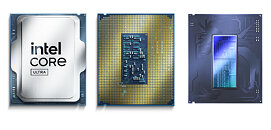
Source:
Intel at Goldman Sachs Conference
The plan for Arrow Lake Refresh isn't currently clear. These desktop CPUs will arrive with the same core count, but supposedly tweaked frequency to extract maximum performance. Initial rumors suggested features like an upgraded NPU, but these were later discarded. For now, all we have to hope for is something similar to the Intel IPO, applied out of the box for Arrow Lake Refresh. This includes fine-tuning the P-core and E-core frequencies, ring-bus speeds, the UPI interconnect, D2D links between tiles, and both PL1 and PL2 power limits. For RAM, IPO raises transfer rates and tightens timings, pushing modules beyond their factory XMP or EXPO profiles, thereby elevating overall performance. If these settings are included out of the box, Intel could justify a refresh without significantly changing the silicon configuration. However, we are yet to see what the company plans as we head into 2026.

82 Comments on Intel Confirms "Arrow Lake Refresh" Next Year, "Nova Lake" Scheduled for Late 2026
The arrow lake platform hasn't sold well at all, given how Intel has significantly cut prices.
I doubt it has sold well with OEM's, but now they get the chance to sell arrow lake as being new again because a higher number CPU SKU must be better to the average consumer. Selling a refresh just months before a new generation with a new socket is egregious but nothing new for Intel.
2500K released in 2011 and i started using it in 2012.
7 years and by the end of it, it was a major bottleneck even in general tasks not only gaming. Party because of it's meager four cores and no HT.
1070 would be bad to use today. At least for 1440p. I was on 1080 from 2016 and i moved to 2080 Ti on 2021 because 8GB was not enough for me anymore.
I used that for 4 years until i moved to 9070 XT this year and like that 7 year old 2500K, the 4 year used 2080 Ti was also a pain in 1440p in games i played as it could barely hold 60fps. No im not talking about unoptimized UE5 games.[sigh]. Not this again. Yeah we get you really like those simulators no one has even heard of before, but dont think this is the normal usecase.
5775c is a horrible bottleneck for modern GPU's. Just looking at HUB's latest testing where even much newer CPU's can bottleneck 5090.
Not to mention that the platform lacks even PCIe 4.0, modern USB, NVMe and so on.It's not fine. Using 10 year old component is noticeably worse experience than using 5 year old component. I know. I've been trough this since 2012.
5800X3D still holds up, but it's also been 3 years so it has two years more life left in it. Eventually lower end Zen 6 variants will be much faster and cheap and make upgrade a no brainer. DDR5 is already cheap.
1080 Ti as great too, but it's time has also passed.
Intel skylake doesn't have any official W11 support, most users won't go to the effort of manually keeping up with updates and workarounds, and Nvidia Pascal won't have any driver support soon.
A 5775c performed better than the average quad core, but it isn't a normal use case either, the 5775c was a rare and expensive niche of a CPU.
Lacking modern PCI 4.0....how much does that hurt GPUs? Almost nothing, yup terrible platform indeed.
Ok so what about something based on the unreal 5 engine?
Ooof not very good fps, so lets use a better cpu right.....like a 7800X3D
Weird......doesn't seem like the CPU is the problem.
What if we drop the GPU down to a 5070ti, we should see zero performance change because of a cpu bottleneck because it's so old right?
hmm performance went down, looks like the CPU isn't the problem.
No one has ever heard of flight sim 2020 before either....
USB 3.0 sound modern until you realize that it means only SATA-III speeds at best 500MB/s.Congratulations. You dug up some edge cases of unoptimized mess to prove your point.
First video with 5775c and 4090 has the CPU almost completely swamped at near 100% usage at times. Fps below 60fos in static scenes with no NPC's.
Second video has 7800X3D at below 30% usage, but no fps improvement. Sound like a bottleneck to me. Possibly single thread limited.
Third video has again 5775c swamped.
Fourth video has 4090 below 40% usage and underutilized because it's limited by the CPU.
You dont think it odd that a 4090 user cant get 60fps in static tech demos?
Like i said 5775c is a massive bottleneck. It doesn't matter how much edge cases you dig up where modern hardware is not properly utilized.
No one should pair something like 4090 with anything lower 12th gen Intel or Zen 4 with 6c/12 as minimum.
I think a new platform would make sense if they plan on supporting DDR6, or move the desktop systems to 3 (or 4) memory channels (instead of 2). I would appreciate both things.
I don't think they plan on moving to PCIe 6.0.
So what's the need for a new platform exactly?
Like SentioCAT said the only things that would necessitate socket change are the move to DDR6, increasing the number of memory channels or PCIe 6.0
Tho in the case of PCIe again Zen 1, Zen+ and Zen 2 were 3.0 where as Zen 3 moved to 4.0 on the same socket.
It did require new motherboards with a new chipset, but crucially the socket stayed the same.
The only reason for the socket change now that i think would somewhat justify it, is that Nova Lake increases core counts and LGA1851 is unable to support that many cores.
If its any true ofc
Like seriously if we look at midrange X870E models and also lower tier chipsets compared to their Zen 4 equivalents, they're priced like they're cutting edge tech or something. Like they make espressos on the side or some shit.
They are milking it hard this generation even if the new boards are just old ones with some lip filler here and there. It's the same old worn bitches but with fresh makeup. It's like the new heatsinks are what's driving up the total budget for the board. Seriously, for cosmetic changes? Those cost pennies at the factory gate. What else USB4? >Insert moment of silence<
And Zen6 apparently is on AM5 so again the "new" boards won't be some revolutionary products that required a ton of R&D that would in turn justify higher MSRPs. Hopefully they won't raise prices for the new boards. Competition from Intel might help in that regard. Fingers crossed.
Of course it keeps costs down if the user does not have to buy one new board when moving to Zen 6 or two new boards if they want to use Zen 5 and then Zen 6.You're taking the highest end and newest chipset variant. There is no "midrange" with X870E. It's already high end by definition.
Yes the lower end board have increased from ~100 to ~130 compared to AM4, but that's not unreasonable considering PCIe 5.0 requirements for signal integrity etc. B650 can still be bough new today starting from ~80. I dont remember B350, B450 or B550 being much cheaper in the past.
B850 starts from 105. X870 from 191 and X870E from 234. Considering lower end Zen 5 CPU prices at 143 (7500F) and 185 (7600) those are not unreasonably high prices for motherboards. Based on features most motherboards top out at 400-500 range for rare things like Dual-10G etc and going beyond that is usually just looks and prestige and no meaningful features.No one is forcing AM5 users to buy new boards to use Zen 6. That's the beauty of a long lived socket.
At least with AM5 you have a choice. With Intel there's zero choice. You have to buy a new board every two generations or one and a half considering Arrow Lake's lackluster performance and uncertainty regarding this refresh.
I'm talking how the newer boards have less R&D in them, therefore they should cost less and less with each facelift.I wasn't talking about the chipset there but the price, I was talking about X870E boards that have a midrange price relative to the X870E line. My bad for not wording it more clearly.The beauty? Of what, pairing a fresh CPU with an old board that doesn't have the latest tech on it? Sounds like a Macron allegory.
Just so you can then say "AM5 mobos are so cheap, thank you AMD"? They're cheap alright because they're behind in features not due to socket longevity.
Yes, Arrow Lake is a handy punching bag for that aspect, but LGA1954 will apparently have much longer longevity (ar least according to MLID leaks). So there's that.
Even PCIe 4.0 supported on B650 boards is enough for most users despite the fact that Zen 4, 5 and 6 support PCIe 5.0. Features such as USB4 or Wi-Fi 7 can be upgraded on existing boards with add-on cards. Literally the Wi-Fi on most boards is a M.2 2230 module plugged into the slot.
Aside from potentially better memory topology allowing for higher RAM speeds in 1:1 mode, there's little reason to get the newest board.
AM5 motherboards are not behind in features. A B650 board today is a perfectly viable and modern option. I have always advised people to steel clear of the A series boards as they're too expensive for the number of compromises they make, but B series has always been solid and X series is mostly for those who need more lanes from the double chipset teamup.
When it comes to Intel then i welcome a longer lived socket wholeheartedly. If indeed they do go that route. Because it will benefit AMD users too and wont allow AMD to get complacent. MLID has already hinted at possible Zen 7 compatibility on AM5 which would be great and if Intel provides that pressure to AMD then im all for it.
We are not exactly rediscovering America by noticing that newer products are more expensive than older ones, unless we talk about uninspiring Arrow Lake CPUs.
You don't notice details and do not appreciate increased costs of incremental improvements, plus new tariffs, plus labour, plus inflation, plus logistics, plus components, etc. Most of 600 boards are already in the market, in warehouses, etc. Those don't need transport and logistics cost anymore. Do an Excel sheet with all breakdowns and you shall find out more.
Three M.2s for X870E is absolutely enough.
Intel Z890 as well, not just AMD.
You can have 10TB of storage with three M.2s.
The primary a 2TB Gen5 or a good Gen4, the other two some midrange Gen4 4TB drives.
Or even 20 TB, by doubling the capacities for the above.
Whoever needs more goes for a NAS, this stupid approach of having tons of M.2s on the mobo is detrimental, the board gets more and more cluttered, these added components harder to cool, and all sorts of issues from trying to juggle all the lanes etc.
Going with "just" three M.2s frees up the corresponding area on the mobo where the fourth M.2 would be and this area could be used to place various retimers, controllers etc. to free up other areas which were cluttered in the first place.
Not only that it frees up 4 lanes, that way everything can be fed without limitations.
My approach would make everything more streamlined, simpler, more reliable, and possibly cheaper.
Why do you figure the mobo mfgs do the opposite, because they have your (the consumer's) best interest in mind, right?If there's anyone who notices details that would be me.
I also notice how nVidia created Blackwell which is sort of a tweaked/rearranged/modified Ada yet they did a $50 discount (except for the 5090). Every analysis showed that when adjusted for inflation, the difference was slightly more than $50 compared to past models.
I am not defending nVidia, I am just saying that they also could've invented some excuses to keep the same prices of Ada which still would've made Blackwell marginally cheaper when prior models would be adjusted for inflation.
I remember back in Q4 2024 and after that how many people were being displeased with motherboard prices, it's interesting to see how today some are defending the prices.
Well good you're free to do that, keep doing it if produces the effect you desire.
The 800 series AM5 boards were also shipped before tariffs and all that drama happened, people were complaining back then.
My X870E board has 4 NVMe slots and I use all of them, but even if one is free, it's fine. It can serve a different purpose, as explained above.There are other regions in the world apart from America where boards are sold.
These also have to be cheap to even get any sales. I very much doubt many are buying these on a dead socket with DDR5 prices as they are...for productivity of all things.
Most people dont create, they consume. So the pool of potential buyers is already small to begin with.
And to top it all off Intel did bait and switch by increasing prices after glowing reviews. 250K 199 > 219 and 270K 299 >329.
Prices have not been jacked up over msrp in Canada. 270k plus is the same or slightly cheaper than the 265k. 250k is the same price as the 245k.
Dead socket argument again. Thing is if you bought a 270k now you wouldn't need to upgrade for years. But if you spent the same money on an equivalent AMD cpu (9700x) to get worse overall performance, it's ok though because you can upgrade the cpu maybe in a year or two and end up spending more money overall. But the dead platform is bad, even though you saved money because you bought one cpu instead of two
Zen 5 (non-X3D was a disappointment because power went up, but performance was only single digits percentage higher plus that was at the time when DDR5 was at it's cheapest.
With AMD it's much better for anyone already on AM5 as they dont have to worry about buying RAM and AM5's install base is much larger than LGA1851's.
Granted AM4 still dominates this because of 10 years of products and lower prices.The same would be true of buying a 9700X too. Unless you're telling me than years from now 8c/16t will not be enough to run normal everyday programs and games...
The purpose of in-socket upgrades is not that you have to do it every time a new CPU generation launches in order to justify the upgradeability.
It's about giving the user a choice. The user may or may not use this option, but it's there if they ever need it.
As for the whole "buy Intel and never have to use anything else for years" argument: somehow i doubt 7700K buyers are really happy with their purchase knowing that a user who bought AM4 and 1700X at the same time was able to upgrade to a 5800X3D or 5950X depending on their needs.
Buying the faster one with no upgrade path only seems like a good idea at the moment. Years later it looks outright dumb.Or you could sell the old one after buying the new one to recoup a large portion of the new one's cost.
Thanks to a big install base there's plenty of buyers.
Also 9700X is already up to 77€ cheaper in the EU compared to 270K (242 vs 319).
If DDR5 prices were normal that's the difference of an entire kit of DDR5 with decent capacity and speed.And you bought the motherboard and RAM too. Because on AM5 you only have to buy these once you know. The second purchase is only the CPU where as with LGA1851 you buy the full set and then a new platform years later.
In the long run AMD still comes out as cheaper no matter how you slice it.