Sunday, September 21st 2025

Intel Arc Pro B60 Workstation GPU Spotted at $599, Suggests Non-OEM Availability

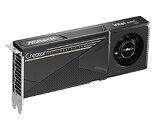
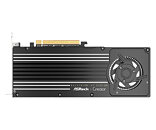
US retailer Central Computers listed the ASRock-branded Intel Arc Pro B60 "Battlemage" GPU with 24 GB of GDDR6 memory at a surprisingly low $599, cancelling previous rumors of a four-figure price and OEM-only availability. This retail sighting matters because it frames the B60 as a rare workstation GPU that pairs high memory capacity with an approachable street price, a combination attractive to creatives and engineers working with large models, complex renders, and memory-heavy data sets. The listing also confirms the B60's rumored OEM-only approach is not true, and that we will see broader retail availability, although Intel has not confirmed MSRP or distribution plans publicly. A single retailer listing can be an early indicator rather than proof of wide release. Still, seeing a Battlemage-based card with 24 GB at this price reshapes expectations and invites fresh conversations about how Intel positions the Arc Pro line.

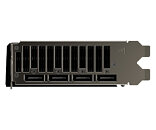
The ASRock Arc Pro B60 Creator features a blower-style cooler, a quoted boost clock of around 2,400 MHz, a 192-bit memory interface that feeds 24 GB of GDDR6 at a bandwidth of 456 GB/s, and a reported 160 XMX AI engines that enhance its INT8 and FP32 capabilities. Compared with the Arc Pro B50, which attracts attention for bringing 16 GB VRAM to a sub-$400 bracket, the B60 expands the viable options for users who need larger frame buffers for complex scenes, high-resolution texture sets, large language model inference, and memory-intensive simulation tasks. If the $599 listing reflects reality and availability broadens, the B60 could become the most accessible 24 GB workstation card, making Intel's entry into the workstation space worthwhile.
Source: VideoCardz
Add your own comment

36 Comments on Intel Arc Pro B60 Workstation GPU Spotted at $599, Suggests Non-OEM Availability

#26
DeathtoGnomes
Clearly the price is a mistake. I mean we're talking Intel here.
Posted on Reply
#27
Tomorrow
danm1988I purchased one for ~$600, but it's admittedly the first one I could find so I jumped on it.
What power connector does the Maxsun card use?

Im asking because AsRock has had the tendency to use the 12pin high failure rate connector on their workstation cards lately. Even AMD ones.
Admittedly it's less of a problem at the back of the card where it receives more airflow, but the connector design is still inherently flawed.
Posted on Reply
#28
Slesreth
TomorrowWhat power connector does the Maxsun card use?

Im asking because AsRock has had the tendency to use the 12pin high failure rate connector on their workstation cards lately. Even AMD ones.
Admittedly it's less of a problem at the back of the card where it receives more airflow, but the connector design is still inherently flawed.
1x 8-pin Power Connector
ASRock Arc Pro B60 Creator

Personally interested in seeing benchmarks for AV1.
Posted on Reply
#29
TheGeekn°72
danm1988I was able to purchase the Maxsun Dual B60...It is in my build right now..

So it is definitely possible to get these outside of OEM.
How did you get one of those ? and how much did you get it for ? I found a german retailer selling them for an obnoxious 3200€
trying to find a way to get my hands on one for my own server but I can't find any anywhere else...
maxx2575looks just like an old GTX 280
any 2-slot blower style card does
SlesrethPersonally interested in seeing benchmarks for AV1.
genuine question, not being sarcastic : why would you want to overpay for a pro card if you just want AV1 transcode ? isn't it the same die as the B580, thus getting the same media hardware?
TomorrowIm asking because AsRock has had the tendency to use the 12pin high failure rate connector on their workstation cards lately. Even AMD ones.
Admittedly it's less of a problem at the back of the card where it receives more airflow, but the connector design is still inherently flawed.
it's also less of a problem because they typically don't try to draw 600+W through it lmao
even the dual B60 should have a max combined TDP below 450, I'm reading the regular B60 has a 200W TDP
Posted on Reply
#30
lexluthermiester
FreedomEclipseBut can it run crysis in 4k?
This card would likely run 6 concurrent instances of it. Crysis, even at 2160p, is trivial to run on modern hardware.
Posted on Reply
#31
Slesreth
TheGeekn°72genuine question, not being sarcastic : why would you want to overpay for a pro card if you just want AV1 transcode ? isn't it the same die as the B580, thus getting the same media hardware?
I did not actually say I was buying the card, only that I was interested in benchmarks that featured AV1.
Transcoding is used for conversion of files that are already encoded. Content creation would be from native raw formats, this is what I would be interested in. Very large files encode faster with more memory, less active read write from one storage medium to another. I already have a 24GB 7900XTX, but Intel has more tenure with encoding AV1. I would be interested in knowing if their card is faster. Quicker post processing is the end goal.
Posted on Reply
#32
TheGeekn°72
SlesrethI did not actually say I was buying the card, only that I was interested in benchmarks that featured AV1.
Transcoding is used for conversion of files that are already encoded. Content creation would be from native raw formats, this is what I would be interested in. Very large files encode faster with more memory, less active read write from one storage medium to another. I already have a 24GB 7900XTX, but Intel has more tenure with encoding AV1. I would be interested in knowing if their card is faster. Quicker post processing is the end goal.
Riiiiight, I gotchu, I didn't know encode benefitted from more VRAM, I thought it was progressively writing to file

I did know Intel was better than AMD in regards to encode stuff in general (and RDNA3 didn't exactly have the best encoders...) but they did seriously improve things with RDNA4 (which I have) and that even small cards like the ARC A310/380 were highly prized for systems handling media files
Posted on Reply
#33
LastDudeALive
sudothelinuxwizardComparing it to a 5 year old used card is not fair
Depends on the market. If we're talking about new OEM workstations, sure, none of them are going to get a 5 year old 3090 instead. But if we're talking homelabbers and amateur AI enthusiasts, the 3090 is absolutely a competitive alternative.

The point is, OP called Nvidia pricing "inflated," with absolutely no detail.
Posted on Reply
#34
jallenlabs
LastDudeALive$600 is about where used RTX 3090 cards have been for a while. And those have 2x the memory bandwidth, CUDA, and far more raw horsepower. This is actually overpriced, comparing it to that competition (but it's a pro card, so you're paying a premium for that).

What other "inflated" Nvidia cards are you comparing it to?
A 3090 was not $600 retail. I see prices are falling decent, but I long for the days of $1000 cards. I guess, basically anything over a grand for consumers? I have owned maybe 30 some cards over time, starting with Radeon 7000/ Nvidia MX2. The most expensive card Ive owned was the 3090 and I believe I paid 700 for it (preowned, just after the 4090 released). I do understand that you pay for what you get, but i dont believe consumers or pros for that matter are getting what they pay for. Just my 2c.
Posted on Reply
#35
LastDudeALive
jallenlabsA 3090 was not $600 retail. I see prices are falling decent, but I long for the days of $1000 cards. I guess, basically anything over a grand for consumers? I have owned maybe 30 some cards over time, starting with Radeon 7000/ Nvidia MX2. The most expensive card Ive owned was the 3090 and I believe I paid 700 for it (preowned, just after the 4090 released). I do understand that you pay for what you get, but i dont believe consumers or pros for that matter are getting what they pay for. Just my 2c.
So it's just vibes then, nothing specific. Alright, good to know.
Posted on Reply
#36
danm1988
danm1988I still need to do testing with it all...But it would be for LLMs, yes, but also custom deep learning models for clinical research applications (since I work as an MD/PhD).

I use SLES 15 sp7 (and I suppose will adapt to openSUSE Leap 16.0 whenever it comes out) and will use oneAPI in various ways like through Julia, and will also probably testing things out using ollama. But I do not have any relevant numbers yet, I barely had the time to assemble this and the other systems.

But I hope to provide some things to the community to serve as some precedent or at least some example of how the hardware performs in this area apart from just benchmark software.
TomorrowWhat power connector does the Maxsun card use?

Im asking because AsRock has had the tendency to use the 12pin high failure rate connector on their workstation cards lately. Even AMD ones.
Admittedly it's less of a problem at the back of the card where it receives more airflow, but the connector design is still inherently flawed.
It uses a 12pin connector...The one they send is rated at 450W and had three 8-pin ports. I just currently use the connector that comes with super flower sfx PSU I bought (since the case I am using needs that PSU for its lower ITX motherboard), and so far it seems fine.
Posted on Reply
Add your own comment
Nov 25th, 2026 21:03 CST change timezone

New Forum Posts

Popular Reviews

TPU on YouTube

Controversial News Posts