Monday, October 13th 2025

AMD "Sound Wave" Arm-Powered APU Appears in Shipping Manifests

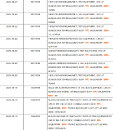
Despite AMD's assertion that the Arm ISA doesn't provide any inherent efficiency advantage and that power savings are primarily dependent on the package and design, it seems AMD is developing an Arm-based SoC codenamed "Sound Wave." Recent shipping manifests, noted by X user @Olrak29_, indicate that the Sound Wave APU has resurfaced after a period of silence. It comes in a BGA 1074 package, featuring 1074 pins, and is intended for embedded systems without a removable socket. Measuring 32 × 27 mm, its compact size is suitable for mobile designs like handhelds and laptops. It utilizes the FF5 socket, replacing the FF3 used in Valve's Steam Deck SoC, and has a 0.8 mm pitch.

As an Arm design, it's likely to incorporate a big.LITTLE architecture, with some models featuring two larger P-Cores and four smaller E-Cores. This configuration would result in a six-core SoC paired with RDNA 3.5, with up to four CUs in the top model. This computing power is designed to operate within a 10 W TDP power envelope, meeting the demand for extended gaming sessions on battery power alone. There will likely be options to adjust the TDP for specific customers, allowing for higher or lower configurations based on their needs. The market this SoC will compete in is still unknown, but the competition with Arm-based solutions is heating up as Qualcomm and NVIDIA ready next-generation designs. Estimating the time of launch and pricing point for this APU is impossible, as we have little details on when and how AMD plans to implement this in third-party designs.
Sources: Olrak29, via VideoCardz
Add your own comment

32 Comments on AMD "Sound Wave" Arm-Powered APU Appears in Shipping Manifests

#1
LastDudeALive
A Steam Deck Lite with ARM and RDNA 3.5 in a 10W power budget would be very interesting.

Valve helped accelerate Windows to Linux translation with Proton for the Steam Deck. This would provide the impetus to increase the efficiency of x86 to ARM translation as well, and increase the market for ARM-native software and games.
Posted on Reply
#2
Space Lynx
Astronaut
LastDudeALiveA Steam Deck Lite with ARM and RDNA 3.5 in a 10W power budget would be very interesting.

Valve helped accelerate Windows to Linux translation with Proton for the Steam Deck. This would provide the impetus to increase the efficiency of x86 to ARM translation as well, and increase the market for ARM-native software and games.
will all my games still work the same on a ARM APU?
Posted on Reply
#3
LastDudeALive
Space Lynxwill all my games still work the same on a ARM APU?
That's why I said this would provide an impetus to create efficient x86 to ARM translation. Microsoft has started that with Windows on ARM, but I'm sure Valve and the Linux community would do a much better job.
Posted on Reply
#4
Space Lynx
Astronaut
LastDudeALiveThat's why I said this would provide an impetus to create efficient x86 to ARM translation. Microsoft has started that with Windows on ARM, but I'm sure Valve and the Linux community would do a much better job.
Does ARM actually make games run faster or something? or is it going to be limited by node shrinks, no different than where we are now?
Posted on Reply
#5
john_
That's nice. AMD does have the money today to invest and develop these kinds of SOCs. And probably their collaboration with Samsung on Exynos will help them to integrate Radeon in an ARM SOC faster. It's also good that now they will have an extra reason to improve on efficiency of their Radeon GPUs.
Posted on Reply
#6
ymdhis
Someone at AMD R&D must really like Transformers, first it was the upcoming RDNA5 chips being named Alpha Trion / Ultra Magnus / Orion Pax, and now we also have Sound Wave. Can't wait for RDNA6 Megatron/Galvatron/Unicron...
Space LynxDoes ARM actually make games run faster or something? or is it going to be limited by node shrinks, no different than where we are now?
It uses less power (it can scale to sub watt category, x86 can't go that low) but it's also a weaker. That's about it.
Posted on Reply
#7
sudothelinuxwizard
If this has ARM ACPI and it comes to desktop, this would be great. (although unlikely it's possible to get it to work on a AM5 board).
Posted on Reply
#8
lambda
Space LynxDoes ARM actually make games run faster or something? or is it going to be limited by node shrinks, no different than where we are now?
Games or software in general will have to be compiled to target a specific ISA.

And no, they will not run faster just because it's ARM.
Posted on Reply
#9
Beermotor
I wonder if this is the AMD K12 ARM CPU, that being the other CPU that Jim Keller was working on while he was at AMD working on designing Zen.
If it is, this is basically an ARM chip with Zen DNA.
Posted on Reply
#10
Space Lynx
Astronaut
lambdaGames or software in general will have to be compiled to target a specific ISA.

And no, they will not run faster just because it's ARM.
arm is pointless to me then. i will wait for 2nm x86 node cpu and gpu's to hit.
Posted on Reply
#12
A Computer Guy
Humm...future cellphones with 16 core AMD-ARM CPU's let's do it!
Posted on Reply
#13
lambda
Space Lynxarm is pointless to me then. i will wait for 2nm x86 node cpu and gpu's to hit.
ARM is big in the server space for the hyperscalers due to licensing. It's far more common in the low end hardware and mobile phones for the same reason (and ofc lower power targets).

Unless you have specific needs, x86 is fine.
Posted on Reply
#14
Darmok N Jalad
I think when it comes to mobile gaming, Arm vs x86 is probably moot. Arm is great for idle power, but games do not run on idle. At that point, you’re looking at which CPU can execute the game threads at the best performance per watt. And even Arm-powered phones and tablets get really hot at sustained loads. Even if Arm is more efficient at load, you’re still dealing with potential translation and compatibility problems that a miserly x86 Zen core won’t have. The other half of the equation is GPU power, and that is likely taking up quite a bit more thermal budget than the CPU in LP gaming setups.
Posted on Reply
#15
Hecate91
A 10W ARM SoC with Radeon graphics would be nice for a handheld or small laptop, hopefully AMD can compete as it's lot more interesting than Qualcomm chips.
Posted on Reply
#16
Squared
With 6 cores big and little and a 10W TDP, this sounds like perhaps a Chromebook processor. I doubt AMD made both a big core and a little core, so at best there could be 2 custom cores. This is going to be a very slow CPU, but it'll be cheap.
Posted on Reply
#17
tommo1982
Darmok N JaladI think when it comes to mobile gaming, Arm vs x86 is probably moot. Arm is great for idle power, but games do not run on idle. At that point, you’re looking at which CPU can execute the game threads at the best performance per watt. And even Arm-powered phones and tablets get really hot at sustained loads. Even if Arm is more efficient at load, you’re still dealing with potential translation and compatibility problems that a miserly x86 Zen core won’t have. The other half of the equation is GPU power, and that is likely taking up quite a bit more thermal budget than the CPU in LP gaming setups.
AMD's APU chips for mobile are more advances than their desktop counterparts. We're talking power management and GPU's.
This is very exciting news. AMD has the knowledge, experience and technology to make APU's, albeit x86. I'd like to see ARM version in smartphones one day. Could be unrealistic, considering Qualcomm, MediaTek and Exynos, BUT! It definitely makes things interesting.
Posted on Reply
#18
sephiroth117
LastDudeALiveA Steam Deck Lite with ARM and RDNA 3.5 in a 10W power budget would be very interesting.

Valve helped accelerate Windows to Linux translation with Proton for the Steam Deck. This would provide the impetus to increase the efficiency of x86 to ARM translation as well, and increase the market for ARM-native software and games.
Valve seems more interested in waiting for a real new generation of APU, after Steam Deck 2, your steam deck lite would probably just be the steam deck oled.

They are certainly waiting for FSR4 APU, ML upscaling in a handheld is super useful, the switch 2 is really benefitting from DLSS, greatly.
Posted on Reply
#19
TheinsanegamerN
Lets get some ARM strix halo! ARM is overdue on desktops.
Posted on Reply
#20
R-T-B
LastDudeALiveThat's why I said this would provide an impetus to create efficient x86 to ARM translation. Microsoft has started that with Windows on ARM, but I'm sure Valve and the Linux community would do a much better job.
I'm not so sure based on past linux experiences emulating difference archs (qemu mostly).
Posted on Reply
#21
Craptacular
LastDudeALiveA Steam Deck Lite with ARM and RDNA 3.5 in a 10W power budget would be very interesting.

Valve helped accelerate Windows to Linux translation with Proton for the Steam Deck. This would provide the impetus to increase the efficiency of x86 to ARM translation as well, and increase the market for ARM-native software and games.
In my eyes the 10W power budget is no coincidence, that is the power budget of the Nintendo Switch when it first came out, before its die shrink revision in 2019, and then of course that is the power budget of the Nintendo Switch 2.

AMD in my view is aiming to make a product that they can pitch to Nintendo for the NS3, and if they can demonstrate that they have a product in production that is hitting that 10w power budget, then in AMD's view they are increasing their credibility with Nintendo that they can deliver that product.
Posted on Reply
#22
TheinsanegamerN
CraptacularIn my eyes the 10W power budget is no coincidence, that is the power budget of the Nintendo Switch when it first came out, before its die shrink revision in 2019, and then of course that is the power budget of the Nintendo Switch 2.

AMD in my view is aiming to make a product that they can pitch to Nintendo for the NS3, and if they can demonstrate that they have a product in production that is hitting that 10w power budget, then in AMD's view they are increasing their credibility with Nintendo that they can deliver that product.
I'm pretty sure this product is aimed at the far larger mobile market, tablets, 2 in 1s, and ultraportables, along with smart TVs and other appliances, rather then a console that is at least 5 years out and would have to break all backwards compatibility to use AMD.
Darmok N JaladI think when it comes to mobile gaming, Arm vs x86 is probably moot. Arm is great for idle power, but games do not run on idle. At that point, you’re looking at which CPU can execute the game threads at the best performance per watt. And even Arm-powered phones and tablets get really hot at sustained loads. Even if Arm is more efficient at load, you’re still dealing with potential translation and compatibility problems that a miserly x86 Zen core won’t have. The other half of the equation is GPU power, and that is likely taking up quite a bit more thermal budget than the CPU in LP gaming setups.
Phones get hot because they have 0 active cooling, unlike laptops; and their cases are used to disperse heat, not because they draw lots of power. Even chips like the A19 pro and snapdragon elite only draw ~8w under sustained load. That's comparable to the idle draw of raptor lake or zen 5 mobile chips.

Compatibility is a software problem more then a hardware problem. Linux already has a competent ARM translation layer, and far better performance will follow widespread adoption. As it stands the market is so small there's no push for it.

But it isnt impossible. Apple showed that. The M series x86 code capability is surprisingly good.
Posted on Reply
#23
kondamin
Now I’m wondering it it would be hard to give a chip a secondary isa
Posted on Reply
#24
mikesg
Potentially exciting for a handheld...

Unity/Unreal can be easily compiled for ARM, and shaders can use FP16 instead of FP32 which offers 2x the performance in RDNA architecture.
Posted on Reply
#25
Panther_Seraphin
kondaminNow I’m wondering it it would be hard to give a chip a secondary isa
Nearly all modern CPUs have 2 ISAs in them technically. x86 for the main cores you use but the security aspect tends to be a locked either RISC/ARM processor.
Posted on Reply
Add your own comment
Nov 17th, 2026 22:12 CST change timezone

New Forum Posts

Popular Reviews

TPU on YouTube

Controversial News Posts