Monday, October 13th 2025

AMD "Sound Wave" Arm-Powered APU Appears in Shipping Manifests
Despite AMD's assertion that the Arm ISA doesn't provide any inherent efficiency advantage and that power savings are primarily dependent on the package and design, it seems AMD is developing an Arm-based SoC codenamed "Sound Wave." Recent shipping manifests, noted by X user @Olrak29_, indicate that the Sound Wave APU has resurfaced after a period of silence. It comes in a BGA 1074 package, featuring 1074 pins, and is intended for embedded systems without a removable socket. Measuring 32 × 27 mm, its compact size is suitable for mobile designs like handhelds and laptops. It utilizes the FF5 socket, replacing the FF3 used in Valve's Steam Deck SoC, and has a 0.8 mm pitch.
As an Arm design, it's likely to incorporate a big.LITTLE architecture, with some models featuring two larger P-Cores and four smaller E-Cores. This configuration would result in a six-core SoC paired with RDNA 3.5, with up to four CUs in the top model. This computing power is designed to operate within a 10 W TDP power envelope, meeting the demand for extended gaming sessions on battery power alone. There will likely be options to adjust the TDP for specific customers, allowing for higher or lower configurations based on their needs. The market this SoC will compete in is still unknown, but the competition with Arm-based solutions is heating up as Qualcomm and NVIDIA ready next-generation designs. Estimating the time of launch and pricing point for this APU is impossible, as we have little details on when and how AMD plans to implement this in third-party designs.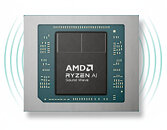
Sources:
Olrak29, via VideoCardz
As an Arm design, it's likely to incorporate a big.LITTLE architecture, with some models featuring two larger P-Cores and four smaller E-Cores. This configuration would result in a six-core SoC paired with RDNA 3.5, with up to four CUs in the top model. This computing power is designed to operate within a 10 W TDP power envelope, meeting the demand for extended gaming sessions on battery power alone. There will likely be options to adjust the TDP for specific customers, allowing for higher or lower configurations based on their needs. The market this SoC will compete in is still unknown, but the competition with Arm-based solutions is heating up as Qualcomm and NVIDIA ready next-generation designs. Estimating the time of launch and pricing point for this APU is impossible, as we have little details on when and how AMD plans to implement this in third-party designs.


32 Comments on AMD "Sound Wave" Arm-Powered APU Appears in Shipping Manifests
I for one am not sure why AMD would do this without some kind of big partner. Huge development effort on an architecture they don't own. Maybe the tablet/gaming phone market is big enough to warrant it.
This isnt the AMD of 2015.
TBH I think they should start experimenting with it soon as the growth of ARM usage in areas where it was exclusively x86 is only going up and the fact there is more markets for this now in phones/handhelds it doesnt make it a single market design anymore.
There is a place in low power handheld/phone area that AMD doesnt have anything to offer currently so it could be a nice competitor to the Switch 2 SOC that could be used in higher end phones/low end handhelds for retro gaming/emulating at a good price for the initial offering without cannibalising any of their current market share.
Then if its successfuly the could work to scale it up and rethink things like low end strix point etc.
Hence, this (like the rumored custom chip for Xbox handhelds) would need someone that wanted a specific SoC for a market they do not address. For ARM, it would be Microsoft for Surface or someone who wants an Android device, which is not likely.
The Xbox handheld was dismissed because AMD seems to have requested a 10M chips order minimum, which I think is reasonable for the work involved. Designing an SoC with ARM cores would be targeting a much bigger market than that. You would need a big wallet.
AMD Sound Wave has very few CPU & GPU cores, and is very small. The performance is similar to the current Steam Deck, supports FSR4, and FP16 on AMD runs at 2x the performance of FP32, and Unity & Unreal typically allow shaders for ARM devices to run at FP16.
It's a genuine competitor in the handheld market, and IMO a better direction than the GPD Win 5 Strix Halo, which costs >$1k and has an external massive battery because the internals is a massive heatsink/fan.
I think MS may want it for Surface and (wanted it) for some future Xbox handheld. The FTC leak mentioned they were looking at ARM for future products. I have serious doubts they would build an Xbox handheld around it, given how things shifted since then.