Tuesday, December 23rd 2025

Arch Linux Drops Support for NVIDIA Pascal and Older GPUs
Linux can be a solid option for anyone looking for an operating system that supports older hardware, but bleeding-edge distributions like Arch Linux often drop support for older hardware sooner than other distributions. This is exactly what happened recently, as the development team behind Arch Linux decided to upgrade the default NVIDIA GPU driver to version 590. This change means that Arch Linux will no longer support NVIDIA GPUs from the Pascal generation and older—this means GeForce GTX 1000 GPUs and older. Somewhat comically, this happened shortly after AMD's Linux kernel drivers extended support to AMD GPUs dating back to 2012.
Arch Linux has also migrated the default NVIDIA GPU drivers to the nvidia-open, nvidia-dkms, nvidia-open-dkms packages. Previously, the GTX 900 series GPUs were the oldest NVIDIA graphics cards supported by the Linux distro, although there are ways to work around the new support limitations. Users with older NVIDIA GPUs can manually uninstall the official nvidia, nvidia-lts, and nvidia-dkms packages and replace them with the nvidia-580xx-dkms drivers from the community-driven AUR (Arch User Repository).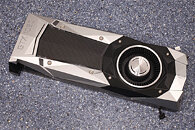
Source:
Arch Linux news
Arch Linux has also migrated the default NVIDIA GPU drivers to the nvidia-open, nvidia-dkms, nvidia-open-dkms packages. Previously, the GTX 900 series GPUs were the oldest NVIDIA graphics cards supported by the Linux distro, although there are ways to work around the new support limitations. Users with older NVIDIA GPUs can manually uninstall the official nvidia, nvidia-lts, and nvidia-dkms packages and replace them with the nvidia-580xx-dkms drivers from the community-driven AUR (Arch User Repository).

71 Comments on Arch Linux Drops Support for NVIDIA Pascal and Older GPUs
The current open source kernel effort, nouveau, supports Pascal but it can't work properly at full capacity without NVIDIA's firmware files. In the past NVIDIA was aggressively against those efforts, going as far as suggesting to the developers that they should not provide a tool to extract the firmware files from Windows driver packages.
As far as I'm aware the current plan is to deprecate nouveau and combine its efforts with the nvidia-open driver for upstreaming.
rust-for-linux.com/nova-gpu-driver
It also only supports GSP-enabled GPUs. Fwiw, nouveau also supports those GPUs with GSP and is even able to run the newest NVK with lots of good support and performance has been improving quite a lot since the project has started.
That Project NOVA has not progressed. I would not advocate or advertise that there are any drivers. There was nothing done two months ago. Nothing. They just decided on the kernel documentation and how to setup the tools and structures. I doubt there was any source code for it. I know about because they are using Rust or something else exotic for it. The huge debatte because they moved away from the classical C.
nouveau in 2023 had no support. and before had no support and i doubt that has changed. A big fancy project which never supported any of my gaming laptops or desktop cards. Similar as coreboot, libreboot whatever. Nouveau is a fancy project with hardly any progress, asks for massive donation of graphic cards but never got anything completed or done. Even when the hardware was outdated and old. For some reason I used very old graphic cards which were most of the time from nvidia several years on the market. 9800m gts / 660m gtx and 960 desktop cards are nice samples in my case to see there was nothing implemented at teh point of time when i looked several times in the owning period how the software support was.
gitlab.freedesktop.org/drm/rust/kernel/-/tree/drm-rust-next
There's no reason to try to move everything into upstream for an unstable driver. But yes, it's not meant to be used as a daily driver at ALL.Nouveau got some really nice upgrades after the GSP became a thing. Its performance is ofc way behind Nvidia's own driver, but it actually manages to run almost everything with NVK:
www.phoronix.com/review/nvidia-nvk-linux-618-mesa-26/10
However, Maxwell and Pascal get the short end of the stick given that they lack the GSP and also face the lack of reclocking due to the missing firmware signing required by nvidia:
www.phoronix.com/review/nvidia-980-5080-linux
For the nvidia-dkms package, if you really want to have the v3 optimizations, you can just edit your `makepkg.conf` to add the proper cflags that ALPH uses:
somegit.dev/ALHP/ALHP.GO/src/branch/main/flags.yaml
My current config snippet for that looks like so:
And that'd be it, you'd have the same optimizations as before. But again, there's not much to optimize to begin with since the majority of the files in those drivers are pre-built libraries and what's being built is just the kernel shim to talk to those libraries.
My original assertion is probably true for other AURs, but luckily I only use 3 or 4. 2 of them being the ALHP repos and keyring.
As an aside, I'm still postponing updating my desktop because I'm too lazy to go through the hassle of switching over from Gnome+X to KDE+Wayland haha
And so does my tip, just include the proper cflags to your makepkg.conf and you're set for any source package in the AUR.
KDE does work with X for the meantime, but since it's going to be dropping that support in 6.8, and I'm already putting in the effort to change DEs, I thought it would be better to go all in and move to Wayland as well to avoid extra work in the future.
I don't have a session manager to begin with and prefer to log in from a tty because I'm a weirdo.
The hardware that is unusable and painfully slow/lagging is Pentium 4 era hardware and earlier.