Monday, December 22nd 2025

Linux Kernel 6.19 Delivers Major Performance Boost for Old AMD GPUs
Linux users have long preferred AMD GPUs for their superior built-in support in the Linux kernel, and the latest Linux kernel update, version 6.19, appears to reinforce these notions, according to testing by Phoronix. For users of old GCN 1.0 and GCN 1.1 GPUs, like the AMD R9 390x, recent change to the Linux kernel now defaults to using the newer AMDGPU Linux kernel driver, where they would previously default to the Radeon driver. This change was facilitated by Valve, whose engineers have been working on bringing modern feature support to the GPUs and getting the AMDGPU kernel driver support into a state that allowed for it to become the default option. This change was expected to deliver a performance uplift, but in testing, it has been revealed that this performance uplift often exceeds 40%, depending on the game.
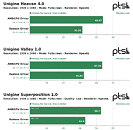
Phoronix tested the new configuration on an AMD Radeon HD 7900 3 GB from the Southern Island family, which is a 13-year-old graphics card, and in the publication's testing, the new driver outperformed the older version in every test, with the biggest performance increases coming from the GravityMark 1.87 OpenGL tests, although Unigine's benchmarks also saw a handsome improvement. Aside from performance improvements, access to features like the Mesa RADV Vulkan driver, among others, allows these older GPUs to play a number of games using Proton, which could improve performance or make previously unplayable games compatible.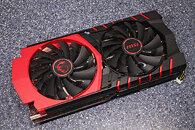
Source:
Phoronix
Phoronix tested the new configuration on an AMD Radeon HD 7900 3 GB from the Southern Island family, which is a 13-year-old graphics card, and in the publication's testing, the new driver outperformed the older version in every test, with the biggest performance increases coming from the GravityMark 1.87 OpenGL tests, although Unigine's benchmarks also saw a handsome improvement. Aside from performance improvements, access to features like the Mesa RADV Vulkan driver, among others, allows these older GPUs to play a number of games using Proton, which could improve performance or make previously unplayable games compatible.


21 Comments on Linux Kernel 6.19 Delivers Major Performance Boost for Old AMD GPUs
How comes Valve provides improvement and not AMD itself? Note: text mention valve engineers
Spoilers: NV Linux drivers are just fine for their intended purpose. It’s just that this purpose hasn’t been consumer workloads like gaming for the longest time. The only thing that can change it is if Linux on desktop becomes more popular, which is what is slowly happening and why NV has started working on their drivers for that purpose more.
NV, MS, Google, Meta side of things, just wanted to say. They somehow aren't fans of open source, free OS and SW in general, why would they even (make viable alternatives better on purpose)?
Out of the box with good cooling (not efficient) it was a revolutionary GPU, as much as I want AMD to make a Nvidia killer they don’t have the reason or resources yet to do so. Their focus is on small boxes that have to meet TDP requirements and their graphics cards will follow suit. Maybe once the AI bubble pops and both companies realize they’re working on essential the same architecture something new and revolutionary will happen. But for now path tracing and ray tracing is still in terrible two toddler stage and we get a decent option for the masses that can do both VS the tessellated BS that Ngreedia pulled with barriers and unseen waves, and maybe AMD will pull their head out of their ass and develop or reintroduce the vector motion adaptive frame interpolation in driver for video like was free for years before, or figure out how to move their video subsystem off die so watching a blu-ray with upscaling didn’t ramp up power consumption.
The R9 390/390X used the same GPU (Hawaii) as the R9 290/290X. It was renamed, got a new stepping and more VRAM (8 GB), but it was still the same chip.
GCN 1.1 is the 2nd generation GCN, yes, but it isn't GCN 2.0. Actually, AMD went directly to 3.0 with the R9 285/380/380X and Fury/Fury X GPUs.
My 'full fat' Tonga 8GB (FirePro S7150 -> W7100 2048SP) might actually be useful, in such a setup.
Much like AMD on windows, nVidia's problems on linux are greatly exaggerated.That doesnt change his question, which was why Valve specifically puts so much work into AMD drivers on linux. There was no argument that AMD was open source and that anyone can contribute.They do plenty of work on them. The 580 branch is perfectly stable on linux and games/produces just fine.
Wish Nvidia would ditch their proprietry blob and put the full weight of their support behind an open-source solution. Tired of waiting for full Wayland support.
RADV is amazing for gaming. Better performance and framepacing than the competition, and significantly better support for things like Wayland, Gamescope, multiple monitors, and vsync/vrr. It's a shame Adrenaline
Luckily amdgpu and mesa are not one of those cases, but AMD's previous AMDVLK and many other parts of their stack were not really open to contributors.I get that you are not really a linux nor an nvidia user, right?
github.com/NVIDIA/open-gpu-kernel-modules
lwn.net/Articles/1038358/
Nvidia and AMD are usually on par on amount of contributions, Intel, Google and IBM/RedHat are usually in the top, and Meta is usually in the top 10 with all their FS contributions.
Microsoft every now and then appears in that list as well.Nor AMD even, due to their binary firmware blobs.Their open modules have become the default modules since quite some time, and are now the de-facto default now that the previous proprietary one has been deprecated.
They are also making a lot of contributions to the likes of NVK and nouveau with the GSP-enabled GPUs.I'm finally migrating out of X since Gnome has dropped support for it, and moving to KDE with Wayland, and so far so good with my 3090 setup.