Friday, December 26th 2025

AMD Ryzen 9 9950X3D2 and Ryzen 7 9850X3D are Real, Coming this CES?
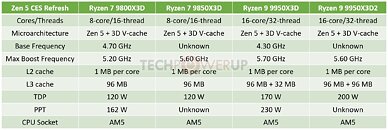
AMD is preparing to refresh its Ryzen 9000 series "Zen 5" desktop processor lineup with two high-end chips targeting gamers and PC enthusiasts, the 8-core Ryzen 7 9850X3D, and the 16-core Ryzen 9 9950X3D2. The 9850X3D is a speed-bumped 9800X3D, while the 9950X3D2 comes with 3D V-Cache on both its 8-core chiplets, compared to the 9950X3D, which only has it on one of its chiplets. The Ryzen 7 9850X3D comes with a maximum turbo frequency of 5.60 GHz, a 400 MHz increase over the 9800X3D, along with a TDP of 120 W, which is expected to increase its single-thread performance by 5-7%.
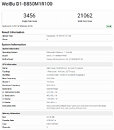
The Ryzen 9 9950X3D2 is a different beast. It comes with a maximum boost frequency of 5.60 GHz, which is a 100 MHz reduction over the 5.70 GHz that the 9950X3D comes with, but both its chiplets have 3D V-Cache, allowing for more flexible scheduling and thread migration. With a combined L3 cache of 192 MB, this chip could also be vastly preferred by the workstation and creator crowd that's working on memory-intensive workloads. All this comes at a cost, though, with AMD rumored to increase TDP to 200 W, up from the 170 W of the 9950X3D, which could mean a PPT value nearing the 250 W-mark. Geekbench and PassMark numbers of the 9950X3D2 just surfaced on the web, which show the newer chip to be 2% faster than the 9950X3D despite the marginally lower clock speed, however, the real heft of this chip will be felt in memory/cache sensitive workloads.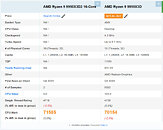
Sources:
x86isdeadandback (Twitter), Olrak29_ (Twitter), VideoCardz
The Ryzen 9 9950X3D2 is a different beast. It comes with a maximum boost frequency of 5.60 GHz, which is a 100 MHz reduction over the 5.70 GHz that the 9950X3D comes with, but both its chiplets have 3D V-Cache, allowing for more flexible scheduling and thread migration. With a combined L3 cache of 192 MB, this chip could also be vastly preferred by the workstation and creator crowd that's working on memory-intensive workloads. All this comes at a cost, though, with AMD rumored to increase TDP to 200 W, up from the 170 W of the 9950X3D, which could mean a PPT value nearing the 250 W-mark. Geekbench and PassMark numbers of the 9950X3D2 just surfaced on the web, which show the newer chip to be 2% faster than the 9950X3D despite the marginally lower clock speed, however, the real heft of this chip will be felt in memory/cache sensitive workloads.


56 Comments on AMD Ryzen 9 9950X3D2 and Ryzen 7 9850X3D are Real, Coming this CES?
and
2x8GB DDR5 is being given away w/ boards.
Just sayin'.
It that's the case, we could see some impact. And we also don't know the impact of fixing the core parking issues on the 9950X3D, for which this is a brute-force fix.
- Over 3 year old IOD. You're right. I forgot about that one. Perhaps slightly polished since the first iteration.. IDK.
- Same non-mesmerizing Zen 5 IPC uplift.
- Like mentioned, AMD said we're talking diminishing returns with dual 3D.
- If you have a 7800X3D or better, you're all set for now.
- If you don't have a 7800X3D or better, is this the one you've been holding out for? :confused: This is the one, but the 9800X3D/9950X3D doesn't do it for ya?
Why would anyone pick this before anyone have seen what Zen6 can do? Well unless you're upgrading CPU more often than once a year just because itch/curiosity/giggles/having trouble getting rid of money.
I'm just eagerly awaiting the X3D2 reviews. I'm confident this will be an overwhelmingly powerful processor, beyond anyone's wildest imagination.
9850X3D kinda feels like its a bit pointless from what I've heard about it, unless it also means 9800X3D price goes down (hopeful delusions)
Rolls off the tongue about as well as Arr-two dee-two-
-we'll see if it's as charming :laugh:Considering how many "V2" and "II" motherboards, GPUs, etc. I've seen these days... Yeah.
I expect the 9950X3D2 to replace the 9950X3D, the 9850X3D replacing the 9800X3D; selling alongside each other until inventory is depleted.Aye. This configuration has been what Enthusiasts, Power Users, etc. have been wanting since Vermeer-X3D.People that want the 9950X3D2 either have an actual need they've defined (Content creation, etc.*),
or
are looking for a 'full fat' solution to remain performance-relevant for as long as possible.
(Historical Examples: X79/X99/X299 adopters, 4th-5th gen Crystal Well(Haswell-C) and Broadwell-C owners, etc.)
*www.pugetsystems.com/labs/articles/choosing-the-right-cpu-for-unreal-engine-ryzen-x3d-vs-threadripper/
Unreal Engine runs a lot of modern 'Professional Entertainment' media. I think X3D2's demand is/will be extremely high from otherwise-quiet markets.
Not to mention, X3D2 will be the only >8core vCache-per-CCD option from AMD, before EPYC.
AFAIK, every expected/rumored vCache'd Threadripper, never showed up to market. EPYC Milan-X are the first multi-CCD SKU w/ vCache on every CCD. The 16c/32t 768MB L3 AMD EPYC 7373X being the nearest comparable SKU.
- having cache on the second CCD is blown up by inter-ccd latency, so still the best performance for 90+% of gaming will still be 9800x3d
- performance of non-cache sensitive apps is minimal vs 9950x
- pro consumers will always use EPYC if they need it for a multitude of reasons, they're not building a bunch of B850 rigs to save money.
so having X3D2, apart from the marketing hype, may not actually net any tangible (<10%) benefit to performance.
If they went with lke a 16x16 design with Zen5c cores and 3dvcache to make up the difference then I could see that being interesting, but these feel a lot like when intel kept giving us slightly faster quad cores every year.It's the "next" real release, so it's basically around the corner - not sure anything is coming out for the next 9 months that's going to change the landscape from either camp.
Back on topic, I'm curious if the dual X3D chiplet will bring any advantage in gaming, but somehow I doubt it.
Otherwise it sounds very much like people I described in the end, i.e often upgrading. The benefit over other 9950's remains to be seen.As long as possible? Not comparable at all, those buyers could upgrade to more cores years later because they had the only platform that allowed doing so. Meanwhile AM5 is mainstream, it's all up to the choice of CPU.
Zen 6 isn't that far away, I bet we're talking <15 months for 3D models. 50 % more cores, AKA the first core bump in SEVEN YEARS for mainstream AMD, and probably a new IOD for the first time in four years.
I'm not saying that the 9950X3D can't stay performance relevant after that, but if it can't, a 9950X3D2 won't make any difference.By moving the V-cache to the bottom AMD could hypothetically have done the ground work for a single unified V-cache that all chiplets can use, thus eliminating the problem you describe. Sounds complicated to me, but even if it can be done it won't happen this time around.
So the advantage of these would be minimal, migrating threads from one chiplet to another will still incur a penalty. Of course, unlike current chips, you pay the penalty when migrating, but then you bring the data into the other's chiplet cache and you're up to speed again. Still, not a big gain, because the OS scheduler will not move threads around just because. Threads tend to stay on the core they start on.
Zen6 and Nova Lake should come at similar time, by the end of next year.We don't know if X3D parts on Zen6 would launch at the same time as vanilla CPUs. Halo users and productivity buffs will buy this CPU. And then sell it on eBay and buy another one on Zen6 or Zen7, if still on AM5. It's very flexible with longevity platforms. You should never assume that a CPU is for giggles and burning money when it can serve well for a year or so, and be easily sold and replaced with another one, a drop-in CPU.
When you have a longevity driven platform, such as AM5, it's more flexible and easier to exchange several CPUs, without usual waiting for a few years. For example, I have 9800X3D since last year. If Zen6 12 core X3D part brings a substantial uplift, I will sell the current COU and upgrade. Pretty easy stuff.
So long as they get the scheduler right and games aren't using cores on both CCDs, it'll be fiiine.
Looking forward to see the TPU test.