News Posts matching #Ryzen 9 9950X3D

Return to Keyword Browsing

Unreleased AMD Ryzen 9 5900X3D Engineering Sample Appears With 128 MB L3 Cache

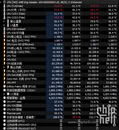
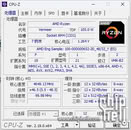
An engineering sample of AMD's never-released Ryzen 9 5900X3D has surfaced on the Chinese forum Chiphell, and it looks quite different from the prototype AMD has shown before. The 12-core, 24-thread Zen 3 chip carries the code 100-000000652 and reports 128 MB of L3 cache, split as 96 MB on one CCD and 32 MB on the other. That means only one of its two six-core chiplets has the 64 MB 3D V-Cache stack. The Ryzen 9 5900X3D and 5950X3D prototypes that AMD showed to Gamers Nexus in 2023 had cache stacked on both CCDs, for 192 MB in total. The single-stack layout apparently lets the chip clock higher. CPU-Z screenshots from the owner show it running at around 4.7 GHz with a 105 W TDP, while the dual-stack 5900X3D topped out at a 4.4 GHz boost.

Getting it to boot took some effort, though. The sample reportedly refuses to work on current BIOS versions and only started with an older one carrying SMU firmware 56.70.0. The owner has apparently asked ASRock to add support in a newer BIOS. At retail, the Zen 3 X3D lineup started with the eight-core Ryzen 7 5800X3D in 2022 and never included a dual-CCD chip. Interestingly, the one-CCD approach seen here is the same one AMD later used for its Ryzen 9 X3D chips on AM5, before the Ryzen 9 9950X3D2 Dual Edition put cache on both chiplets this year. AMD hasn't confirmed anything about this sample, of course, but it's interesting to see from an archival standpoint.
The ASUS ROG G1000 Gaming Desktop Brings Top-Tier Performance

Republic of Gamers (ROG) today announced that the ROG G1000, a flagship gaming desktop engineered to redefine the boundaries of performance, is now available for purchase and order. Powered by up to an AMD Ryzen 7 9800X3D CPU and our ROG Astral GeForce RTX 5080 GPU, the G1000 introduces the ROG Thermal Atrium—a specialized compartment decoupled from the main chassis to provide its 420 mm AIO radiator with unrestricted access to cool ambient air. Combined with the groundbreaking AniMe Holo platform, the G1000 offers a whisper-quiet, high-performance experience housed in a commanding ultra tower built exclusively with premium ASUS and ROG components.

AniMe Holo: A New Era of Personalization
Beyond its raw power, the ROG G1000 is a visual masterpiece featuring the all-new AniMe Holo technology. This system utilizes full-color holographic projectors, allowing gamers to personalize their desktop like never before. The side panel showcases a massive 380 mm holographic fan with 720 LEDs, complemented by dual 215 mm fans on the front panel.

NVIDIA RTX 5080 Reportedly Dies After DLSS 5 Test in Modded GTA 5

An MSI GeForce RTX 5080 16G Ventus 3X reportedly stopped working after its owner injected an unofficial version of DLSS 5 into a heavily modded copy of Grand Theft Auto 5. Reddit user "wax469" said the card had been running fine for about a month before the crash. According to the post, the screen began flashing uncontrollably about five minutes into a session, and the system refused to boot afterward. Swapping to his Ryzen 9 9950X3D2's integrated graphics let the PC start normally, and reinstalling the RTX 5080 brought the failure back. A replacement card of the same model has apparently worked without issues since.

It's worth being cautious here. NVIDIA has not released DLSS 5 for GTA 5, so the injection relied on unofficial tools, and the user says the card was running at stock settings with no overclock. There's no photo evidence of physical damage, and it's entirely possible a manufacturing defect was already present and just got exposed under load. Whether DLSS 5 had anything to do with it remains unconfirmed. The user was running a heavily modified version of GTA 5 Legacy, and adding unofficial DLSS 5 seems to be what eventually led to the failure.

Redditor's AMD Ryzen 9 9950X3D Reportedly Dies Shortly After Changing Motherboards

A Ryzen 9 9950X3D has reportedly died just an hour after being moved into an ASUS ROG Crosshair X670E Hero motherboard. According to Reddit user SpecialistConcept423, posting in r/GamersNexus, the chip had been running fine for about a year and a half in an ASRock X670E Taichi Carrara before the swap. After switching to the new board, no manual overclocking or voltage tweaks were applied; only one of the board's built-in memory presets was enabled for a set of SK hynix 6200 MHz modules. After saving that setting and rebooting, the board threw a "00" Q-Code and refused to post. Pulling the CPU and inspecting it revealed two brown marks on its contacts, which all but confirmed the catastrophic failure.

Things got stranger when the user resorted to an older Ryzen 5 8500G that had previously worked fine on the same board. That chip apparently now throws a "4D" code too, pointing at the motherboard itself as the culprit, not just the CPU. There's no confirmation yet on whether a faulty BIOS, a bad batch of boards, or something else is to blame, and ASUS hasn't commented on this specific case. It is worth noting that the ASUS board was not new, and it had undergone USB-related repairs and a BIOS rewrite. The user has since contacted AMD in Brazil for an RMA, but has shared no updates yet.

FEVM Intros New Mini PCs With Desktop AMD or Intel CPUs and RTX 5090 Mobile GPUs

The latest mini PC maker to get in on the high-powered mini PC trend is FEVM, who, to its credit, previously launched a mini PC powered by AMD's impressive Strix Halo platform, with the new FA80G packing up to both an AMD Ryzen 9 9950X3D and an NVIDIA GeForce RTX 5090 Mobile into a mere 2.6 L chassis, while the FN80G swaps out the AMD Ryzen CPU for up to an Intel Core Ultra 7 270KP. What's more, the mini PC maker says that the cooling solutions in the FN80G and FA80G are capable of keeping both versions at below 85 °C on the CPU and 80 °C on the GPU while generating less than 42 dB of noise.

The new FEVM mini PCs, which measure 180 × 168 × 88 mm, both start with NVIDIA's RTX 5060 GPUs, with other configs including the desktop RTX 5060 Ti and 5080 Laptop GPUs. In the 5090 Mobile variants, the GPU is limited to 150 W, with combined CPU and GPU power topping out at 250 W. Both models ship as barebones unit, meaning buyers will need to bring their own RAM and SSDs, but the rest of the mini PC is also nothing to scoff at.

AMD Ryzen 9 9950X3D Drops to an All Time Low Price of $569

AMD's flagship desktop processor until the Ryzen 9 9950X3D2 Dual Edition upstaged it, the 9950X3D, is now selling in the US at an all-time low price of $569. This amounts to an 18.5% drop from its launch price of $699.99. The $569 price can be found on both Amazon (US) and Newegg. The 9950X3D is a 16-core/32-thread Socket AM5 desktop processor based on the "Zen 5" microarchitecture, and powered by 3D V-Cache technology on one of its two 8-core chiplets.

The 9950X3D2 Dual Edition features 3D V-Cache on both its 8-core chiplets. In our testing, the 9950X3D was found to be about 3% slower than the 9950X3D2 at gaming (1080p, averaged), and about 2.5% slower averaged across all our application benchmarks; but it holds significant leads in our Physics Simulation, console emulation, AI ML, and rendering benchmarks.

KLEVV at Computex 2026: 4R CUDIMMs, CRAS C925 G-Lite, CRAS V RGB Prime Memory

Essencore KLEVV brought a slew of new memory and storage products to Computex 2026. We begin our touer with the new LITE V RGB DDR5 memory, which comes in capacities of up to 64 GB, featuring an RGB-crowned heat spreader, and mainstream speeds of DDR5-6400. The CRAS C910 G is a mid-range Gen 4 x4 M.2 NVMe SSD. The CRAS Va RGB is a high-performance DDR5-10000 CUDIMM, we were shown a 48 GB (24 GB ×2) kit. Also shown was a Geniune G540 series Gen 5 x4 M.2 NVMe SSD.

KLEVV CRAS V RGB Prime is the company's first kit implementing AMD EXPO-ULL, it offers DDR5-6000 speeds with a CAS latency of 26. We were shown a 32 GB (16 GB ×2) kit paired with a Ryzen 9 9950X3D. The CRAS C925 G Lite is a value Gen 4 x4 M.2 NVMe SSD. We now more on to the star of the show, a 256 GB kit (128 GB ×2) featuring quad-rank (4R) CUDIMMs. This module offers a stunning DDR5-8000 speed with 128 GB density, letting you max out the 256 GB limit of the Core Ultra 7 270K Plus "Arrow Lake" desktop processor with just two DIMMs, without compromising on speeds.
More pictures follow.

System76 Redefines Linux Platform with Redesign of Thelio Desktop and Workstation

Today, System76, the leading Linux-first computing platform, introduced significant updates to its Thelio product family with the new Thelio Mira desktop and Thelio Major workstation. The two systems - designed, engineered, and manufactured in Denver - deliver a complete range of professional and mission-critical capabilities for organizations that demand sustained performance, open architecture, and hardware built to last.

Engineered for Linux from the hardware up, both systems ship with Pop!_OS 24.04 LTS or Ubuntu. This full-stack approach distinguishes System76 from any other desktop manufacturer in the market.

AMD Ryzen 9 9950X3D2 Dual Edition CPU Starts Pre-Orders in China

AMD's China store on JD has just started accepting pre-orders for the upcoming Ryzen 9 9950X3D2 Dual Edition desktop processor. Priced at an MSRP of $899, this model is $200 more expensive than the launch MSRP of the Ryzen 9 9950X3D. In China, AMD's store requires pre-orders with a deposit of 100 RMB, which counts as 300 RMB towards the final payment due to the "early bird" pre-order benefit. The final payment will be made on April 22, the planned retail launch date. Additionally, at launch, the processor will be available both as retail PIB (processor in box) packages and as part of pre-built gaming desktops by popular OEMs and system integrators. Currently, no Western stores offer pre-orders for this CPU, either in the United States or Europe. Most likely, these stores will start accepting orders on April 22. Some, like B&H, have a placeholder to notify customers when it becomes available.

The Ryzen 9 9950X3D2 Dual Edition is a 16-core, 32-thread processor built on the "Zen 5" microarchitecture and features 3D V-Cache technology, with stacked 3D V-Cache on both of its 8-core chiplets. This configuration results in an on-package L3 cache of 192 MB and a total cache (L2+L3) of 208 MB. In comparison, the 9950X3D has 3D V-Cache on only one of its two CCDs and relies on software-based OS scheduler guidance to ensure gaming workloads are directed to the CCD with 3D V-Cache. As a result, this new processor is more suited for productivity and workstation tasks, while the 9950X3D remains focused on gaming. Aside from the cache differences, the 9950X3D2 Dual Edition is mostly similar to the 9950X3D, except its maximum boost frequency is 5.60 GHz, which is 100 MHz lower than the 9950X3D, and it has a higher TDP of 200 W compared to the 170 W of the 9950X3D. While technically compatible with any Socket AM5 motherboard, support requires UEFI firmware updates from motherboard vendors.

ASRock X870E Taichi OCF Breaks PCMark 10 Express World Record 1st Place with AMD Ryzen 9 9950X3D

ASRock, the global leading manufacturer of motherboards, graphics cards, mini PCs, gaming monitors, power supply units and AIOs, proudly announces a new overclocking World Record achieved with its flagship X870E Taichi OCF motherboard.

Professional overclocker Alex2305 successfully pushed system performance to a new level using the ASRock X870E Taichi OCF paired with the powerful AMD Ryzen 9 9950X3D processor, achieving an incredible PCMark 10 Express score of 14290 marks, securing the World Record 1st Place on HWBOT.org.

Thermal Grizzly Announces Delidded AMD Ryzen 7 9850X3D CPU

Thermal Grizzly announced its TG Delidded CPUs, which would see the company sell delidded AMD Ryzen 9000 CPUs for enthusiast use with direct-die cooling solutions. The program started with the AMD Ryzen 7 9800X3D and has since expanded to include the AMD Ryzen 9 9950X3D, with the latest addition being the recently released AMD Ryzen 7 9850X3D. The delidded 9850X3D comes in at $876.33 on the Thermal Grizzly store, which is a marked increase over the $500 MSRP, but it also includes a warranty in the case of any manufacturer defects or issues that might arise during the delidding process. The aforementioned warranty is valid for two years and covers material defects of the CPU and even extends to overclocking within manufacturer spec, as long as adequate cooling is provided. It does not cover any physical or liquid damage to the silicon, SMDs, or the PCB.

[Editor's note: Our in-depth review of the AMD Ryzen 7 9850X3D is now live]

Roman Hartung, aka Der8auer, famous overclocker and CEO of Thermal Grizzly, published a YouTube video demonstrating the delidding process and documenting potential performance and thermal improvements as a result of delidding and direct-die cooling. In the video, Hartung tests the 9850X3D in Cinebench R23, demonstrating a 90.2° C peak temperature on one CCD, with the average die temperature getting as high as 88.1° C with a peak power draw of 182.35 W in the 10-minute CPU benchmark run. Individual peak CPU core temperatures ranged from 78 to 88.2° C, whereas after applying liquid metal and a direct-die cooling solution resulted in peak CPU core temperatures of 66.1-75.3° C and a peak average CPU temperature of 75.3°C—temperatures were down around 15° C across the board following the delid. Power draw was slightly lower during this test, at 178.09 W peak package power, although the same settings were applied in BIOS ahead of the tests. Hartung also goes on to test the overclocking capabilities of the delidded CPU on the direct-die cooling solution, which can be seen in the video below.

AMD Launches Crimson Desert Promo Bundles for Qualifying Ryzen & Radeon Hardware

This season's AMD Rewards campaign started going live this morning, across several regions. Officially, this promotional period started today (February 10), at 9:00 a.m. ET, and is due to end on April 25. Participants have until May 23 (11:59:59 p.m. ET) to get/redeem "Crimson Desert with select AMD products." Hints of a Pearl Abyss—the game's South Korean development team—and Team Red collaboration appeared online last week; eventually leading to the reveal of Sapphire's Nitro+ Radeon RX 9070 XT OC Crimson Desert Edition graphics card model. In terms of qualifying desktop processor products, AMD has narrowed its selection down to current-gen 3D V-Cache-augmented gaming models, including the 16-core Ryzen 9 9950X3D, 12-core Ryzen 9 9900X3D, and 8-core Ryzen 7 9800X3D. The semi-recently launched Ryzen 7 9850X3D SKU gets some special treatment—according to the latest reward scheme's small print: "purchases of this product prior to the Campaign Period are eligible to receive a Coupon Code."

The Crimson Desert promotion also encompasses RDNA 4 generation graphics cards, although the Red Team has only deemed its upper echelon options worthy of this Pearl Abyss sponsorship. The Radeon RX 9070 XT and Radeon RX 9070 (both 16 GB models) are qualifiers in this category. Oddly, cheaper Radeon RX 9060 XT (16 GB and 8 GB) cards are not listed in freshly published material. Also absent is the Chinese market exclusive Radeon RX 9070 GRE 12 GB or 16 GB models. The less potent Radeon RX 9000-series products are very likely capable of running the Black Desert Online prequel to a satisfying degree—as noted by VideoCardz, Crimson Desert's minimum PC specification requirements hark back to pre-2020s processor and GPU hardware.

Maingear Retro98 Desktops Pack Modern Gaming Hardware in Vintage Beige Designs

Maingear has officially announced its latest retro-themed pre-built desktop PCs, the Retro98. The new pre-built desktops are built in SilverStone FLP02 chassis, replete with a functional turbo button—for setting PWM-controlled fans to max speed—and a big red power toggle switch, and they can be had with either a 360 mm AIO or open-loop liquid cooling designed in collaboration with Alphacool. The entire build looks rather authentic, with classic ketchup and mustard cables and classic 5.25" drive bay covers for the HDD bays tying the look together. The open-loop version is called the Retro98α, and the version that features AIO cooling is just the Retro98. Both versions of the Retro98 are limited edition, though, with only six units of the Retro98α and 32 units of the Retro98 available—by the looks of it, each specific SKU is limited to these quantities, not the series as a whole. Prices start at $2,499 for the Retro98, with the Retro98α topping out at $9,799.

Internally, the Retro98 series starts with the Intel Core Ultra 7 265K paired with 32 GB DDR5-6400 RAM, a 2 TB NVMe Gen 5 SSD, and an NVIDIA GeForce RTX 5070, with the AMD Ryzen 7 9800X3D and RTX 5080 available from $3,499. Stepping up again to $4,999 gets you an RTX 5090, a Ryzen 7 9850X3D, and the $9,799 Retro98α coming equipped with an AMD Ryzen 9 9950X3D, 64 GB of RAM, a 4 TB SSD, and an RTX 5090. All versions of the Retro98 also come with onboard Wi-Fi 7 and Bluetooth 5.4, and the cooling configuration consists of dual 120 mm front intakes, a single 120 mm rear exhaust, and three top-mounted 120 mm exhaust fans for the radiator. The Intel variant ships with an MSI Z890 Gaming Plus WiFi motherboard, while the AMD versions are all built around the MSI X870E Gaming Plus WiFi, and they all come with appropriately sized 80+ Gold-rated PSUs ranging from 650 W to 1600 W.

AMD Ryzen 9 9950X3D2 Gets Benchmarked, Shows 7% Improvement over Regular X3D SKU

AMD's Ryzen 9 9950X3D2 processor has taken on a mythical status in the CPU world, as it has been rumored for some time without any commercial release. Recently, the CPU appeared in the online database of the Geekbench CPU benchmark, showing a slight performance improvement over its predecessor—the regular Ryzen 9 9950X3D CPU. A Geekbench v6.5 test revealed scores of 3,553 for single-core performance and 24,340 for multicore performance. This represents about a 7% improvement for the X3D2 model over the X3D in both single and multicore scores. Initially, CES 2026 was expected to be the announcement date for this processor, but after the show we got more hints that the SKU will perhaps appear later in the year.

Reportedly, the SKU features 16 cores and 32 threads, with 3D V-Cache on both chiplets, hence the name X3D2, totaling around 192 MB of L3 cache. It operates at a base frequency of 4.30 GHz, with boost clocks reaching up to 5.6 GHz. Compared to its predecessor, it sacrifices a modest 100 MHz in peak speed for significantly greater cache capacity. This configuration is expected to benefit cache-sensitive workloads and gaming, while also appealing to workstation users and content creators handling memory-intensive tasks. However, this enhanced capability comes with a thermal cost, as the rumored TDP increases to 200 W from the 9950X3D's 170 W, potentially pushing PPT values close to 250 W. With 3D V-Cache on both CCDs, the overall performance appears to be boosted by about 7%, so its appearance is justified in some workloads that enthusiasts would appreciate.

AMD "Ryzen 9 Pro 9965X3D" Model Leaked, Document Describes 16-core CPU & 170 W TDP

PC hardware detectives are still searching online for more evidence of AMD's not-yet-released Ryzen 9 9950X3D2 desktop gaming processor, but the latest discovery has shifted some focus onto Team Red's "Ryzen PRO" product line on the AM5 platform. Earlier today, Gray/Olrak29 shared an intriguing screenshot of yet another partial NBD shipping manifest. A mid-November entry outlines a previously unmentioned Ryzen 9 PRO 9965X3D SKU. Only very basic details are visible in late 2025 shipping information; namely a 16-core configuration and 170 W TDP rating. The two leaked credentials seem to align with specs applied to the readily available Ryzen 9 9950X3D model; Team Red's current flagship "Granite Ridge" gaming CPU.

Half-way through last year, AMD announced three new Ryzen PRO products that would expand their "Zen 5" range of mainstream desktop processors. At the present moment, their most potent "PRO" level option on the AM5 platform is the 12-core Ryzen 9 PRO 9945 SKU. Naturally, the just leaked Ryzen 9 PRO 9965X3D model is expected to take top billing—if it launches later this year. Based on model naming convention, early reportage posits that the not-yet-released PRO flagship will be blessed with only a single provision of third-gen 3D V-Cache, rather than a highly-anticipated dual configuration. This pioneering setup—for modern mainstream gaming rigs—could debut with an eventual arrival of Ryzen 9 9950X3D2 CPUs.

The 5 Biggest No-Shows of CES 2026

As the Consumer Electronics Show of 2026 comes to an end, our field crew has done of a lot of work to keep readers updated. However, pre-CES expectations were high for several product launches, that sadly didn't happen. In today's piece we are ranking the top five things we didn't get at CES 2026, even with hopes of a product launch occurring during the show.

1) First on our non-weighted ranking is NVIDIA's GeForce RTX 50-series "Blackwell" SUPER refresh. This mid-cycle was originally planned for late Q1 to early Q2 2026, with a possible announcement at CES 2026. The "SUPER" treatment was planned with denser GDDR7 memory modules with 3 GB of capacity per chip, increasing the memory configuration of the standard GeForce RTX 5070, RTX 5070 Ti, and RTX 5080. Initially, the RTX 5070 SUPER was planned with an upgrade to offer 18 GB, while the RTX 5070 Ti SUPER and RTX 5080 SUPER would each provide 24 GB of GDDR7 memory.

AMD Ryzen 9 9950X3D2 and Ryzen 7 9850X3D are Real, Coming this CES?

AMD is preparing to refresh its Ryzen 9000 series "Zen 5" desktop processor lineup with two high-end chips targeting gamers and PC enthusiasts, the 8-core Ryzen 7 9850X3D, and the 16-core Ryzen 9 9950X3D2. The 9850X3D is a speed-bumped 9800X3D, while the 9950X3D2 comes with 3D V-Cache on both its 8-core chiplets, compared to the 9950X3D, which only has it on one of its chiplets. The Ryzen 7 9850X3D comes with a maximum turbo frequency of 5.60 GHz, a 400 MHz increase over the 9800X3D, along with a TDP of 120 W, which is expected to increase its single-thread performance by 5-7%.

The Ryzen 9 9950X3D2 is a different beast. It comes with a maximum boost frequency of 5.60 GHz, which is a 100 MHz reduction over the 5.70 GHz that the 9950X3D comes with, but both its chiplets have 3D V-Cache, allowing for more flexible scheduling and thread migration. With a combined L3 cache of 192 MB, this chip could also be vastly preferred by the workstation and creator crowd that's working on memory-intensive workloads. All this comes at a cost, though, with AMD rumored to increase TDP to 200 W, up from the 170 W of the 9950X3D, which could mean a PPT value nearing the 250 W-mark. Geekbench and PassMark numbers of the 9950X3D2 just surfaced on the web, which show the newer chip to be 2% faster than the 9950X3D despite the marginally lower clock speed, however, the real heft of this chip will be felt in memory/cache sensitive workloads.

AMD Lists Ryzen 7 9850X3D CPU with 5.6 GHz Boost Frequency

AMD has launched an official website placeholder for the Ryzen 7 9850X3D processor, which was leaked in October. As a part of the "Granite Ridge" Ryzen 9000 X3D series, AMD is reportedly developing two additional updates to the lineup. One is a flagship model, the Ryzen 9 9950X3D2, and the other is a refined eight-core, 16-thread X3D design. Today, AMD's website confirms the Ryzen 7 9850X3D, featuring 8 cores and 16 threads, 96 MB of L3 cache, and a boost clock up to 5.6 GHz, with a 120 W power envelope. This represents a 400 MHz increase over the Ryzen 7 9800X3D model, which has the same cache and core configuration. AMD is likely using higher-binned dies it has saved over the past few months to offer a better alternative to Intel's upcoming "Arrow Lake Refresh," scheduled for early 2026, and "Nova Lake," scheduled for late 2026.

However, details about the new flagship model, the Ryzen 9 9950X3D2, featuring 16 cores and 32 threads, remain uncertain. This chip reportedly includes 3D V-Cache on both chiplets, totaling approximately 192 MB of L3 cache. It is said to operate at a base frequency of 4.30 GHz, with a boost up to around 5.6 GHz, and has a TDP of about 200 W. The 9950X3D2, with its new naming convention, suggests a tradeoff of slightly lower peak boost speeds (-100 MHz) compared to the single-stack X3D Ryzen 9 9950X3D model, but offers significantly increased cache capacity. Today only the higher-clocked Ryzen 7 9850X3D is confirmed by AMD, so we might have to wait on the dual-chiplet X3D2 SKU a bit more.

AMD Ryzen 7 9700X3D Appears in Leaked PassMark Benchmark

A new leaked PassMark benchmark has revealed what appears to be AMD's next 3D V-Cache processor, the Ryzen 7 9700X3D, a new CPU to refresh the company's mid-range gaming lineup. The listing shows it is an eight-core, 16-thread Zen 5 CPU with 96 MB of L3 cache and a boost clock of up to 5.8 GHz, however, that figure is likely from early testing or overclocked conditions. The 9700X3D scored 4,687 points in single-threaded and 40,438 points in multithreaded benchmarks. That's about 1-5% ahead of the existing Ryzen 7 9800X3D. With the Ryzen 7 9700X3D, AMD might follow the same path as the 5700X3D, offering slightly lower clocks and price while maintaining strong gaming performance.

It's also rumored, as we reported earlier, that AMD is developing a higher-end Ryzen 7 9850X3D (120 W, 8 cores, 16 threads, 96 MB L3 cache, 5.6 GHz/4.7 GHz), a Ryzen 9 9950X3D2 (200 W, 16 cores, 32 threads, 192 MB L3 cache, 5.6 GHz/4.3 GHz), and an entry-level Ryzen 5 7500X3D (65 W, 6 cores, 12 threads, 96 MB L3 cache). With CES 2026 just two months away, we can expect AMD to release some of these now-rumored CPUs there, if not all four of them.

Update Nov 8th: This PassMark benchmark has been identified as a faked result. Redditors used Linux commands to submit spoofed identification data, using a standard 9700X, apparently to see if it was possible. The higher clocks than the 9800X3D would be unusual for a lower binned X3D part. Many news sites reported on the story, and the shenanigans serve as a warning regarding trusting the veracity of unverified benchmarks.

GIGABYTE Introduces New X870E AORUS XTREME X3D AI TOP Motherboard

GIGABYTE TECHNOLOGY Co. Ltd, the world's leading computer brand, takes extreme performance and style to the next level with its All New X870E AORUS XTREME X3D AI TOP motherboard. First unveiled at GIGABYTE EVENT 2025, the X870E AORUS XTREME X3D AI TOP is the world's first Flagship motherboard platform purpose-built for AMD Ryzen X3D processors, delivering GIGABYTE X3D Turbo Mode 2.0 for uncompromising gaming and productivity, industry-leading DDR5 speeds of up to 9000+ MT/s, and a smarter user experience through innovative thermal solutions (e.g., CPU Thermal Matrix etc.), Unrivaled EZ-DIY features, and DriverBIOS technology.

At the core of the X870E AORUS XTREME X3D AI TOP is X3D Turbo Mode 2.0, a dynamic AI overclocking model trained on big data, tailored for per-chip optimization and resulting in a custom tuning profile with optimal results. This breakthrough enables users to achieve the optimal balance without compromise, improving 25% gaming performance and 14% multi-tasking productivity over default settings. By intelligently finetuning frequency, power, and thermal behavior, X3D Turbo Mode 2.0 unleashes the true potential of AMD Ryzen X3D processors.

AMD Could Launch 16-Core Ryzen 9 9950X3D2 CPU with 192 MB L3 Cache and 200 W TDP

AMD seems to be preparing an update to its "Granite Ridge" Ryzen 9000 X3D series, introducing two new chips targeted at high-performance gamers and creators. Among the two, a new SKU type has appeared, carrying the "X3D2" suffix. Leaks suggest a new flagship model, the Ryzen 9 9950X3D2, featuring 16 cores and 32 threads. This chip reportedly includes 3D V-Cache on both chiplets, totaling approximately 192 MB of L3 cache. It is said to operate at a base frequency of 4.30 GHz, with a boost up to around 5.6 GHz, and has a TDP of about 200 W. The 9950X3D2, with its new naming convention, suggests a tradeoff of slightly lower peak boost speeds (-100 MHz) compared to the single-stack X3D Ryzen 9 9950X3D model, but offers significantly increased cache capacity. This combination could be a sweet spot for cache-sensitive workloads and certain games.

The expanded cache and increased thermal headroom may necessitate more attention to cooling and VRM design for system builders, potentially leading AMD to price these chips at a premium or adjust current MSRPs. A companion model, the Ryzen 7 9850X3D, is expected to follow a similar design with eight cores, 96 MB of L3 cache, and a boost up to 5.6 GHz, with a 120 W power envelope. The 9850X3D appears to be a refined, higher-clocked (+400 MHz) alternative to existing 8-core Ryzen 7 9800X3D models, offering improved single-thread performance that is highly valued by gamers, while maintaining a relatively modest TDP.

MAINGEAR Unleashes Hell with Ultra-Premium Limited Edition DOOM EDITION Desktop Gaming PC Drop

MAINGEAR, the leader in premium-quality, high-performance, custom gaming PCs, is dropping its all-new DOOM EDITION desktops, forged in collaboration with HAVN, using their HS 420 DOOM: The Dark Ages Limited Edition chassis. Combining the artistry of HAVN's award-winning design with MAINGEAR's industry-leading engineering, these limited-edition systems are bespoke-crafted battle stations worthy of the Slayer himself. Face the nightmare, watch the drop come alive in this short video.

MAINGEAR's DOOM EDITION PCs are built using no ordinary PC case. Crafted with precision-cut steel, tempered glass, and premium-grade finishes, the chassis is built to resemble a relic of war, brutal, imposing, and instantly recognizable as DOOM. Designed for maximum airflow, cable management, and support for the highest-end GPUs and cooling systems, it's a masterpiece of form and function. MAINGEAR takes this foundation and infuses it with top-of-the-line components and expert craftsmanship, ensuring that every DOOM EDITION desktop doesn't just look the part, but dominates the battlefield of modern gaming.

Intel Updates First-Party Performance Claims of Core Ultra "Arrow Lake-S," How They Stack Up Against AMD

Intel this month released a presentation updating its channel partners and end-users how its Core Ultra 200-series "Arrow Lake-S" desktop processors stack up against AMD Ryzen 9000 series "Zen 5" processors, including the latest 9000X3D series chips with 3D V-Cache. The company claims a superior balance of gaming and productivity performance at comparable prices. These performance claims take into account the various software and microcode updates the platform received since its October 2024 debut—nearing a year in the market—particularly taking into account advances Intel made to its APO (application performance optimization) software in this time.

Intel begins its presentation by layout out its entire Socket LGA1851 desktop processor lineup. The maxed-out Core Ultra 9 8P+16E processors are shown as being competitive to the entire Ryzen 9 9000 series high core-count processors. The Core Ultra 7 265K/KF 8P+12E chips are compared to the Ryzen 7 9800X3D, which remains the fastest processor for PC gaming. The non-K Core Ultra 7 265 and 265F are compared to the Ryzen 7 9700X. And then the bulk of the Core Ultra 5 6P+8E and 6P+4E lineup is compared to the Ryzen 5 9600X and 9600.

AMD Promotes Ryzen 9000 X3D CPUs as "1000 FPS" Esports Machines

At AMD event in China, AMD made bold claims that its latest Ryzen 9000X3D family can achieve the 1,000 FPS mark in competitive esports titles, marking a never-before-utilized marketing point. AMD pointed to three processors, the desktop Ryzen 7 9800X3D and Ryzen 9 9950X3D, and the mobile Ryzen 9 9955HX3D, as members of a so-called "1000 FPS Club." In demos shared by the company, six popular esports games were shown running above 1,000 FPS at 1080p: Counter-Strike 2, League of Legends, Valorant, PUBG, Naraka: Bladepoint, and Marvel Rivals. AMD credits its 3D V-Cache design, which stacks extra cache directly on top of the compute die, for the unusually high frame rates. This pitch is clearly aimed at competitive players and teams that prize every millisecond of latency reduction, and AMD framed the results as proof that cache-boosted CPU design still matters for gaming performance.

For testing, AMD paired the X3D chips with high-end GPUs. NVIDIA's GeForce RTX 5080 and RTX 5090D reportedly topped 1,000 FPS in all six titles, while AMD's Radeon RX 9070 XT reached that threshold only when running Valorant and League of Legends. The systems utilized DDR5 at 6000 MT/s with CL30 timings, Windows 11 with Smart Access Memory and virtualization features disabled to minimize any potential interference. AMD itself noted that current consumer monitors typically stop at around 720 Hz at smaller resolutions and that true 1,000 Hz panels are not yet available, so the announcement is mostly a technical showcase for now rather than a practical feature. Still, the extra headroom could matter in pro play where shaving input lag is everything.

Colorful Reveals DDR5-6400 RAM Overclocked to 9600 MT/s

Colorful claims that it can run a pair of its 16 GB iGame Shadow II DDR5-6400 memory modules in dual-channel at up to 9600 MT/s on an AMD Ryzen 7 9800X3D with a pretty stark overclock. This particular result was achieved with slightly stretched out timings, at CL30 vs the stock 28, and by running the UCLK and MCLK with the usual 1:2 ratio. Complete stability was achieved by dropping the overclock to 9200 MT/s with CL32, suggesting there was some instability at the bleeding edge. Read more about AMD Zen 5 and DDR5 in our article "DDR5 Memory Performance Scaling with AMD Zen 5"

Colorful's testing was validated in RunMemTestPro, and Colorful ran a third test, this time trying to chase lower latencies by tightening up the timings, reducing the memory clock, and running the UCLK and MCLK in 1:1 mode, usually reserved for DDR5 RAM running at 6000 MT/s or less. For this test, Colorful swapped the CPU for a more powerful—and likely better-binned—AMD Ryzen 9 9950X3D, and it managed to achieve 7200 MHz with timings of 24-37-32-28 and 100% completion of the memory test, suggesting decent stability, even with the increased UCLK frequency. The overclocking team also managed to stabilize an overclock with 8900 MT/s and 34-47-47-47 timings. It should be noted that Colorful hasn't actually provided any benchmark testing results to show any performance improvements over the stock 6400 MT/s for this particular RAM kit, nor has it provided any of the voltages or temperature consequences that came about as a result of these overclocks, so it's unclear what the long-term viability or implications of these overclocks would be.
Return to Keyword Browsing
Nov 11th, 2026 04:18 CST change timezone

New Forum Posts

Popular Reviews

TPU on YouTube

Controversial News Posts