Tuesday, January 13th 2026

AMD Could Lift Ryzen 7 9850X3D CPU Review Embargo on January 28
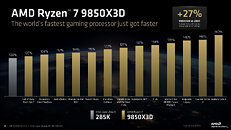
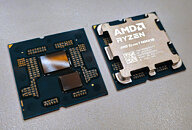
AMD introduced its new Ryzen 7 9850X3D desktop gaming processor last week. This early January virtual launch event occurred weeks in advance of a highly-anticipated rollout at retail; officially set to happen within the first quarter of 2026. An unfortunately-timed pre-CES kick-off leak spoiled some fun—coming from prematurely published e-tail listings—signalling a possible January 29 roll out at shop outlets, at least in France. Earlier today, a new claim made by VideoCardz seems to align—timing-wise—with NDA-busting information mistakenly released by the French LDLC webstore. The popular PC hardware news site believes that Team Red will lift its Ryzen 7 9850X3D review embargo on January 28; the day prior to a speculated retail launch. Additionally, VideoCardz reportedly knows about a recent distribution of press samples—likely heading in the direction of reviewers, influencers, and tech-adjacent entities. A delidded example was allegedly presented at CES 2026, as evidenced by a recent PCGamesHardware Germany article. An unnamed provider managed to sneak OEM variants (intact and torn down) in front of a select bunch of journalists.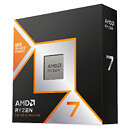

Sources:
VideoCardz, PC Guide, PCGH.de (image source of dellided example)


45 Comments on AMD Could Lift Ryzen 7 9850X3D CPU Review Embargo on January 28
In CAD its $90.
There is increased power consumption but also more performance.
The only difference I feel is the decreased heat due to lower SoC voltage at slow speeds, which is a much bigger advantage than that +1 FPS I'd get otherwise.
Seriously though, due to RAM prices, I'm years away from upgrading from my 5800x. If AMD re-released the 5800x3D, I'd upgrade tomorrow.
As your GPU ages and games become more demanding, you can lower in game settings more and more, using stronger (up) scaling factors and the like, they're more often than not highly scalable to GPU performance and rendering resolution.
With CPU (+ memory subsystem to a degree), when the performance is lower than desired there's generally a lot less in a given game you can do about it. Not that many settings can lighten the CPU load and increase your FPS ceiling when CPU limited.
Just how more performance at Idle will you need to notice the difference?
5600x -> 9850x3D
Frequency: 4600 MHz -> 5600 MHz .... ca +22%
IPC: Zen3 -> Zen4 -> Zen5 .... ca +15% and +8%
Cores: 6 -> 8 ... ca +25%
ST uplift: 1.22 x 1.15 x 1.08 = 1.51 (+51%)
MT uplift: 1.22 x 1.15 x 1.08 x 1.25 = 1.89 (+89%)
Add some for 3D V-cache if you like.
How does 2 generation CPU difference look like?
Cinebench R23
3700x - ST: 1304, MT: 12472
7600x - ST: 1930, MT: 14853
ST: +48%, MT: +19% with only 3/4 of cores.Some people already have AM5 platform with RAM.For some games? Yes.
In general? Not so much.
There are cases where higher clock of 5800x matters more than more cache of 5800x3D.
And vice versa
Step 1: Read it
www.techpowerup.com/img/heL28NDf3ANbXvdC.jpg
What do you see?
Its written there = The world's fastes gaming processor [Key word is GAMING]
Step 2: Read this
The real difference in Full HD games between "antiquated" 7800X3D and "modern" 9800X3D is 4.1% (in 4K = 0.3%)
Zero-Point-Three percent, Karl! :D
Look at this ☝️
Even on the super-enthusiast site, they're only 4% ;)
It's plainly evident that even at 1080p with a 4090 multiple tested games in the review are still GPU bound which skews the relative performance differential. There are multiple games tested where a 7600X and even 5800X3D is achieving within margin of error results to a 9800X3D, being within 5% or less. In one test the 7600X is measured to be faster. Then in other CPU limited tests we see the 9800X3D pants a 7600X by 27%, 30%, 33%, 35% and even 64%. Yet the average of 10 games is 85% relative performance for the 7600X vs 9800X3D.
Given how easy GPU limited results are to spot, and knowing how badly they can skew a relatively small sample size of 10 games, I wouldn't be hanging my hat on saying that a 7800X3D truly possess 95.9% of a 9800X3D's potential performance as a gaming CPU, when the CPU is the limiting factor for your performance.
This doesn't mean other, slower CPU's aren't potentially an adequate choice when you pump the res and are far more likely to be GPU limited, like at 4k where a 7600X is tested to have 97.8% relative performance of a 9800X3D.... But even at 4k there's an outlier, where the 9800X3D is 34.5% faster, BG3. Notice how the 7600X enables 102fps at 4k, and only 105.9fps at 720p, a mere 3.8% more... It held that 4090 back the entire time.
Bit of a rant but what I'm getting at here is the average performance figure at 1080p picture you posted from W1zzards 9800X3D review is not a true, all encompassing figure that accurately represents a 9800X3D's gaming potential vs a 7800X3D.
Now speaking for myself: I won't be jumping from an 8-core chip to another one. Bring me Ryzen 10KX3D with 12c and I'll consider.
We shall wait for reviews on Jan 28th to see what the gains are in cpu bound titles.
12C single CCD is tho, biggest upgrade in NINE years. (Ignoring CCX improvements)
1. Learn basics - always look into more than one review
You see, if you were just a tiny little bit more curious, you would have looked into more than one review by default, as you already know that different reviewers test different mix of games. Those different bundles of tested games contain less or more CPU-bound games and e-sports, where X3D CPUs truly excel. In GPU-bound games, generational uplifts are smaller. So, depending of the mix, you will get different averages across reviewers. Are you learning something new? Good. For example, Hardware Unboxed gets around 11% in games with significant uplifts, where the cut-off point was 3%, a standard below which everything is considered within margin of error.
2. Learn more - what do all reviews together show?
Two reviews if not enough either. If you want to triangulate data from reviews and show a tad more curiosity, then the graph you are actually looking for is bellow - a meta-analysis of 19 global reviews, 'the average of all averages'. Here, the number is 10.3%. That's all you need to remember in terms of the word 'average'. If you play majority of CPU-bound games, like Flight Simulator and similar games hammering CPUs and cache, and many e-sports titles, 9800X3D will bring you very decent generational uplifts. If you play majority of GPU-bound games, then the answer is smaller, single digit uplifts and it's not worth upgrading from 7800X3D.
3. Learn even more - CPU matters in 4K too, even with lower tier GPUs
Now, if you are really motivated to find out nitty-gritty details, for example performance in 4K, you will need to put some extra effort into analysis and forget about Ultra settings being a reliable indicator of all performance in 4K. Unfortunately, no global tech outlet has tested a wide range of games in 4K non-Ultra settings, as this takes a lot of time and reviewers often work to tight deadlines. However, we have strong indicators that when GPU load is lowered from Ultra to High or Medium, this is where X3D CPUs excel again, more than other CPUs, because CPU-bound games, e-sports and cache sensitive games allow 9800X3D to stretch its muscles further than other CPUs. See below. And no, you do not need 5090 to get benefits from X3D CPU in 4K, as you can hopefully see in the graphs. Notice how performance difference between CPUs are wider in Medium settings than in Ultra settings. That's your X3D CPU working hard for you. That's all you need to remember about 4K - lower the settings until it's still enjoyable to play and rejoice.
4. Master the learning about CPUs role in gaming, including 4K gaming
Here is an article about how CPU contributes to gaming performance and which gaming workloads it processes.
cyberpost.co/is-hogwarts-legacy-gpu-or-cpu-heavy/
Another game that shows even greater uplifts in 4K with X3D CPUs is Hogwarts Legacy. Here, it is shown with three different GPUs. With 7700XT, you get whopping 50% performance uplift in Medium settings. 9800X3D would bring even more uplift here, minimum another ~20%.
We need TPU or other tech outlet to freshly re-test CPUs in a bigger sample of games, in different settings and with different GPUs to show where exactly those uplifts could be expected with X3D CPUs. There's performance hidden under the table in 1440p and in 4K, even with mid range GPUs. Testing only in Ultra settings does not allow us to see this hidden performance. I hope this makes sense. Enjoy.
I am curious if they are binned what's better (ignoring the installation extra work) a delidded 9800X3D or a 9850X3D with a good 360 aio on it.
If they delid a 9850X3D, how much further can they take it.
There's a hard limit on 7800X3D's 5.05
Is there a hard limit on either variant of the 98x0X3D (either lidded on or the TG delid)