Friday, February 27th 2026

Microsoft Brings Back the Dumb Terminal with Windows 365 Cloud PCs
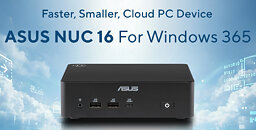
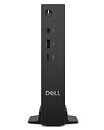
Microsoft has partnered up with ASUS and Dell to bring back the "dumb terminal," or at least something that very much reminds of it. Back in 2024 Microsoft launched its Windows 365 Link cloud PC which largely went unnoticed outside some corporate usage. Now the company has decided that it's time to let its partners get a slice of the action with the announcement of the ASUS NUC 16 for Windows 365 and the Dell Pro Desktop for Windows 365.
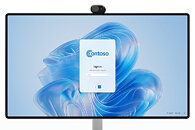
Based on the specs of equivalent models from ASUS and Dell, the hardware could still prove to be decent, with ASUS' coming soon page point towards DDR5 memory, Wi-Fi 6E, Bluetooth 5.3 and 2.5 Gbps Ethernet, as well as USB 3.2 Gen 2x2 Type-C connectivity. Nothing is really known about the Dell Pro Desktop, as it appears to be a new model of its current hardware, based on the picture provided by Microsoft. What makes these two devices "dumb terminals" is that they run Windows 365, which is a stripped down OS that launches you straight into Office 365. The devices aren't expected until the third quarter of this year, but are a clear sign of things to come, where Microsoft wants to push the corporate PC to be a cloud only device. This might work for some businesses that don't require any other software for their staff, but it's hard to see how this will replace the traditional PC.
Source:
Windows Experience Blog
Based on the specs of equivalent models from ASUS and Dell, the hardware could still prove to be decent, with ASUS' coming soon page point towards DDR5 memory, Wi-Fi 6E, Bluetooth 5.3 and 2.5 Gbps Ethernet, as well as USB 3.2 Gen 2x2 Type-C connectivity. Nothing is really known about the Dell Pro Desktop, as it appears to be a new model of its current hardware, based on the picture provided by Microsoft. What makes these two devices "dumb terminals" is that they run Windows 365, which is a stripped down OS that launches you straight into Office 365. The devices aren't expected until the third quarter of this year, but are a clear sign of things to come, where Microsoft wants to push the corporate PC to be a cloud only device. This might work for some businesses that don't require any other software for their staff, but it's hard to see how this will replace the traditional PC.


27 Comments on Microsoft Brings Back the Dumb Terminal with Windows 365 Cloud PCs
Alot of money to be saved out there
only really useful for schools/libraries, and perhaps some corps, but useless to everyone else
The most modern kind of terminal is from Citrix, they have something quite similar to this as well, but at least there, the corporation that has them installed can decide more freely on what software their users can access.
en.wikipedia.org/wiki/Citrix_Systems#Products
This is dumb in the way that the hardware seems to be reasonably powerful, while you're locked in to using Office 365 and seemingly not much else. I presume Edge is part of what you can use as well.
The old school terminals all connected to mainframe and that's not something I've ever touched. Most of them had very basic hardware, compared to a "real" computer, unlike whatever Microsoft just announced.
en.wikipedia.org/wiki/Computer_terminal
Regardless, in all instances, these are systems that the user has zero control over.
I know of companies that are going solely for wireless connections for their offices (hallmark from Delloite's "hot-seat" "innovation" from 2013), to save coin from copper, for which this will backfire completely unless a high-density grid of full-certified 802.11ax is installed and even then, with the outages that Microsoft had in 2024 and 2025, this cloud-connected terminal is a huge cybersecurity and resilience planning concern, to use.
If we're post lean processes and departments, that means that to some extent, almost every vector of production, operation, administrative and support is critical to a company and it won't be great if you literally cannot go past logon, because "The server is unavailable.".
See, with the original terminals, the mainframes they connected to were on-prem. Post-Balmer Microsoft hates everything related "on-prem", even the word itself.
The issue with M365 connected content that is dynamically edited is that if sync is not available, it becomes a N+1 version of the original if storage is available otherwise lost, for which a merge is always a challenge. That for MSOffice data might be a big hurdle only sometimes, but let's talk databases and automation processes, then. You miss something, then what? I'm pretty sure that if most companies were presented with: "Hey, with scenario A where data loss occurs, your calculated expense in business impact would be X." that would get the C-Level thinking.
EDIT: Wrote in a rush the 1st time, improved the grammar a bit.
wire.com/en/blog/unbundling-dependence-eu-teams-breakup-enterprise-sovereignty
apnews.com/article/europe-digital-sovereignty-big-tech-9f5388b68a0648514cebc8d92f682060
www.oracle.com/cloud/eu-sovereign-cloud/
I wonder how long the Azure fairy tale is going to last, abroad at least.
Meanwhile chromeOS is super simple to administer and educational Chromebooks are both cheap and quite repairable. I have some that have been through the ringer multiple times but are still going.
But I suppose the result is the same, you don't own the PC or the OS and have to rely on MS software for everything, and given how much MS breaks regularly with updates this wouldn't go well for a company or IT supporting these PC's.
I'm not surprised MS is trying to attract businesses with cheaper dumb terminal like devices, though as mentioned it would make more sense for businesses to hold onto hardware longer instead.
Why would they want to own a depreciating asset that costs money to maintain?
Edit: It seems like the Windows 365 Link cloud PC has an Intel N250, 8 GB of RAM and 64 GB of UFS storage, yet still sells for US$350. I guess these things will be double that price or more then...
www.windowscentral.com/microsoft/microsofts-windows-365-link-mini-pc-is-now-available-full-specs-and-pricing-revealed
Have to lock one behind a good firewall and see what it spews.
However this starts with corporate use, Microsoft will probably find a way to sell this to the average user as owning a PC will be priced for the high end market only unless the AI bubble pops.
See also the automotive industry and its dependance on chip production that they really cannot exercise control over.
They don't like that - it puts pressure on their entire existence and they will work to counter that problem. The obvious counter is having actual control over hardware (production/supply).
And in todays world EVERY corp relies fully on computer hardware in one way or another. It takes just one contract that cannot be honored in the industry for this whole principle to fall apart and give businesses their much needed reality check. Its the exact same 'asleep at the wheel' risk mitigation the EU has been doing geopolitically and it will work out the exact same way - when push comes to shove, if you have no real leverage, you're screwed.
Writing down intentions on your contract in the end only translates into money going from one party to the other. It does not guarantee hardware in any way shape or form.
The leasing promises way better SLAs and lower TCO, which we can see that is a lie when the math is done properly (also ROI isn't really there because support SLAs don't really come to fruition and JIT deliveries are now impacted by what we are wittnessing regarding "shortages"), but we have that one executive that two fiscal years ago somehow argued that there would be gains from going from a capex to an opex approach post-covid times.