Thursday, April 16th 2026
Game Industry Workers: AI Hurts Creativity
The Skillsearch 2026 Games & Immersive Salary Report has been published, with the results of the survey revealing findings relating to AI, hiring, and game industry trends. While the data is impressively cohesive, there are a few main takeaways from the report that highlight both a pessimistic outlook on AI and the overall gaming industry. Despite many of the gaming industry's biggest game studios going all-in on AI, only 29% of respondents surveyed worked for companies that had policies or guidelines for ethical AI use. Of the game workers themselves, who consisted of a mix of everything from management, HR, and operations to art, programming, design, and writing, as many as 64% believe AI has a negative impact on creativity in the gaming industry, while 52% stated that they or their company have started using AI tools in their workflows.
When asked about the game industry job market, responses varied greatly, likely in part because the survey targeted many different countries. When it came to finding a job, 56% of graduates who did not have a gaming-related degree took longer than a year to find a job in the industry, and even 25% of the respondents who had a degree in gaming said it took over a year. Meanwhile, 27% of graduates with a degree in gaming managed to land a job in the industry before even graduating. Meanwhile, 65% of respondents reported that they have been directly affected by layoffs or layoffs happened at the studio where they work, with 22% of workers saying they were made redundant within the last 12 months. Of those who were made redundant, 52% were "unsatisfied with their redundancy package." Only 45% of those made redundant have since gone on to find new jobs, and only 27% of those workers feel secure in their new positions. As many as 37% of those who were laid off have been unemployed for longer than seven months.


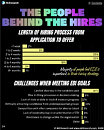
 The survey also reports that game 45% of game studios listed new games as their top priorities for 2026, while studio space, events, and recruitment were the least common priorities for the year. Of those respondents who reported being involved in the hiring process, 33% reported that the hiring process took two to four weeks, with another 33% reporting a hiring process as long as one to two months, with the biggest hiring challenges being skills and experience, out-of-budget salary expectations, and ensuring candidates align with the company culture and values.

Source:
Skillsearch
When asked about the game industry job market, responses varied greatly, likely in part because the survey targeted many different countries. When it came to finding a job, 56% of graduates who did not have a gaming-related degree took longer than a year to find a job in the industry, and even 25% of the respondents who had a degree in gaming said it took over a year. Meanwhile, 27% of graduates with a degree in gaming managed to land a job in the industry before even graduating. Meanwhile, 65% of respondents reported that they have been directly affected by layoffs or layoffs happened at the studio where they work, with 22% of workers saying they were made redundant within the last 12 months. Of those who were made redundant, 52% were "unsatisfied with their redundancy package." Only 45% of those made redundant have since gone on to find new jobs, and only 27% of those workers feel secure in their new positions. As many as 37% of those who were laid off have been unemployed for longer than seven months.


21 Comments on Game Industry Workers: AI Hurts Creativity
Like this A image a fan generated for Warframe
Nothing of value is lost here, I think. The content itself will be our guide, as it always has been.
It's already pretty easy to see the patterns and repetitive junk coming our way; identifying AI written text is childs play. And if its NOT that its actually original and surprising and then, if AI inspired that, I think its showing its value, right?
Creativity might be lost but only locally and temporarily. We'll bounce back from that.Ah, you mean that thing where a Publisher funds a studio? ....Its a nice escape for dead weight in the company "its not me, the tooling is the culprit!"
I think I said the same thing as you did, just using different words.
And if we can't see the difference between generative junk and real artwork, the artists have some soul searching to do.
This problem is temporary and this too, shall pass.
Sure AI can be a black box. The how and why doesn't matter, just the transactional if-then process.
When I'm working on something that depends on a creative process or product I use AI for drafts.
I typically see an entire system in place when working on new stuff and usually need to explore.
Sometimes I find holes in those systems or an absence of reality. The AI helps to steer around it.
Maybe Microsoft will take a leaf out of Project Amethyst with their new box?
I think Star Citizen was aiming to have a 90% NPC to 10% ratio to make the universe feel more alive. At least outside of yourself...
As such, over using it will definitely hurt creativity.
Just compare Star fields NPCs to oblivions. Starfield has more, but they just aimlessly wander. The radiant system in oblivion could be goofy but it was genuinely immersive and it ran on computers 20 years ago.
I agree, but isn't their "Driveatar" stuff done backend? Certainly be interesting to see scale relative to application.
In the same breath as "Scam Citizen", at least the fine folk at Once Lost Games know which direction they wished games had gone.
It's also useful for research, data analysis, and to get a flow of ideas you can work on.
If it's being used as a solution in any environment, you're using it wrong.
I wouldve thought you guys smart enough to see through this BS.
We are a nation of laws that do little more than protect the threats and punish victims.
Half cooked AI tools that have no business in production are hamfisted exactly where they don't belong.
You know, situations that decide/destroy human lives primarily through pre-interview dismissal, busted security gates, wrongthink labels and bad insurance agents.
The entire point of adopting tools of any kind is to delegate resources and solve problems, not create more of them.
So if not stupid, then outright pure malice. Is that where we're going with this?The artists are already eating well, at least the ones that know how to stay busy with a long ass queue.
Everybody eats. Some eat more, some eat better. I do not worship the artists and you shouldn't either.
Half of them are scambait, a big portion are unable to follow directions and a few are extremely good.
I can find many but also don't want to give them work until it's worth the attempt. Their time matters.No, it's the ladder pull and this bizarre convergence of censorship that's running rampant in our hobbies these days. It now bleeds into everything else.
If you're an artist that makes consensual ero material but you're a pleb, you get shut down, deplatformed, unperson'd because it isn't "safe" to create.
But if you're a corpo artist, things like this are totally chill because companies can just do this without any kind of pushback or major social backlash.
Make it make sense. I'll be adding AI brushes to my next Blender workflow.