Tuesday, June 9th 2026

Intel 8086, the First x86 chip, Enters its 50th Year in 2027

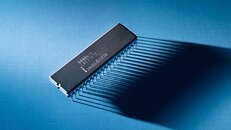
Intel on Monday celebrated 48 years of the 8086, the microprocessor that laid the foundation of its breadwinning x86 microarchitecture. Introduced in 1978, the 8086 is a 16-bit microprocessor that established the x86 ISA. Its significance lies in its role as the basis for the IBM PC lineage, establishing a dominant standard for desktop computing. Prior to the 8086, the market was fragmented. By providing a scalable architecture, Intel enabled software developers to write programs that remained compatible across multiple hardware generations. This commitment to backward compatibility meant that legacy software could run on newer, faster processors. Consequently, the x86 architecture, originating from the 8086, remains the most prevalent platform in computing markets globally today. By this time in 2027, the chip will enter its 50th year. This probably explains why Intel wants to once again dominate the market with an x86 processor that has significant core-count and cache size increases.
Source: Tom's Hardware
Add your own comment

29 Comments on Intel 8086, the First x86 chip, Enters its 50th Year in 2027

#1
Grimling
50 year Anniversary Edition incoming?
Posted on Reply
#2
dj-electric
Grimling50 year Anniversary Edition incoming?
Well, we already had a Core i7 8086K, maybe Intel can come up with another special edition processor.
Posted on Reply
#3
glen-the-grey
btarunrthe x86 architecture, originating from the 8086, remains the most prevalent platform in computing markets globally today
Is that still true with ARM processors being in everything?

Maybe it should read "...most prevalent platform in desktop computing markets..."
Posted on Reply
#4
Kohl Baas
dj-electricWell, we already had a Core i7 8086K, maybe Intel can come up with another special edition processor.
Here comes the Core Ultra 9 8086K... :laugh:
Posted on Reply
#5
_roman_
Intel and AMD are both not backwards compatible.

AVX512 was removed on the intel side.
XOP instruction was removed after the AMD Bulldozer architecture. There are more instrucitons which are not backwards compatible.

MAybe up to the year 2020 it maybe was correct.

some compiler targets are the same for certain processor families when you drop certain instructions.

backwards compatibility only matters when you have a long term installation like i do for 20 years where you move the data from storage to storage and motherboard to motherboard. 20 years no fresh installations, but many windows fresh installations because it is not backwards compatible.

I already consider AVX512 as legacy code and this will not run on most "intel" consumer platforms. I did not bother yet with the intel 270k plus ultra something family so far.

Thething if it is x86 or not is up to discussion. I mix on purpose amd64 wiht x86.

I also doubt certain cpus and operating system can still execute x86 16 bit code. can it run native? without dosbox? i think i read something about it years ago, the 16 bit support will be dropped or is dropped.

The statement is flawed, like many intel cpus, ethernet and wireless products.
Posted on Reply
#6
Wirko
Grimling50 year Anniversary Edition incoming?
Speaking of 50th anniversaries, let's also remember the Zilog Z80. The exact date has apparently been forgotten but this microprocessor was launched in July 1976.
(And it had the logic for DRAM refresh built in!)
Posted on Reply
#7
Hakker
_roman_Intel and AMD are both not backwards compatible.

AVX512 was removed on the intel side.
XOP instruction was removed after the AMD Bulldozer architecture. There are more instrucitons which are not backwards compatible.

MAybe up to the year 2020 it maybe was correct.

some compiler targets are the same for certain processor families when you drop certain instructions.

backwards compatibility only matters when you have a long term installation like i do for 20 years where you move the data from storage to storage and motherboard to motherboard. 20 years no fresh installations, but many windows fresh installations because it is not backwards compatible.

I already consider AVX512 as legacy code and this will not run on most "intel" consumer platforms. I did not bother yet with the intel 270k plus ultra something family so far.

Thething if it is x86 or not is up to discussion. I mix on purpose amd64 wiht x86.

I also doubt certain cpus and operating system can still execute x86 16 bit code. can it run native? without dosbox?

The statement is flawed, like many intel cpus, ethernet and wireless products.
IA64 is also one and is actually the only instruction set that actually broke programs because it actually replaced stuff instead of adding things. All what you mentioned are instructionsets not being used except in very specific cases. They provide additional boosts in certain cases.
But you also missed Intel (MPX, KNC, LOCK), AMD's (3DNOW, FMA4, SSE5, TBM, LWP), Cyrix EMMI and VIA's AIS instruction sets.The funny thing is that with AMD's switch to Ryzen CPU's it broke all 5 of those instruction sets I mentioned before. Kind of shows you how much was on the line for AMD to make Zen cpu's succeed. AMD literally went all in on that one.
Posted on Reply
#8
lemonadesoda
WirkoSpeaking of 50th anniversaries, let's also remember the Zilog Z80. The exact date has apparently been forgotten but this microprocessor was launched in July 1976.
(And it had the logic for DRAM refresh built in!)
My first machine code was Z80, later 6502 then 65C102
Posted on Reply
#9
ymdhis
HakkerIA64 is also one and is actually the only instruction set that actually broke programs because it actually replaced stuff instead of adding things. All what you mentioned are instructionsets not being used except in very specific cases. They provide additional boosts in certain cases.
But you also missed Intel (MPX, KNC, LOCK), AMD's (3DNOW, FMA4, SSE5, TBM, LWP), Cyrix EMMI and VIA's AIS instruction sets.The funny thing is that with AMD's switch to Ryzen CPU's it broke all 5 of those instruction sets I mentioned before. Kind of shows you how much was on the line for AMD to make Zen cpu's succeed. AMD literally went all in on that one.
Those are all extensions to x86. They have always been a cause for incompatibility, I remember in some early emulators in the 00s when something using SSE did not run on early Athlons, something using SSE2 did not run on Athlon XPs, etc.
But as long as you don't lock a program to force usage of an extension (either something not yet available, or something now defunct), something programmed in the 90s that targets at least i386 should still execute on a Zen 4 chip (OS limitations notwithstanding).

Case in point I still occasionally fire up games made around 1999-2001. Sometimes they need patches for the graphics API changes and the lack of driver support, but otherwise they run fine.

IIRC the biggest break in backwards compatibility in the past 20 years was not AVX or FMA4 or SSE5, but the removal of 16-bit support in x64 chips. And even that only applied to when the chip was running in x64 mode, in 32-bit mode it was not a problem. Not sure if that's still the case, last time I tried that was in the early 2010s with an Ivy Bridge chip and 16-bit apps still worked through Virtual PC (Windows 7 had a bundled "XP Mode" that used Virtual PC).
Posted on Reply
#10
BSim500
ymdhisCase in point I still occasionally fire up games made around 1999-2001. Sometimes they need patches for the graphics API changes and the lack of driver support, but otherwise they run fine.
I find it impressive we can still play 1970's PC games like Akalabeth, Zork or Colossal Cave Adventure without much issue.
Posted on Reply
#11
sam_86314
WirkoSpeaking of 50th anniversaries, let's also remember the Zilog Z80. The exact date has apparently been forgotten but this microprocessor was launched in July 1976.
(And it had the logic for DRAM refresh built in!)
...and it's still used today in Texas Instruments graphic calculators.

Gotta love paying top dollar for literally 50-year-old technology.
Posted on Reply
#12
Grimling
WirkoSpeaking of 50th anniversaries, let's also remember the Zilog Z80. The exact date has apparently been forgotten but this microprocessor was launched in July 1976.
(And it had the logic for DRAM refresh built in!)
I remember my Dad had a ZX Spectrum with a cassette audio player. It was using normal audio cassette tapes to load software. I played a stupid game with spiders in it. And it was not easy to play on it, considering the only input device was this horrible "keyboard" on the computer, that had soft wobbly keys.
Posted on Reply
#13
A Computer Guy
dj-electricWell, we already had a Core i7 8086K, maybe Intel can come up with another special edition processor.
80286K?
Posted on Reply
#14
lemonadesoda
Somewhere in a bottom drawer I have some CERAMIC 8080 chips with a window and GOLD traces and GOLD leg-pins. From a salvage yard approx 1988. I couldn't let them get crushed just to recover trace gold elements.


From the internet:


Key Differences

FeatureIntel 8080Intel 8086
Type8-bit microprocessor16-bit microprocessor
Release Year19741978
Data Width8 bits16 bits
Address Width16 bits (up to 64 KB memory)20 bits (up to 1 MB memory)
Max Clock Rate2 MHz to 3.125 MHz5 MHz to 10 MHz
Transistor Count4,500 to 6,00029,277
Architecture8080 architecturex86 architecture
Primary UseEmbedded systems, early PCsPCs, servers, and workstations
Posted on Reply
#15
Rulumi
_roman_I also doubt certain cpus and operating system can still execute x86 16 bit code. can it run native? without dosbox? i think i read something about it years ago, the 16 bit support will be dropped or is dropped.
I think CPU wise they still can if you use a 32-bit or 16-bit mode kernel or OS, albeit a lot of such software may require also having CSM support in the case of old legacy 16-Bit mode operating systems.
ymdhisIIRC the biggest break in backwards compatibility in the past 20 years was not AVX or FMA4 or SSE5, but the removal of 16-bit support in x64 chips. And even that only applied to when the chip was running in x64 mode, in 32-bit mode it was not a problem. Not sure if that's still the case, last time I tried that was in the early 2010s with an Ivy Bridge chip and 16-bit apps still worked through Virtual PC (Windows 7 had a bundled "XP Mode" that used Virtual PC).
I think it should still work, just that you usually would need CSM support in your motherboard if you want native support and not through virtualization. I'm pretty sure that as long as you have CSM and with a lot of effort you can still get things like Windows 3.11 to work in modern AMD and Intel CPUs.

Since almost everyone of the big companies and players opposed to Intel proposition of "X86S", "X86S" would of have eliminated 32-Bit RIng 0, 16-Bit Adressing and protected 16-Bit and 32-Bit modes and realted, mostly only leaving 32-bit userspace support only. But since it was opposed to and Intel terminated the intiative of "X86S" for 64-Bit mode only architecures as such, 32-Bit mode (and probably the 16-Bit mode and adressing parts it relies on because legacy) aren't going anywhere any time soon.
Posted on Reply
#16
lexluthermiester
Intel's CPU line up is almost as old as me.. WTH! Thanks Intel, I did not want to feel that old! :banghead:;)
Posted on Reply
#17
Darmok N Jalad
dj-electricWell, we already had a Core i7 8086K, maybe Intel can come up with another special edition processor.
Due to DDR5 shortage, we give you the “Core i7 8086K 50th Anniversary Edition”! Pairs great with a 3060!
Posted on Reply
#18
Wirko
lemonadesodaI have some CERAMIC 8080 chips with a window
That was not a window, that was a lid. The operation done on the right chip in the pic is called "delidding". The usual suspects for it were the guys who called themselves "AMD", or Advanced Microprocessor Delidding.
Posted on Reply
#20
lemonadesoda
WirkoThat was not a window, that was a lid. The operation done on the right chip in the pic is called "delidding". The usual suspects for it were the guys who called themselves "AMD", or Advanced Microprocessor Delidding.
Yes/no.

I have a number of "8080" with windows. What? They were versions of 8080 family that had UV windows for clearing EPROM code. In another drawer, somewhere, i even have a UV box and an EPROM programmer. Photo illustratuve. LHS, thats a 2764 EPROM, and i had loads of those programmed ROMs for utilities on my 6502 BBC Micro, upgraded to clock doubled 65C102. Word processors, teletext, disassemblers, extensions to BASIC, floppy disk utilities etc. Fun days.
Posted on Reply
#21
A Computer Guy
wNotyarDCore Ultra 486DX incoming?
Core Ultra 486DX (with e-cores) and Core Ultra 486SX (without e-cores)
Posted on Reply
#22
Ihnako
Darmok N JaladDue to DDR5 shortage, we give you the “Core i7 8086K 50th Anniversary Edition”! Pairs great with a 3060!
Nah... you can buy the original 8086 with 640 KB RAM and an original IBM (clone) mainboard as an effortable computer.
Manufacturing the highly advanced 3 µm chips should be doable. And since you only get 640 KB, you can spend all your money in RGB and other fancy stuff.
Posted on Reply
#23
RootinTootinPootin
lexluthermiesterIntel's CPU line up is almost as old as me.. WTH! Thanks Intel, I did not want to feel that old! :banghead:;)
you're still in bingo cards man!!
Posted on Reply
#24
Wirko
lemonadesodaYes/no.

I have a number of "8080" with windows. What? They were versions of 8080 family that had UV windows for clearing EPROM code. In anorher drawer, somewhere, i even have a UV box and an EPROM programmer. Photo illustratuve. Thats a 27xx EPROM, not a microprocessor with programmable ROM combo.
I totally forgot that microcontrollers with UV EPROM existed. However, they belonged to the 8048 or 8051 families, and the second digit was a 7, so the model numbers were 8748, 8751 and such. It's obvious what that "7" stood for if you compare it to stand-alone UV EPROMs.

It's funny to see how some parts of the nomenclature persist till today. 80 = processor -> 80768 = Arrow Lake Core Ultra, 82 = peripheral -> 82Z890 = Z890 chipset, 29xxx = Micron flash ROM.
lexluthermiesterIntel's CPU line up is almost as old as me.. WTH! Thanks Intel, I did not want to feel that old! :banghead:;)
Not sure which CPU you meant here but my age is 4004. This makes me a bit old and a bit proud, almost like gold-plated.
Posted on Reply
Add your own comment
Nov 22nd, 2026 13:46 CST change timezone

New Forum Posts

Popular Reviews

TPU on YouTube

Controversial News Posts