Tuesday, July 14th 2026
Slay the Spire 2 Dev Explains Why It Used "A Bunch Of Garbage" Art Instead of AI Placeholders
There's an ever-growing list of games that have received notable backlash for the use of AI-generated placeholder art in games, from Pearl Abyss's Crimson Desert to The Alters, and even the award-winning Clair Obscur: Expedition 33. When the wildly popular Slay the Spire 2 launched to Early Access earlier in 2026, it was littered with roughly scrawled placeholder art. Mega Crit co-founder, Casey Yano recently explained the decision to shirk AI art in favor of the scribbles in a recent interview with GameSpot, and it mostly seems to come down to both communicating to the players that the game is in an early access state and making it obvious what the cards in the deck-builder do. He argues that generative AI also removes authorial intent, so some of the intended communication would be lost if the studio used generative AI art instead of the hastily scrawled concept sketches.
Yano explains that "If we use art that looks nearly complete, then people would think that that's going to be the final art. It has to look like shit. It's important that it looks like shit." He notes that part of that communication of the game's incomplete state is self-preservation, because "otherwise people would judge the game as if it's a 1.0, fully developed video game." He also notes that the art helps avoid confusion among both players and other artists: "Prioritization was mostly about making sure that our players have an emotional connection to the content and also recognize what content is what," he continues to say "when you draw placeholder art, there's a very high chance that when we pass it on to our artists...so I do want the [placeholder] art to be kind of like a framework, especially-especially-the art that's used in the timeline. They're the narrative beats, and I want to make sure that those kinds of compositions and colors and details [are] communicated through those drawings."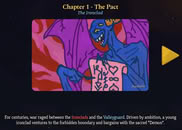
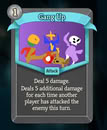 The latter point has become a point of contention when it comes to AI placeholders recently, because in almost every example in which a large studio ends up with unintentional AI-generated art in a final game, it's because it "slipped through" QA. Thus, it makes sense to make the placeholders as obvious as possible, and the Microsoft Paint-style cave paintings seem to strike a middle ground between communicating what the game needs its players to understand and making placeholders obvious to fellow artists in the development pipeline.
Sources:
u/Blubbpaule on Reddit, u/ggWolf on Reddit, GameSpot
Yano explains that "If we use art that looks nearly complete, then people would think that that's going to be the final art. It has to look like shit. It's important that it looks like shit." He notes that part of that communication of the game's incomplete state is self-preservation, because "otherwise people would judge the game as if it's a 1.0, fully developed video game." He also notes that the art helps avoid confusion among both players and other artists: "Prioritization was mostly about making sure that our players have an emotional connection to the content and also recognize what content is what," he continues to say "when you draw placeholder art, there's a very high chance that when we pass it on to our artists...so I do want the [placeholder] art to be kind of like a framework, especially-especially-the art that's used in the timeline. They're the narrative beats, and I want to make sure that those kinds of compositions and colors and details [are] communicated through those drawings."


When you draw anything, you draw a thousand lines. Each line is not some serious decision, but there's a decision process for nearly every line—every line you erase, every line you adjust, and everything that you do. There's also a very distinct look to [AI art as well. To me, it's very strange. It's very dense, very colorful, and very distinct. It doesn't fit with the rest of the art style, and it's just clearly lazy.The crude art has become something of an endearing trait in the game, with multiple Reddit threads discussing the comical visuals and some even requesting an option to toggle the placeholder art when the game does eventually exit Steam Early Access. Yano confirmed in the interview that this is the intention, also commenting that he'd like to take it further, with a community contest for fans to draw "janky" art for some of the monsters that could be added to the game as optional art to celebrate the community.
11 Comments on Slay the Spire 2 Dev Explains Why It Used "A Bunch Of Garbage" Art Instead of AI Placeholders
Mega Crits are just greedy to hire a good artist :cool:
Does not compute
I mean this ain't Picasso lets be real
Tons of things change all the time in early access...
However, now, going by what he said, since it looks like shit, then people are going to think it will always look like shit, since those same people are going to think that this is "final art" 🙄