Friday, August 21st 2026
AMD Confirms Radeon RX 9050 4 GB Has Smaller Infinity Cache, Lower Memory Bandwidth
AMD has updated its documentation page for the late-July launch of the Radeon RX 9050 graphics cards, which include two models: one with 4 GB and another with 8 GB of GDDR6 memory. Both cards feature 1,024 Streaming Processors across 16 Compute Units and can boost up to a 2.6 GHz clock speed. However, the lower-end GPU has only 4 GB of GDDR6 memory on a 64-bit bus, resulting in a memory bandwidth of 144 GB/s, which is significantly lower than the 8 GB version. The 8 GB version of the Radeon RX 9050 uses 8 GB of GDDR6 on a 128-bit bus, providing a memory bandwidth of 288 GB/s, doubling the throughput.
Another difference lies in the Infinity Cache within each GPU die. The 8 GB edition has 32 MB of Infinity Cache, while the 4 GB edition has only 16 MB. Initially, the listing for the 4 GB edition did not reveal the difference in Infinity Cache size, but AMD's documentation confirms it. Naturally, this will result in some performance differences, as larger cache buffers tend to improve performance significantly.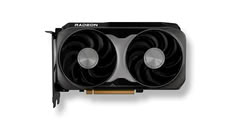 AMD confirmed that the 4 GB version will be exclusively for OEMs and system integrators to include in their low-end PC configurations. For gamers, the 8 GB edition will be marketed as the entry-level RDNA 4 GPU and is expected to be priced at $279, making it the most affordable card AMD currently offers. There appear to be no Made by AMD (MBA) designs, as add-in board partners are handling the launch.
Sources:
AMD, via VideoCardz
Another difference lies in the Infinity Cache within each GPU die. The 8 GB edition has 32 MB of Infinity Cache, while the 4 GB edition has only 16 MB. Initially, the listing for the 4 GB edition did not reveal the difference in Infinity Cache size, but AMD's documentation confirms it. Naturally, this will result in some performance differences, as larger cache buffers tend to improve performance significantly.

118 Comments on AMD Confirms Radeon RX 9050 4 GB Has Smaller Infinity Cache, Lower Memory Bandwidth
Absolute garbage for the discerning, not terrible for those looking at building/buying Used.
It's Marketing Wank from CyberPower, etc.
TBF
This PoS OEM-only RX 9050 4GB still will beat a 6500XT in RT and a FuryX and RX480/580/590 in raster. All while using less power and providing full modern Video HW Encode/Decode support.
As a Basement Entry into PC gaming in 2026, it's not the worst compared to piecemealing ultra-budget used components or buying someone else's retired oldrig.
I also don't see the relevance of your example in relation to this topic, that's my honest answer.
I'm here because this product is straight up misleading any potential buyers of it, it's got the wrong name and the wrong price and I'm not willing to excuse it against previous examples of similar products.
That is why I am telling you Nvidia sets the prices. Because it has raised its prices by 40–60%, maybe even more in some cases, and people still prefer its GPUs. So it rules the market; it drives pricing. If AMD could influence the market with its own pricing, Nvidia wouldn't feel so comfortable jacking up prices—it would limit its profit margins.
So, when AMD sees that people blindly buy Nvidia, and when it sees Nvidia pricing its cards so high, AMD has no reason to keep its profit margins low, nor does it have any reason to take a loss by absorbing most of the memory price hikes. Naturally, AMD will move upward too. If Nvidia kept its prices in check, not only Nvidia cards, but even AMD cards would be cheaper. If the RTX 5050 hadn't gone from $250 to $300+, the RX 9050 would probably cost $240, not $280. It would still be a bad choice, but a cheaper one.And why should gaming cards be a priority for AMD? Gamers themselves come right out and tell AMD to its face that they will keep buying the RTX 5060 Ti even over the RX 9070. Because if the majority of the market didn't have a clear preference for the RTX 5060 Ti over the RX 9070, prices wouldn't hold at these levels for even an hour. Any retailer raises a product's price as long as customers keep buying, and they won't stop raising it as long as they see customers continue to buy.
We have reached a point of effective monopoly, where prices are at ridiculous levels—you look at GPU prices and know that in other eras, those prices would cover the entire system hosting the card, and yet plenty of people defend the prospect of things getting even worse with knives between their teeth. Under these conditions, no serious company is going to waste silicon wafers—which it already lacks—on customers who simply do not care.Let me add one more thing here. Nvidia knows that whatever GPU it releases to the market, it will sell at MSRP or higher. AMD doesn't have that luxury. So AMD has all the more reason to prioritize Instinct, EPYC, and even Ryzen, because it knows those will sell. Instinct and EPYC are locked-in contracts. The Ryzen 5 5800X3D Anniversary proved that AMD is even willing to redesign parts of a chip as long as it knows people will actually buy it. Unfortunately this isn't the case in the GPU market.
2GB VRAM GPUs, no one said it's Nvidia's fault. Everyone said what it really is. A limited supply model for an OEM, because an OEM order it. Stop making stuff up. And it's 4GB not 2GB. A model that even youtubers will have a hard time finding one to review. And they will do their best to find one. But other than HUB, I doubt many will manage to find one.
BTW, found out these cards have a full pcie interface, all 16 lanes. Are these companies finally realizing that cutting vram at the same time you cut pcie bandwidth is really stupid? Especially when they are low end cards likely to be used in machines with older versions of pcie? ( The thing you need the most when vram is low! ) Or maybe its just fulfilling an order, like you say. Hopefully its the former.
If Nvidia dropped its prices to reasonable levels, AMD would be forced to lower its prices as well. Exit the market? I doubt it, unless Nvidia pursued a pricing policy specifically designed to leave itself as the only practical player left. But that could backfire, because if regulators couldn't be convinced that Intel was a meaningful competitor, they would step in to prevent the creation of a clear monopoly. Besides, suggesting market exit as a solution for AMD isn't something we, as consumers, should even be discussing. And yes, if Nvidia pushed AMD out of the gaming market just to play completely alone, we shouldn't just consider it Nvidia's fault—it would be a hostile move against PC gaming, against you, me, and future generations. The obvious goal would be pushing us toward GeForce Now to milk us without limit or control, merely offering a few hours of playtime via a subscription. That would be disgraceful.So why not reduce that 90% share? What is the point of wasting hours, days, and months online fighting to keep that share at 90% or push it even higher? Look at what you just wrote and think about it. If Nvidia felt the need to compete with itself or an equal rival, what kind of prices and GPUs would we have on the market today?Like I said, gamers are proving every day right now that even when the 10% offers an RX 9070 XT with 16GB VRAM for the price the 90% offers an RTX 5060 Ti 16GB, they will still go ahead and support the 90%. Do you not realize how much harm this situation is doing to all of us?
P.S. Nvidia tried to aggressively enter the smartphone market about 15 years ago with Tegra, and Qualcomm’s antitrust tactics practically threw them out. Just imagine where smartphone SoCs, ARM-based laptops, and more would be today if Qualcomm had allowed Nvidia to operate in a fair market. How many smartphones today would have enhanced AI capabilities because they used CUDA-supported GeForce GPUs? On the other hand, where would the CPU market be today if AMD had exited before introducing Ryzen? Do you think some deus ex machina like Qualcomm or Samsung would have shown up to save x86 and us?
That's why supporting monopolies and casually saying "let them leave the market" are simply self-destructive moves.
Anyway I stop here.
Also past few months have proven nothing. You are creating a scenario that doesn't exist. Nobody buys a 5060ti 16gb for the same price as a 9070xt. At least not for gaming, I don't know if the nvidia is faster for AI and stuff. You are literally making an argument with no data to back it up and treat it as reality. In fact I literally just clicked TOP GPU SALES on amazon, 9070xt is both number 1 and number 5 (different models). The 5060ti is number 8. In fact the 5060ti is selling LESS than GPU holders. The same is true for mindfactory sales where the 9070xt is selling 4 times as much as the 5060ti (33,41% vs 8,5%). So your whole argument is based on a false claim which you just took for granted and run with it.
In fact there aren't many people in this very forum (even though they are all called nvidia fanboys) that would suggest anybody to buy a 5060ti over a 9070xt for the same price. Those are all things that you guys just make up and run with them
Yes it's essentially nvidias fault for what every GPU on the market costs, despite AMD selling the 9070xt often at half the price of the 5070ti.
Nvidia gets away with massive margins and greedflation because they can, we can thank Nvidia for memory prices too, they're the ones handing unprofitable AI companies datacenters in this AI circular investment. Nvidia also controls the market with their proprietary feature set while paying devs to use their features.
What 8 core sells for $999? Intel chose not to compete even though they're a much larger company with higher market share and has their own fabs, so no not the fault of AMD either, AMD is simply following market demand.
Still not on topic.