Monday, October 26th 2026

NVIDIA Cuts HBM4 Speed and NVLink Bandwidth Targets for "Vera Rubin"
NVIDIA has officially implemented changes across its "Vera Rubin" product line, reducing target specifications for memory and interconnect fabric. According to the updated product specification sheet, the first change involves HBM4 memory. Previously, NVIDIA used HBM4 with a speed of 11.7 Gbps per pin, which has now been reduced to 9.6 Gbps per pin. In a "Vera Rubin" NVL72 rack-scale solution, NVIDIA now offers a total memory bandwidth of 1,400 TB/s, down from the previously advertised 1,580 TB/s. While this issue does not stem directly from NVIDIA's suppliers, it indicates that the company's implementation of memory bus width and overall electrical signaling is insufficient to support higher speeds.
However, the changes are not limited to memory. NVIDIA has also reduced the previously advertised NVLink bandwidth per GPU, decreasing it from 1.8 TB/s to 1.5 TB/s. This results in a reduction from 3.6 TB/s to 3 TB/s in bidirectional NVLink GPU bandwidth. The underlying issue is related to signal integrity, as NVIDIA reportedly lowered the NVLink Nyquist frequency target from 56 GHz to 47 GHz. Lowering the Nyquist frequency reduces the electrical demands on the SerDes, cables, and materials, which can improve manufacturing yields and overall feasibility, even though it requires accepting a small reduction in peak interconnect bandwidth. Thus, NVIDIA chose to sacrifice some bandwidth to enhance system stability. Below is the new system specification in light mode, and old system specification in dark mode.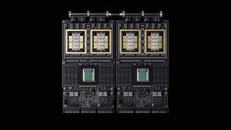
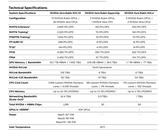
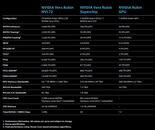 Now, NVIDIA's solution is inferior to AMD's rack-scale Helios system in both memory capacity and memory bandwidth. AMD's Instinct MI455X offers significantly more high-bandwidth memory than NVIDIA's revised "Vera Rubin," with 432 GB of HBM4 per GPU at 23.3 TB/s compared to Rubin's 288 GB at 19.2 TB/s. At the 72-GPU rack level, Helios aggregates roughly 31 TB of HBM4 with about 1.67 PB/s of total memory bandwidth, compared to approximately 20.7 TB and 1.4 PB/s on the Vera Rubin NVL72. The gap extends to scale-up interconnects as well. AMD's UALoE delivers 3.6 TB/s bidirectional per GPU (260 TB/s aggregate), while NVIDIA's NVLink has been reduced to 3 TB/s per GPU (216 TB/s aggregate). These differences give Helios a clear advantage in both on-package memory capacity and system-level bandwidth.
Sources:
Zephyr on X, Insane Analyst on X
However, the changes are not limited to memory. NVIDIA has also reduced the previously advertised NVLink bandwidth per GPU, decreasing it from 1.8 TB/s to 1.5 TB/s. This results in a reduction from 3.6 TB/s to 3 TB/s in bidirectional NVLink GPU bandwidth. The underlying issue is related to signal integrity, as NVIDIA reportedly lowered the NVLink Nyquist frequency target from 56 GHz to 47 GHz. Lowering the Nyquist frequency reduces the electrical demands on the SerDes, cables, and materials, which can improve manufacturing yields and overall feasibility, even though it requires accepting a small reduction in peak interconnect bandwidth. Thus, NVIDIA chose to sacrifice some bandwidth to enhance system stability. Below is the new system specification in light mode, and old system specification in dark mode.


12 Comments on NVIDIA Cuts HBM4 Speed and NVLink Bandwidth Targets for "Vera Rubin"
u will read (if they dont lie again) that they lower rest things on system
and this is another nvidia upsie from what 20 now ..
PS. The my understanding is that problems is everywhere in the path of the signal not only "bad" controller.
So they had to throttle back everything to fit in their desired power envelope, so they won't have cards burning left & right?