Friday, October 30th 2026

Intel Fab 28 Shutdown to Cost $600 Million in Lost Revenue, Production to Restart Soon
Intel's global foundry operations are crucial to the company's revenue generation, and impacting any part of the supply chain directly harms the business. When explosions occurred at Fab 28 in Kiryat Gat, Israel, Intel's operations there briefly halted 10 nm node production for two weeks. During this time, the assessment of both equipment and production output is estimated to result in about $300 million of lost revenue in the upcoming Q4 2026, as well as another $300 million in Q1 2027. Just two weeks of downtime has destroyed a massive amount of 10 nm wafers that Fab 28 has been manufacturing.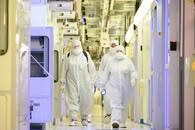 Intel's Fab 28 in Israel has been manufacturing I/O dies for Xeon 6 "Granite Rapids" as well as compute tiles for Xeon 5 "Emerald Rapids" CPUs. Intel has rebranded the node name to Intel 7, but it is still essentially the 10 nm technology. Just two weeks of downtime is destroying a massive amount of wafers, as it takes roughly six months for leading-edge nodes to complete wafer production from start to finish. Hence, interrupting that has resulted in significant losses spread over two quarters.
Source:
Intel Q3 2026 Earnings
Intel CFO David ZinsnerWe have been shut down for about two weeks. We feel like we are going to be starting up production here by the end of this week. While we are doing that, we are trying to assess all the wafers that are in the line and what is usable and what is not usable from those materials. This is somewhat of an early assessment, both really of 4Q and of 1Q. But I think the current thinking is that we will have about a $300 million impact to the fourth quarter. That is likely to be similar in the first quarter.

7 Comments on Intel Fab 28 Shutdown to Cost $600 Million in Lost Revenue, Production to Restart Soon
Also the explosion had nothing to do with any geo-political issues.
There is a reason TSMC also needs to pull all the stops to populate those new fabs. And I remember quite a few articles about workforce from the US having 'different' demands ;) That's cultural alignment for ya. Its not like the US magically opens a can of fab workers overnight. And then, you might have the numbers, but do you have the seniority in the work force too? You can't run a plant on juniors.^