Monday, November 23rd 2026

Experimental XNU Linux Project Boots macOS 27 Desktop on Linux
Unix software enthusiasts, rejoice! An experimental project called "XNU Linux" has successfully booted a complete macOS 27 desktop on an ARM64 Linux system. This breakthrough offers a new way to run Apple's operating system without relying on traditional virtualization methods. This is significant news for the community, as there is a large group of enthusiasts eager to create custom macOS desktops, also known as Hackintoshes. The project utilizes Apple's open-source XNU kernel, modified to function as a loadable module within Linux, enabling macOS and Linux processes to run on the same hardware.
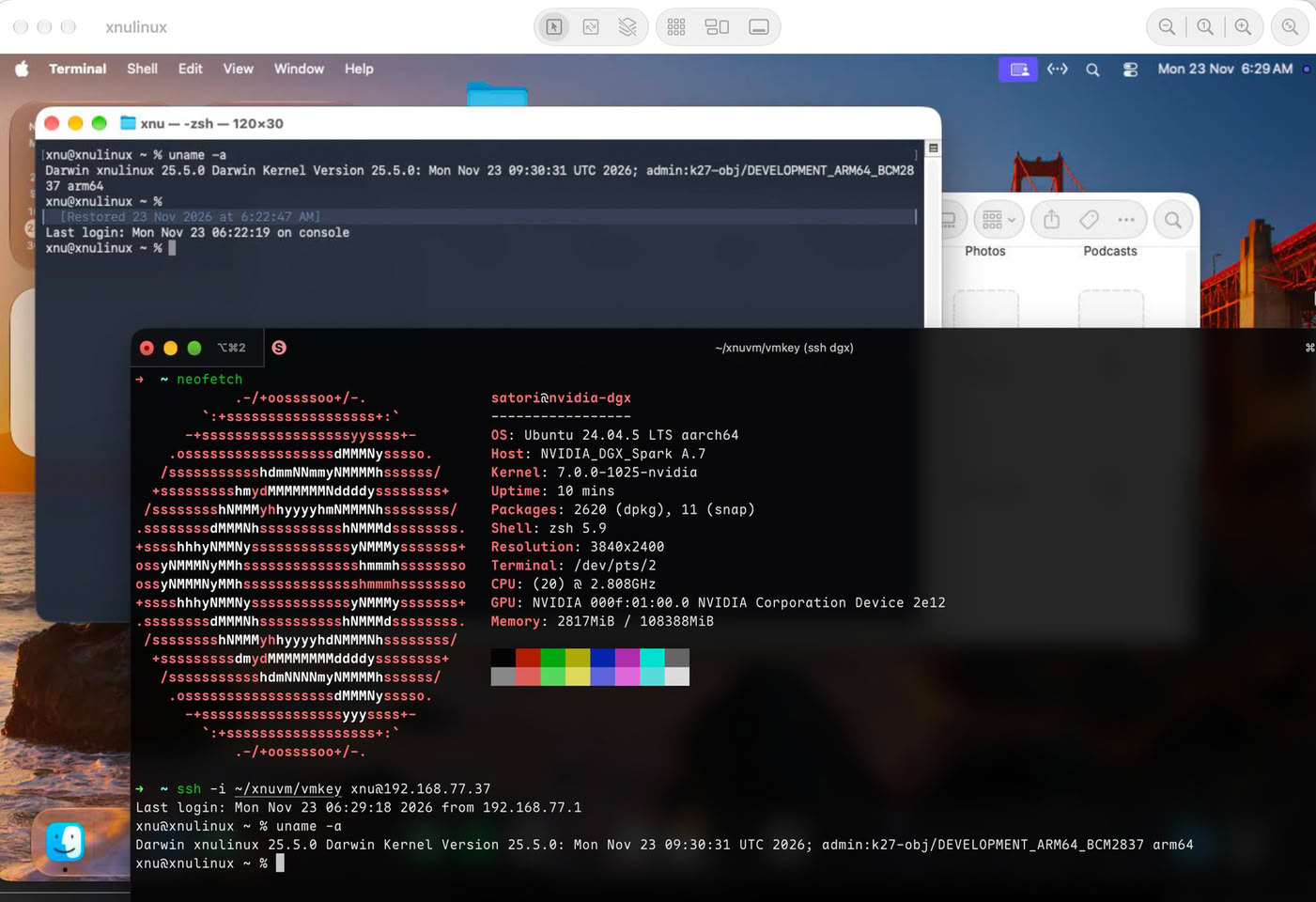
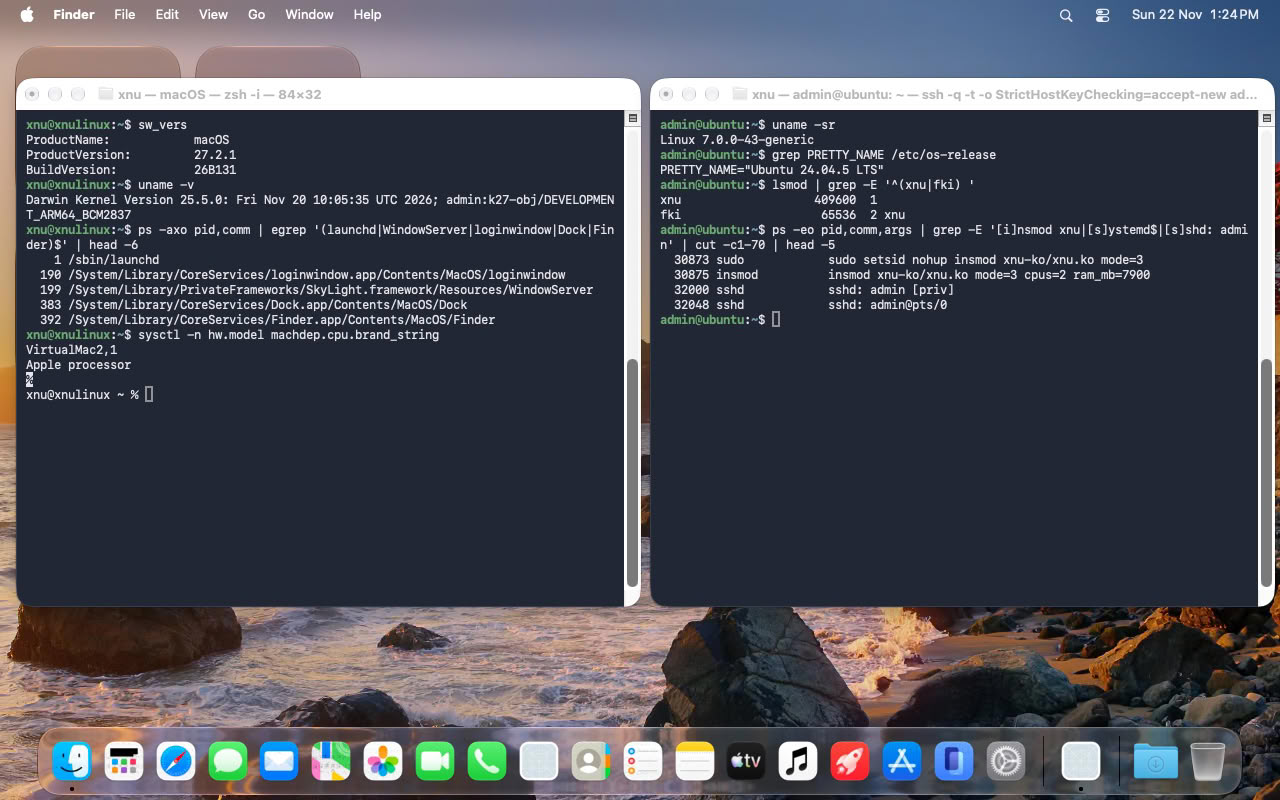
Instead of translating macOS applications into a format Linux can execute, XNU Linux takes a different approach by integrating Apple's kernel into the Linux environment. It consists of two primary components: xnu.ko, which runs the hosted XNU kernel, and fki.ko, which provides an interface to Linux resources such as memory, networking, timers, and storage. This setup allows macOS processes to run natively on the host CPU without an intervening hypervisor. The setup has been tested on an NVIDIA DGX Spark running Ubuntu, as well as an Apple Silicon Mac running Linux in a virtual machine. The system successfully reached the macOS desktop, including Finder, Dock, WindowServer, and loginwindow, with Safari and Chrome also operational. Applications such as Spotlight and file-system operations remained functional during a brief 30-minute stress test.
 Graphics support is also part of the project, with a bridge that routes macOS Metal workloads through Vulkan and Mesa to the host GPU. However, this currently requires a compatible Virtio-GPU setup. The NVIDIA DGX Spark demonstration still uses CPU-based rendering. There are also hardware restrictions, as the project currently requires an ARM64 processor with pointer authentication, 4 KB memory pages, and at least 16 GB of RAM. Users must supply their own macOS 27 installation, and conventional x86-based PCs are not supported, largely due to the optimizations done by Apple for its Apple Silicon M-series of chips for macOS.
Sources:
XNU Linux, via Phoronix
Instead of translating macOS applications into a format Linux can execute, XNU Linux takes a different approach by integrating Apple's kernel into the Linux environment. It consists of two primary components: xnu.ko, which runs the hosted XNU kernel, and fki.ko, which provides an interface to Linux resources such as memory, networking, timers, and storage. This setup allows macOS processes to run natively on the host CPU without an intervening hypervisor. The setup has been tested on an NVIDIA DGX Spark running Ubuntu, as well as an Apple Silicon Mac running Linux in a virtual machine. The system successfully reached the macOS desktop, including Finder, Dock, WindowServer, and loginwindow, with Safari and Chrome also operational. Applications such as Spotlight and file-system operations remained functional during a brief 30-minute stress test.
2 Comments on Experimental XNU Linux Project Boots macOS 27 Desktop on Linux
meanwhile over at the DGXs