Thursday, November 26th 2026

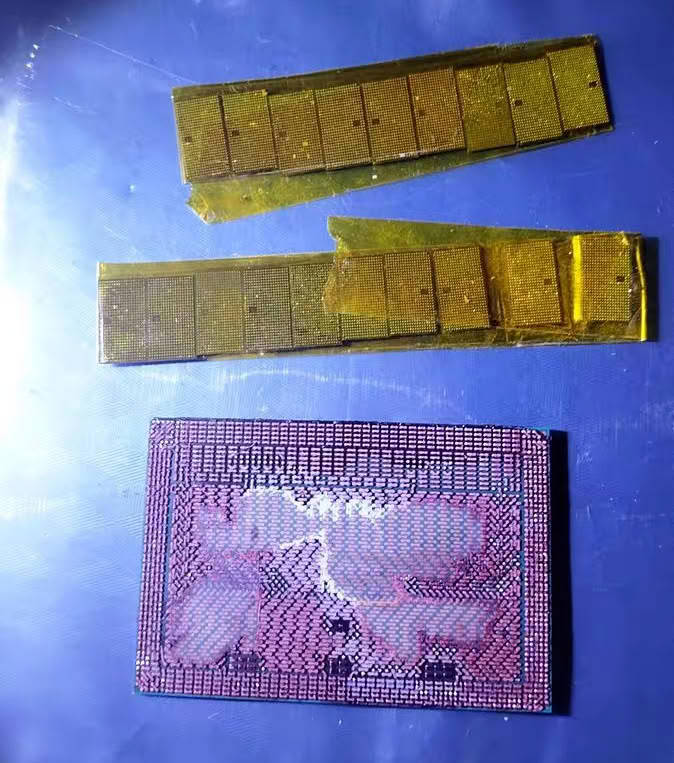
Intel "Razor Lake-AX" MoP Chip Pictured with Four LP5X Memory Pads, Memory Not Included
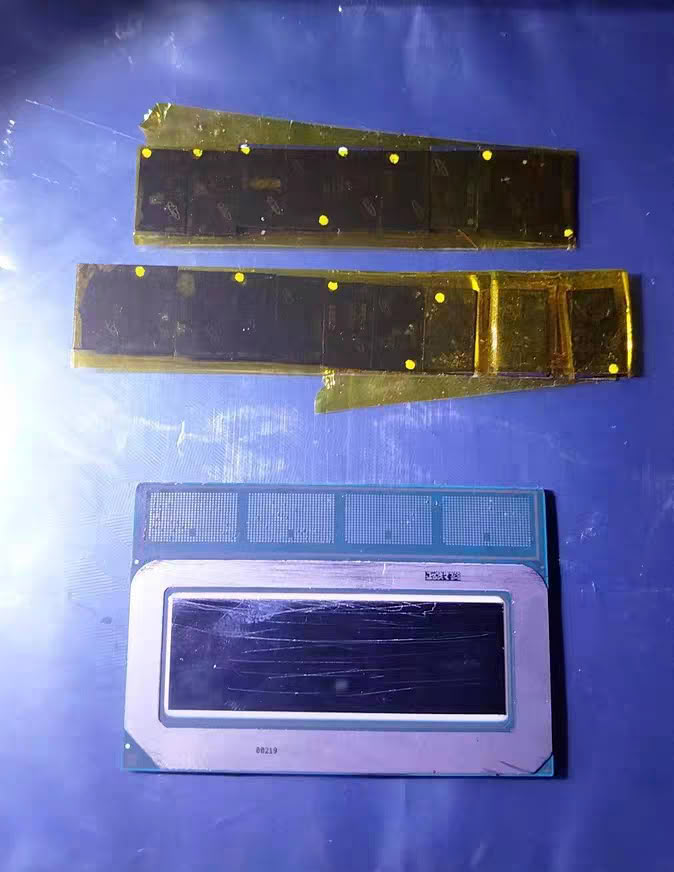
Intel is readying the Core Ultra "Razor Lake-AX" halo-segment mobile processor to compete with the likes of AMD's Ryzen AI MAX 400 "Gorgon Halo" and NVIDIA RTX Spark N1X processors. Pictures of this chip were processor leaked to the web. The processor features a memory-on-package (MoP) design resembling the Core Ultra 200V "Lunar Lake," but with a key difference. While Intel sourced LPDDR5X memory from DRAM vendors and integrated it into the package; the company plans to change the way this processor is sold, guarding itself against volatility in the memory supply-chain, without losing out on the design advantages of MoP. Apparently, "Razor Lake-AX" is an MoP that comes with empty LPDDR5X memory pads. It's the notebook OEMs that will have to source LPDDR5X memory chips, and install them onto the MoP during assembly.
The way we imagine this works practically would be that the bare processor will be picked-and-placed onto the notebook's mainboard, and then LPDDR5X chips from a reel will be picked-and-placed onto the package. It's the OEM that will have to source LPDDR5X memory independently. Intel will probably supply OEMs with exhaustive QVLs on which chips are supported. VideoCardz reports that "Razor Lake-AX" will support memory configurations ranging from 32 GB to 128 GB, which fits into profile of the Ryzen AI MAX and RTX Spark processors that the chip is designed to go up against.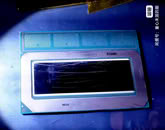
 "Razor Lake-AX" is rumored to be designed with a CPU complex of up to 32 CPU cores; while its oversized iGPU will feature up to 32 Xe cores. It will also feature a contemporary NPU that meets Copilot+ local inferencing requirements. The CPU complex will be a mix of "Coyote Cove" P-cores, and "Arctic Wolf" E-cores in both E-core and LPE-core sub-configurations. Meanwhile, the iGPU is expected to be based on the Xe3P graphics architecture—the same one that powers D270 "Crescent Island" inferencing accelerators. The up to 32 Xe cores provide 4,096 unified shaders, and 256 XMX cores.
Sources:
VideoCardz, HXL (Twitter)
The way we imagine this works practically would be that the bare processor will be picked-and-placed onto the notebook's mainboard, and then LPDDR5X chips from a reel will be picked-and-placed onto the package. It's the OEM that will have to source LPDDR5X memory independently. Intel will probably supply OEMs with exhaustive QVLs on which chips are supported. VideoCardz reports that "Razor Lake-AX" will support memory configurations ranging from 32 GB to 128 GB, which fits into profile of the Ryzen AI MAX and RTX Spark processors that the chip is designed to go up against.

1 Comment on Intel "Razor Lake-AX" MoP Chip Pictured with Four LP5X Memory Pads, Memory Not Included