News Posts matching #AM4

Return to Keyword Browsing

Intel to Refresh its LGA2066 HEDT Platform This Summer?

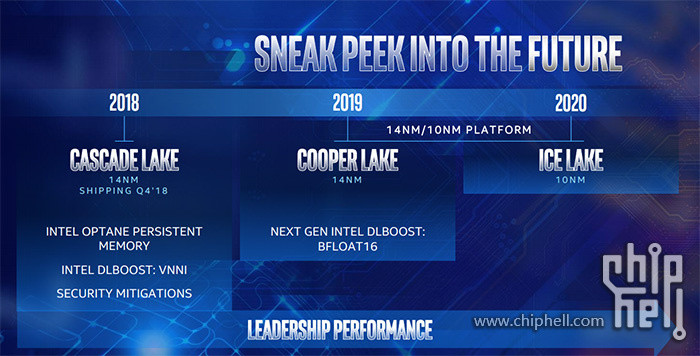
Intel is rumored to refresh its high-end desktop (HEDT) platforms this Summer with new products based on the "Cascade Lake" microarchitecture. Intel now has two HEDT platforms, LGA2066 and LGA3647. The new "Cascade Lake-X" silicon will target the LGA2066 platform, and could see the light of the day by June, on the sidelines of Computex 2019. A higher core-count model with 6-channel memory, will be launched for the LGA3647 socket as early as April. So if you've very recently fronted $3,000 on a Xeon W-3175X, here's a bucket of remorse. Both chips will be built on existing 14 nm process, and will bring innovations such as Optane Persistent Memory support, Intel Deep Learning Boost (DLBOOST) extensions with VNNI instruction-set, and hardware mitigation against more variants of "Meltdown" and "Spectre."

Elsewhere in the industry, and sticking with Intel, we've known since November 2018 of the existence of "Comet Lake," which is a 10-core silicon for the LGA1151 platform, and which is yet another "Skylake" derivative built on existing 14 nm process. This chip is real, and will be Intel's last line of defense against AMD's first 7 nm "Zen 2" socket AM4 processors, with core-counts of 12-16.

Alphacool Unveils Eisbaer Solo Chrome DIY CPU Pump+Block

Alphacool today unveiled the Eisbaer Solo Chrome DIY pump+block, a variant of Eisbaer Solo that features a chrome mirror-finish body along three out of four sides, and the top, with a clear acrylic window covering one of the sides. You plumb your own coolant tubes and radiator to the contraption, which combines the functionality of a CPU water-block, a 70 l/h pump, and reservoir into one. The pump features an ultra low-noise ceramic bearing and operational speed of 2,600 RPM and a maximum head of 0.85 m. The package includes mounting brackets for LGA2066/2011, LGA115x, LGA1366, and AM4 sockets; in addition to some thermal compound. Available now, it is priced at 54.95€ including taxes.

Noctua CPU Coolers Now Include AM4 Mounting at No Extra Cost

Noctua today announced that all of its current multi-socket desktop CPU coolers, such as the popular NH-D15, NH-U14S and NH-U12S, now also include installation hardware for the AM4 socket of AMD's Ryzen processors. Although Noctua introduced its dedicated SE-AM4 models in early 2017 and has provided free-of-charge upgrade kits ever since the launch of the AM4 platform, the updates of the existing multi-socket models now allow customers to install them on all current mainstream sockets without ordering extra mounting kits. As suggested retail prices remain unchanged, the updates come at no extra cost to the customers.

"We've supported AMD's Ryzen platform with our SE-AM4 models and free-of-charge mounting upgrades from the very beginning", says Roland Mossig (Noctua CEO). "As with Intel's LGA115x and 20xx platforms, our customers have greatly appreciated our free upgrade policy. We've provided many thousands of free mounting kits and quite a few customers have migrated 10-year-old heatsinks they had already used on several socket generations. This means a lot to us and we'll continue to offer the free kits of course. However, with AM4 becoming more and more popular, we think it is time to also include the mountings with our existing models so that customers have everything at hand when they purchase new coolers."

ASMedia to Continue as Chipset Supplier to AMD, But X570 an In-house Chipset

AMD's socket AM4 and socket TR4 chipsets are originally designed by ASMedia. With its "Zen" family of processors being full-fledged SoCs, the motherboard "chipset" only serves to increase connectivity, and ASMedia already holds certifications for key groups such as the PCI-SIG, USB-IF, SATA-IO, NVM-Express group, etc. It's being reported now that ASMedia will develop some, if not all 500-series chipsets, with the exception of X570. The X570 will be an in-house design by AMD, which will use its own foundry partners (likely GloFo 14 nm) to manufacture it. This presents AMD with an opportunity to harden it against vulnerabilities, and have greater control over pricing, not to mention overcoming key design shortfalls of "Promontory," such as downstream PCIe connectivity.

This flies in the face of speculation that AMD would discontinue ASMedia's supply of chipset, especially in the wake of the "Chimera" vulnerability affecting "Promontory" 300-series and 400-series chipsets. The supposedly security-hardened 500-series chipset will feature PCI-Express gen 4.0 certification. What this means is that the chipset bus between the AM4/TR4 SoC and the chipset will be PCI-Express 4.0 x4 (64 Gbps), translating to double the bandwidth. It remains to be seen if the downstream PCIe lanes put out by the chipset are gen 4.0, too. Current 400-series chipsets continue to put out stale gen 2.0 lanes, compensated for by additional gen 3.0 lanes put out by the SoC. Sources also mention that ASMedia-supplied chipsets will only hit the market toward the end of 2019, which means AMD X570 could be the only 500-series chipset option between the mid-2019 launch of 3rd generation Ryzen, and late-2019. You should be able to run these processors on older socket AM4 motherboards via BIOS updates, though.

ASRock Readies Nine AMD X570 Motherboards with "Zen 2" Matisse Support

Sometime mid-2019, AMD will launch its 3rd generation Ryzen "Zen 2" processors with core counts of up to 16 cores in the AM4 package. These processors will launch alongside the new AMD 500-series desktop chipset family, led by the X570. AMD assures backwards compatibility of these processors with older chipsets provided motherboard vendors support their customers with BIOS updates. You'll probably need a 500-series chipset motherboard to use PCI-Express gen 4.0 connectivity, while older chipsets will limit connectivity to gen 3.0 (not that there are any GPUs that use gen 4.0).

ASRock is developing as many as nine motherboard models based on the AMD X570, according to a list scored by VideoCardz. These include the X570 Phantom Gaming X and X570 Taichi leading the top-end; X570 Phantom Gaming 6, X570 Phantom Gaming 4, and X570 Extreme4 covering the mid-range, and the entry-level of the lineup consisting of the X570 Pro4/R2.0 and X570M Pro4/R2.0.

ASRock Launches World's First Mini-STX Platform Based on AMD A300: DeskMini A300

The leading global motherboard and graphics card manufacturer, ASRock, pleasure to announce the world's first AMD based Mini STX Platform - DeskMini A300 at CES 2019. It adopts with AMD A300 chipset, not only supports AMD AM4 65W APU, but also provides up to 32GB DDR4-2933MHz high-speed memory, which leads to outstanding computing power and 3D performance. DeskMini A300 offers up to 4 storage interfaces, supports three display outputs simultaneously, M.2 Wi-Fi module and various accessories within 1.9 Liter compact size. DeskMini A300 is an ideal choice to build a home entertainment PC and mini data center.

DeskMini A300 features the brand new A300M-STX motherboard. Continuing the design of the ASRock DeskMini series, the AMD AM4 socket is able to support the Bristol Ridge and Raven Ridge's 65W APU, as well as two DDR4 SO-DIMM slots, which can support up to 32GB of capacity. With overclocking memory module, it will power up 20% of 3D gaming performance even more . Moreover, the DeskMini A300 supports three display outputs simultaneously, greatly improves the user experience.

ASRock Announces Steel Legend Family of Motherboards

The leading global motherboard manufacturer, ASRock, is proud to introduce the new ASRock Steel Legend motherboard series. ASRock Steel Legend motherboards are built around the most demanding specs and features to provide a wide array of materials, components, and features that ensure stable and reliable performance. Steel Legend motherboards stand out from the crowd through its massive and luscious XXL Aluminum Alloy Heatsinks, I/O Armor, PCI-E Steel Slot, Polychrome Sync (Addressable RGB LED) support, and detailed PCB print on Sapphire Black PCB for mainstream users, gamers, and professionals that choose to work and play in style. With support for the latest AMD Ryzen processors, as well as high-quality audio featuring the highest quality Nichicon golden audio caps and signal shielding integrated into the PCB.

ASRock has gone to great lengths to ensure optimum stability and protection. With ASRock Full Spike Protection on all USB, Audio and LAN ports, users are always protected from Lightning/ESD damage, which is a comforting thought when using Steel Legend motherboards in challenging environments. Use of Premium 60A Power Chokes and Nichicon 12K Black Caps means not only that the B450 Steel Legend and B450M Steel Legend will remain rock solid no matter the task, but it also keeps your system stable when overclocking, for extra performance, whether you're gaming or rendering professional content.

ENERMAX Expands LIQFUSION RGB Liquid Cooler Lineup with 360 Version

ENERMAX, a leading designer and manufacturer of high-performance PC hardware products, is expanding the acclaimed RGB liquid cooler series, LIQFUSION, with the addition of a 360mm AIO cooler. After the launch of the 240 variant, LIQFUSION has got users' attention and recognition for its cooling performance and brilliant lighting effects. With the larger cooling surface, LIQFUSION 360 is able to easily handle a large amount of heat produced by the overclocked CPUs. Moreover, LIQFUSION comes with an addressable RGB-sync waterblock featuring patented flow indicator, which allows the users to monitor the status of coolant flow. Along with ENERMAX addressable RGB fans, LIQFUSION can create visual appealing lighting effects.

LIQFUSION can sync the RGB lighting with motherboards featuring addressable RGB headers (4-pin assignment: +5V/D/-/G). Users can select preferred effects via the motherboard RGB software with 16.8 million color options. On the other hand, for those who use non-RGB motherboards, they can use the included RGB control box to select preferred lighting color, speed, and effects (10 pre-set effects).

AMD 3rd Gen Ryzen AM4 Package Capable of Two 8-core Chiplets

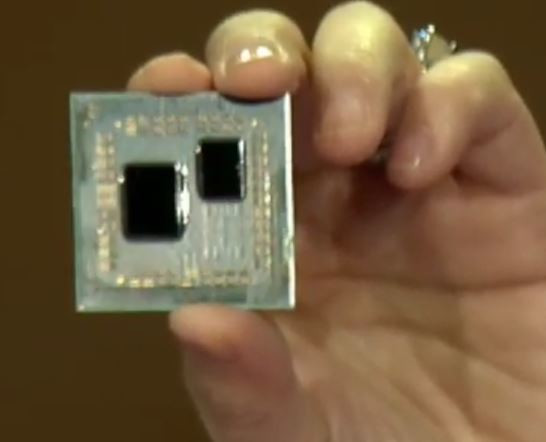
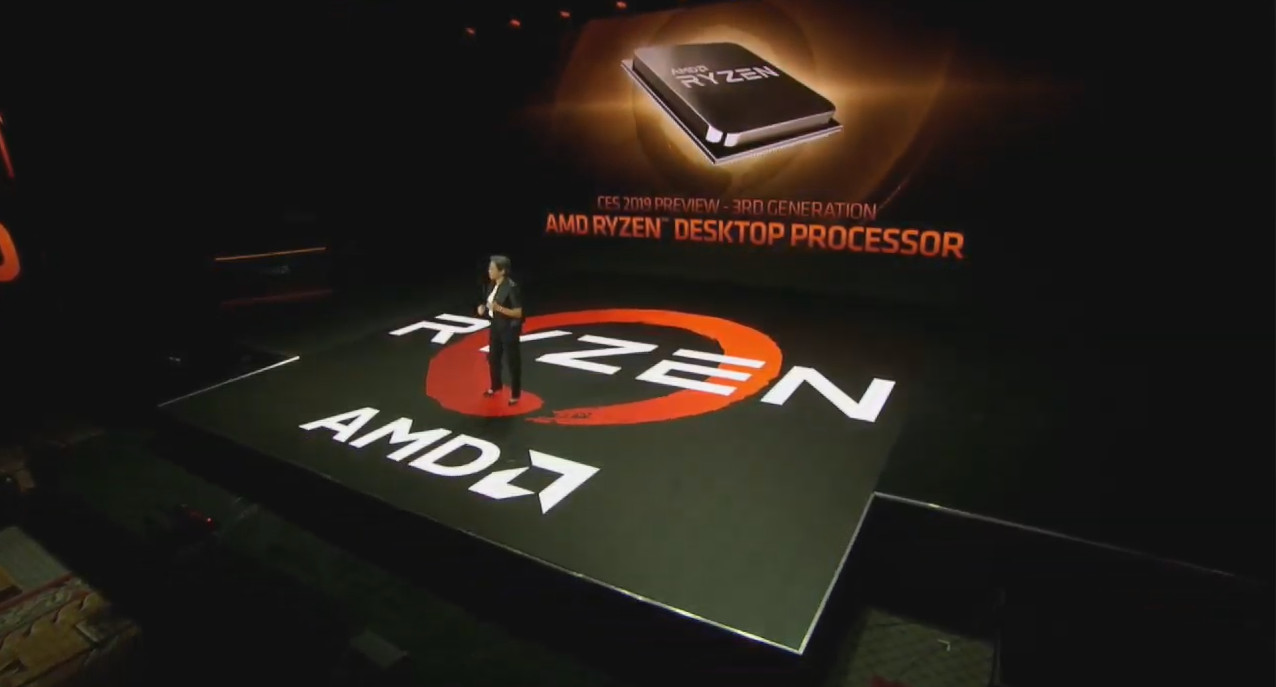
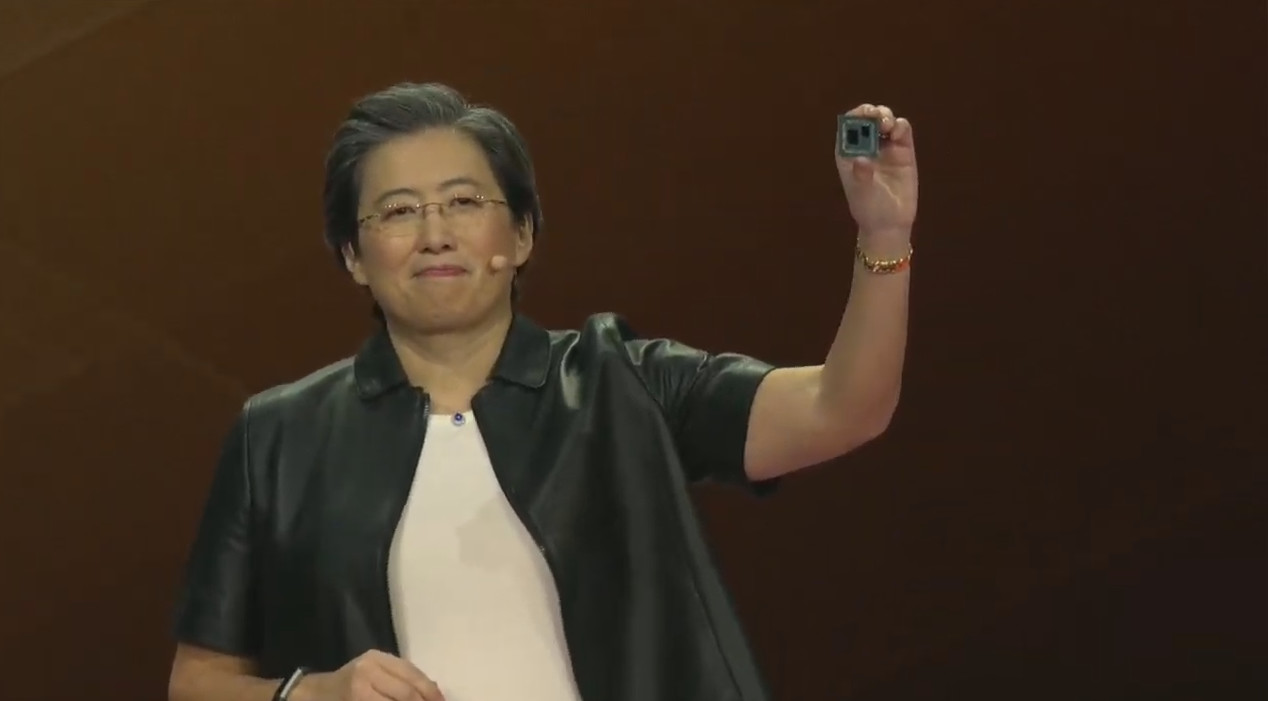
At its CES 2019 keynote, AMD unveiled two killer client-segment products, the Radeon VII graphics card, which beats the GeForce RTX 2080; and a sneak preview of the 3rd generation Ryzen socket AM4 processor based on the company's "Zen 2" microarchitecture. As part of the unveil, CEO Lisa Su demonstrated an 8-core/16-thread 3rd generation Ryzen prototype processor in a head-to-head CineBench nT face-off with the Intel Core i9-9900K processor, which has the same core-count. The Ryzen narrowly beat the Intel flagship. Following this, Dr. Su held up a de-lidded sibling of the processor that was tested, revealing not one, but two dies.

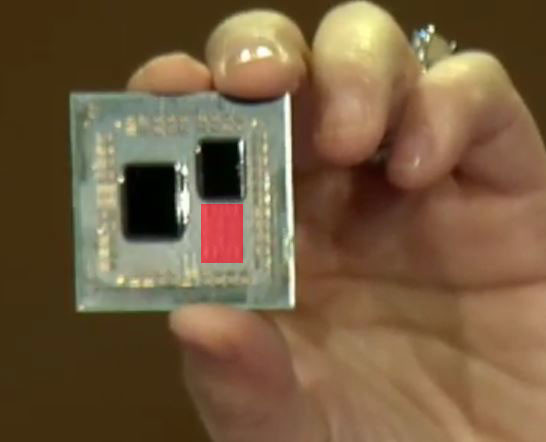
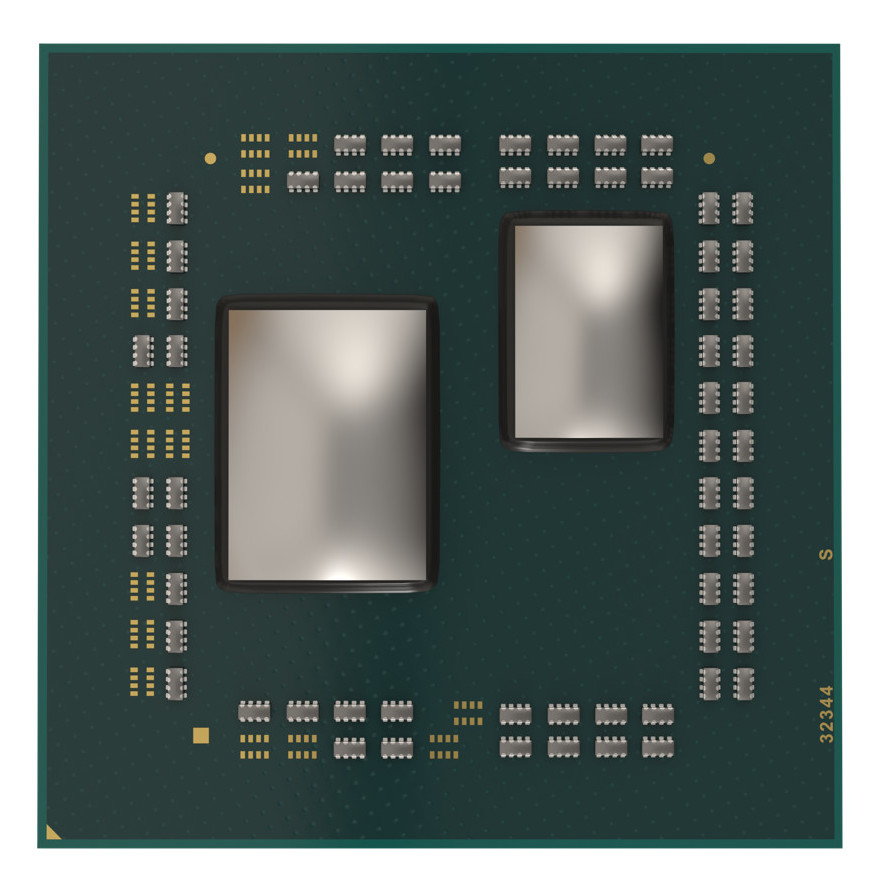
This confirms that AMD is taking the heterogeneous multi-chip module approach to building its 3rd generation Ryzen processors, much like its 2nd generation EPYC processors that were unveiled late last year. The MCM of the processor Dr. Su held up had two chips, the smaller chip is an 8-core CPU chiplet built on the 7 nm process, that appears to have the same die-size as the 8-core chiplets that make up the 64-core 2nd gen EPYC MCMs, the larger die is an I/O controller logic built on the 14 nm process. This die controls the memory, PCIe, and SoC connectivity of the package. We noticed something curious about the way the two dies are arranged on the package substrate.

AMD's CES 2019 Keynote - Stream & Live Blog

CPUs or GPUs? Ryzen 3000 series up to 16 cores or keeping their eight? Support for raytracing? Navi or die-shrunk Vega for consumer graphics? The questions around AMD's plans for 2019 are still very much in the open, but AMD's Lisa Su's impending livestream should field the answers to many of these questions, so be sure to watch the full livestream, happening in just a moment.

You can find the live stream here, at YouTube.

18:33 UTC: Looking forward, Lisa mentioned a few technology names without giving additional details: "... when you're talking about future cores, Zen 2, Zen 3, Zen 4, Zen 5, Navi, we're putting all of these architectures together, in new ways".

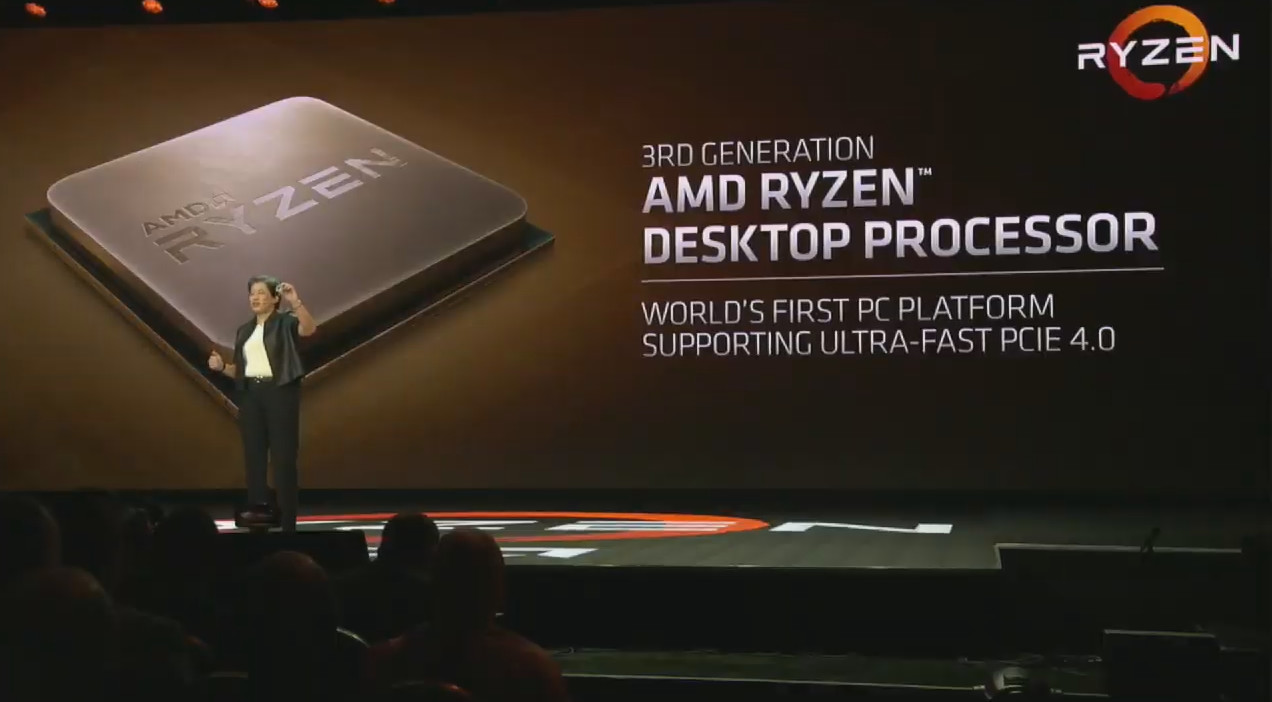
18:20 UTC: New Ryzen 3rd generation processors have been teased. The upcoming processors are based on Zen 2, using 7 nanometer technology. AMD showed a live demo of Forza Horizon 4, using Ryzen third generation, paired with Radeon Vega VII, which is running "consistently over 100 FPS at highest details at 1080p resolution". A second demo, using Cinebench, pitted an 8-core/16-thread Ryzen 3rd generation processor against the Intel Core i9-9900K. The Ryzen CPU was "not final frequency, an early sample". Ryzen achieved a score of 2057 using 135 W, while Intel achieved a score of 2040 using 180 W.. things are looking good for Ryzen 3rd generation indeed. Lisa also confirmed that next-gen Ryzen will support PCI-Express 4.0, which doubles the bandwidth per lane over PCI-Express 3.0. Ryzen third generation will run on the same AM4 infrastructure as current Ryzen; all existing users of Ryzen can simply upgrade to the new processors, when they launch in the middle of 2019 (we think Computex).
Ryzen third generation uses a chiplet design. The smaller die on the right contains 8-cores/16-threads using 7 nanometer technology. The larger die on the left is the IO die, which consists of things like the memory controller and PCI-Express connectivity, to shuffle data between the CPU core die and the rest of the system.

Be Quiet Unveils Six New Products at CES 2019

Be Quiet invited us to its product unveil suite on the sidelines of CES 2019. The company unveiled six new products, most of which are variations or improvements of existing products in the company's stack. The lineup begins with Dark Base 700 White Edition, limited-edition (3,000 units) ATX mid-tower. The case combines all-white interiors with mostly-white exteriors, black mesh accents along the sides, with RGB LED embellishments, and clear tempered glass. The case retains the remaining feature-set from the Dark Base 700, and is expected to be priced at 189.95€.

Also shown here is a Dark Rock Slim 120 tower-type CPU cooler with a single fan. This cooler is rated to handle thermal loads of up to 180 W (TDP), and hence only supports mainstream-desktop CPU sockets such as LGA115x, AM4, and probably even LGA2066. The fin-stack features a high-clearance fin design that curves inward. Slated for Q2-2019, the cooled is expected to be priced around 50€. Three color variants of the company's existing fan lineup were shown, including matte-black and all-white variants of Shadow Wings 2, and a new high-RPM version of Pure Wings 2, with up to 1,600 RPM for the 140 mm variant, and up to 2,000 RPM for the 120 mm one. Available from January 2019 (later this month), prices of these fans could range between 12.50-13.90€.
Raijintek Refreshes the Pallas CPU Cooler with RGB LED Lighting and More

Raijintek today introduced the Pallas 120 RGB, a refresh of the original Pallas from 2014. Raijintek has made four key changes to its design. To begin with, the mirror finish nickel-plated copper base from the original has been replaced with a direct-touch base, where the cooler's six 6 mm-thick copper heat pipes make direct contact with the CPU. The second big change is the black coated aluminium fin-stack and heat-pipes, which offer a matte appearance. Thirdly, the change reflecting the namesake - the fan featuring RGB LED illumination using 10 diodes (4-pin standard RGB header); and lastly, support for newer sockets AM4 and LGA2066, in addition to LGA115x and AM3+.

The C-type heatsink offers a height of just 68 mm, making it perfect for low-profile builds, provided you can find room around the CPU socket for the cooler's vast width and depth. Measuring 130 mm x 146.8 mm x 68 mm (WxDxH), it weighs 550 g, including the fan. The fan specs are mostly unchanged from the original. Drawing power from a 4-pin PWM header, and featuring a hydraulic bearing, it spins between 200 to 1,400 RPM, pushing up to 41.71 CFM of air, with a maximum noise output of 28.43 dBA. The company didn't reveal pricing.

ENERMAX Launches LIQTECH II, Universal AIO Liquid Cooler with TDP 500+ Watts

ENERMAX, a leading designer and manufacturer of high-performance PC hardware products, announces the launch of a new all-in-one liquid cooler series, LIQTECH II. Responding the market demand of cooling solution for high-end CPUs, LIQTECH II can deliver enthusiast-grade cooling capacity of 500+ watts (TDP) and is compatible with both Intel and AMD sockets (except AMD sTR4).

Furthermore, certified by main motherboard makers (ASRock, ASUS, Gigabyte, and MSI), LIQTECH II can support the latest addressable RGB lighting synchronization with advanced motherboards featuring addressable RGB headers (pin assignment: 5V/D/-/G) to create dynamic visual effects. LIQTECH II is perfect for overclocked systems, image editing workstations, and high-end gaming machines.

AMD 3rd Generation Ryzen Probable SKUs, Specs, Pricing Leaked?

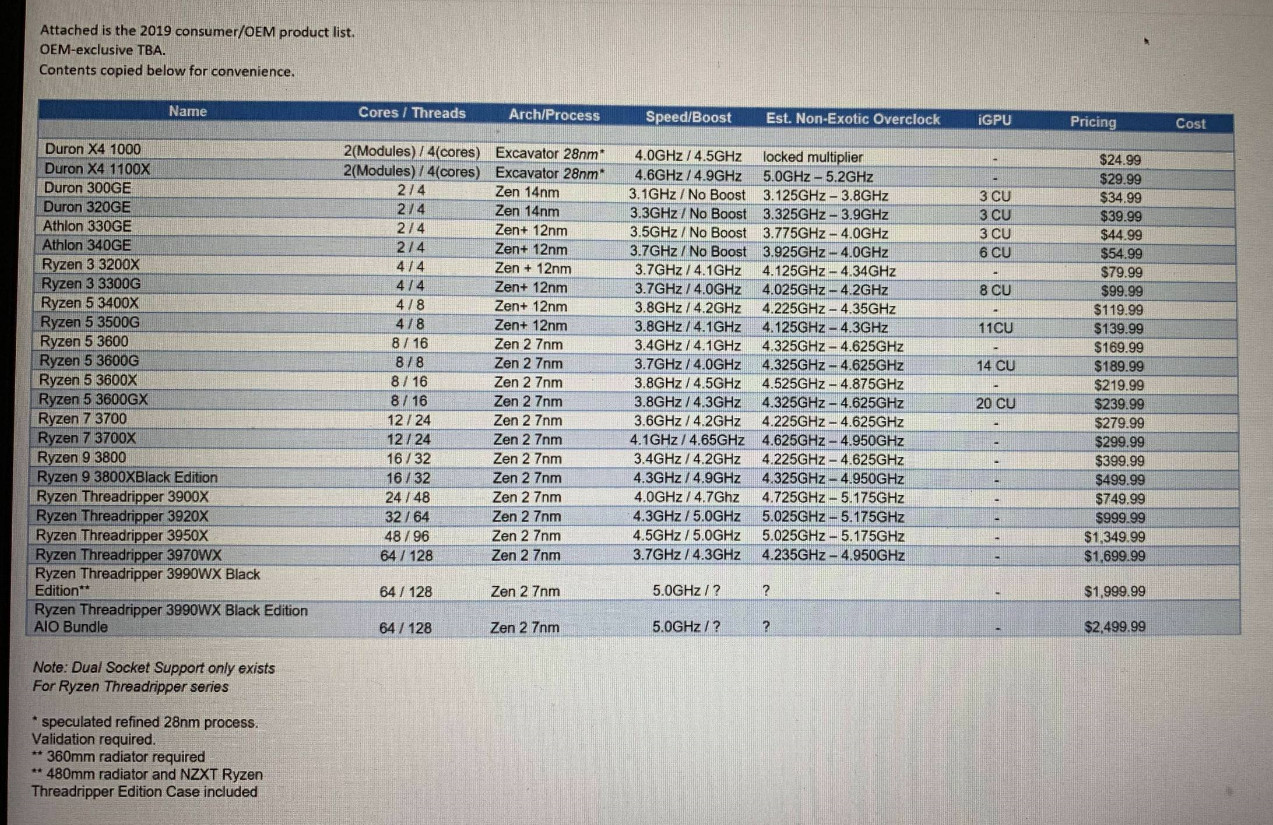
One of our readers tipped us off with a very plausible looking image that drops a motherlode of information about what AMD's 2nd generation Ryzen (aka Ryzen 3000 series) processor lineup could look like. This includes a vast selection of SKUs, their CPU and iGPU core configurations, clock-speeds, and OEM channel pricing. The list speaks of a reentry for 7th generation A-series "Excavator" as Duron X4 series, followed by Duron 300GE-series based on a highly cut down "Raven Ridge," Athlon 300GE 2-core/4-thread based on an implausible "Zen+ 12 nm" APU die, followed by quad-core Ryzen 3 3000 series processors with and without iGPUs, making up the company's entry-level product lineup.

The core counts seem to jump from 4-core straight to 8-core, with no 6-core in between, for the Ryzen 5 series. This is also where AMD's new IP, the 7 nm "Zen 2" architecture, begins. There appears to be a large APU die (or a 3-chip MCM) with an 8-core CPU and 20-CU iGPU, which makes up certain Ryzen 5 SKUs. These chips are either 8-core/8-thread or 8-core/16-thread. The Ryzen 7 series is made up of 12-core/24-thread processors that are devoid of iGPU. The new Ryzen 9 series extension caps off the lineup with 16-core/32-thread SKUs. And these are just socket AM4.

Raijintek Intros MYA RBW CPU Cooler

Raijintek today introduced the MYA RBW, a large aluminium fin tower-type CPU cooler with addressable RGB embellishments. The cooler was first shown off at Computex 2018. Its design involves a heavy aluminium fin-stack with ridged fins that have increased surface area over flat fins, capped off by a composite top, with a silicone RGB LED diffuser, and a brushed metal top-plate. Heat drawn by six 6 mm-thick nickel-plated copper heat pipes pass through the fin-stack.

At the base, these heat pipes make direct contact with the CPU. A 13 mm-thick slimline hydraulic bearing 120 mm fan compensates for the fin-stack's thickness, as does the vertical offset in the fin-stack itself, freeing up room near your motherboard's memory slot area. The fan spins between 200 to 1,400 RPM, pushing up to 41.71 CFM of air and a 28.43 dBA minimum noise level. Measuring 130 mm x 86 mm x 163 mm (WxDxH), the cooler weighs about 925 g, including the fan. Among the CPU sockets supported are Intel LGA2066, LGA115x, and AM4. The company didn't reveal pricing.

MSI Goofup Unlocks Overclocking on AMD Athlon 200GE

MSI late November released BIOS updates for its entire range of socket AM4 motherboards, mainly to include AGESA 1.0.0.6, which improves memory compatibility. The updates also pack various motherboard model-specific fixes. Apparently there has been a goof-up with this update (not in a bad way, though). The latest BIOS updates "accidentally" unlock the otherwise locked Athlon 200GE dual-core processor with integrated graphics.

No, you won't get more cores or iGPU stream processors, but the base-clock multiplier letting you easily overclock the processor is now unlocked. This adds value to the $55 processor, given that competing Celeron and Pentium Gold SKUs are overpriced in the market these days. In their overclocking adventures with the 200GE paired with a MSI B450 Gaming Pro Carbon AC motherboard, TechSpot observed that the chip (which is clocked at 3.2 GHz by default) wouldn't POST beyond 3.90 GHz, and that you need vCore at 1.4 V to sustain even 3.90 GHz. They found 3.80 GHz at 1.35 V to be 100% stable (an 18.75% overclock). The memory clocks are still restricted to DDR4-2666, although you can still play with timings.

German Retailer Mindfactory.de Shows AMD Outselling Intel 2 to 1 in November

AMD seems to be picking up steam over Intel's previous sky-high dominance of the desktop CPU market (Intel still dominates aplenty, really; but AMD has been clawing back market percentage monthly). The latest figures from the German retailer show shoppers taking advantage of AMD's newfound competitiveness in the CPU space, with increasing sales momentum starting on June 2018 up to a staggering 69% total AMD units sold against Intel's 31% during the month of November.

GeIL Launches New Additions to its SUPER LUCE RGB Sync DDR4 Lineup

GeIL - Golden Emperor International Ltd. - one of the world's leading PC components and peripheral manufacturers today announced the new additions to their SUPER LUCE RGB SYNC Series DDR4 memory. The new modules are available in three capacities and speeds: 4133 MHz 16 GB (8 GB x2) CL19-19-19-39 1.40 V, 3600 MHz 16GB (8 GB x2) CL16-18-18-36 1.35 V, and 3200 MHz 16 GB (8 GB x2) CL14-14-14-34 1.35V

The 4133 MHz 16 GB (8 GB x2) CL19-19-19-39 1.40 V DDR4 kits can be the overclocker's new favorite with support for most ASUS, GIGABYTE, MSI and ASROCK Z390 and Z370 motherboards as well as giving enthusiasts the room to push their systems to the limit without exception. The 3600 MHz 16GB (8 GB x2) CL16-18-18-36 1.35 V DDR4 kits meets the memory needs for any gaming system using the latest Intel platforms and is an excellent solution for first time overclockers. The 3200 MHz 16 GB (8GBx2) CL14-14-14-34 1.35 V DDR4 kits are compatible with both Intel and AMD AM4 platforms and feature a low latency design to enhance performance and offer the most affordable upgrade option for users.

Raijintek Intros Juno Pro RBW Low-profile Air CPU Cooler

Raijintek today introduced the Juno Pro RBW, a low-profile air CPU cooler and successor to the Juno-X RGB from late-2017. While the Juno-X RGB only featured a multi-color fan strapped onto the original Juno-X heatsink, the new Juno Pro RBW features a more substantial redesign, with a metal shroud crowing the upper portion of the heatsink, and a silicone RGB LED diffuser ring framing the shroud. The lighting system conforms to the newer addressable-RGB standard, so you can control it using various motherboard branded lighting control software.

Under the hood, the heatsink is unchanged from the Juno-X: a radially-projecting aluminium fin-stack that's bunched up at the center, making up the base that makes contact with the CPU, which is ventilated by a 120 mm PWM fan that spins between 400 to 1,800 RPM, pushing up to 38.5 CFM of air, with a noise output of 28 dBA. Measuring 122.5 mm x 122.5 mm x 65 mm (WxDxH), it weighs 315 g. The cooler is capable of handling thermal loads of up to 105W TDP. Among the CPU sockets supported are LGA115x and AM4. The company didn't reveal pricing.

AMD Doubles L3 Cache Per CCX with Zen 2 "Rome"

A SiSoft SANDRA results database entry for a 2P AMD "Rome" EPYC machine sheds light on the lower cache hierarchy. Each 64-core EPYC "Rome" processor is made up of eight 7 nm 8-core "Zen 2" CPU chiplets, which converge at a 14 nm I/O controller die, which handles memory and PCIe connectivity of the processor. The result mentions cache hierarchy, with 512 KB dedicated L2 cache per core, and "16 x 16 MB L3." Like CPU-Z, SANDRA has the ability to see L3 cache by arrangement. For the Ryzen 7 2700X, it reads the L3 cache as "2 x 8 MB L3," corresponding to the per-CCX L3 cache amount of 8 MB.

For each 64-core "Rome" processor, there are a total of 8 chiplets. With SANDRA detecting "16 x 16 MB L3" for 64-core "Rome," it becomes highly likely that each of the 8-core chiplets features two 16 MB L3 cache slices, and that its 8 cores are split into two quad-core CCX units with 16 MB L3 cache, each. This doubling in L3 cache per CCX could help the processors cushion data transfers between the chiplet and the I/O die better. This becomes particularly important since the I/O die controls memory with its monolithic 8-channel DDR4 memory controller.

Scythe Announces Katana 5 CPU Cooler

Japanese cooling expert Scythe presents the fifth generation of its popular all-round Katana CPU cooler. This new version comes with a revamped asymmetric heatsink design and total height of only 135 mm, offering unrestricted compatibility to mainboards and memory modules. The second generation of the Easy Clip Mounting System (E.C.M.S) assures a fast and easy installation process. Another key innovation of the Katana 5 is the newly developed Kaze Flex 92 PWM fan. It combines the high-quality Sealed Precision Fluid Dynamic Bearing with anti-vibration rubber spacers for silent operation and long lifespan.

The Katana series ever since the initial release aimed for great versatility. Scythe underlines this further with the release of the Katana 5, which offers optimum performance at compact dimensions and an advanced multi-socket mounting system at a competitive price. The fifth generation offers even more added value by incorporating a band new asymmetric heatsink design for unrestricted compatibility to both mainboard components and memory modules. In addition to that, all three high-quality copper heatpipes as well as the massive copper-baseplate have been nickel-plated for the fifth generation. This upgrade protects the copper from corrosion and lets Katana 5 look more unified.

ID-Cooling Releases AURAFLOW X 240 Budget RGB AIO Water Cooler

ID-COOLING a cooling solution provider focusing on thermal dissipation and fan technology research and production for over 10 years, announced AURAFLOW X 240 AIO water cooler, featuring the newly developed powerful pump and 12V RGB lighting on both the pump and fans at the same time synchronizing with motherboard RGB control.

AURAFLOW X 240 is equipped with the newly developed powerful pump which has the flow rate reaching up to 106L/H, lift range 1.3m H2O. The pump block has a micro-fin copper base to ensure the best cooling performance. Power connector is 3pin with a 3pin to Molex adapter to help ensure 12V constant input to ensure maximum cooling performance. It also comes with a standard 12V RGB connector.

GIGABYTE Intros B450M Gaming Socket AM4 Motherboard

GIGABYTE today introduced the B450M Gaming, a low-cost socket AM4 motherboard based on AMD B450 chipset, designed to be priced under $100. Built in the compact micro-ATX form-factor (205 mm x 244 mm), the board draws power from a combination of 24-pin ATX and 8-pin EPS, and uses a 4+3 phase VRM to power the AM4 SoC. A large VRM heatsink dominates the main MOSFET block, which also covers up a portion of the rear I/O area. The AM4 socket is wired to two DDR4 DIMM slots, supporting up to 32 GB of dual-channel memory, the board's sole M.2-2280 slot, and the PCI-Express 3.0 x16 slot with metal reinforcement. Two PCI-Express 2.0 x1 slots wired to the B450 chipset make for the rest of the expansion area.

Storage connectivity includes one M.2-2280 slot with PCI-Express 3.0 x4 and SATA 6 Gbps wiring, and four SATA 6 Gbps ports. USB connectivity includes four USB 3.1 gen 1 type-A ports on the rear panel, and two USB 3.1 gen 1 ports via header. Networking, interestingly, is a 1 GbE interface driven by Realtek Dragon 8118AS controller, which was originally launched as Realtek's competitor to the i219-V (comes with various performance enhancements). Audio is a basic 6-channel fare driven by Realtek ALC887, somewhat improved with ground-layer isolation and electrolytic capacitors.

DeepCool Intros GamerStorm Castle 360 RGB CPU Cooler

DeepCool expanded the GamerStorm Castle RGB line of AIO liquid CPU coolers that feature addressable RGB LEDs, with the new Castle 360 RGB. As its name suggests, the cooler mates a 360 mm x 120 mm radiator with the cylindrical pump-block characteristic of this series, which features dual ceramic bearings for the pump assembly, and a circular RGB LED diffuser along the top plate. The rest of the pump-block's body is finished in matte-black with diamond-cut edges.

A trio of 120 mm fans with addressable RGB LED illumination and rubberized frame edges comes included. These fans each take 4-pin PWM input, spin between 500 to 1,800 RPM, pushing up to 69.34 CFM of air, with a noise output of up to 30 dBA. The pump-block as well as fans feature both an included preset-based lighting module, but also fully support standardized addressable RGB input, letting you control them via motherboard software such as Aura Sync, Mystic Light, RGB Fusion, Polychrome, and VividLED. The GamerStorm Castle 360 RGB is among the rare few coolers that support both AMD TR4 and Intel LGA2066, in addition to AM4 and LGA115x. Available now, the DeepCool GamerStorm Castle 360 RGB is priced at 180€ (including taxes).

AMD Could Solve Memory Bottlenecks of its MCM CPUs by Disintegrating the Northbridge

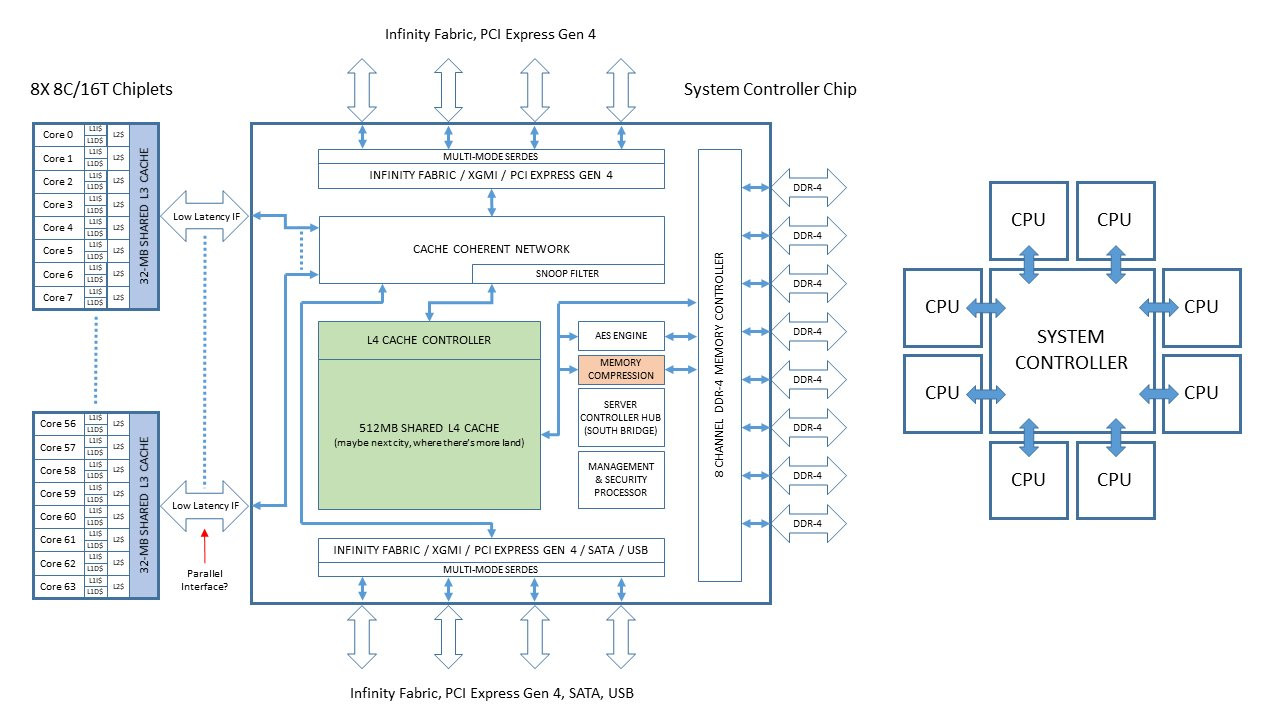
AMD sprung back to competitiveness in the datacenter market with its EPYC enterprise processors, which are multi-chip modules of up to four 8-core dies. Each die has its own integrated northbridge, which controls 2-channel DDR4 memory, and a 32-lane PCI-Express gen 3.0 root complex. In applications that can not only utilize more cores, but also that are memory bandwidth intensive, this approach to non-localized memory presents design bottlenecks. The Ryzen Threadripper WX family highlights many of these bottlenecks, where video encoding benchmarks that are memory-intensive see performance drops as dies without direct access to I/O are starved of memory bandwidth. AMD's solution to this problem is by designing CPU dies with a disabled northbridge (the part of the die with memory controllers and PCIe root complex). This solution could be implemented in its upcoming 2nd generation EPYC processors, codenamed "Rome."

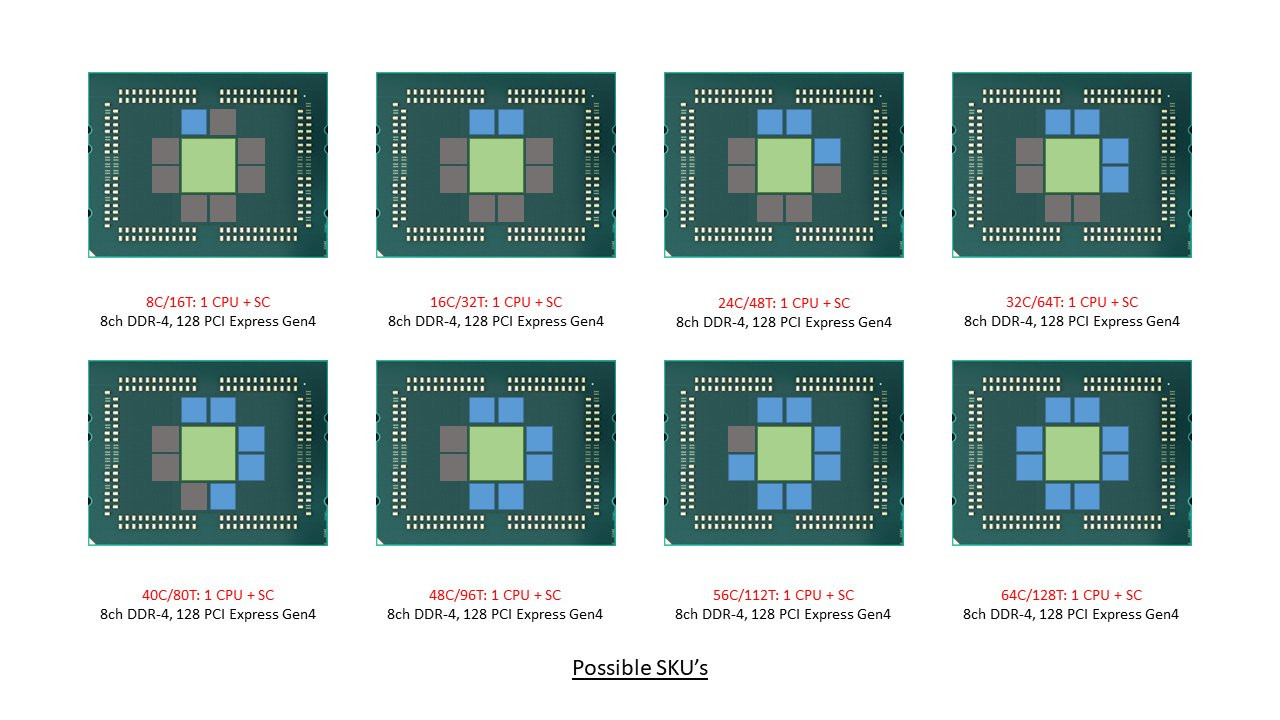
With its "Zen 2" generation, AMD could develop CPU dies in which the integrated northrbidge can be completely disabled (just like the "compute dies" on Threadripper WX processors, which don't have direct memory/PCIe access relying entirely on InfinityFabric). These dies talk to an external die called "System Controller" over a broader InfinityFabric interface. AMD's next-generation MCMs could see a centralized System Controller die that's surrounded by CPU dies, which could all be sitting on a silicon interposer, the same kind found on "Vega 10" and "Fiji" GPUs. An interposer is a silicon die that facilitates high-density microscopic wiring between dies in an MCM. These explosive speculative details and more were put out by Singapore-based @chiakokhua, aka The Retired Engineer, a retired VLSI engineer, who drew block diagrams himself.
Return to Keyword Browsing
Nov 17th, 2026 14:31 CST change timezone

New Forum Posts

Popular Reviews

TPU on YouTube

Controversial News Posts