News Posts matching #Asus

Return to Keyword Browsing

Intel Cuts Prices of Sandy Bridge Mobile CPUs to OEMs

Intel notified its partners among OEMs and ODMs, price cuts of processors based on the "Sandy Bridge" architecture, by 10 to 15 percent, according to sources in the notebook industry. The company hopes that reduced prices will stimulate market demand, and help quicker digestion of inventories as it gears up to launch its new generation of Core processors based on the 22 nanometer "Ivy Bridge" silicon, in April 2012.

Major notebook vendors such as Lenovo, Acer, and ASUS, have already brought prices of their models based on the popular Core i5-2430 below US $659 (NTD 20,000), and those based on cheaper Core i3 models under NTD 13,000 (US $430). Intel's upcoming Core i5-3450 and Core i7-3370, which will be found in Intel's mid-thru-performance lineup of new-generation Core processors, are expected to be just about $10-$15 costlier than the chips they're about to displace. The two are expected to be priced in the range of US $184-332. It is expected that notebook vendors will convey these fresh price cuts to the end-user, resulting in slightly more affordable notebooks.

Hasbro Sues Asus over Transformer Prime Tablet, Shouts Trademark Infringement

Shipment delays aside, Asus now has another problem involving its Tegra 3-powered Eee Pad Transformer Prime tablet, a trademark lawsuit. Last week US-based toy maker Hasbro has filed a complaint with the Los Angeles federal court through which it accuses Asus of violating its uber-popular 'Transformers' trademark.

Hasbro is obviously annoyed with the name of Asus' tablet which combines two important brands - Transformers and Optimus Prime. To 'make things right', Hasbro is asking for monetary damages and a temporary injunction that would prevent the sale of the Transformer Prime in the US.

Asus didn't respond to the lawsuit but it's probably taking action to ensure nothing disrupts Transformer Prime sales.

Asus ET2700 27-inch All-in-One PC Makes its US Debut

Previously showcased at CeBIT (in March) and Computex (in June), Asus' 27-inch ET2700 all-in-one PC has now been launched in the US where it's set to go head-to-head with the Apple iMac.

The ET2700 is equipped with an LED-backlit Full HD (1920 x 1080) MVA panel offering 178/178 degree viewing angles (and, depending on model, 10-point multi-touch) and features a Sandy Bridge processor (Core i3-2120, i5-2400S, i5-2405S or i7-2600S), up to 8 GB of RAM, Intel HD integrated graphics or an NVIDIA GeForce GT 540M 1/2 GB card, up to a 2 TB hard drive, and either a DVD writer, a Blu-ray combo drive, or a Blu-ray burner.

ASUS to Outsource Motherboard to Cal-Comp Electronics

Today ASUS announced that they will be outsourcing a portion of their motherboard manufacturing to Cal-Comp Electronics. The total amount is estimated to be around 5 or 6 million motherboards out of a total shipment forecast of 24.5 million units for 2012. This is somewhat a surprise move by ASUS as they originally outsourced its motherboard orders to Pegatron and other smaller ODMs in Southern China.

The reasons for the shift are unknown. Cal-Comp currently has production bases in Thailand, China, Malaysia, Brazil and Mexico and is mainly manufacturing PC peripherals and components such as printers, external hard drive and printed circuit board (PCB) as well as communication products such as set-top box (STB), handsets and Bluetooth earphones.

TechPowerUp GPU-Z 0.5.7 Released

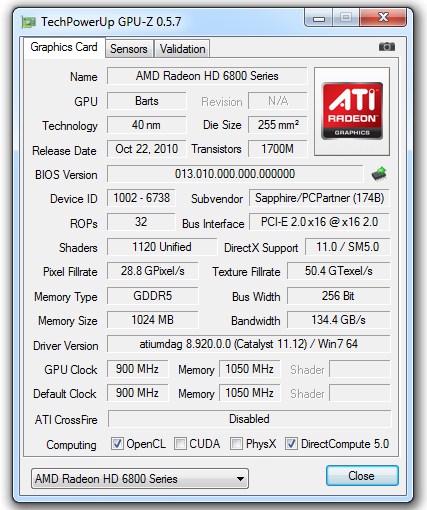
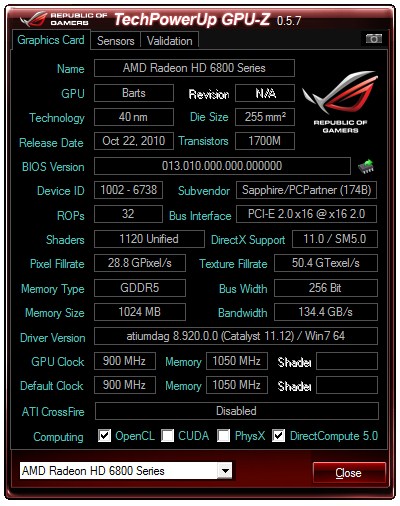
TechPowerUp today released GPU-Z version 0.5.7, the latest version of our popular graphics system information and diagnostic utility. This release of GPU-Z comes just in time for the launch of AMD's Radeon HD 7000 series. It packs tested support for Radeon HD 7970 and HD 7350. It packs an updated PCI Express 3.0 detection routine, with better detection reliability. It fixes a bug related to "APIC counter broken" on AMD Fusion APU platforms. Detection is improved for some rare GPUs, such as HD 6450A, HD 6470M, and the more popular HD 5570.

Several reliability updates were introduced. This includes fixed (improved) fillrate calculation on Fermi architecture, fixed ROP count on GT 420, GT 520, HD 5450, HD 6450; fixed random values showing as default clocks on some NVIDIA cards; fixed random value showing as shader clock on NVIDIA cards without shader clock; and addition of process size, die size, transistor count for Radeon E6760.

DOWNLOAD: TechPowerUp GPU-Z 0.5.7 and TechPowerUp GPU-Z 0.5.7 ROG-Themed

Radeon HD 7970 Listed by European Retailer

Dutch online retailer Comcom.nl couldn't hold its rocks, and listed the upcoming Radeon HD 7970 on its site. Listed, was an ASUS-branded card (with no pictures, of course), so it could be a paper listing for pre-orders. Comcom is asking €482.11 for this card before applicable taxes, about €573.71 with them. Disturbing as the pricing looks, it endorses speculated North American pricing of US $550 (pre-tax) for these cards. In its listing the retailer mentions the card's model number as HD7970-3GD5, and as having 3 DVI connectors, 1 HDMI, and two mini-DP.

Microsoft Tells ARM Partners to Pick Notebook Vendors

Windows (PC) will make its first transition to a machine architecture other than x86 in decades with Windows 8 Windows on ARM (WOA), and Microsoft wants to make absolutely sure that it has a well-oiled ecosystem in place to propel its growth. Currently, Microsoft picked three potent players among ARM processor vendors, Qualcomm and Texas Instruments (that have experience and can ship in Zerg volumes), and NVIDIA (which has demonstrated a lot of engineering potential with its latest Tegra products).

Microsoft reportedly asked the three ARM players to pick two notebook vendors each (one major, and one minor) with which they will work to develop some of the first WOA portable computing devices. Qualcomm selected Samsung and Sony, Texas Instruments chose Toshiba and Samsung, while NVIDIA chose Acer and Lenovo. Among these, Samsung, Toshiba, and Lenovo are the major partners. Surprisingly, Taiwan-based companies have an insignificant role in this ecosystem. ASUS, which has thus far been the largest client of NVIDIA for Tegra processors, has been left out. Now that downstream partners are selected, upstream ODMs such as Quanta Computer, Compal Electronics, Wistron and Pegatron Technology, which manufacture for those companies, are getting their R&D teams in shape to compete for the next-generation platform. The finishing line of ARM's marathon run to get into PCs is in sight.

NVIDIA GeForce GTX 560 Ti with 448 Cores Launched

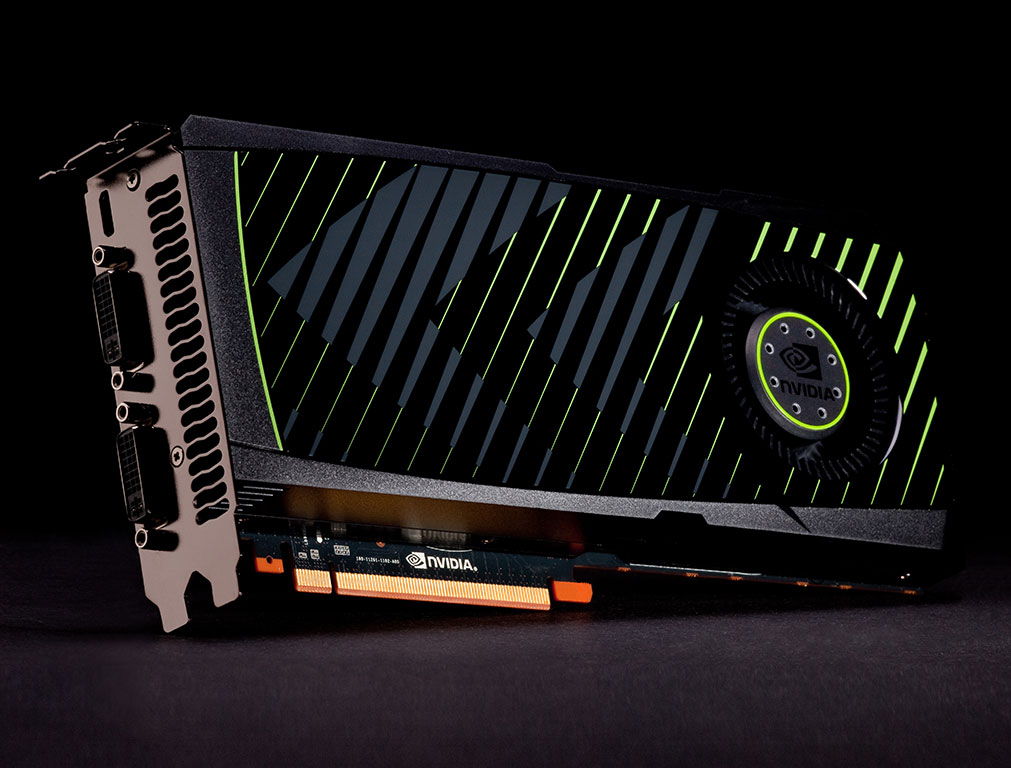
NVIDIA released its newest graphics card model specifically for the winter shopping season, the limited edition GeForce GTX 560 Ti 448 cores. Not only is this a limited edition launch, but also targeting only specific markets in North America and Europe. This includes the United States and Canada in North America; and the UK, France, Germany, Russia, and the Nordics in Europe. The new card is based on the 40 nanometer GF110 GPU instead of the GF114 that the regular GTX 560 Ti is based on. This allows NVIDIA to add 64 more CUDA cores (448 vs. 384), 25% more memory (1280 MB vs. 1024), and a 25% wider memory bus (320 bit vs. 256).

The new limited edition GeForce GTX 560 Ti 448 cores features clock speeds identical to those on the GeForce GTX 570, at 732 MHz core, 1464 MHz CUDA cores, and 950 MHz (3.80 GHz effective) GDDR5 memory. Since it's based on the GF110 board, this new card is also capable of 3-way SLI, something the regular GTX 560 Ti isn't. The card draws power from two 6-pin PCIe power connectors. Display outputs typically include two DVI and a mini-HDMI. Add-in card vendors are free to design their own graphics cards based on this chip, and so expect most GTX 560 Ti 448 core cards to look similar to non-reference GTX 570 ones. ZOTAC, Inno3D, EVGA, Palit, Gainward, ASUS, Gigabyte, and MSI will have graphics cards based on this chip. Prices should typically start at US $289.

Small, High Resolution Windows Laptops Coming In 2012 - Thanks To Apple

Love 'em or hate 'em, Apple has a habit of trend setting. When Apple released their original iPad, it had a meager low resolution 1024 x 768 resolution display which was scoffed at by many, yet it didn't stop it from being a runaway success. And the iPad 2 didn't improve on it, either - perhaps surprisingly, since the original formula worked so well. However, in early 2012 Apple plans to introduce its new Retina display equipped next generation iPads, offering a very high 2048 x 1536 resolution. On the 9.7" screen of an iPad, this would make the pixels all but invisible to anyone, except for those with the sharpest of 20-20 vision, giving the screen superb clarity and wow factor. These will be incorporated into its next generation iPads, which is expected to push the PC notebook market to use higher resolution displays too in order to remain competitive.

Kingston Technology Launches New HyperX Genesis Kits for Quad-Channel Memory

Kingston Technology Company, Inc., the independent world leader in memory products, today announced a range of HyperX Genesis memory in 8GB, 16GB and 32GB kits to support the new Intel Sandy Bridge-E X79 quad-channel processors and X79 Express-based motherboards. Kingston HyperX Genesis is the perfect solution for enthusiasts who require 4x raw performance increases afforded by quad channel over single channel solutions.

For extreme users who require both the fastest memory and largest capacity, Kingston's 2400MHz and 2133MHz will soon be available in both 8 GB and 16 GB kits of four modules. Other HyperX Genesis memory for X79 systems include 1866 MHz and 1600 MHz frequencies in kits of four and eight, with capacities ranging from 8GB to 32GB. All of Kingston's HyperX kits have achieved Intel XMP certification and are compatible with the latest X79 motherboards from vendors such as ASUS, GIGABYTE, MSI and ASRock.

NVIDIA SLI & Intel Core I7 Extreme Ed. CPUs Power World's Fastest Desktop Gaming PCs

NVIDIA today announced that system builders worldwide are now shipping the fastest PC gaming platforms ever built, thanks in part to NVIDIA SLI technology and the just-released Intel Core i7 Extreme Edition processors and X79 chipset-based motherboards.

The combination of NVIDIA SLI technology -- which allows for multiple GPUs to run on a single PC -- and new X79-based motherboards allow gamers to customize their PC experience with up to four NVIDIA GeForce GTX GPUs, including the GeForce GTX 580 and GTX 570, the world's fastest DX11 GPUs. Licensed by the world's leading motherboard manufacturers -- including Intel, ASUS, ASRock, EVGA, Foxconn, Gigabyte and MSI, SLI technology is crucial for playing this year's hottest graphics-intensive games, such as the recently released Battlefield 3 and upcoming Batman: Arkham City with detail, resolution and immersion settings cranked up.

ASUS Ready with Rampage IV Formula; Rampage IV Gene in the Pipeline

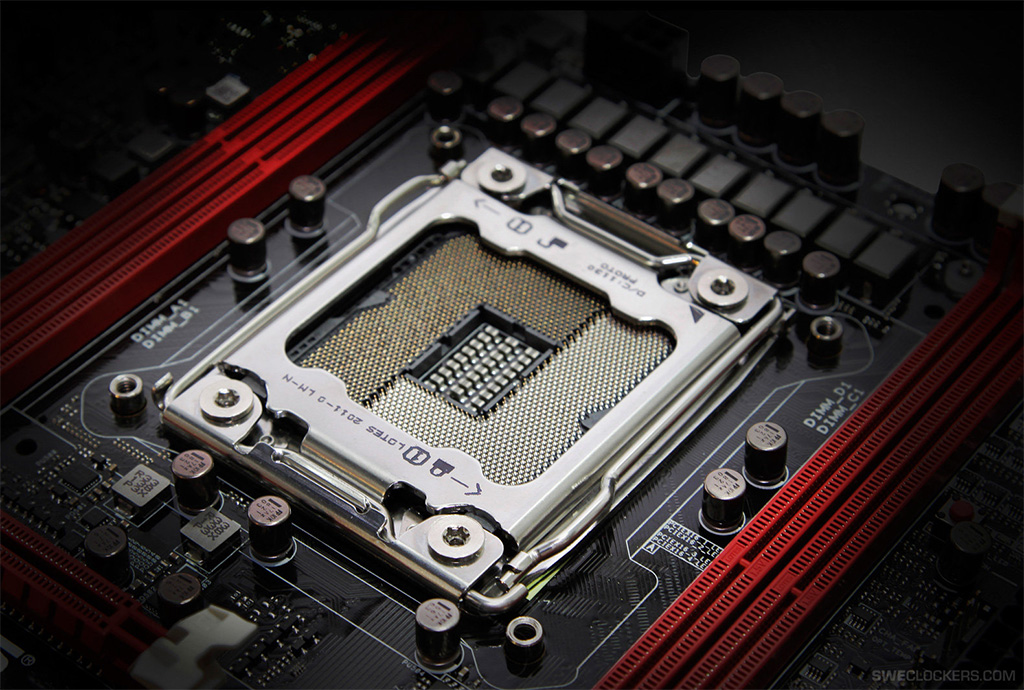
This week, ASUS, along with the rest of the PC motherboard industry, launched its socket LGA2011 board lineup, with its three main lines: P9X79, ROG Rampage IV, and TUF Sabertooth X79. The ROG line included the Rampage IV Extreme, which ended up being ASUS' flagship socket LGA2011 motherboard for the platform's launch. It's filled to the brim with all the features gamers and overclockers will ever need. But as with most ROG lines, Rampage IV will have a complete triad: Extreme (already launched), Formula (a notch below Extreme, but still offers great features), and Gene (Micro-ATX, stuffed with features).

Press shots and presentation slides of the Rampage IV Formula started making waves today. Pictures reveal the board to be standard ATX. Unlike the Extreme, Formula has just four DDR3 DIMM slots (one slot per memory channel), yet it supports all the DRAM multipliers Extreme does. The CPU is powered by a 11-phase Digi+ VRM. It is wired to four PCI-Express 3.0 (capable) x16 slots, among which two are PCI-Express 3.0 x16 capable, and all four are x8 capable, depending on the way they are populated with addon cards. Apart from these long slots, there are two PCI-E 2.0 x1. 4-way SLI and CrossFireX are supported. Storage connectivity includes four SATA 3 Gb/s (black), four SATA 6 Gb/s (red, two from the PCH, two from third-party controller), and two eSATA 6 Gb/s (also from a third-party controller).

Digital Storm Pushes ODE to the Next Level with Sandy Bridge-E

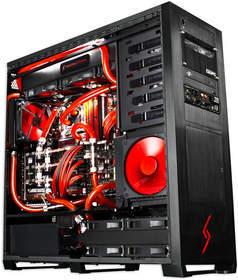
Digital Storm, the predominant name in computer system integration and engineering, proudly announces the flagship system in its award-winning line of ODE gaming computers - ODE Level 4. This new system takes the pre-built and fully customized concept to the next level by integrating Intel's X79 chipset, Core i7 3930K six-core CPU, and overclocking it to 4.6GHz. ODE Level 4 gaming PCs are packed with lightning fast components that have been optimized to deliver unparalleled performance, while not breaking the bank.

Based on Intel's X79 chipset, ODE Level 4 boasts blazing fast speed that creates unrivalled gameplay. Digital Storm engineers have also taken advantage of the quad-channel memory controller on the new X79 chipset by designing a luxurious 16GB configuration of DDR3 memory that delivers an even more responsive user experience. Additionally, a configuration of three NVIDIA GTX 570 1.2GB video cards, in triple SLI, generates fluid smooth graphics, creating an immersive gaming experience.

ASUS Launches the Most Complete and Innovative X79 Motherboard Lineup

ASUS, maker of the world's best-selling and most innovative motherboards, is excited to release a wide range of new X79 motherboards. All feature the new Intel X79 Express Chipset, with support for 2nd generation Core i7 processors in the new LGA 2011 Socket. The complete lineup includes P9X79 Series motherboards with total performance tuning and control, the enthusiast-centric ROG Rampage IV Extreme, the ultra-reliable TUF SABERTOOTH X79, and the professional P9X79 WorkStation Series supporting NVIDIA 4-way SLI and AMD CrossFireX.

All motherboards feature ASUS Dual Intelligent Processor 3 technology with the latest ASUS DIGI+ Power Control design providing three digital voltage controllers onboard, one for the CPU and two for DRAM. ASUS' class-leading Digital Power designs result in better performance, greater stability, and enhanced overclocking for all users. All of the new motherboards ship with multi-GPU support, PCI Express 3.0 capabilities*, exclusive ASUS UEFI and up to 64GB of quad-channel DDR3 support via 8-DIMM slots.

ASUS Ready With X79 Workstation Board

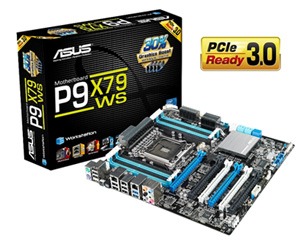
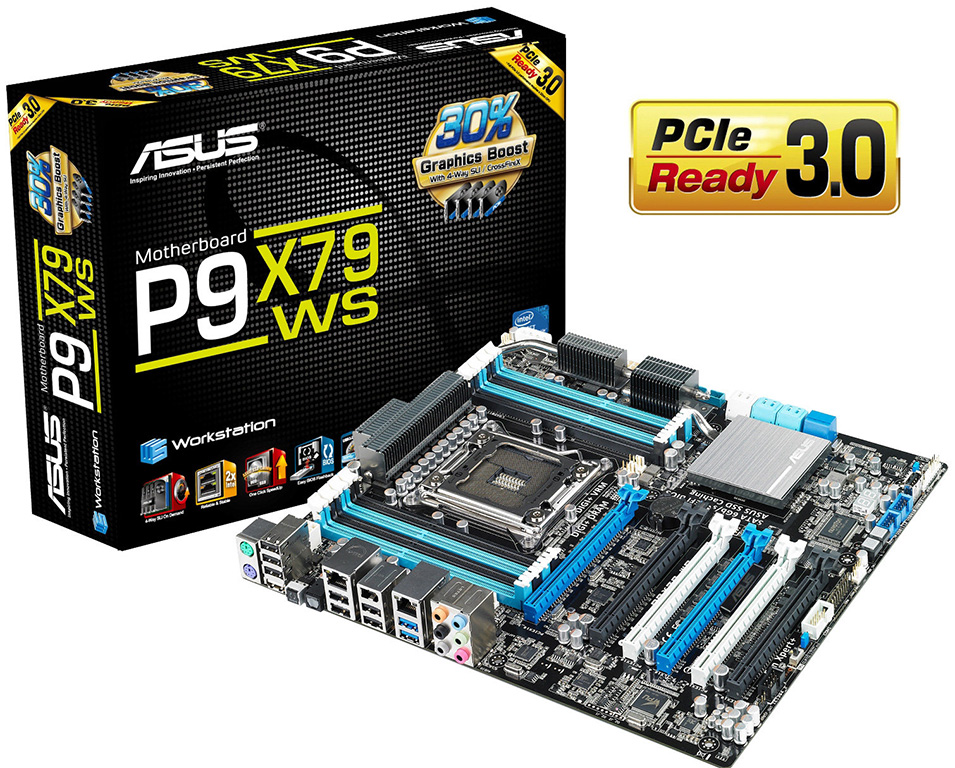
Republic of Gamers and Sabertooth aren't the only special client motherboard product lines of ASUS apart from its mainline, there's also the WS (workstation) series, that consists of motherboards fit for mission-critical environments, and which are filled to the brim with features. These motherboards are often based on chipset from Intel's client product lines, rather than enterprise ones. Intel's Sandy Bridge-E 1P platform will get a similar treatment with the P9X79WS.

Based on the ATX form-factor, the P9X79WS uses a typical X79 motherboard layout. The socket LGA2011 is powered by a 10-phase Digi+ VRM, which is cooled by a heatsink that shares its heat with a VRM heatsink cluster over the memory VRM, and the one over the X79 PCH. There are eight DDR3 DIMM slots, supporting quad-channel DDR3 memory. All expansion slots are PCI-Express long-type, though the exact lane configuration is not known. The board is advertised with 4-way NVIDIA SLI and CrossFireX support, so at least four of those slots could be wired to the CPU.

AMD Ready Solutions for Server Help Accelerate Data Center Deployments

AMD today announced AMD Ready Solutions for servers, a collaborative effort with leading server platform manufacturers to provide a broad portfolio of ready-to-market AMD Opteron 6200 Series processor-based motherboards worldwide through authorized AMD distributors the day of the launch. Because the upcoming AMD Opteron processors will drop into the existing socket infrastructure, leading motherboard manufacturers such as ASUS, Supermicro and TYAN are able to bring fully validated and rigorously tested platforms to market even more quickly. These new platforms address market demands and customer requirements for a wide range of server workloads, including high-performance computing (HPC), cloud computing, virtualization, enterprise and database applications and Web/email servers.

"With AMD Ready Solutions for servers, our customers can find complete and verified server platforms in the channel the day of launch," said Paul Struhsaker, corporate vice president and general manager, Commercial Business at AMD. "The combination of the existing socket infrastructure already in place with AMD Ready Solutions will enable faster and easier upgrade paths to new levels of server performance and scalability."

ASUS Bundles Battlefield 3 with Graphics Cards and Sound Cards

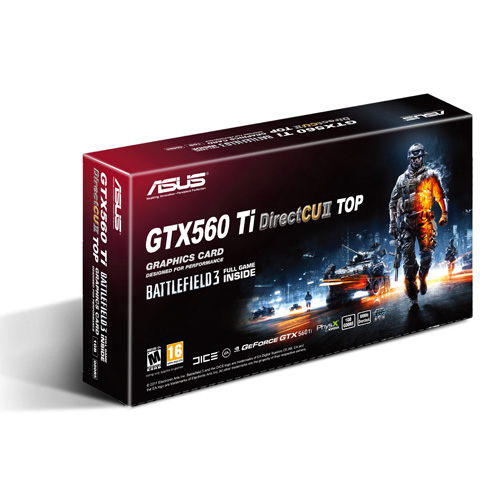
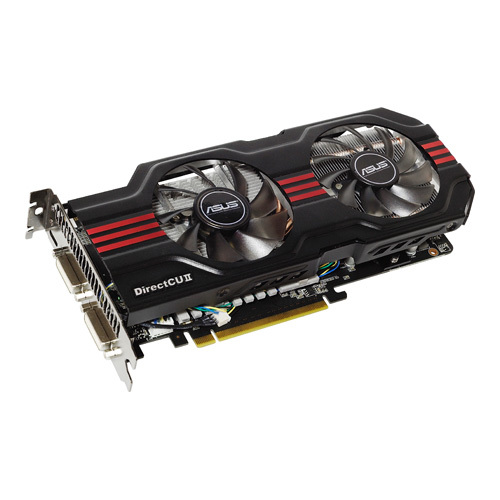
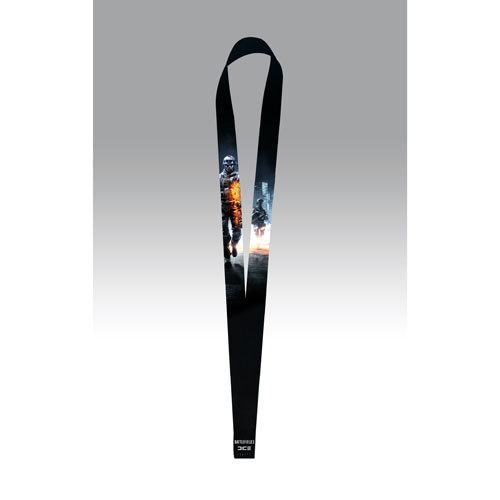
ASUS began bundling copies of Battlefield 3 (not Limited Edition) and an ASUS-Battlefield 3 themed Lanyard with GeForce GTX 560 Ti DirectCU II TOP graphics card and Xonar D2X PCI-Express 7.1 channel sound card. You can buy either of those and get a Battlefield 3 coupon that can be redeemed on Origin.

The GeForce GTX 560 Ti TOP will allow you to play Battlefield 3 at 1080p resolution with quite some eye-candy turned on. Its core is overclocked to 900 MHz (from NVIDIA reference speed of 820 MHz), and memory at 1050 MHz (4200 MHz GDDR5 effective). The DirectCU II cooler, ASUS claims, keeps the card 20% cooler than the reference heatsink. There is 1 GB of GDDR5 memory across a 256-bit wide memory interface. This GTX 560 Ti is based on the 40 nm GF114 silicon, packing 384 CUDA cores.

Sandy Bridge-E and X79 Motherboards Listed on Chinese Stores

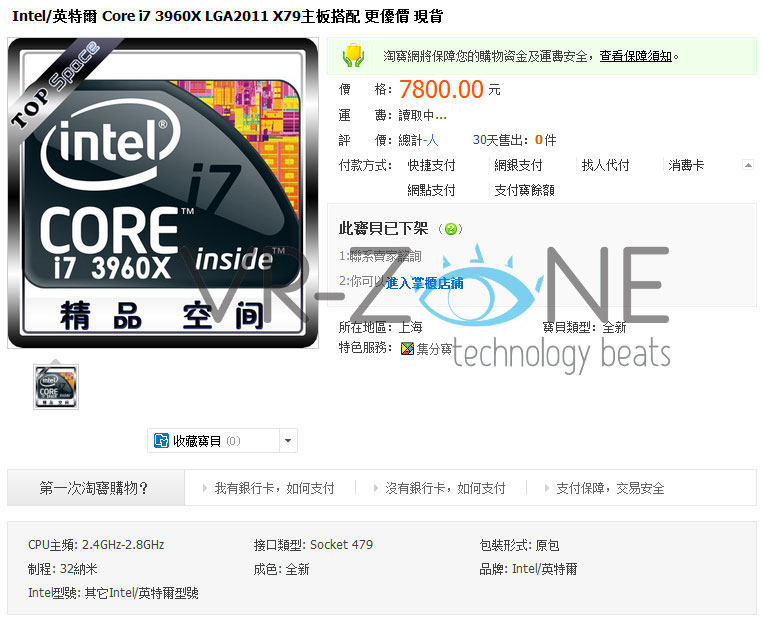
A couple of weeks ahead of its worldwide launch, Intel's much talked about "Sandy Bridge-E" Core i7 processors and compatible motherboards are beginning to surface on an online store in China. Listings include all three of the Core i7 LGA2011 processors Intel will launch in November, that includes the quad-core Core i7-3820, six-core Core i7-3930K and six-core Core i7-3960X Extreme Edition (details on the three here. Apart from these, a few compatible motherboards such as the ASUS ROG Rampage IV Extreme and MSI X79A-GD65 8D, were also listed.

Before getting into the pricing, it's important to note that prices of components in mainland China, in general, are more or less consistent with those in the US. The top-of-the-line Core i7-3960X Extreme Edition is priced at RMB ¥7,800 (converts to US $1,227). The next best LGA2011 offering, Core i7-3930K, is priced at ¥5,800 (US $912). The most afforable of the three, Core i7-3820, goes for ¥3,500 (US $550).

AMD OC Record Broken, Still Powered by AMD FX-8150

In mid-September, earlier this year, a team of overclockers sponsored by AMD set a new Guinness Record for clock speed by a silicon processor, setting an AMD FX-8150 processor to run at a staggering 8429.38 MHz. If anything, the coveted Guinness Record feat helped cement the general notion that AMD FX processors are good at overclocking. Sadly, AMD's record didn't last long, with renowned overclocker Andre Yang breaking it with his 8461.51 MHz feat. At this point we don't know if Andre had Guinness covering his feat to he could officially break AMD's record. AMD wouldn't mind it at all, because the new record was set using an AMD FX-8150, too. Andre did it single-handed, or at least he is the only person in the "Submitted by" field on the CPU-Z Validation page.

According to the validation page, 8461.51 MHz was achieved using a base clock speed of 272.95 MHz, with 31.0X multiplier, and a brutal core voltage of 1.992V (almost 2 volts!). As with AMD's record feat, an ASUS Crosshair V Formula motherboard was used. A single 2 GB Corsair-made memory module was used doing 909.8 MHz (1818.16 MHz DDR) with timings of 9-9-9-24T. Like with AMD's feat, only two out of the FX-8150's eight cores were enabled. More details are awaited.

AMD Reports Third Quarter Results

AMD today announced revenue for the third quarter of 2011 of $1.69 billion, net income of $97 million, or $0.13 per share, and operating income of $138 million. The company reported non-GAAP net income of $110 million, or $0.15 per share, and non-GAAP operating income of $146 million.

"Strong adoption of AMD APUs drove a 35 percent sequential revenue increase in our mobile business," said Rory Read, AMD president and CEO. "Despite supply constraints, we saw double digit revenue and unit shipment growth in emerging markets like China and India as well as overall notebook share gains in retail at mainstream price points. Through disciplined execution and continued innovation we will look to accelerate our growth and refine our focus on lower power, emerging markets, and the cloud."

ASUS TUF Sabertooth X79 Detailed, Too

ASUS' top-tier LGA2011 lineup is completed by the TUF Sabertooth X79. This board, along with the ROG Rampage IV Extreme and P9X79 Deluxe makes up for it. There will be many more affordable LGA2011 boards by ASUS, one such model we're hearing about is the P9X79 Pro. The TUF Sabertooth family is based on the idea of rock-solid stability and component durability, these motherboards are built to last, if not score accolades with overclocking like the ROG boards are designed for.

The Sabertooth X79 uses an ASUS-designed Digi+ VRM to power the CPU, which is spread across two sides of the socket (north and west). The heatsink cooling the VRM components to the west is actively cooled by a 40 mm fan, the one over the X79 PCH is cooled by a similarly sized lateral blower, too. Like with the other two top-tier boards from ASUS' stable, this one provides eight DDR3 DIMM slots supporting quad-channel memory.

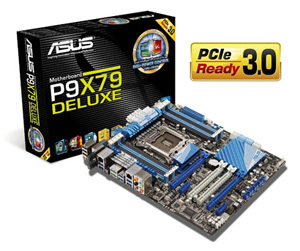
ASUS P9X79 Deluxe Detailed

Here are the first pictures of ASUS P9X79 Deluxe, the company's premium segment LGA2011 motherboard based on the X79 chipset. This features in ASUS' main motherboard lineup, and not sub-lineups such as Republic of Gamers (ROG) or The Ultimate Force (TUF). The P9X79 Deluxe is loaded with features and connectivity options. To begin with, the LGA2011 socket is powered by a next-generation Digi+ VRM design by ASUS, driven by Dual Intelligent Processors III (next-generation Energy Processing Unit (EPU) chip and TurboV Processing Unit (TPU)). Like with the ROG Rampage IV Extreme, VRM is spread across three sides of the socket, and each cluster of MOSFETs is cooled by heatsinks. The socket is wired to eight DDR3 DIMM slots in two sets of four slots, supporting quad-channel DDR3. The memory VRM uses a Digi+ design, too.
Among the six expansion slots, there are four PCI-Express x16 slots, and two PCIe x1. The PCH gives out six SATA ports, two 6 Gb/s (white), four 3 Gb/s (blue), the two additional 6 Gb/s ports come from a third-party controller. There are two power-eSATA ports on the rear panel. The eight USB 3.0 ports on this board are spread across as six ports on the rear-panel, and two via standard header. Other connectivity includes 8+2 channel HD audio, two gigabit Ethernet connections, USB 2.0, and Bluetooth.

ASUS Rampage IV Extreme Cometh

Here is ASUS' top of the line LGA2011 motherboard targeting the gamer-overclocker market, the Republic of Gamers (ROG) Rampage IV Extreme. This board offers all the expansion room and connectivity you'll ever need, plus a wealth of nifty features that help overclockers and ease incremental upgrades. To begin with, the Rampage IV Extreme employs a strong digital PWM circuitry that supports heavy voltage-assisted overclocking with Vdroop control.
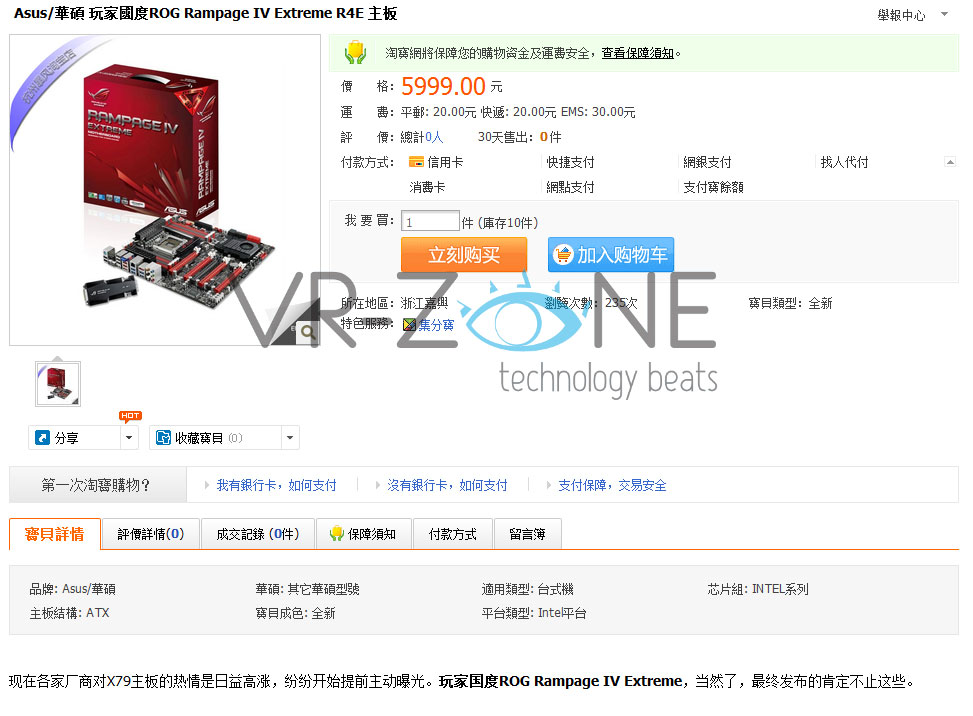
The LGA2011 socket is wired to eight DDR3 DIMM slots (two per channel). CPU and memory VRM areas are located along three sides of the socket, all cooled by heatsinks that are connected by heat pipes. These VRM heatsinks share heat with the one over the X79 PCH, which is actively cooled by a fan.

ASUS Unveils ROG Maximus IV Gene-Z/Gen 3 with PCI-Express 3.0 Slots

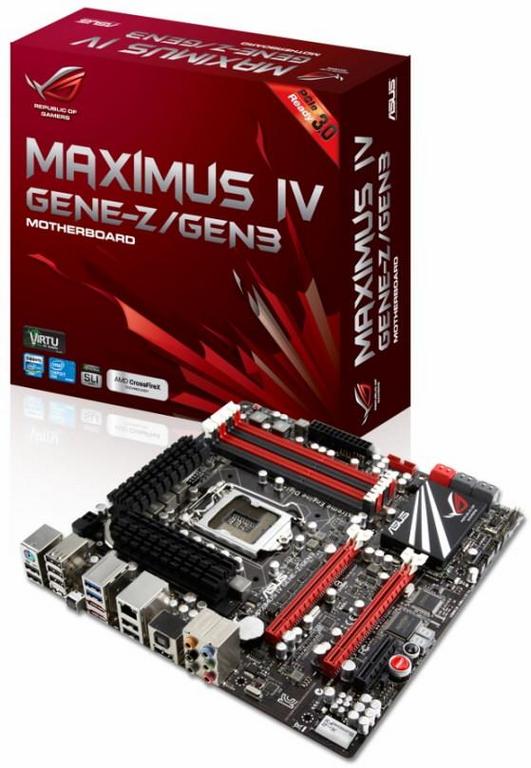
ASUS is ready with a new PCI-Express 3.0 compliant socket LGA1155 motherboard, adding to its recently-launched line of Intel Z68 chipset-based boards that feature Gen 3.0 PCI-Express x16 slots. This latest one is part of the elite Republic of Gamers (ROG) family, and is built on the compact micro-ATX form factor, called Maximus IV Gene-Z/Gen 3. This is the second modification of the Maximus IV Gene, the original was based on Intel P67 chipset, the Gene-Z replaced the chipset with Intel Z68 that supports Smart Response technology, while the Gene-Z/Gen 3 adds PCI-Express 3.0 x16 slots.

The board uses a 12-phase Digi+ VRM for the CPU, it is wired to four DDR3 DIMM slots supporting DRAM speeds of up to DDR3-2200 MHz with overclocking. The socket is wired to two PCI-Express 3.0 x16 slots over Gen 3 compliant switches and electrical components, the slots configure to PCI-Express 3.0 x8/x8 when both are populated. PCI-Express Gen 3 support requires next-generation 22 nm Ivy Bridge Core processors, which will be launched next year. The only other expansion slot is an open-ended PCI-Express 2.0 x4, wired to the Z68 PCH. NVIDIA SLI and AMD CrossFire are supported.

ASUS Unveils Trio of PCI-Express 3.0 Motherboards Based on Intel Z68 Chipset

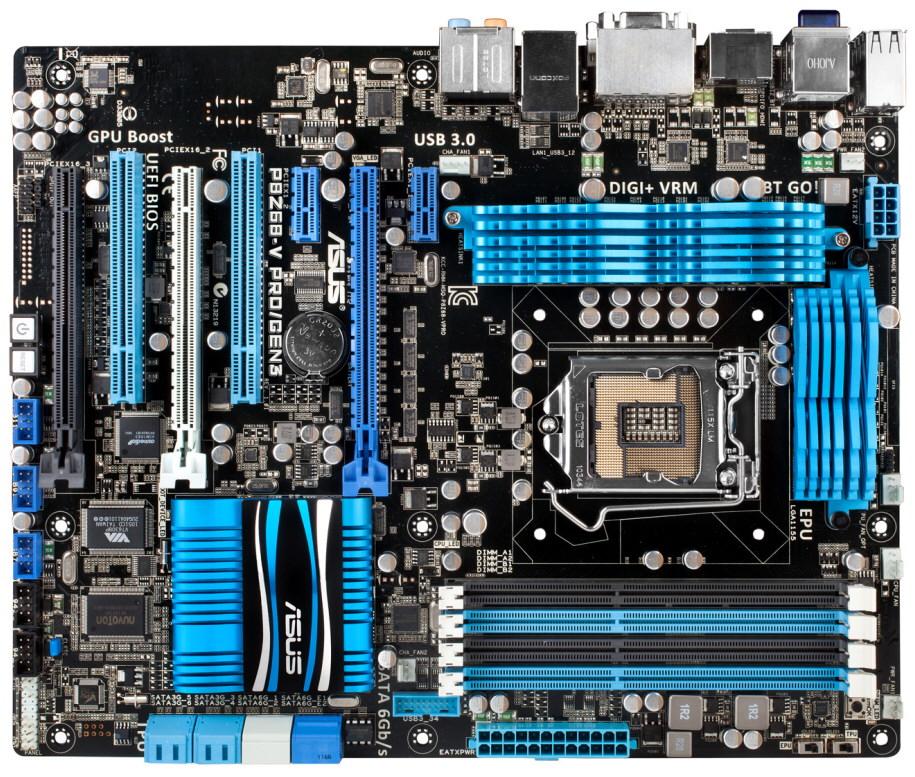
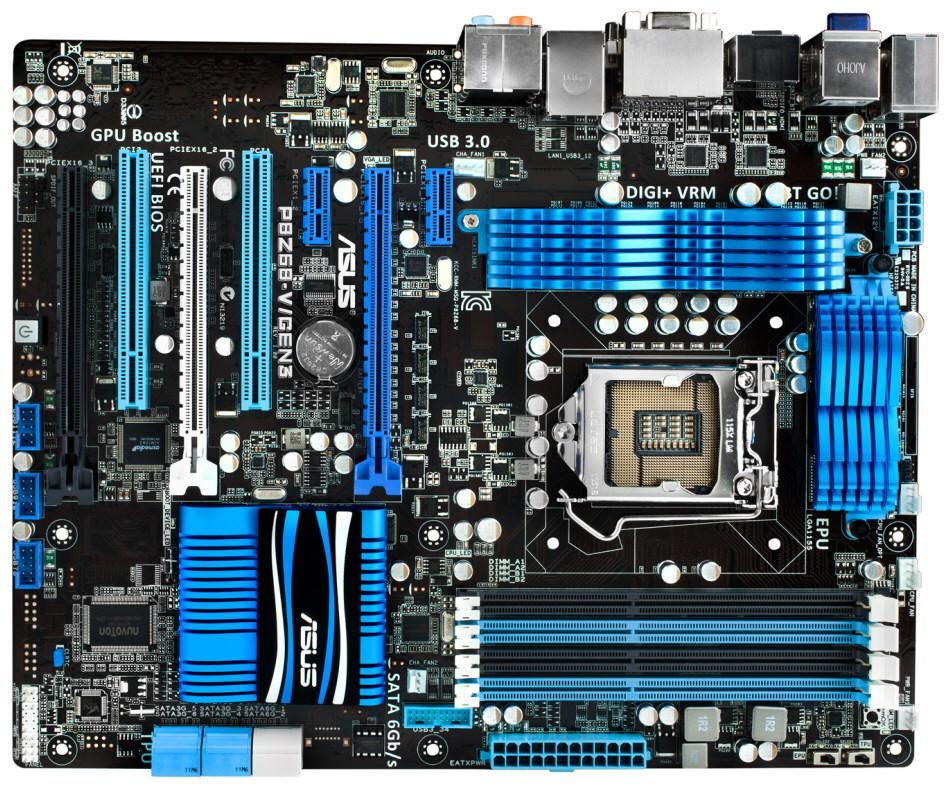
ASUS unveiled a trio of socket LGA1155 motherboards based on the Intel Z68 chipset, which feature PCI-Express 3.0 x16 slots (electrical x8/x8 when both are populated). The new motherboards are PCI-Express Gen 3.0 specifications compliant, complete with switches and electrical components. Leading the pack is the P8Z68 DELUXE/Gen3 in the $250-segement, followed by the P8Z68-V PRO/Gen3 in the $200-segment, and the P8Z68-V/Gen3 in the sub-$200 segment.

All three feature 16-phase Digi+ CPU VRM, an Intel-made gigabit Ethernet controller, and Lucid Virtu support. All three feature the same expansion slot loadout, with two PCI-Express 3.0 x16 (x16/NC or x8/x8), one PCI-Express 2.0 x16 (electrical 2.0 x4), and two each of PCI-Express 2.0 x1 and legacy PCI wired to an ASMedia-made bridge chip.
Return to Keyword Browsing
Nov 26th, 2026 00:05 CST change timezone

New Forum Posts

Popular Reviews

TPU on YouTube

Controversial News Posts