News Posts matching #Asus

Return to Keyword Browsing

ASUS Motherboards First to Implement USB-attached SCSI to Boost USB 3.0 Performance

With its latest P8Z77, ROG Maximus V, and Sabertooth Z77 motherboard lines, ASUS became the first PC motherboard vendor to implement UASP - USB-attached SCSI Protocol. UASP changes the way the computer and connected USB devices talk to each other. It ensures more efficient utilization of bus bandwidth (5 Gb/s), resulting in higher bandwidth yield to connected devices. UASP allows connected devices to exchange multiple commands at once, reducing protocol overhead. UASP is implemented on ASUS motherboards using third-party controllers that support it. So far we know the likes of VLI to have such host controllers. In addition to these, ASUS motherboards also provide USB 3.0 ports wired to Intel PCH chipsets.

ASUS P8Z77-I Deluxe Detailed

ASUS unveiled a new mini-ITX motherboard based on the Intel Z77 chipset, supporting LGA1155 processors, the P8Z77-I Deluxe. Despite is ultra-compact form the designers crammed in as many features as possible, including a powerful 10-phase Digi+ VRM. ASUS found an ingenious way of designing the VRM area, by raising it to a (fixed?) add-on card north of the CPU socket. This VRM riser has the electrical controller, the 10-phase VRM, complete with chokes, drivers, and FETs, and a MOSFET heatsink. This board is one of the few of its form-factor that draws power from an 8-pin EPS, apart from the 24-pin ATX.

The LGA1155 socket is wired to two full-length DDR3 DIMM slots, supporting dual-channel DDR3 memory, and a PCI-Express 3.0 x16 slot. There are four SATA ports on board, two each of SATA 6 Gb/s and 3 Gb/s. Connectivity includes 6-channel HD audio with 7.1 channel optical SPDIF output, four USB 3.0 ports (two front, two rear), gigabit Ethernet, wireless b/g/n network controller, and a number of USB 2.0 ports. The board features UEFI BIOS, and USB BIOS Flashback. Expect the ASUS P8Z77-I Deluxe to launch in April. More variants, based on this exact design, can be expected.

ASUS Eee PC X101CH Cedar Trail Netbook Available for Purchase

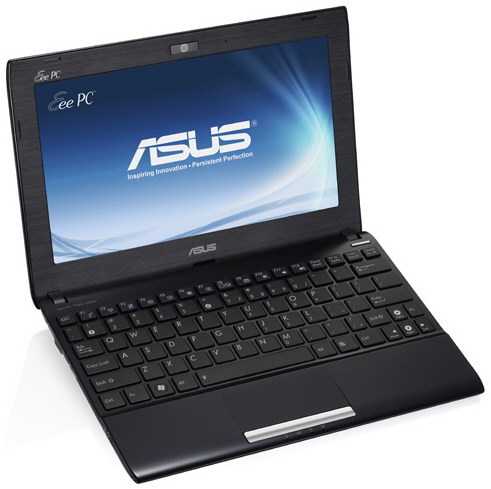
Following on the footsteps of its sibling, the 1025C, ASUS' Eee PC X101CH netbooks has also made it into stores and is currently available in the US for $279.99. For this price you get an Eee PC with a Seashell design that features a Matte Black coating, a 1.6 GHz Atom N2600 dual-core processor, a 10.1-inch (1024 x 600) display, 1 GB of DDR3 memory, and a 320 GB (5400 RPM) hard drive.

The Eee PC X101CH also comes with a 0.3-megapixel webcam, a micro SD card slot, 802.11 b/g/n WiFi, two USB 2.0 ports, and a 3-cell battery allowing up to 4.5 hours of operation per charge. The netbook can be found on sale here.

ASUS TUF Sabertooth Z77 Motherboard is a Dark Knight in Thermal Armour

ASUS hasn't completely ditched the "Thermal Armour" concept it introduced with the TUF Sabertooth P67, which we thought it did away, with the Sabertooth X79. The newest member in the series, the Sabertooth Z77, still very much features it. Thermal Armour is ASUS' idea of blanketing most of the motherboard's component area with a perforated sheet that directs air-flow, and also lends it an aesthetic touch (depending on your taste, you may love it, or hate it).

We spy four DDR3-DIMM slots (with matching Corsair Vengeance modules, not included), and an all-PCIe expansion slot layout, with two PCI-Express 3.0 x16 slots, one PCIe 2.0 x16 (x4), and three PCIe x1. There are two additional SATA 6 Gb/s ports augmented to the ones provided by the Z77 PCH. Display connectivity looks to include DVI and HDMI. 8-channel HD audio, GbE, about 6 USB 3.0 ports, and a number of USB 2.0 ports, complete the package. The board supports ASUS' BIOS Flashback feature. ASUS TUF Sabertooth motherboards are designed to be rock-stable and durable enough to be certified by stress-testing agencies for it.

ASUS ROG Maximus V Gene Detailed, Too

Perhaps the most exciting micro-ATX motherboard based on Intel 7-series chipset, supporting "Ivy Bridge" Core processors, is the ROG Maximus V Gene, from ASUS. This board gives you nearly all the connectivity of larger ATX motherboards, by making use of what little PCB real-estate it has. The board uses a 12-phase VRM to power the LGA1155 CPU, just like the Maximus V Formula. The CPU is wired to four DDR3 DIMM slots. Expansion slots include two PCI-E 3.0 x16 (x8/x8 with both populated), and one open-ended PCI-E 2.0 x4. Connectivity includes two SATA 6 Gb/s, four SATA 3 Gb/s internal ports, six USB 3.0 ports (four rear, two front), SupremeFX III audio with ground-layer isolation from the rest of the motherboard, and a mini-PCIe riser card that packs a dual-band wireless networking adapter. Expect this board to be out in April.

ASUS ROG Maximus V Formula Unveiled

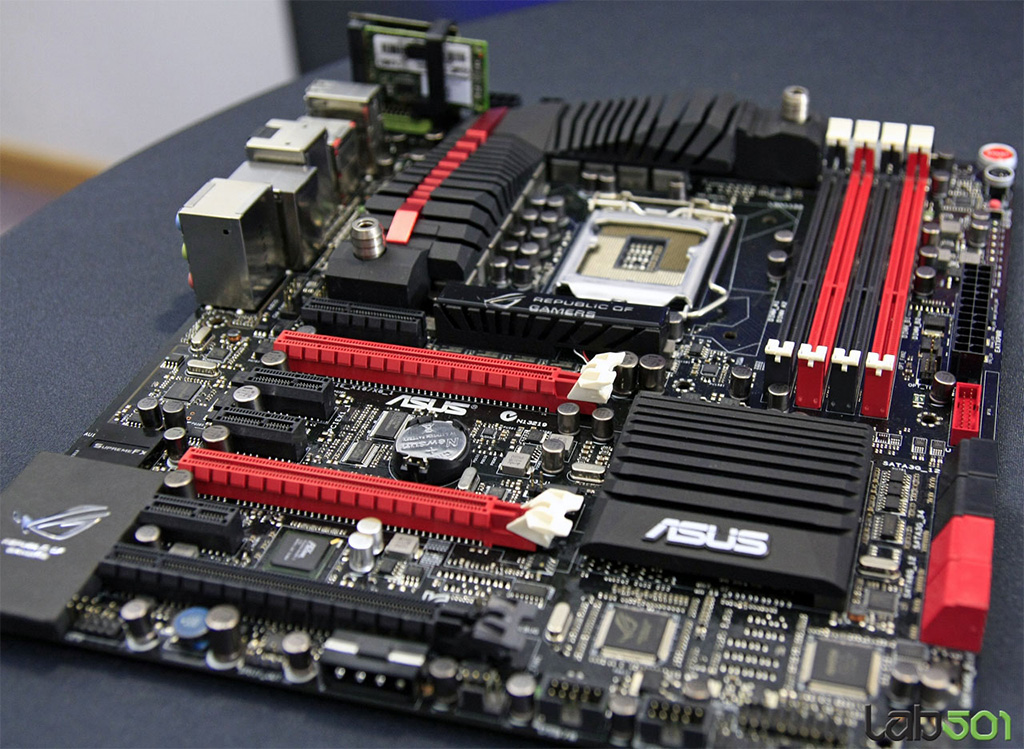
ASUS unveiled the Republic of Gamers Maximus V Formula motherboard, at CeBIT. Its latest bad boy is based on Intel Z77 chipset, and supports "Ivy Bridge" and "Sandy Bridge" Core processors in the LGA1155 package. The LGA1155 socket is powered by a 12-phase Digi+ VRM, which takes power from one 8-pin EPS, and one 4-pin ATX, apart from the 24-pin ATX, and an optional 4-pin Molex. The VRM area of this motherboard is cooled by a heatsink that is embedded with a liquid-cooling channel that lets you plug it to your water-cooling loop. With the Ivy Bridge platform motherboards, it's really just the CPU and CPU VRM that need liquid cooling for extreme overclocking, since the Z77 PCH is just a glorified southbridge that doesn't get hot enough to break your OC.

The CPU is wired to four DDR3-DIMM slots, supporting up to 32 GB of dual-channel DDR3-2600+ (by OC). Expansion slots include two PCI-Express 3.0 x16 (x8/x8 when both are populated), one open-ended PCI-Express 2.0 x4 (wired to the PCH), one PCI-Express 2.0 x16 (electrical x4, also wired to the PCH), and three PCI-Express 2.0 x1. ASUS deployed a PLX PCIe 2.0 bridge chip to create more PCIe lanes for onboard devices. The board features ThunderFX audio, which consists of high-grade DAC and AMP circuitry that's ground-isolated from the rest of the motherboard. On the connectivity side, there's gigabit Ethernet and a dual-band WiFi module. Several ROG-exclusive features can also be found.

ASUS To Launch Five New 10" Eee PCs at CeBIT

ASUS is readying five new Eee PC netbooks for launch at CeBIT, these include the Eee PC X101CH, Eee PC 1011CX, two variants of the Eee PC 1015BX, and the Eee PC 1025C. The X101CH and 1011CX are driven by Intel Atom N2600 processor, the 1025C by Atom N2800, while the 1015BX has two variants, driven by AMD Vision C50 or C60 APUs. All of these are 10.1-inchers. Also common between these models are 1 GB RAM, 320 GB storage, and Windows 7 Starter Edition operating system. The five Eee PCs also feature ASUS Express Gate, a lean web-oriented operating system. In related news, ASUS is also working on 11.6-inch Eee PC 1225B/C, which feature larger screens, with 1366x768 pixels resolution.

ASUS Teases with ROG Maximus V

With launch of Intel's 7-series chipset a little over a month away, there's hectic activity in the PC motherboard industry, a section of which is wooing the PC enthusiast community. Among this, is ASUS, which has its Republic of Gamers Maximus V series of motherboards ready. In all likelihood, these motherboards are based on Intel's Z77 chipset, and could include three variants, Extreme, Formula, and Gene (micro-ATX). Full pictures, and previews of these motherboards are lined up for a little later this week.

ASUS Announces the DSL-N55U Gigabit ADSL Modem Router

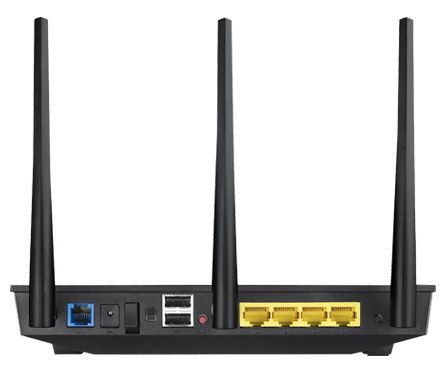
The ASUS DSL-N55U utilizes a powerful tri-antenna, dual-CPU design that offers the complete benefit of ADSL modem and router features in one streamlined and easy to use device. It supports simultaneous 2.4 GHz and 5 GHz transmission at up to 600 Mbps, making it an ideal choice for power users, gamers, and consumers who stream HD media regularly. Quick and simple installation gets users online complication-free, while two USB ports afford multi-role usability as a file, media, and printer server.

ASUS Announces its Radeon HD 7800 DirectCu II Graphics Card Series

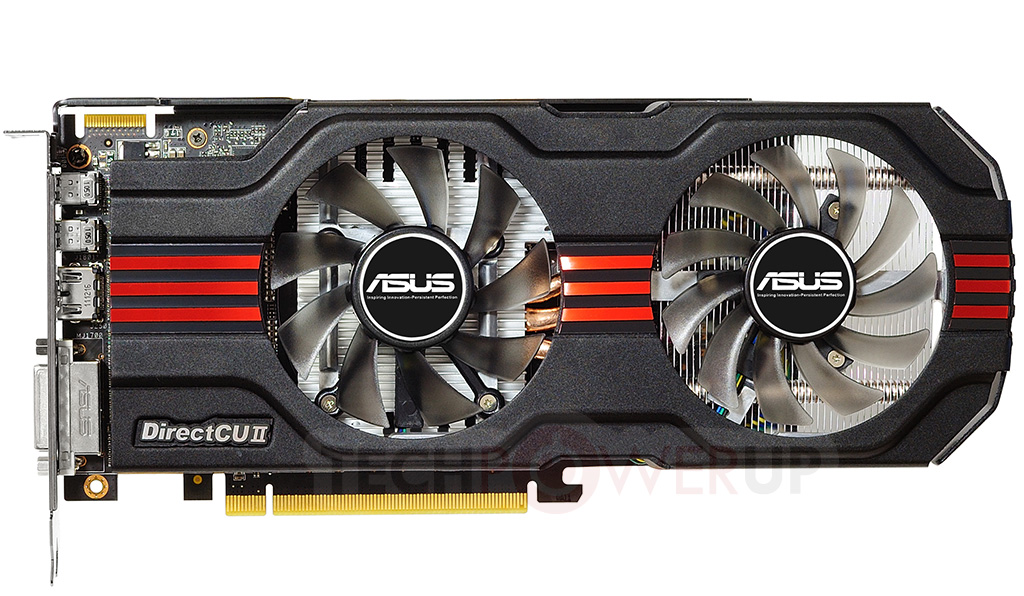
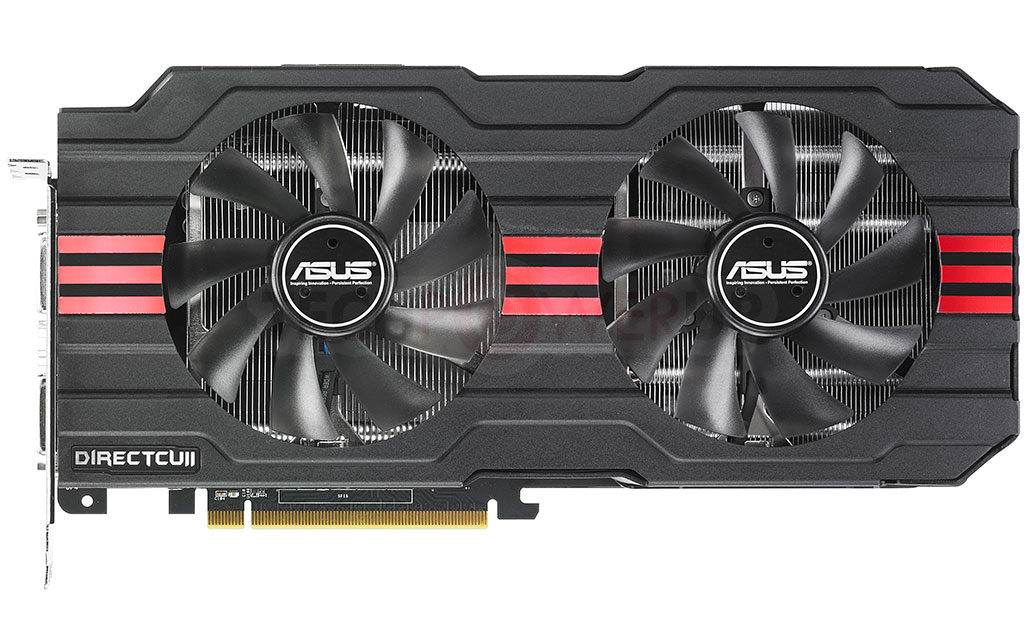
ASUS kicked off its Radeon HD 7800 series with two non-reference design implementations, DirectCu II TOP, at that. Both the ASUS Radeon HD 7870 and Radeon HD 7850 DirectCu II TOP use a 2-slot variant of ASUS' coveted dual-fan cooler, and based on what appear to look like a non-reference design PCBs. The DirectCu II cooler consists of a combination of a heatsink and an aluminum fin array, to which heat is conveyed by copper heat-pipes that make direct contact with the GPU die. The cooler makes use of two large fans to ventilate the heatsink. As TOP models, the two should feature 5-10% factory OC, out of the box. There's no word on the pricing.

ASUS Eee PC 1025C Netbook Available for Pre-Order

One of the three Cedar Trail-based netbooks announced by ASUS in January, the 10.1-inch Eee PC 1025C, can now be found on Amazon on pre-order in two color versions, black and white. Priced at $299.99, the netbook measures 10.3 x 7.0 x 0.815 ~ 1.35 inches and features an LED-backlit (1024 x 600) display, a 1.6 GHz Atom N2600 processor, 1 GB of RAM, a 320 GB hard drive (backed by 3 GB worth of ASUS Web Storage), 10/100 LAN, 802.11 b/g/n WiFi, an SD/MMC card reader, a 0.3-megapixel webcam, D-Sub and HDMI outputs, and a 6-cell battery.

Both the Eee PC 1025C-MU17-BK (black model) and 1025C-MU17-WT (white) run Windows 7 Starter (32-bit) and are expected to ship as of March 10th.

ASUS P8Z77-V Deluxe Starts Selling in China

Chinese online marketplace site Taobao has listings of two yet-to-launch motherboards based on the Intel Z77 Express chipset, the Wibtek Z77 Hacker (we earlier covered news of that listing in early January) and now, the ASUS P8Z77-V Deluxe. This will be among ASUS' premium LGA1155 motherboards based on the new chipset. It is priced at 2,499 RMB (US $396), which seems overpriced. The seller is probably looking to make a quick Mao with pre-launch orders. The seller was kind enough to paste ASUS' marketing poster for the P8Z77-V Deluxe, which can typically also be found on the back side of product packaging.

The P8Z77-V Deluxe supports DDR3-2800 MHz with overclocking. Expansion slots include two PCI-Express 3.0 x16 (x8/x8 when both are populated), wired to the CPU, supporting NVIDIA SLI, AMD CrossFire and Lucid VirtuMVP; one PCI-Express 2.0 x16 (electrical x4, wired to the PCH); and four PCI-Express 2.0 x1 slots. Good riddance to legacy PCI. Display connectivity lacks archaic connectors such as DVI and D-Sub, includes HDMI and DisplayPort, instead. Storage connectivity consists of four SATA 6 Gb/s (two from the PCH, two from a third-party controller), four SATA 3 Gb/s, and two eSATA 6 Gb/s.

Samsung Miniaturizes 1920x1080 Pixels Into A 4.8" Display

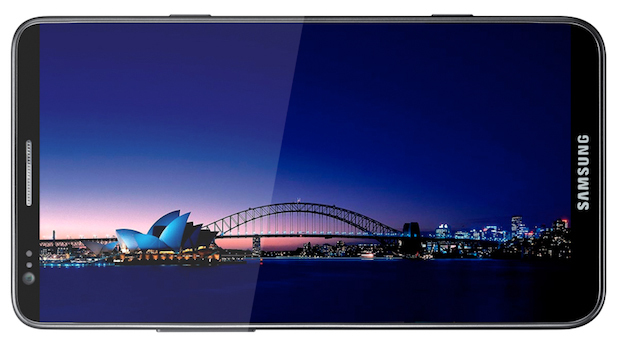
Thought the 1920x1200 pixel 10.1-inch Super IPS+ display with ASUS Transformer Infinity tablet carried shock-value? Wait till you hear what Samsung's innovators have been up to. They've managed to develop a market-ready 4.8-inch display for the upcoming Galaxy S III smartphone that packs a whopping 1920x1080 pixels resolution, which smokes Apple's Retina display the iPhone 4S comes with (960x640 pixels in a 3.5-inch screen), or the 1280x800 pixels AMOLED screen Samsung's own Galaxy Note phone-tablet-thingy comes with. Then there are PC monitor vendors with the audacity of selling 27-inch monitors with the same 1920x1080 pixels resolution for upwards of $500. Multi-billion Dollar price-fixing scam much?

ASUS Also Unveils the Transformer Pad 300 'Affordable' Tegra 3 Tablet

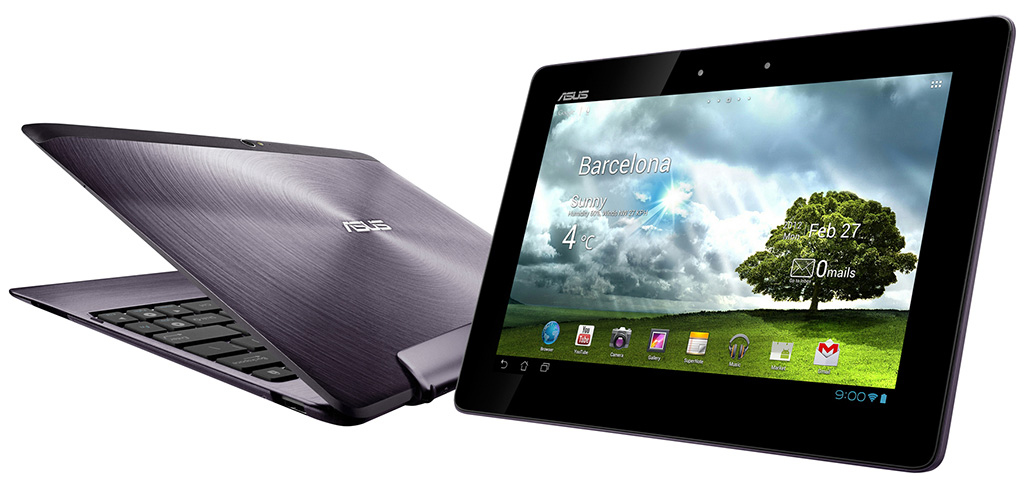
In addition to officially announcing the Full HD-capable Transformer Prime TF700T flagship, ASUS today also revealed another 10.1-inch tablet powered by NVIDIA's Tegra 3 4-PLUS-1 processor, the Transformer Pad 300.

Codenamed TF300T, this new model measures 263 x 180.8 x 9.9 mm, it weights 635 grams, and features a plastic chassis (colored in red, white or blue), a 10.1-inch (1280 x 800) Super IPS capacitive touchscreen, a 1.2 GHz Tegra 3 chip, 1 GB of RAM, 8 GB of built-in storage (plus 8 GB of ASUS WebStorage), a microSD card slot, an 8-megapixel rear-facing camera, a 1.2 MP front camera, and a battery enabling up to 10 hours of operation (battery life goes up to 15 hours when the tablet is connected to the separately-sold keyboard dock).

ASUS' tablet also comes with 802.11 b/g/n WiFi and Bluetooth 3.0 connectivity, a micro HDMI port, an accelerometer, an ambient light sensor, a gyroscope, an e-compass, GPS, and it runs Android 4.0 (aka Ice Cream Sandwich). The Transformer Pad 300 is said to cost $399.

ASUS Crams 1920x1200 Pixels Super IPS+ Display Into 10.1" Transformer Pad Infinity

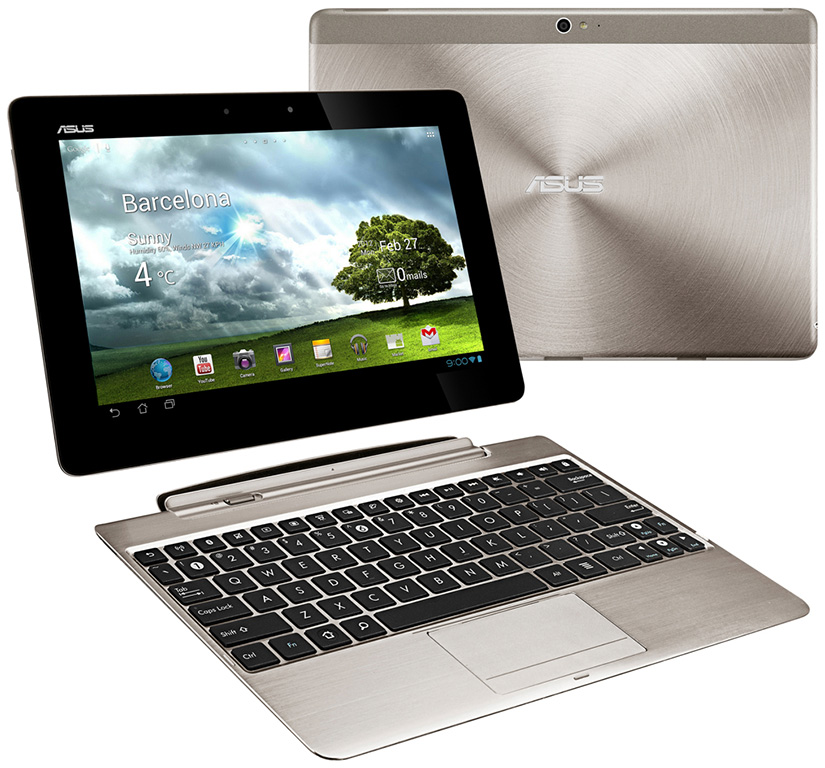
Till Apple's 2048x1536 pixel Retina Display materializes with the iPad 3, ASUS can stake claim to having a 10-inch tablet with the highest pixel-density on its display. The new Transformer Pad Infinity (formerly known as Eee Pad Transformer Prime TF700T in its CES exhibition), packs a 1920x1200 Super IPS+ display with a capacitive touchscreen. The tablet is convertible to a netbook by attaching a base dock that gives it a keyboard and trackpad. It is driven by NVIDIA Tegra3 4+1 core processor clocked at 1.60 GHz, with a customized version of Google's Android OS.

ASUS Zenbook UX21 Rose Gold Launched at Milan Fashion Week

ASUS chose the Milan Fashion Week as the perfect launch-pad for its Zenbook UX21 Rose Gold Ultrabook. Zenbook is ASUS' premium Ultrabook brand. The new UX21 Rose Gold variant sticks to the 11-inch, 2 cm-thick chassis, with a premium 2-tone alloy finish, with a brushed rose-gold lid. This finish also extends to the bezel around the display, and some other parts. Under the hood is an Intel Core i5-2467M processor, 4 GB DDR3 memory, and a 128 GB SSD. The ASUS ZenBook UX21E Rose Gold will be priced around 999€.

A video presentation follows.

Core i7-3820 Overclocked to 5.666 GHz

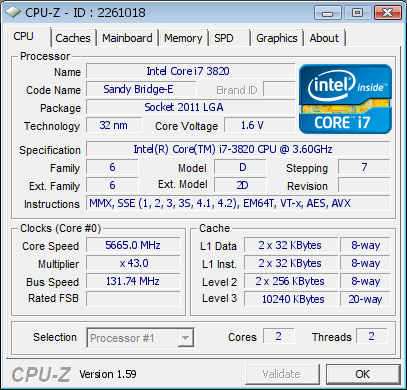
GUN'G'STAR of TeamRussia successfully achieved an overclocking record of 5.666 GHz for the quad-core Intel Core i7-3820 processor; a feat that validates the LGA2011 i7-3820 of being a generally good chip for overclocking, despite being "Limited Unlocked" (BClk multiplier being unlocked only to a few notches above its stock setting). GUN'G'STAR achieved a clock speed of 5,665.99 MHz using a BClk speed of 131.74 MHz, a multiplier value of 43x, and core voltage of 1.6V. The chip was assisted with GeIL-made DDR3-1600 memory sitting on all four channels, and ASUS Rampage IV Extreme motherboard. Only 2 out of 4 cores of the i7-3820 were enabled for the feat, HyperThreading was disabled. Extreme cooling was used. The CPU-Z validation can be accessed here.

ASUS Z9PE-D8-WS Motherboard Up For Pre-Order

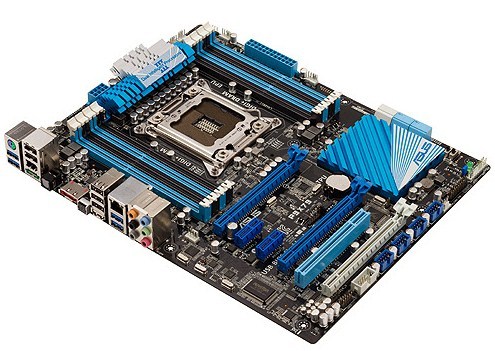
ASUS' dual-LGA2011 workstation motherboard, the Z9PE-D8-WS, has been listed by Canadian retailer NCIX for pre-order. It is priced at CA $632.98 (US $634.56). The store page does not go on to mention availability, except that orders will be shipped whenever there are inventories. Given its pre-order listing, we expect the product-launch of the Z9PE-D8-WS not to be too far, considering Intel's launch of a large number of "Sandy Bridge-EP" Xeon processors is just around the corner (within Q1, 2012). The Z9PE-D8-WS is designed to support 2P configurations based on Xeon "Sandy Bridge-EP" processors. The motherboard is further detailed here. To PC enthusiasts, it presents a potential alternative to EVGA's SR-X.

Image Courtesy: VR-Zone

ASUS Has No Booth At CeBIT

ASUS decided to bail on this year's edition of CeBIT, Europe's biggest consumer electronics and computer expo, held annually in Hanover, Germany. It has reportedly scrapped plans of setting up a booth there. What makes this big news is that it's ASUS - the single biggest vendor of PC motherboards, a notable vendor of notebooks, netbooks, and other computer hardware. Perhaps it's the timing of CeBIT that ASUS isn't quite liking, which falls right in between CES, held in early-January, in the US; and Computex, held mid-year in Taiwan, home of most computer hardware manufacturers, including ASUS. CES and Computex both have a fair attendance of European press anyway. No other companies similar to ASUS have reported to scrap their CeBIT plans. ASRock and Biostar have plans to set up small booths.

DisplaySearch: Apple Maintains Top Mobile PC Share Position for Q4'11 and Full Year

Apple shipped nearly 23.4 million mobile PCs in Q4'11, up 128% Y/Y, and over 62.8 million mobile PCs in 2011, up 132% Y/Y, according to preliminary results from the latest NPD DisplaySearch Quarterly Mobile PC Shipment and Forecast Report. Nearly 80% of Apple's mobile PC shipments were iPads, more than 18.7 million shipped in the quarter, up 156% Y/Y, and 48.4 million units for the year, up 183% Y/Y.

Overall mobile PC shipments grew 12% Q/Q and 44% Y/Y, reaching 88 million units in Q4'11. This was driven by continuing strong demand for tablets. Tablet PC shipment growth was 42% Q/Q and 210% Y/Y, reaching 31.7 million units in Q4'11. Notebook PC shipments were flat Q/Q but up nearly 11% Y/Y, reaching 56.3 million units. As expected, consumer mobile PC adoption was focused on tablets, holding up demand in notebooks.

ASUS Launches HD 7770 DirectCu and Non-Reference HD 7750

ASUS launched its Radeon HD 7700 series with two cards, both non-reference design, which take advantage of proven cooler designs ASUS used in previously-launched models. The Radeon HD 7770 card is based on its DirectCU cooler that has been used on a number of upper-mid range graphics cards. Its cooler consists of a heat-pipe fed aluminum fin array, in which the heat-pipes make direct contact with the GPU die. This card bears slightly overclocked speeds, with the core clocked at 1020 MHz (vs. 1000 MHz reference), and 1150 MHz / 4.60 GHz memory (vs. 1125 / 4.50 GHz reference) memory.

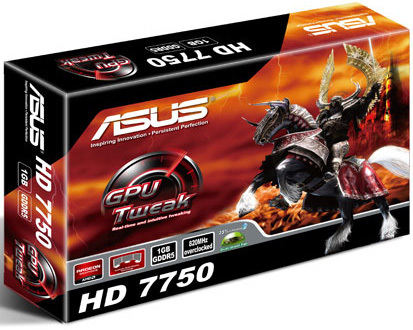
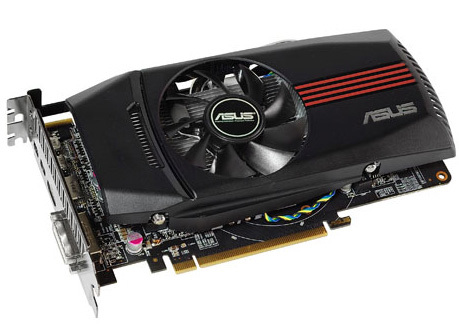
The Radeon HD 7750 card from ASUS uses a non-reference PCB and a cooler design which has been implemented on several mid-range graphics cards by the company in the past it is a fan-heatsink with spirally-projecting aluminum fins, with a copper core at the center. The heatsink is ventilated by a large fan, which is known to be very quiet. Like its bigger brother, this card too features slightly overclocked speeds, with the core clocked at 820 MHz (vs. 800 MHz reference), and 1150 MHz / 4.60 GHz memory (vs. 1125 / 4.50 GHz reference) memory. Expect these cards to stick to common prices of US $159 for the HD 7770 and $109 for the HD 7750.

ASUS Introduces the O!Play TV Pro Smart TV Set Top Box

The ASUS O!Play TV Pro upgrades living room TV viewing to a completely digital HD and live experience, enabling easy content consumption and distribution. Features open up playback and recording of digital programs, as well as almost any multimedia file currently available with over 50 formats supported, including 3D. Exclusive O!Easy technology adds specific one-click functions that cover file streaming, sharing, and replay, while an always-on design affords direct access to many major online entertainment and content services, all from a single user-friendly device.

ASUS' MS-100 USB Speakers get a Picture Preview

Announced late last year together with the HS-W1 Wireless Headset, ASUS' MS-100 USB speakers have now went their separate way to be the focus of an unboxing/preview piece. Pictured below, the stereo speakers target mobile users and feature a cone design, a glossy black coating, a rubber stand that reduces vibration, and only USB connectivity (no need for a separate power cord).

The MS-100 makes use of 54 mm drivers, it has a frequency response of 100 Hz to 20 KHz, and delivers a total output of 3 W RMS. Still no word on pricing or availability but it's likely the speakers will be out very soon.

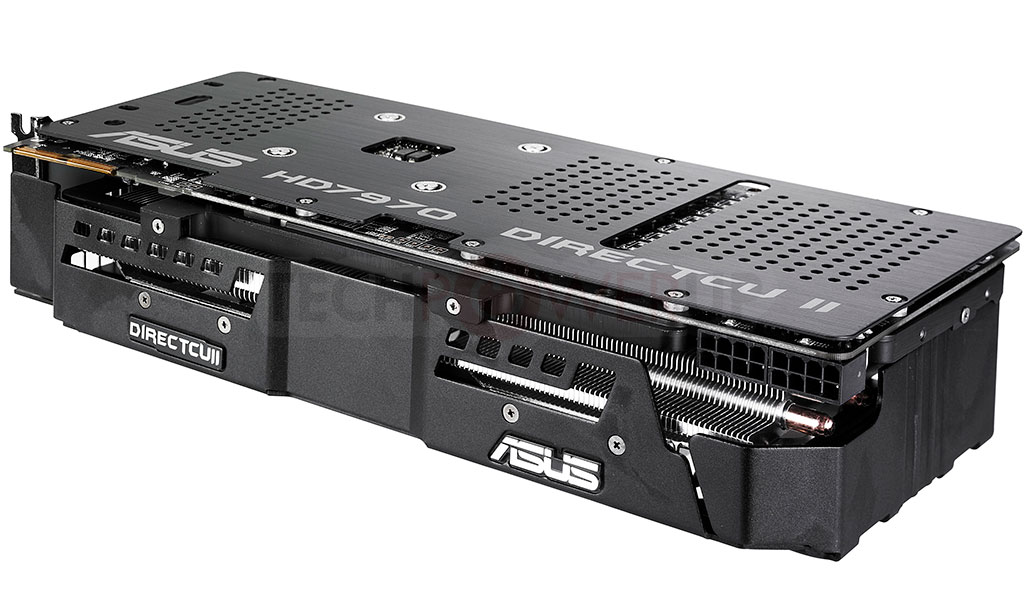
ASUS Launches the Radeon HD 7970 DirectCU II TOP Graphics Card

Ushering the finest and most capable graphics card based on new AMD "Tahiti" 28nm GPUs, the ASUS HD 7970 DirectCU II TOP uses a factory-overclocked core and 3 GB of GDDR5. It is cooled by the exclusive DirectCU II, a dual fan thermal design with six copper heatpipes and a large dissipation area that leads to the lowest temperatures and quietest operation of any HD 7970 card.

ASUS DIGI+ VRM 12-phase digital power delivery comes to graphics cards improved with Super Alloy Power components, while overclockers are bound to appreciate the inclusion of exclusive VGA Hotwire hardware overvolting and GPU Tweak software tuning. The new cards further support adapter-free AMD Eyefinity 6.

PC Motherboard Prices to Rise By 10% By Q2, 2012

Responding to increasing prices of key raw materials such as copper, and spiraling labor costs, motherboard manufacturers are planning price-hikes of their products by as much as 10%, which will take effect by the end of Q1, 2012. Vendors adopting these increased prices include major players such as ASUS and Gigabyte. Motherboard prices were earlier raised by 5-10% in early-2011 to tune in with increased material costs and the impact of labor shortages, and by 3-8% in April 2011 due to shortages and increased prices of components sourced from Japan, in the wake of the earthquake/tsunami disaster of 2011.
Return to Keyword Browsing
Nov 26th, 2026 00:15 CST change timezone

New Forum Posts

Popular Reviews

TPU on YouTube

Controversial News Posts