News Posts matching #Copilot

Return to Keyword Browsing

Dell Introduces New 14S and 16S Mid-Range Laptops with Core Ultra Series 3 CPUs

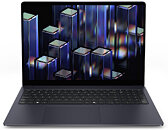
Dell has silently expanded its mainstream laptop portfolio with the new Dell 14S and 16S mid-range, productivity-focused notebooks positioned below the XPS lineup. The new models combine slim aluminium chassis designs with Intel's latest Core Ultra Series 3 processors and Copilot+ AI functionality. The Dell 14S is available in configurations equipped with up to a Core Ultra 9 386H, 32 GB of LPDDR5X memory, and a 14-inch FHD+ OLED touchscreen. The system measures 313.7 x 224 x 15.4 mm and weighs between 1.49 kg and 1.54 kg depending on configuration. Worth noting that Dell also offers the Intel Core Ultra X7 358H configuration, which upgrades several key specifications, including switching from standard Intel Graphics to Intel Arc graphics, doubling memory to 32 GB LPDDR5X, and increasing storage capacity to a 1 TB PCIe NVMe SSD. The higher-end configuration also changes the chassis color from Frost Blue to Celestial Blue and replaces the non-touch OLED display with a touch-enabled FHD+ OLED panel. However, this also raises the price to $2,169. Meanwhile, the larger Dell 16S starts with similar hardware but expands to a 16-inch chassis and optional 2.8K OLED touch display variants. The 16S laptops measure 356.8 x 251.4 x 15.4 mm, with the weight ranging from 1.79 kg to 1.86 kg.

Connectivity is largely identical across both models, including dual Thunderbolt 4 ports with DisplayPort 2.1 and Power Delivery support, HDMI 2.1, dual USB 3.2 Gen 1 Type-A ports, Wi-Fi 7, Bluetooth, and a 70 Wh battery paired with a 65 W USB-C charger. Dell also equips both laptops with 2 MP RGB-IR cameras, dual-array microphones, stereo speakers using Cirrus Logic SmartAmps, and integrated Copilot+ AI capabilities via the Intel onboard NPU hardware. As we mentioned, both systems can be configured with processors up to the Intel Core Ultra 9 386H, paired with up to 32 GB LPDDR5X memory and OLED display options. Base configurations start at $1,319 and include an Intel Core Ultra 5 322 six-core processor, 16 GB RAM, a 512 GB PCIe NVMe SSD, and FHD+ touch displays.

Xbox Axes Copilot on Consoles, Winds Down Copilot Mobile Development

In a recent post on X, Xbox CEO, Asha Sharma, announced that Copilot on console will officially exit active development, while Copilot on mobile will also be wound down. Copilot for Gaming was previously announced in March 2025, with the feature first making its way to mobile and later announcements predicting that Copilot would be coming to Xbox Series consoles sometime in 2026. Copilot was slated to land on Xbox consoles in the form of an AI that effectively watches you game by taking screenshots and monitoring inputs and then providing suggestions and recommendations based on that data. Judging by the wording in the announcement, this appears to be another move by Xbox Gaming CEO, Asha Sharma, to earn back the trust of gamers in what she calls "a return to Xbox." It's unclear what this means for the rest of the Xbox Gaming software suite, especially when it comes to devices like the ASUS ROG Xbox Ally and its Xbox Game Bar, but it seems likely at this point that those integrations may also eventually be removed.

The full post by Sharma reads:
Xbox needs to move faster, deepen our connection with the community, and address friction for both players and developers.
Today, we promoted leaders who helped build Xbox, while also bringing in new voices to help push us forward. This balance is important as we get the business back on track.
As part of this shift, you'll see us begin to retire features that don't align with where we're headed. We will begin winding down Copilot on mobile and will stop development of Copilot on console.

Intel "Wildcat Lake" Is Official: Up to 6 CPU Cores and 2 Xe3 Cores

Intel has officially unveiled its "Wildcat Lake" Core 300 series of processors for the entry-level PC segment. These CPUs are designed for value-oriented buyers looking for good CPU performance and basic GPU output in small form-factor commercial and edge AI PCs. Officially rated at 40 TOPS, these processors are capable of Copilot+ AI PC certification, meaning Intel has managed to provide basic local AI processing functionality to entry-level buyers. As part of the Core 300 series non-Ultra family, Intel's main selling point is all-day battery life in laptops with local AI processing. There are three segments, each featuring a hybrid core configuration, pairing two "Cougar Cove" P-cores with four LPE "Darkmont" cores.

The actual SoC package integrates two dies. The first and most important one, built on the 18A internal Intel node, features a 6-core CPU configuration, NPU 5 with 40 TOPS of INT8 data, Xe display and media engine, and a GPU that includes up to two Xe3 cores. This die also contains the memory controller and cache pool, supporting LPDDR5X memory running at 7,467 MT/s or up to 6,400 MT/s for DDR5. The memory-side cache includes 4 MB to help tasks "buffer" into this cache before and after accessing memory. Intel dedicates the second die to I/O handling, as the platform supports 6 PCIe Gen 4 lanes, two Thunderbolt 4 connections, two USB 3.2 connectors, and up to eight USB 2.0 connectors. For Wi-Fi, there is the Wi-Fi 7 standard, and Intel also includes Bluetooth 6.0.

MSI Introduces Cubi NUC AI+ 3MG, an Ultra-Compact Copilot+ PC for AI-Driven Workloads

MSI has announced the launch of the Cubi NUC AI+ 3MG, a powerful and ultra-compact 0.51-liter Copilot+ PC designed to deliver advanced AI capabilities and enterprise-ready connectivity for modern business environments. This device is powered by the latest Intel Core Ultra Series 3 processors, providing efficient on-device AI performance while maintaining exceptional power efficiency within a remarkably small footprint.

To enhance multitasking workflows, the Cubi NUC AI+ 3MG is equipped with dual Thunderbolt 4 ports, supporting up to four simultaneous displays to boost productivity and deliver an immersive visual experience. Additionally, it features dual 2.5G Ethernet ports, ensuring secure, high-speed networking for enterprise deployments, digital signage, and edge computing applications.

Microsoft Piles Up 80 "Copilot" Products, Apps, and Services

Microsoft has been addressing the recent wave of "Microslop" criticism that has emerged online in response to the forced integration of AI into its products. Specifically, Microsoft has been promoting its Copilot applications, products, and even Copilot-branded hardware like Copilot+ AI PCs to consumers. However, this is just the scratching the surface, as the actual number of Copilot variants is much higher than what the average PC enthusiast might consider. If you've ever wondered how many Copilot applications exist, the official count stands at 80 Copilot applications, products, services, and hardware that the Redmond giant has developed. Across every Microsoft vertical, there is a Copilot icon in some form, even present on Copilot+ PCs with its own dedicated Copilot key. This represents the biggest branding overhaul in Microsoft's history, as the company traditionally distinguished products with unique features and names.

However, the popularity of its ecosystem is at an all-time low, particularly within the PC community, which interacts most with the Windows 11 operating system and the Microsoft 365 suite of applications, formerly known as the Office package, including Excel, Word, PowerPoint, and others. Regular consumers are largely unaware of the extent of the Copilot branding, as Microsoft has extended its AI narrative to consumer and business chatbots, developer tools, desktop applications, Copilot applications within other applications, enterprise platforms, hardware, and business software serving the enterprise sector. At some point, the community narrative suggests that the branding is being pushed a bit too aggressively, as Windows 11 users, who interact daily with the world's most widely distributed operating system, have openly discussed the drawbacks of the forced Copilot integration.

ASUS Announces Updated ExpertCenter P600 AiO PC

ASUS today announced two new ExpertCenter P600 AiO models, the 27-inch PM640GA and the 24-inch class PM670GA. The ExpertCenter P600 AiO is an all-in-one Copilot+ PC, designed to deliver next-generation AI performance for business. Powered by up to an AMD Ryzen AI 7 processor with up to 50 NPU TOPS, it combines immersive visuals, AI-enhanced collaboration and enterprise-grade security in a sleek and versatile design.

With its edge-to-edge touchscreen, adjustable stand options and built-in security features, ExpertCenter P600 AiO is engineered for the evolving needs of modern offices, retail counters and educational environments—empowering employees to work faster, collaborate smarter and stay more secure.

Microsoft Plans Better Windows 11 RAM Management and a Smoother User Experience

Microsoft recently announced a plethora of changes coming to Windows 11 to reshape the operating system into a completely stable and enjoyable experience. Today we learn that Microsoft plans a major background usage overhaul with future updates, focusing on RAM usage and overall memory management, so even configurations with less RAM can enjoy the benefits of a smooth operating system. For example, the minimum requirement for Windows 11 is a system with 4 GB of memory, while Copilot+ PCs require a minimum of 16 GB. When a PC has 8 GB of RAM installed, standard Windows 11 versions like Home or Pro will take up a majority of that, leaving only about 2 GB free. Even with 16 GB installed, regular Windows allocation goes beyond 10 GB.

However, Microsoft plans to change this with better background memory management. For example, OS overhead is a significant performance and memory hog, which impacts the user's overall experience on the PC. Apple recently launched a MacBook Neo with 8 GB of memory, and reviews confirmed that users will be able to get a relatively smooth user experience with only 8 GB, while a comparable Windows-based machine would struggle. This has pushed Microsoft to think about memory management more, and the company now promises that the entire operating system will implement new background policies that will help with resource management. While the exact implementation is unknown, we suspect that doing something like Xbox Full Screen Experience, which is proven to increase performance and lower RAM usage, will be implemented on a wider scale. When the numerous background tasks disappear, memory is freed for other things like excessive Chrome browser tabs.

Microsoft Promises Slew of Windows 11 Changes in Response to "Microslop" Criticisms

With every Windows 11 update seemingly introducing a new bug or somehow breaking some core functionality, it seems as though trust in Microsoft and Windows is at an all-time low, with the recent "Microslop" insult popping up in online tech circles as a sort of culmination of the recent spate of issues. Microsoft has apparently been following the backlash against Windows 11, with Pavan Davuluri, President of Windows + Devices, stating in a new Windows Insider Blog post that "over the past several months, the team and I have spent a great deal of time analyzing your feedback," and subsequently laying out a plan that walks back many of the contentious changes that have been made in recent Windows 11 updates and promising to add highly requested new features and return features from older Windows versions that likely shouldn't have been removed in the first place.

One of the earliest complaints about Windows 11—before Copilot launched—was that the task bar could not be relocated to other screen edges, but Microsoft will soon introduce more taskbar customization, including moving it to the top, left, or right screen edges as needed. Microsoft will also walk back many of the Copilot integrations, stating that it will be "more intentional about how and where Copilot integrates across Windows." It specifically calls out removing Copilot from Snipping Tool, Photos, Widgets, and Notepad. The other two important changes that will come from the new plan for Windows 11 is giving users more control over updates to reduce interruptions—essentially allowing users to go longer without restating without an update and skipping updates during device setup, and restarting and shutting down without updating. Microsoft also plans to address File Explorer and speed up launch times in order to deliver "smoother navigation and more reliable performance for everyday tasks," as well as polishing the user experience overall.

Windows 11 March Update Blocks Microsoft Account Sign-In in Office and Copilot Apps

Microsoft's Windows 11 March update has a confirmed issue affecting Windows 11 versions 25H2 and 24H2 with KB5079473. This issue causes sign-in failures in some Microsoft applications, including the free version of Microsoft Teams, OneDrive, Microsoft Edge, Excel, Word, and Microsoft 365 Copilot. After installing the Windows 11 March update, you might encounter a message saying, "You'll need the Internet for this. It doesn't look like you're connected to the Internet," even when your device is connected. This problem occurs when a device enters a specific network connectivity state that the Windows 11 March update does not handle well, causing some Microsoft applications to mistakenly identify the device as offline. It's important to note that this issue only affects Microsoft accounts.

To resolve this issue, Microsoft recommends simply restarting your device. This should fix the connectivity state that causes the connection to Microsoft accounts to fail. However, there is a significant chance that the device might return to this specific networking state, resulting in repeated sign-in errors. Microsoft is working on a fix, which is expected to be released in the coming days. As the week ends, the release will likely be early next week. No server platforms are affected by this issue; it only impacts Windows 11 versions 24H2 and 25H2 with the March update KB5079473, OS Build 26100.8037.

Microsoft Won't Auto-Install Microsoft 365 Copilot App on Windows 11 Anymore After Backlash

Microsoft has reportedly decided not to automatically install its Microsoft 365 Copilot App on Windows 11 by default, following significant user backlash against its AI integration into the operating system. What seemed to be a major initiative by the Redmond giant is now being reined in by a group of power users and enthusiasts who are resisting the "Copilot everywhere" strategy that Microsoft has recently promoted. According to a new update on the Admin 365 dashboard, Microsoft states, "Automatic installation of the Microsoft 365 Copilot app on Windows devices with Microsoft 365 desktop apps, planned for December 2025, is temporarily disabled. Existing installations remain unaffected. Admins can deploy the app via other methods and should await further updates."

For those who may not remember, the Microsoft 365 Copilot App is the rebranded version of what was originally called Microsoft 365 / Office Hub. This app version was introduced alongside the regular Copilot app on customers' Windows 11 systems. Back in September 2025, Microsoft planned to automatically install the Microsoft 365 Copilot App on Windows 11, along with the regular Copilot App, which meant users would receive two "AI-enhanced" applications automatically. This move sparked a significant backlash from the community, particularly from enthusiasts who saw little to no added value in Microsoft's AI integrations. Users made it clear that they wanted this enhancement to be optional, if not stopped altogether. Microsoft has recently commented that the company is focusing on what truly matters to consumers, such as fixing the bug-prone operating system and enhancing core features for a smoother user experience in Windows 11. They also mentioned stepping back from the "AI-everywhere" approach.

ASUS Announces ExpertCenter PN55 Mini PC with AMD Ryzen AI 400 Series

ASUS today announced the ExpertCenter PN55 Mini PC, a compact Copilot+ PC powered by the latest AMD Ryzen AI 400 Series processors with class-leading multithreaded performance and advanced XDNA 2 NPU delivering up to 55 AI TOPS. Integrated AMD Radeon 800M graphics provides prosumers and content creators with exceptional, incredibly detailed visuals. Despite its small footprint, ExpertCenter PN55 offers dual LAN and up to six USB ports, giving it the flexibility to take on a variety of tasks including AI-accelerated productivity, collaboration, and content creation. It also offers design features that enable tool-less upgrades.

Enhanced productivity with Copilot+
ASUS ExpertCenter PN55 Mini PC is powered by an up to AMD Ryzen AI 9 HX 470 processor featuring up to 55 TOPS of XDNA2 NPU performance. This robust compute engine enables smooth generative AI tasks, allowing users to generate ideas, create content, and upscale images in seconds. Paired with up to 96 GB of DDR5 memory, ExpertCenter PN55 ensures rapid access to AI-accelerated workloads and supports seamless multitasking for everyday productivity tasks such as web browsing, presentations, and content creation. AI PCs accelerate everyday tasks by automating repetitive work, helping users save time and work more efficiently.

Microsoft Will Add Gaming Copilot To Xbox Series Consoles in 2026

Microsoft Gaming Copilot has been out in the open and available as a beta for PC, mobile, and the ROG Xbox Ally since October 2025, but at a recent GDC conference, Sonali Yadav, Xbox Gaming AI partner group project manager, commented that Gaming Copilot would be landing on current-gen Xbox Series X|S consoles before the end of 2026. Gaming Copilot purports to help its users "get to the fun, faster," with gaming recommendations based on what you play, "get help without leaving your game," by providing players with advice based on their current place in the game, and "brainstorm strategies and get tips or insights with personalized coaching." The service operates similarly to Microsoft's original Copilot service in that it takes screenshots of your gameplay and analyzes them to provide the aforementioned recommendations.
I'm excited to announce that later this year, we will bring Gaming Copilot to the current-generation consoles, and we will continue to bring it to more services that players are playing.

Acer Debuts First TravelMate P4 & P2 Copilot+ PCs Featuring Intel Core Ultra Series 3 Processors with Intel vPro

Acer today unveiled a new lineup of TravelMate Copilot+ PCs that empower organizations of all sizes to unleash the full potential of AI. The new TravelMate P4 14 AI, TravelMate P4 Spin 14 AI, TravelMate P2 16 AI, and TravelMate P2 14 AI business laptops are powered by up to the latest Intel Core Ultra Series 3 processors with Intel vPro, delivering real-world performance, long battery life, enterprise-grade security, and simplified manageability.

From SMBs to the public sector, the new lineup delivers a combination of performance, productivity, and security. The devices also represent the first Copilot+ PCs in the TravelMate P4 and P2 series, underscoring Acer's commitment to offering a robust commercial portfolio of AI-ready devices.

ASUS Announces ExpertCenter P700 Mini Tower

ASUS today announced ExpertCenter P700 Mini Tower (PM700MG) with AMD Ryzen AI 400-series processors, a refreshed 15-liter business desktop designed to deliver exceptional performance, scalability, and reliability for professional creators, engineers, and small businesses. With cutting-edge hardware, business-grade security, and comprehensive manageability, ExpertCenter P700 Mini Tower is engineered to be the trusted backbone of business-critical workloads.

Blending next-generation AI performance with whisper-quiet thermal design, P700 Mini Tower is built to tackle modern professional tasks with ease—from generative AI and content creation to advanced data analysis. As Copilot+ PCs, these new desktops bring intelligence and creativity to the forefront of everyday business, while the exclusive ASUS MyExpert all-in-one AI platform boosts productivity in multiple innovative and flexible ways. They also benefit from ASUS ExpertGuardian, providing all-around protection for sensitive data, plus military-grade durability to ensure long-term reliability.

ASUS Announces New-Gen NUC 16 Pro Mini PC

ASUS today announced NUC 16 Pro Mini PC, a compact Copilot+ PC offering versatile AI-accelerated performance to handle a wide range of needs. Powered by up to the latest Intel Core Ultra 9 Series 3 processor and boasting onboard LPDDR5x memory, the NUC 16 Pro delivers up to 1.5X faster 3D graphics processingi, 20% faster performance, and 50% less power consumption over previous-generation NUC models. Built-in Intel WiFi 7 and Bluetooth 6.0 wireless connectivity, along with dual 2.5G LAN ports, make the NUC 16 Pro ideal for hyper-connected workspaces. In addition, select models include fTPM for enterprise-grade security and management.

Next-generation Intel Core Ultra Series 3 processors with built-in Intel Arc GPU
The NUC 16 Pro Mini PC easily tackles AI workloads. Featuring up to an Intel Core Ultra X9 processor with built-in Intel Arc B390 GPU and a 50 TOPS NPU delivering up to 180 Platform TOPS for real-time Edge AI inference and machine learning tasks. This compact Copilot+ PC is an Edge AI-ready system that enables secure, low-latency on-device intelligence to support AI-driven applications for videoconferencing, analytics, language translation, and enhanced team collaboration.

Lenovo Intros New Consumer AI Laptops, Tablets, and Concepts at MWC 2026

Today at MWC 2026, Lenovo announced its latest consumer device innovations targeted at creators, gamers, and productivity-focused users. This includes powerful creative convertibles like the Yoga 9i 2-in-1 Aura Edition (14", 11), ultralight laptops like the IdeaPad Slim 5i Ultra (14", 11), productivity-on-the-go tablets like the Idea Tab Pro Gen 2, and the Yoga Pro 7a (15", 11) and the Legion 7a (15", 11)—laptops both powered by AMD Ryzen AI Max+ Series processors, delivering next-generation improvements in performance, AI experiences, and graphics.

Lenovo also unveiled proofs of concept from both its Yoga and Legion sub-brands—the Yoga Book Pro 3D Concept and the Legion Go Fold Concept—that embody Lenovo's commitment to pushing the envelope with its consumer innovations. The Yoga Book Pro 3D Concept addresses gaps in the 3D creative process by shedding the need for peripherals and streamlining user interactions. The Legion Go Fold Concept pushes the adaptability ethos of the Legion Go line of gaming handhelds even further with modularity to fit even more use cases.

Lenovo Unveils New Business Notebooks and More at MWC 2026

At MWC 2026, Lenovo builds on the momentum from CES and Tech World to highlight its latest portfolio of AI-powered business devices, intelligent form factors, and enterprise-ready platforms, designed to help organizations scale AI with confidence. From modular AI PC concepts and rugged frontline tablets to the trusted ThinkPad portfolio and human-centric AI companions, Lenovo's MWC showcase highlights how innovation, reliability, and repairability come together to support modern work.

The new announcements reflect a continued focus on delivering democratized AI that is productive, adaptable, and protected, addressing the real-world needs of professionals, IT leaders, and enterprises operating across increasingly distributed environments. By combining AI-ready devices with strong repairability, platform choice across leading silicon partners, and enterprise-grade security and services, Lenovo is enabling businesses to adopt AI-powered computing without added complexity.

Microsoft Steps Back from "AI Everywhere" in Windows 11 to Focus on Core Features

If you're tired of seeing Microsoft's AI features like Copilot, agentic workloads, and Recall forced into their products, you're not alone. Microsoft has finally confirmed that it will be stepping back from its "AI everywhere" strategy. According to an exclusive report by Windows Central, the internal Windows 11 teams at Microsoft are now focusing on reducing forced AI integration. Instead, they aim to address what truly matters to consumers, such as fixing the bug-prone operating system and enhancing core features for a smoother user experience. The integration of Copilot into basic apps like Notepad and Paint is reportedly under review, and Microsoft may remove these features to restore the basic functionality users have come to appreciate. This includes features like basic text formatting and tables in Notepad, which are nice additions to a core application.

Additionally, forcing Copilot AI button in every application has been paused, as there has been very little interest from users in actually using these features. TechPowerUp Forums has been a constant source of criticism for Microsoft's forced AI integration, among the remaining large crowd of PC enthusiasts who have been fighting the "AI everywhere" approach for a while. Microsoft's telemetry records usage of these AI buttons and additions, likely showing that only a few percent of Windows 11 users are actually interested in having AI access every application layer, especially with the recent ambition to shape Windows 11 into "agentic OS." The company confirmed that these features are a security nightmare to maintain, so thankfully these efforts are now cancelled.

ASUS Unveils ExpertBook B3 G2

ASUS today announced ASUS ExpertBook B3 G2, a configurable Copilot+ PC designed for business, available in 14-inch and 16-inch models and featuring a durable, lightweight design starting from just 1.41 kg, a 180° lay-flat hinge, advanced AI capabilities, enterprise-grade security, and seamless collaboration.

With up to an AMD Ryzen AI 9 HX processor with integrated GPU and NPU acceleration power, ExpertBook B3 G2's advanced AI features—including ASUS MyExpert, Copilot, and noise-canceling technology—to enhance business productivity. The lightweight, easily-maintained design offers extensive I/O options and support for high-speed Wi-Fi 7 connectivity. Security is strengthened by ASUS ExpertGuardian, delivering NIST SP 800-193 compliance, dual ROM BIOS recovery, and TPM 2.0 protection for robust data resilience.

Global AI Server Shipments Forecast to Grow Over 28% YoY in 2026, with a Rising Share of ASIC-Based Systems

North American CSPs' continued investments in AI infrastructure are expected to increase global AI server shipments by more than 28% YoY in 2026, according to the latest market research from TrendForce. The rapid growth of AI inference services is boosting demand for general-purpose servers, supporting both replacement and expansion efforts. Consequently, TrendForce predicts that total global server shipments, including AI servers, will accelerate from 2025, with a 12.8% YoY growth in 2026.

The server market from 2024 to 2025 primarily centered on training advanced large language models (LLMs), utilizing AI servers with GPUs and HBM for parallel computing. However, starting in the second half of 2025, the growth of AI agents, LLaMA-based applications, and Copilot upgrades shifted CSP's focus toward inference services as a monetization strategy. AI inference workloads are now deployed not only on dedicated AI server racks but also on general-purpose servers that handle pre- and post-inference computing and storage.

Acer Introduces Aspire AI Copilot+ PCs Featuring Intel Core Ultra Series 3 Processors

Acer today announced new models of its Aspire series of mainstream laptops, powered by new Intel Core Ultra Series 3 processors. Built as reliable all-rounders, the Acer Aspire 14 AI and Aspire 16 AI feature premium designs and deliver smooth performance, all at accessible price points. With optional OLED displays and a flexible 180-degree hinge design, the new Aspire AI lineup offers both style and versatility for learning, productivity, and everyday computing.

Acer Aspire 14 AI (A14-I71M/T) and Acer Aspire 16 AI (A16-I71M/T) feature up to Intel Core Ultra 9 processors 386H, engineered with up to new performance and efficient cores, and paired with new Intel Graphics to support upscaled CPU and graphics performance. The new processors enhance productivity and creative capabilities for a variety of tasks on the latest Aspire AI devices.

Acer Announces New Lineup of Premium Swift AI Copilot+ PCs

Acer today introduced its latest Swift AI laptop portfolio, a new generation of Copilot+ PCs on Windows 11 designed to deliver powerful on-device AI capabilities for creators, on-the-go-professionals, and tech-savvy users. The new lineup includes the Swift 16 AI, along with the Swift Edge AI, weighing as light as under 1 kg, and the versatile thin-and-light Swift Go AI in 14- and 16-inch variants.

Each model in the Swift AI series is purpose-built with cutting-edge hardware and complemented with Acer's suite of proprietary AI features. These include productivity enhancements like Acer PurifiedVoice, PurifiedView, and User Sensing, while additional tools for AI-enhanced creativity and entertainment can be downloaded via the Acer Intelligence Space hub. The customizable Acer My Key is a programmable hotkey for launching apps, websites, and Windows 11 features with a single press, providing additional convenience.

Acer Intros AMD Ryzen AI 400 Series Processors Across Copilot+ PC Portfolio

Acer today announced new models across its laptop portfolio with the latest AMD Ryzen AI 400 Series processors, including the thin-and-light Acer Swift Go 16 AI, the mainstream Acer Aspire 14 AI and Acer Aspire 16 AI, and the Acer Nitro V 16 AI for gaming, all featuring Copilot+ PC experiences on Windows 11. Built on the advanced "Zen 5" architecture, the new AMD Ryzen AI 400 Series processors enhance productivity and creative capabilities across the board.

Acer Swift Go 16 AI
The powerful and versatile Acer Swift Go 16 AI (SFG16-A71/T) features up to AMD Ryzen AI 9 465 processors and AMD Radeon 880M graphics, up to WUXGA+ OLED displays, and AI-enhanced features for everyday productivity.

ECS Unveils New Motherboards, LIVA Mini PCs, and Next-Generation AI Laptops at CES 2026

Elitegroup Computer Systems (ECS), a global leader in high-performance motherboards, Mini-PCs, and notebook solutions, will unveil a diverse portfolio of new computing products—including next-generation motherboards, upgraded LIVA Mini-PC platforms, and a new series of AI-ready business laptops—at CES 2026, taking place from January 6-9, 2026 in Las Vegas. Hosted at the Bellagio Hotel, ECS's showcase highlights innovations designed to elevate productivity, accelerate AI-driven workflows, and support flexible deployment across home entertainment, professional environments, education, and a wide range of commercial applications.

Next-Generation Intel /AMD Motherboards—Engineered for Performance and Stability
ECS is introducing two new motherboards—B860H8-M8 and PRO600AM5-M5—built to meet diverse demands for high performance, robust durability, and flexible expansion in modern PC architectures.

Redragon Launches Slew of Gaming and Office Peripherals Including an "AI Mouse"

Redragon has officially announced the Wyvern K761 Pro as its latest full-size wireless mechanical keyboard, featuring both Bluetooth 5.0 and 2.4 GHz wireless connectivity. The K761 Pro is launching at just $74.99, and it features some enthusiast-grade touches, like a built-in LCD, to show keyboard information, and a knob for adjusting volume. The K761 Pro is available in two colorways—white and green and white and blue—and both feature shine-through RGB backlighting and "round" PBT keycaps, which look to be similar to OEM height, although no specific keycap profile is provided. It comes with linear Mint Mambo switches, which are 40 gf linear mechanical switches with 3.6 mm of travel, and it features hot-swap sockets, compatible with 3- and 5-pin mechanical switches. It also features a gasket mount and five-layer sound-damping in the case. The Redragon Wyvern K761 Pro is also reprogrammable and customizable on Windows with Redragon's proprietary software suite. The keyboard is charged via USB-C and features a 4,000 mAh battery, which should be more than enough, even for those who want to use RGB backlighting effects.
Return to Keyword Browsing
Nov 11th, 2026 04:07 CST change timezone

New Forum Posts

Popular Reviews

TPU on YouTube

Controversial News Posts