News Posts matching #Core Ultra

Return to Keyword Browsing

Maxsun Readies Panther Lake and Wildcat Lake MoDT NAS Motherboards for November

Maxsun has shared full specifications for the SK-PTLNAS and SK-WCLAIO, two NAS-focused MoDT (Mobile on Desktop) motherboards built around Intel's Panther Lake and Wildcat Lake chips. Both were first shown at Computex 2026 and are expected to launch this month, though pricing is still unknown. The SK-PTLNAS now tops out at the Core Ultra 9 386H, a 16-core chip with four Xe3 GPU cores, a 25 W base power and up to 80 W of turbo power. The Computex listing mentioned options up to the Core Ultra X9 388H, which no longer seems to be on the table. It supports up to 128 GB of DDR5-7200 memory across two SO-DIMM slots, with five M.2 slots and three Mini SAS ports for storage. The board also gets a PCIe 5.0 x8 slot, 10GbE, 2.5GbE and two 1GbE ports, plus two Thunderbolt 4 ports. Maxsun lists Windows 11 and Ubuntu support.

The SK-WCLAIO measures just 90 x 165 mm, a big change from the mATX design shown in June. It runs the six-core Core 7 350 (2P + 4LPE) with two Xe3 cores, a single DDR5-6400 SO-DIMM slot for up to 48 GB, 1 TB of onboard UFS 3.1 storage and four M.2 slots. Wildcat Lake has very few PCIe lanes, so those drives probably won't each get full x4 bandwidth. Maxsun rates the system at 45 W when active and 16 W with drives on standby, which should suit an always-on home NAS. The power input is a bit unclear for now, since the listing mentions both a 12 V DC jack and USB-C PD.
Intel Nova Lake-S CPUs Reportedly Drop to 5.1 GHz Max Above 90°C

Intel's upcoming Core Ultra 4000 "Nova Lake-S" desktop processors will reportedly cap their maximum core frequency at 5.1 GHz whenever they run above 90°C, according to Intel leaker Jaykihn on X. He says the limit applies to the entire Nova Lake-S desktop lineup, works separately from regular TjMax throttling at 100°C, and can't be raised. He also notes that the information is still preliminary. In practice, it looks like a safety net that sits between normal boost behavior and full thermal throttling. Below 90°C, the chips should presumably boost as usual, and models that don't exceed 5.1 GHz in the first place wouldn't be affected at all.

Final Nova Lake clocks aren't official yet, though the current Core Ultra 9 285K already boosts up to 5.7 GHz, so a high-end Nova Lake chip that runs hot could lose a sizable chunk of its peak frequency. A 100°C TjMax would also be lower than Arrow Lake's 105°C, which can be manually raised to 115°C on the 285K. That puts more weight on cooling, since the 28-core Core Ultra 9 4970K BFC was reportedly set to pull up to 296 W at PL2 despite its 125 W rating, and staying under 90°C at that kind of power draw will probably take a really capable cooler. Nova Lake-S is currently expected to arrive in Q1 2027, and Intel hasn't confirmed any of this yet.

Intel Moves Select Core Ultra 200H and 200U CPUs to Embedded Market

Intel has released the latest Product Change Notice (PCN) document, stating that the company's mobile "Arrow Lake-H" and "Arrow Lake-U" processors, with the Core Ultra 200H and Core Ultra 200U naming schemes, will no longer be offered as standard parts for consumer products. Instead, Intel plans to transition some of these SKUs to the embedded sector, meaning these processors will continue to exist but under a different licensing agreement. For laptop manufacturers purchasing these processors, Intel has set May 21, 2027, as the final date for submitting orders, with the last shipments scheduled for November 19, 2027. After this date, these SKUs will cease commercial shipments.

The list includes the Intel Core Ultra 5 235H, Core Ultra 5 225U, Core Ultra 5 235U, Core Ultra 7 255U, Core Ultra 5 225H, Core Ultra 7 265U, Core Ultra 7 255H, Core Ultra 7 265H, and Core Ultra 9 285H processors.

Intel "Raptor Lake Next" 16-Core and 20-Core CPUs Surface

Intel is actively planning the "Raptor Lake Next" chips as an update to its Socket LGA-1700 desktop processors. These chips are essential for PC buyers who are limited to the decade-old DDR4 memory standard due to the high prices of DDR5 memory, especially since the current Core Ultra "Arrow Lake" processors do not support DDR4. Today, two "Raptor Lake Next" chips have appeared in shipping manifests, which usually indicate that the CPUs are being shipped as samples to customers or as part of a production run returning to Intel, suggesting a nearby launch. Four SKUs have been identified, labeled 99DLMV, 99DLMT, 99DLMW, and 99DLMX.

However, we have details on only two models, 99DLMV and 99DLMT. The 99DLMV is a 16-core design with 8 P-Cores and 8 E-Cores, a clock speed of 3.5 GHz, 30 MB of CPU cache, and a TDP of up to 125 W. The 99DLMT is a 20-core SKU with 8 P-Cores and 12 E-Cores, running at 2.1 GHz, with a CPU cache capacity of 33 MB, and a TDP of 65 W. These leaked models align with previous rumors, such as the one suggesting that Intel plans to replace the Core i5-14600K with a new "Raptor Lake Next" chip featuring 8 P-Cores and 8 E-Cores. Therefore, the 99DLMV SKU might be the one previously speculated about.

28-Core Intel Nova Lake-S CPU Shows Promising Performance Boost in Leaked Benchmark

It looks as though the upcoming Intel Nova Lake-S CPU family will launch soon, headed-up by a 28-core Core Ultra 9 CPU. A new PassMark benchmark spotted by VideoCardz now purports to show expected performance of that 28-core Nova Lake-S CPU in two separate benchmark runs. The CPU, which is listed as "Nova Lake Client Platform," with the motherboard model giving it away as "NVL-S Embedded CRB 1 Fab2 Board," appears alongside an eight-core NVL-S CPU, and both CPUs achieve decent scores in the single-threaded performance benchmarks.

According to the PassMark database scores, the eight-core NVL-S scores up to 5,085 points, while the 24-core variant tops out at 5,210 points. Meanwhile, the 28-core—ostensibly the Core Ultra 9 4970K BFC—scores as high as 61,509 points in the multithreaded CPU test, and the eight-core variant, likely a Core Ultra 3 or 5 CPU, scores 23,478 points. If these PassMark scores are accurate, this puts the Core Ultra 9 4970K BFC at around 85% of the performance of an AMD Ryzen 9 9950X3D in multicore performance, while the CPU beats out the Intel Core Ultra 9 285K on single-threaded performance but misses out on matching the outgoing Intel chip by 5,721 points or around 8.5%.

DT Research Unveils LT365PA Rugged Laptop

DT Research, the leading U.S. designer and manufacturer of AI-capable, rugged computing solutions purpose-engineered for enterprise-scale customization, today announced the LT365PA Rugged Laptop, a high-performance mobile workstation that brings NVIDIA graphics, AI processing and advanced image analysis directly to law enforcement, forensic and military field operations, including mobile command environments that require local processing of multiple sensor inputs, video feeds, drone imagery and AI analytics.
Daw Tsai, president of DT Research"Today's field teams need the same high-performance AI computing capabilities at the edge that they have in a traditional enterprise or tactical operations setting. The LT365PA combines discrete NVIDIA graphics and Intel Core Ultra processing with the ruggedness and hot-swappable battery architecture required for true field mobility. This gives teams the speed and flexibility to analyze complex data and make informed decisions wherever operations take them."

Durabook Introduces the R12 Rugged Tablet Active Edge AI Platform

Durabook, the global rugged mobile solutions brand owned by Twinhead International Corporation, today announced its new R12 Rugged Tablet active edge AI platform. With the Intel Core Ultra Series 3 CPU, the R12 Rugged Tablet delivers exceptional computing power with enhanced AI performance, energy efficiency, and multitasking capability. It is well-suited to teams from defense, public safety, and industrial operations working from vehicles or outdoors where connectivity is unreliable.

With the potential for up to 412 TOPS of combined AI compute the platform is built for demanding edge AI workloads. 180 TOPS of integrated AI performance can process data from cameras, sensors, and connected systems locally, helping teams analyze information and use it to make decisions on the spot. The R12's integrated AI power can be boosted by an optional 232 TOPS of discrete GPU delivering up to 412 TOPS. This scalable architecture gives users the flexibility to run advanced AI inference, computer vision, and mission-critical software-enabled AI applications directly at the edge.

Leak: Intel Core Ultra 9 4995HX Leads Nova Lake Laptop Lineup

Intel's Core Ultra 9 4995HX looks set to be the fastest Nova Lake chip for laptops. Leaker Jaykihn on X has confirmed that the 4995HX uses an 8+16+4+2 layout, meaning 8 P-cores, 16 E-cores, 4 LPE cores, and 2 Xe3 GPU cores. That adds up to 28 CPU cores, four more than Intel's current Arrow Lake-HX chips, with the extra cores coming from the LPE cluster Arrow Lake-HX lacked. The overall layout matches the 8P+16E+4LP ceiling earlier reports pointed to, and the name itself fits the Core Ultra 4000 branding said to be extending to HX parts. Intel hasn't confirmed any of this, and clocks, cache, and power figures are still unknown.

The same post lists the Core Ultra 9 4970H as 4+8+4+12, so 16 CPU cores and a 12-core Xe3P iGPU. That is the same core count as Panther Lake's flagship Core Ultra X9 388H, so any gains here should come from the new Coyote Cove P-cores, Arctic Wolf E-cores, and Xe3P graphics rather than extra cores. The tiny iGPU on the 4995HX is less of a concern, since HX chips almost always end up paired with a discrete GPU anyway. Jaykihn also put the final 8+16 HX compute tile, built on TSMC N2P, at 14.8 x 6.6 mm, or roughly 98 mm², shortly after die shots of both chips surfaced. Current reports point to the first Nova Lake-H and HX laptops showing up around CES 2027, though that timing should be treated as tentative for now.

Intel Core Ultra 4000 Naming Reportedly Extends to "Nova Lake-HX" Mobile Processors

Intel's "new" four-digit Core Ultra 4000 naming apparently isn't limited to desktop chips. Prominent leaker Jaykihn says on X that "Nova Lake-HX" laptop processors will use the same four-number format, while H-series and suffix-less mobile chips continue with the three-digit naming of the previous generation. The clarification follows a leaked list of seven "Nova Lake-S" desktop processors that showed names like Core Ultra 9 4970K BFC and Core Ultra 7 4870K BFC. In that list, the BFC suffix seems to mark the models with bLLC (big last-level cache). As for the mobile versions, HX chips have traditionally been BGA versions of Intel's desktop silicon, so it looks like Intel is grouping them with Nova Lake-S instead of the other laptop chips. Those would presumably fall under Core Ultra 400, although Jaykihn didn't name the series.

The HX claim isn't entirely new, either. When the Core Ultra 9 4950K surfaced in a CPU-Z leak in August, leaker Golden Pig Upgrade had already mentioned Core Ultra 4000HX naming for laptops. Jaykihn also seems to have cleared up one detail from the desktop list. Apparently, the non-BFC models keep their four LPE cores, even though the leaked table didn't show them for every SKU. We haven't seen any HX model names yet, and Intel hasn't confirmed the naming change. Nova Lake-S qualification samples are already showing up in HWiNFO, and reports point to an early 2027 launch. As if Nova Lake-S reusing Haswell's 4000-series numbering wasn't enough, laptop buyers will probably have to deal with two naming schemes in one generation.

Update Oct 17th: Leaker Jaykihn has now retracted part of that statement. Apparently, H-series and suffix-less Nova Lake Mobile CPUs also utilize the four-number "Ultra 4000" naming scheme.

Intel "Nova Lake-HX" and "Nova Lake-H" Die Shots Appear

Intel's upcoming "Nova Lake" lineup for mobile devices has been revealed in bare-die form, thanks to the Moore's Law Is Dead YouTube channel. Leading the lineup is the "Nova Lake-HX," featuring an 8+16+4 core configuration with 8 P-Cores, 16 E-Cores, and 4 LPE-Cores. The total silicon size measures 12x30 mm, amounting to 360 mm², which is divided across six different dies manufactured on various nodes. The first die is the graphics tile, built on the Intel 3-E node, embedding 4 Xe GPU cores and covering roughly 26 mm². Adjacent to it is a dummy die occupying 21 mm², used for the structural integrity of the package. Next, there is a large 72 mm² die built on the Intel 18A-P node, hosting 4 LPE-Cores and serving as a central hub. Beside it is another 18A-P silicon die that functions as a peripheral control tile, measuring 58 mm². Finally, Intel uses an external foundry for the main compute tile, which is on the TSMC N2P node and hosts the 8P+16E CPU core configuration. This compute tile occupies the largest area of 104 mm². Additionally, there is a passive tile next to it, with 85 mm² dedicated to the structural integrity of the package and the intended operation of the "Nova Lake-HX" chip.

Next, we move to the less powerful "Nova Lake-H" variant, which will feature a 4+8+4 configuration with 4 P-Cores, 8 E-Cores, and 4 LPE-Cores. This package is significantly smaller, measuring only 12x23 mm for a total die area of 276 mm², also consisting of both functional and dummy dies. The die configuration remains the same except for the main compute tile, which hosts a 4P+8E-core configuration on the TSMC N2P node, occupying 55 mm² of area. The adjacent passive die is also smaller, with an area of only 45 mm², while the peripheral control die, central hub die, and graphics tile are all made on Intel nodes and remain the same as in the "HX" variant.

Intel Prepares Core 2000HX Series for Laptops Based on "Raptor Lake Next"

Intel is reportedly developing laptop chips based on its rumored "Raptor Lake Next" CPU core architecture, which will be branded as the Core 2000HX series. As readers may recall, Intel is already planning "Raptor Lake Next" chips as an update to its Socket LGA-1700 desktop processors. These chips are necessary to provide options for PC buyers who are stuck with the decade-old DDR4 memory standard due to the DDR5 memory pricing crisis, given that the current Core Ultra "Arrow Lake" processors lack DDR4 backward compatibility.

For mobile "Raptor Lake Next" chips, we can expect Intel to bring a core configuration of up to 8 P-Cores and 16 E-Cores, for a total of 24 cores, similar to the regular "Raptor Lake" and "Raptor Lake Refresh" chips. Since "Nova Lake-HX" laptop chips are expected to carry the Core Ultra 4000HX naming scheme, Intel will drop "Ultra" and downgrade the series naming to Core 2000HX to differentiate the new Intel 18A chips from the older Intel 7 "Raptor Lake" dies that will be part of the "Raptor Lake Next" designs. We can expect slight adjustments, as seen with the "Raptor Lake Refresh," that improve D2D latency and include some minor tweaks.

AMD Shares Its Progress with Agentic PCs

AMD held a press briefing to share how its "Agentic PC" push is going, and it brought a fair number of figures along. Apparently, the company has shipped over half a million Agentic PCs across more than 50 designs, alongside tens of millions of AI PCs across more than 250 designs. Of course, the term "Agentic PC" is AMD's own. It covers any PC whose CPU, GPU, and NPU can run AI agents locally, and AMD says Ryzen AI Max+ systems with 64 GB of memory or more give the best experience. The Ryzen AI Max 400 series is pitched as the "next-gen Agentic PC" for 2026, and most of the briefing focused on its flagship, the Ryzen AI Max+ PRO 495 "Gorgon Halo" with 192 GB of memory.

Akasa Announces Euler MX2 Fanless Mini-ITX Case

Akasa, a leading provider of thermal solutions, introduced the Euler MX2, a premium aluminium fanless case for Mini-ITX motherboards. It supports Intel LGA1851, LGA1700, LGA1200 and LGA115X socket-based processors up to 35 W TDP and pairs an integrated 220 W DC-to-DC power converter with two internal 2.5" SATA drive bays. The Euler MX2 suits commercial systems that run unattended, such as industrial automation, point-of-sale (POS) and kiosks, surveillance, digital signage, and long-life edge computing.

Akasa's patented spring-loaded mounting system gives the Euler MX2 wide compatibility with Mini-ITX form factor motherboards and consistent, stable thermal contact across the supported socket range. The case supports Intel Core (8th-14th Gen) and Core Ultra (15th Gen) processors up to 35 W TDP. Its fully passive aluminium chassis dissipates heat from the CPU through the external fins. With no fans, the system minimizes noise and mechanical points of failure.

Intel Reportedly Limits "Nova Lake DS" Samples, Rollout Starts in December

Intel is reportedly limiting access to some of its most interesting "Nova Lake" processors during the early development stages. According to leaker Jaykihn, chips with the internal "DS" designation are being distributed to a much smaller group of testers compared to the rest of the "Nova Lake" lineup. This "DS" designation reportedly includes parts built around two compute tiles, which are expected to be among the first to be released. These SKUs are currently known to carry the "BFC" suffix, which has appeared on several leaked Core Ultra 4000 desktop processors and is linked to Intel's larger big last-level cache (bLLC) implementation. For example, the leaked Core Ultra 9 4970K BFC is a 28-core processor combining eight P-cores, 16 E-cores, and four LPE cores.

The scarcity of BFC hardware in public leaks may be more related to Intel's sampling policy than to availability. The leaker claims these processors are being kept within a restricted testing group, preventing them from appearing through the standard qualification-sample pipeline that usually produces early benchmarks and hardware detections. This way, no public benchmark scores are surfacing, leaving us in complete dark before the official launch happens.
Intel Nova Lake

Microsoft's Advanced Shader Delivery Arrives to NVIDIA GeForce RTX GPUs Later This Month

Microsoft's Advanced Shader Delivery (ASD), which provides pre-compiled shaders with the game itself, is finally becoming available on a range of platforms. The company confirmed that this feature will expand to NVIDIA's GeForce RTX graphics cards and the RTX Spark platform later this month. This means that game developers will be able to ship pre-compiled shaders to speed up game loading times and reduce any shader-induced stuttering during gameplay. When Microsoft unveiled a public preview of ASD, it reportedly supported various AMD RDNA generations, but now more platforms are receiving support.

Currently, ASD is claimed to work on AMD RDNA 1, RDNA 2, RDNA 3, RDNA 3.5, and RDNA 4 GPU generations, as well as on Qualcomm Snapdragon X2 Series with Adreno integrated graphics. Later this month, Microsoft plans to extend ASD to Intel Arc B-Series, which includes B570, B580, Intel Core Ultra Series 2, and Intel Core Ultra Series 3. This update will coincide with support for all NVIDIA GeForce RTX GPUs and the RTX Spark platform, ensuring that every RTX-based GeForce system benefits from the speedup.

Intel Core Ultra 4000 "Nova Lake-S" Lineup Leaks With 28-Core 4970K BFC

A new leak by @laurentschoice lists seven desktop Nova Lake-S processors under what looks like Intel's new four-digit Core Ultra 4000 naming, led by a Core Ultra 9 4970K BFC. It apparently has 8 P-cores, 16 E-cores, and 4 LPE cores for 28 in total, plus bLLC (big last-level cache), a 125 W rating, and a 32 EU iGPU. That puts it above the Core Ultra 9 4950K, which first surfaced in a CPU-Z leak in August as a 28-core chip. This list shows the 4950K with 24 cores (8 P-cores and 16 E-cores), without LPE cores or bLLC.

The rest of the list follows a similar pattern. The Core Ultra 7 4870K BFC has 24 cores and bLLC, while the 4850K gets 20 cores without it. There is also a Core Ultra 9 4900 BFC with 22 cores, bLLC, and a 65 W rating. We currently don't know what BFC stands for, although the models carrying it appear to be the ones with bLLC, which Intel is introducing as its answer to AMD's 3D V-Cache. Intel hasn't confirmed any of these names, so they may well change before Nova Lake's official launch.

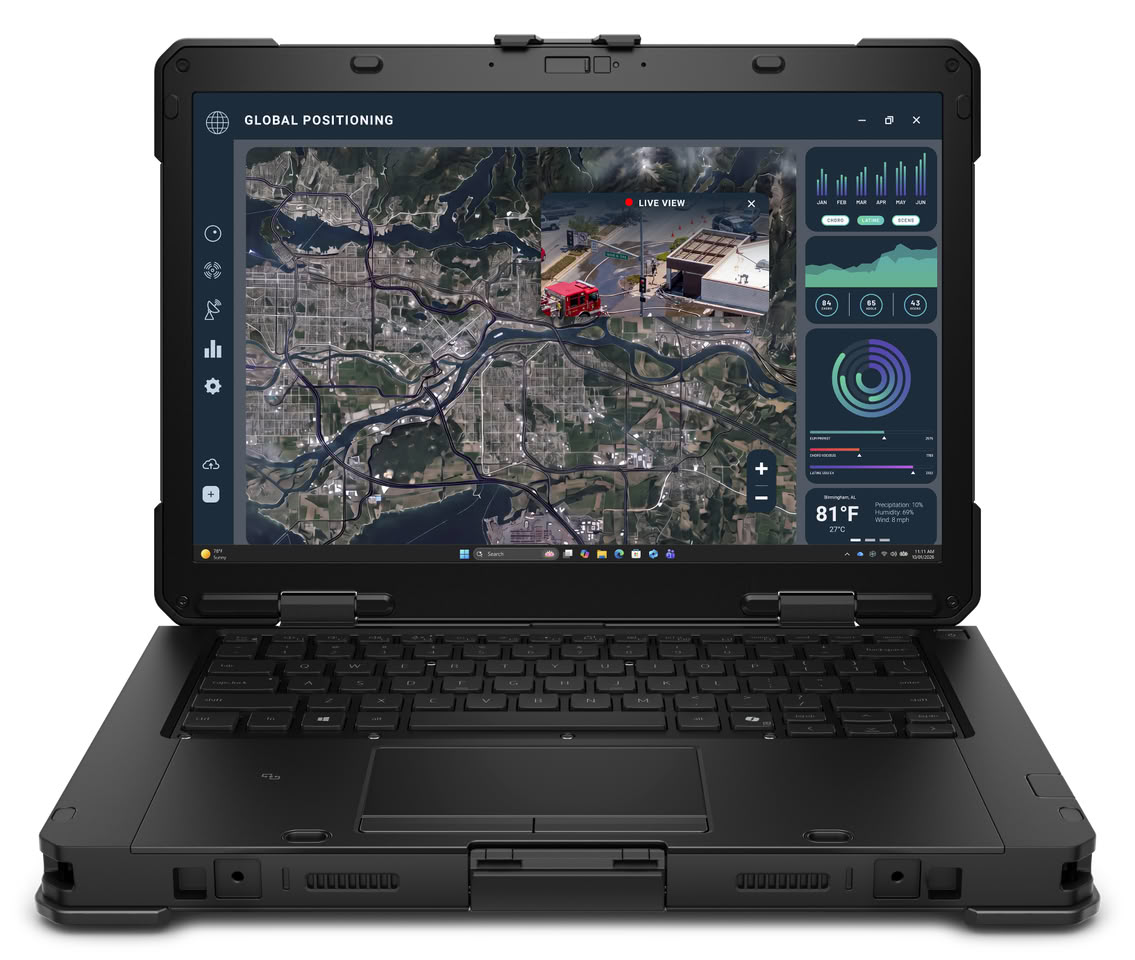
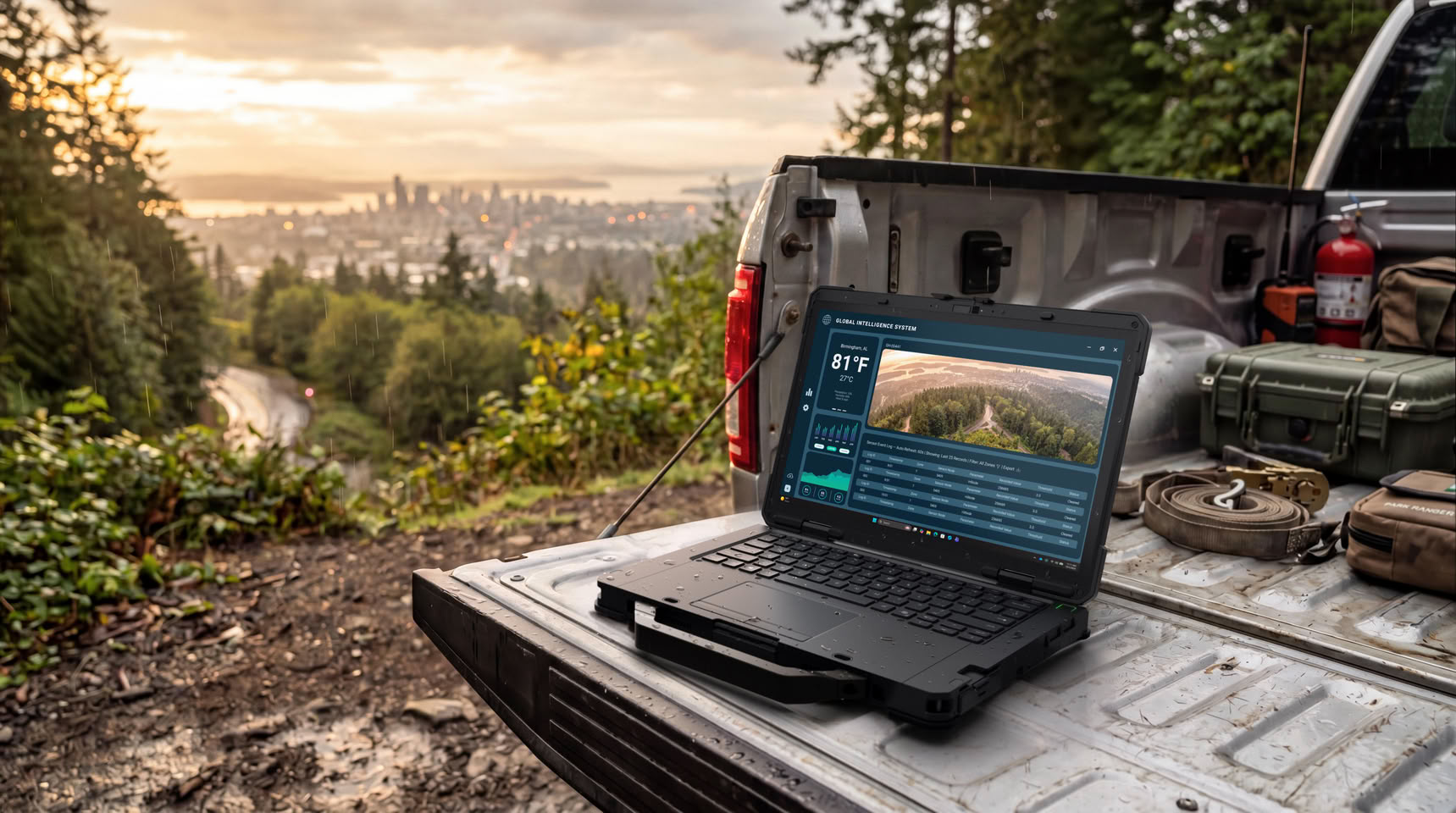
Dell Technologies Introduces New Pro Rugged Laptops

Dell Technologies (NYSE: DELL) announces two new rugged laptops, Dell Pro Rugged 13 Extreme and Dell Pro Rugged 14, purpose-built for field workers who need technology that performs in the harshest conditions. From utility technicians troubleshooting infrastructure in extreme weather to public safety officers coordinating response efforts in the field, both devices are designed to keep workers productive when conditions are most demanding.

Why It Matters
Managing a fleet of devices across distributed field operations demands technology that won't let workers down. Dell Pro Rugged 13 Extreme and Dell Pro Rugged 14 give IT teams a standardized, manageable platform that combines field-grade durability, AI-ready performance and advanced connectivity for large-scale field deployments.

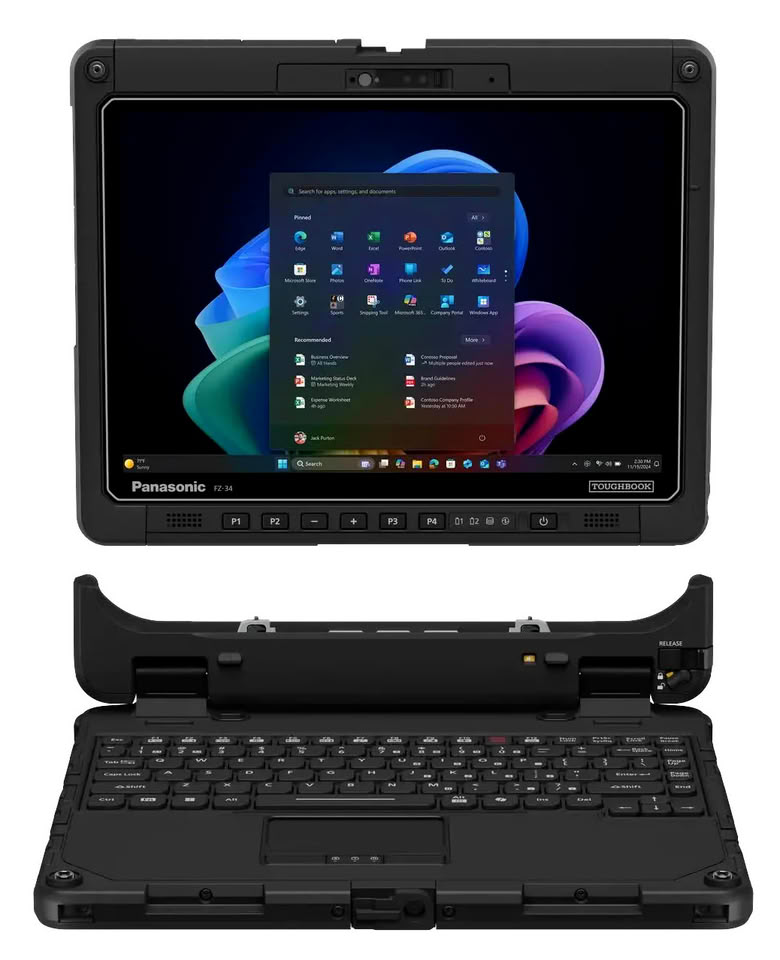
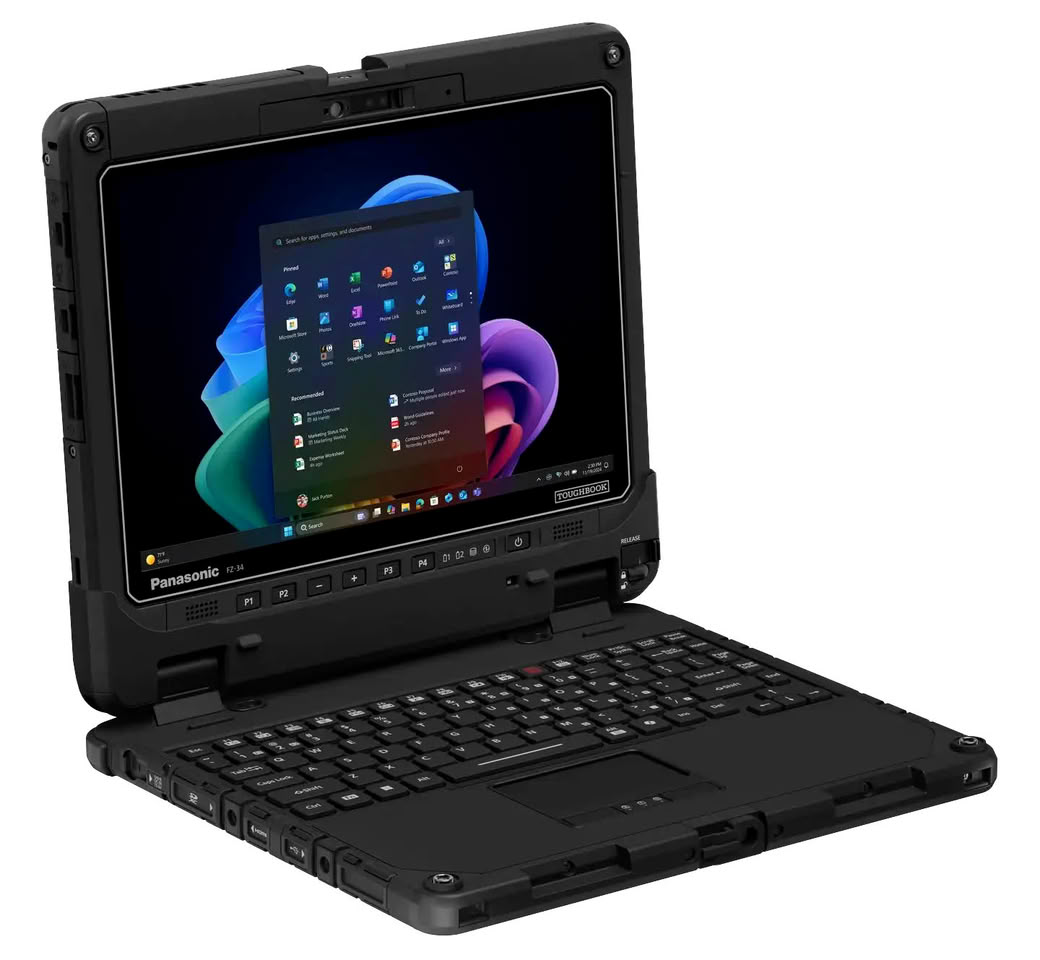
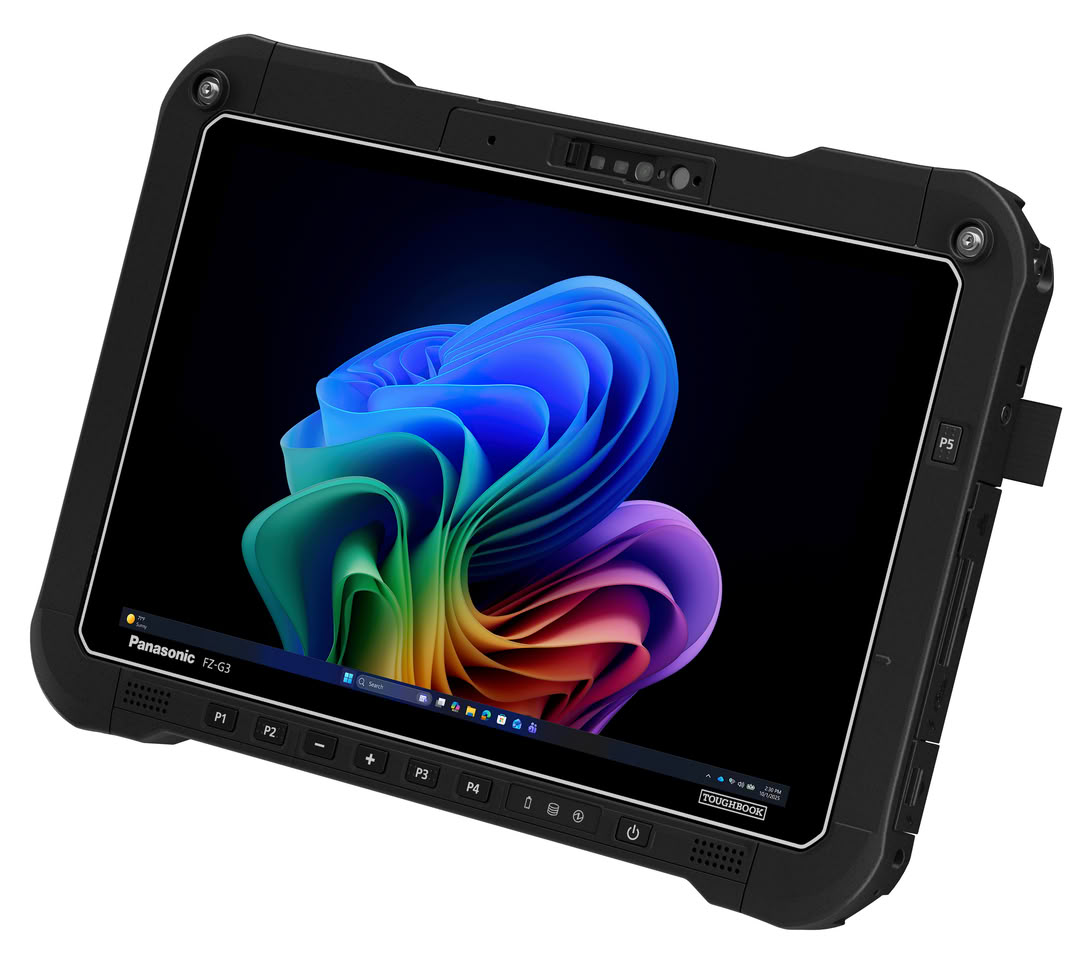
Panasonic Connect Launches the TOUGHBOOK 34 and TOUGHBOOK G3, Fully Rugged 2-in-1 Mobile Computers

Panasonic Connect North America, a Division of Panasonic Corporation of North America, today expanded its line of fully rugged computing devices with the TOUGHBOOK 34 and TOUGHBOOK G3 2-in-1 mobile devices. Targeted at mission-critical workers including utilities, field services, public safety, federal, warehouse and distribution, and automotive, the two devices deliver AI-ready performance, modular flexibility, advanced connectivity, and an intelligent user experience without increasing complexity for IT teams. Both the TOUGHBOOK 34 and TOUGHBOOK G3 come with security and services options, such as TOUGHBOOK Total Defense, for reliable, compliant operations from the first day of deployment. Additionally, building on Panasonic Connect's position as the first rugged device manufacturer to achieve Red Hat Device Edge certification, the new TOUGHBOOK 34 is now certified to run Red Hat Device Edge (RHEL), while the TOUGHBOOK G3 is undergoing certification.

TOUGHBOOK 34 and TOUGHBOOK G3 share core capabilities in two distinct form factors, giving organizations greater computing choice across roles, environments and workflows.

Intel "Nova Lake" Launch Nears as Platform Passes USB4 and PCIe 5.0 Compliance Testing

Intel's Core Ultra 400-series "Nova Lake" CPUs are reportedly nearing launch as Intel has successfully passed USB and PCIe compliance testing. This means the platform has officially passed testing with the two organizations, and all the advertised specifications are working correctly. Starting with the USB Implementers Forum (USB-IF), a governing body of the USB standard, there are two "Nova Lake-H" device IDs certified for compliance with USB4. These include devices with IDs D331 and D333. Additionally, USB-IF lists ID 6E6E for the "Nova Lake" PCH-S chipset for desktop motherboards, compliant with USB 3.2 Gen 2. Intel likely chose a desktop chipset and a laptop CPU to achieve Qualification by Similarity, where testing one product can earn certification for other products easily. To avoid revealing too much before the launch, Intel opted for this strategy instead of testing a full flagship desktop CPU.

For the PCI-SIG, a governing body for PCIe compliance, Intel's 900-series chipset has long been present with the IDs 6E38-6E3F, 6E30-6E35, and 6E40-6E47. These were added back in April, but in August, another set of entries for CPUs specifically appeared. Certifying the PCIe 5.0 x16 root complex were device IDs D461, D465, and D467-D46A, which are likely "Nova Lake-S" CPUs or some mobile variation. Regardless, the verification process is the final stage that a platform and the CPU usually go through before the launch is finalized.

AAEON Launches Panther Lake Edge Mini PC With AirJet Active Cooling

AAEON (Stock Code: 6579) today announced the release of the UP Xtreme PTL Edge Air, a Panther Lake-powered Mini PC featuring Frore Systems' AirJet solid-state active cooling technology.

With this innovative thermal management, the Mini PC replaces conventional fan-based cooling with ultrasonic-frequency membrane vibration technology to generate high-speed pulsating airflow to provide high-capacity heat dissipation without the added height that comes with a heatsink.

Panther Lake Teardown Shows Intel 18A Near TSMC N3E, Newer TSMC Nodes Still Ahead

SemiAnalysis has published a teardown of Intel's Panther Lake (Core Ultra 7 365), offering a rare look at 18A inside a shipping chip. Intel's 18A node brings advanced manufacturing technologies such as rear-side power delivery and a new transistor design, so its success is vital for the Foundry. The firm found the 18A compute logic to be similar in density to the TSMC N3E logic used in the 12-core Xe3 GPU tile. It also puts 18A about 18.6% denser than the Intel 3 GPU logic, using a representative-cell model. However, SemiAnalysis says 18A does not lead TSMC N3P, N2, or Samsung SF2 in peak density. It further cautions that whole-die density depends on cell mix and placement.

Panther Lake is Intel's first chip with RibbonFET gate-all-around transistors, and the first commercial implementation of PowerVia backside power delivery. SemiAnalysis counted four stacked ribbons per transistor, compared to three sheets on Samsung's SF2. Moreover, the Cougar Cove P-core takes roughly the same area as Lunar Lake's Lion Cove, even though L2 grew from 2.5 MiB to 3 MiB. Panther Lake's NPU 5 reportedly requires 36.9% less chip area than Lunar Lake's NPU 4, though the number of INT8 MAC units remains the same. SemiAnalysis describes the CPU cores as incremental updates.

Lenovo Introduces Its First Googlebook, Delivering Premium AI Experiences in a Sleek, Lightweight Design

Lenovo today introduced the Lenovo Googlebook 15, its first Googlebook, expanding the company's laptop portfolio by combining Google's computing experiences with Lenovo's signature design, engineering, and user-focused innovation. Powered by Intel Core Ultra 5 processors with built-in Gemini Intelligence, up to 32 GB of memory and up to 512 GB of storage, the Lenovo Googlebook 15 helps users stay productive and connected - no matter where the day takes them.

Designed for professionals, creators and business owners, the Lenovo Googlebook 15 delivers up to 47 TOPS of performance while weighing under 3 lbs., making it the lightest 15-inch device in Lenovo's portfolio.

Wici Wireless eGPU Promises RTX 5060 Ti and 5090 Performance Over Wi-Fi 7

There has been a lot of development in the eGPU scene lately, with Thunderbolt 5, OCuLink, and MCIO 8i providing serious gains in bandwidth and throughput for eGPU use cases. However, Wici has just launched the Wici One, a new wireless eGPU solution that relies on Wi-Fi 7 for data transfer instead of a cable connection, available with both an NVIDIA GeForce RTX 5060 Ti or an NVIDIA GeForce RTX 5090, the latter of which does not yet have a listed price.

While Wi-Fi 7 is capable of theoretical maximum speeds of around 46.1 Gbps, as VideoCardz points out, the 4×4 radio inside the Wici One, running at 320 MHz and 4096-QAM, would top out at just 11.5 Gbps. To add to this limitation, those speeds are likely only possible over very short distances, with very little interference. Still, Wici promises high-framerate gaming over the network-connected device, with Cyberpunk 2077 reaching 80 FPS at 4K Ultra with DLSS 4 on the RTX 5060 Ti version and Black Myth: Wukong hitting 60 FPS in the 4K Cinematic preset. No latency claims are made, however, but, gaming, a latency-sensitive workload, isn't Wici's main selling point. The true focus for Wici is as a workstation machine, since it contains not only a GPU. The Wici One is actually a full platform, replete with a CPU and storage—presumably, the platform relies entirely on VRAM, since there are no RAM specs or quantities listed.

CyberPowerPC Launches RTX Founders Edition Pre-Built PCs Starting at $1,549

NVIDIA's Founders Edition graphics cards are generally restricted to its own retail channels, but it seems as though CyberPowerPC has a limited run of RTX 50-series GPUs available in its pre-built gaming PCs for a GeForce Week event, which is slated to run until September 27. The CyberPowerPCs are currently available at Walmart with an NVIDIA GeForce RTX 5070 Founders Edition, RTX 5080 Founders Edition, or RTX 5090 Founders Edition, with CPU configs including both AMD and Intel variants.

There are two versions of the RTX 5070-powered gaming PCs at Walmart. Both feature 32 GB of DDR5-6000 RAM, 1 TB of PCIe 4.0 SSD storage, 360 mm closed-loop liquid coolers, and the aforementioned NVIDIA RTX 5070 Founders Edition GPUs inside a CyberPowerPC MA-01 case. The only difference between them is that the $1,599 variant comes with an AMD Ryzen 7 7800X3D, while the version featuring an Intel Core i7-14700KF comes in at $1,549.

Googlebook Launches With Intel Core Ultra Series 3 Processors

Intel today announced the first Googlebook devices powered by Intel Core Ultra Series 3 processors (codenamed Panther Lake), bringing together Google's next-generation computing with the proven performance, best-in-class connectivity and efficiency of Intel's flagship client platform. Launching with premium devices from Acer, ASUS and Lenovo, Intel-powered Googlebook laptops are thoughtfully designed and engineered to support the way people work, play and create.

Whether collaborating with colleagues, exploring new ideas, streaming content, or multitasking across apps, Intel-powered Googlebook laptops enable responsive performance and long battery life in sleek, modern designs, creating a fast, intelligent and seamless computing experience.
Return to Keyword Browsing
Nov 11th, 2026 04:20 CST change timezone

New Forum Posts

Popular Reviews

TPU on YouTube

Controversial News Posts