Wednesday, November 4th 2026

Intel Nova Lake-S CPUs Reportedly Drop to 5.1 GHz Max Above 90°C

Intel's upcoming Core Ultra 4000 "Nova Lake-S" desktop processors will reportedly cap their maximum core frequency at 5.1 GHz whenever they run above 90°C, according to Intel leaker Jaykihn on X. He says the limit applies to the entire Nova Lake-S desktop lineup, works separately from regular TjMax throttling at 100°C, and can't be raised. He also notes that the information is still preliminary. In practice, it looks like a safety net that sits between normal boost behavior and full thermal throttling. Below 90°C, the chips should presumably boost as usual, and models that don't exceed 5.1 GHz in the first place wouldn't be affected at all.

Final Nova Lake clocks aren't official yet, though the current Core Ultra 9 285K already boosts up to 5.7 GHz, so a high-end Nova Lake chip that runs hot could lose a sizable chunk of its peak frequency. A 100°C TjMax would also be lower than Arrow Lake's 105°C, which can be manually raised to 115°C on the 285K. That puts more weight on cooling, since the 28-core Core Ultra 9 4970K BFC was reportedly set to pull up to 296 W at PL2 despite its 125 W rating, and staying under 90°C at that kind of power draw will probably take a really capable cooler. Nova Lake-S is currently expected to arrive in Q1 2027, and Intel hasn't confirmed any of this yet.
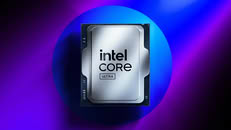
Sources: Jaykihn on X, via Videocardz
Add your own comment

17 Comments on Intel Nova Lake-S CPUs Reportedly Drop to 5.1 GHz Max Above 90°C

#1
windwhirl
As long as the IPC is good, it should be fine.
Posted on Reply
#2
Bobaganoosh
DrUsmanSaleem...since the 28-core Core Ultra 9 4970K BFC was reportedly set to pull up to 296 W at PL2 despite its 125 W rating, and staying under 90°C at that kind of power draw will probably take a really capable cooler.
Meh. That's fine. It has taken a sizeable cooler for a top-end Intel for years. Rocket-Lake took a good cooler and overclocking, but then it was a beast at the time. I can make my 13900k draw over 385W like it's nothing, but it's on water.

I think people get over the need for a big cooler pretty quickly if the performance is worth it. If it's hot, power hungry, AND has bad IPC or poor improvement over previous generations, it will not go down well.

Also, I think real-usage power is important. Sure, my CPU will draw over 300W in Cinebench, but it only draws about 115W in gaming loads and performs really well while doing it. So if Nova-Lake draws 296W in CB, but is closer to that 125W in gaming workloads and has low idle power-draw, I don't think the maximum power-draw is that important for most people. Of course the 125W is just a thermal rating number for cooler planning...which hasn't been based on real numbers in years anyway, but that's a whole other topic lol.

If this 90C throttle is real, I do think this would be an interesting note for reviewers though. It would help their cause pushing consumers to really consider the cooler requirements if they plan on running heavy workloads on these things. I think DIY builders usually know this, but people go buy pre-builts and wonder why their performance sucks when the thing has a crappy cooler on an i9 (or ultra-9 or whatever)
Posted on Reply
#3
XeonsNOpterons
Dang, that's pretty bad if true. The P-core IPC will be superior to Zen 6, but if it proves difficult to keep Nova Lake below 90C, its single thread may actually lag behind if it can only do 5.1GHz like this rumor claims. I am skeptical about the accuracy of this rumor though as 90C these days is really not that hot, especially when you consider the likely low voltages Nova Lake needs to reach 5.1GHz, which I expect to be in the 0.9-1V range. There should be nearly no major degradation with those voltages at 90C.
Posted on Reply
#4
Wirko
XeonsNOpteronsThere should be nearly no major degradation with those voltages at 90C.
I have little trust in the upcoming nodes and their long term endurance, regardless of whether they are coming from TSMC, Intel or Samsung. I take this surprisingly low temperature limit as a sign that Intel itself has little trust. But who cares, the latest technologies are all designed with server processors in mind, and those get thrown out after five years of operation (below 90°C).
Posted on Reply
#5
efikkan
XeonsNOpteronsDang, that's pretty bad if true. The P-core IPC will be superior to Zen 6, but if it proves difficult to keep Nova Lake below 90C, its single thread may actually lag behind if it can only do 5.1GHz like this rumor claims. I am skeptical about the accuracy of this rumor though as 90C these days is really not that hot, especially when you consider the likely low voltages Nova Lake needs to reach 5.1GHz, which I expect to be in the 0.9-1V range. There should be nearly no major degradation with those voltages at 90C.
Even if true, more context is needed do judge this. It's not like modern CPUs with high boost clocks can run every kind of load at that clock sustained, some loads will certainly throttle.
And keep in mind that even though this is probably final silicon, the firmware may still get some fine tuning.
Posted on Reply
#6
thestryker6
This mostly makes me wonder what the all-core clocks look like in the first place. The 12900K and 13600K had 5.1GHz all-core clocks, but every other unlocked CPU after the 12900K had higher. I can't imagine the IPC increase is going to be enough to make up for another large clock regression while still providing a big performance uplift. If 5.1GHz is the all-core clock it would be the same loss as RPL-R to ARL was which limited ARL's practical uplift.

Of course there's another way to look at this information: it could be a way to push usage of stock power levels. At stock power levels ARL is pretty easy to cool, but pull the limits off and around 300W it gets really tricky. If running either without power limits or raising them results in lower performance people would be less inclined to do it. NVL will also have the capability to run AVX512 workloads so that could be another part of the equation since Intel dropped AVX offsets entirely with 12th Gen+.

My first reaction was definitely more of an "ugh" than anything else, but it also might not really mean much. It certainly won't mean anything for gaming performance (or other lightly threaded applications) unless someone has a hotbox cooling solution. If NVL isn't harder to cool than ARL then it shouldn't mean much under most load conditions either. Obviously still a wait and see as we don't have much solid information on performance profiles, but it's certainly an interesting tidbit.
Posted on Reply
#7
AntiX3DGlazer
Eh... that feels... fine. I guess? It's certianly a departure from the 100C boost we've been seeing since early Skylake.
Posted on Reply
#8
matar
Already bad news before lunch
Posted on Reply
#9
Bobaganoosh
The comments are interesting. When AMD said "95C is normal, expected behavior" everyone went "omg that's crazy" and it still only applies to those AMD chips, but Intel might* throttle at 91 and people think that's bad news. It sounds like a reasonable step to prevent damage. I don't think we'll know what it really means until they're out. They may run far from 91 normally so it could be a complete non-issue lol. We'll see.
Posted on Reply
#10
lambda
BobaganooshThe comments are interesting. When AMD said "95C is normal, expected behavior" everyone went "omg that's crazy" and it still only applies to those AMD chips, but Intel might* throttle at 91 and people think that's bad news. It sounds like a reasonable step to prevent damage. I don't think we'll know what it really means until they're out. They may run far from 91 normally so it could be a complete non-issue lol. We'll see.
It's probably due to some sort of process / fabrication reason as per my limited understanding. Shouldn't be an issue for the most part but we'll see.
Posted on Reply
#11
kazuviking
XeonsNOpteronsas 90C these days is really not that hot,
It degrades any silicon due to increased electron migration.
Posted on Reply
#12
Nathaaab
XeonsNOpteronsDang, that's pretty bad if true. The P-core IPC will be superior to Zen 6, but if it proves difficult to keep Nova Lake below 90C, its single thread may actually lag behind if it can only do 5.1GHz like this rumor claims. I am skeptical about the accuracy of this rumor though as 90C these days is really not that hot, especially when you consider the likely low voltages Nova Lake needs to reach 5.1GHz, which I expect to be in the 0.9-1V range. There should be nearly no major degradation with those voltages at 90C.
Intel is just being extra safe to avoid another drama like when people ran their i9s unlimited and at 105°C all the time and were surprised they degraded.

Arrow Lake is quite locked down by default, so is Raptor Lake with newer BIOS updates.
matarAlready bad news before lunch
Quick to jump to conclusions, it's just clock speeds, doesn't matter since IPC is better. Who reaches 90°C in games or single core workloads? 5.1 GHz if it's loaded on all the cores is great.
Posted on Reply
#14
Sol_Badguy
No reason to worry, this is the Thermal Velocity Boost Segunda Etapa.
285K review
1 core active, under 70°C = 5.7 GHz
1 core active, over 70°C, or 2 cores active = 5.6 GHz
3 or more cores active = 5.4 GHz
I wouldn't consider this a bad sign, more granularity is better not worse, it makes things more predictable, they could probably go full retard and make more thermal thresholds tied to frequency bands.
This way we could rate coolers by the thermal threshold/frequency band they achieve. :p
/////
thestryker6This mostly makes me wonder what the all-core clocks look like in the first place.
Surely not less than this.
thestryker6I can't imagine the IPC increase is going to be enough to make up for another large clock regression while still providing a big performance uplift.
Nah I really doubt Nova Lake will have a speed regression compared to Arrow Lake.
Even accounting for Intel's node instead of TSMC's.
I mean the 14900KS got to 6.2 Ghz on Intel's older node, I can't see why Nova Lake can't match that on Intel's newer node.
BobaganooshIt has taken a sizeable cooler for a top-end Intel for years.
Intel probably used Raptor Lake as a reference point to calibrate Nova Lake's cooling requirements.
The dual tile flagship will surely be easy to cool, relatively speaking, thanks to its presumably low(er) thermal density. Also the dual lever ILM will help.
Even though the single tile SKUs will share the big socket and corresponding IHS (and ILM) their thermal density might be higher (and/or a more offset hotspot) than their dual tile relatives, but probably not higher than Raptor Lake and Arrow Lake.
Nathaaab5.1 GHz if it's loaded on all the cores is great.
5.1 GHz on the P-Cores apparently and if it goes over 90°C.
tpucdn.com/review/intel-core-ultra-9-285k/images/boost-clock-analysis.png
tpucdn.com/review/intel-core-ultra-7-270k-plus/images/boost-clock-analysis.png
Those 24-thread values are averages, but to achieve them, the 285K has the P-Cores at 5.425 GHz and E-cores at 4.6 GHz, and the 270K has the P-Cores at 5.425 GHz and E-cores at 4.7 GHz.
But the temps for these Arrow Lake CPUs was obviously under 90°C.
That's the thing with Nova Lake we don't know what the speed is when under 90°C.
Posted on Reply
#15
thestryker6
Sol_BadguySurely not less than this.
I would be surprised to see anyone hitting a 5.9GHz all-core clock speed though it would be pretty great if they did. That would be ~9% boost over the fastest stock ARL (not that ARL all-core overclocks well either).
Sol_BadguyNah I really doubt Nova Lake will have a speed regression compared to Arrow Lake.
Yeah I can't really imagine this clock speed being anything other than cooling related.
Sol_BadguyEven accounting for Intel's node instead of TSMC's.
I mean the 14900KS got to 6.2 Ghz on Intel's older node, I can't see why Nova Lake can't match that on Intel's newer node.
18A cannot clock up very well, and we don't know about 18A-P in the real world yet. TSMC's N2 definitely seems good, but we also don't know where it caps out either. ARL used N3B and couldn't reach high clocks no matter what was done to them. This of course doesn't mean TSMC cannot reach high clocks just that we haven't seen it yet. I wouldn't be particularly surprised to see all-core clocks somewhere around 5.5GHz though I expect no matter what node Intel is using 6GHz will return as a lower core count boost clock.
Posted on Reply
#16
XeonsNOpterons
kazuvikingIt degrades any silicon due to increased electron migration.
Its a mix of temperature and voltage. You can run a chip hot but at low voltage and it will degrade as fast as a chip running cooler at a higher voltage. The actual relations are highly specific to a process node, but that is the trend.
Posted on Reply
#17
twin_savage
XeonsNOpteronsIts a mix of temperature and voltage. You can run a chip hot but at low voltage and it will degrade as fast as a chip running cooler at a higher voltage. The actual relations are highly specific to a process node, but that is the trend.
and tile based CPUs have thermal strain (between pieces of silicon) to worry about too. I've got one of the Intel tile based CPUs and DTS_max is "only" 82C.
Posted on Reply
Add your own comment
Nov 24th, 2026 18:56 CST change timezone

New Forum Posts

Popular Reviews

TPU on YouTube

Controversial News Posts