News Posts matching #Data Center

Return to Keyword Browsing

Intel Reports First-Quarter 2019 Financial Results

Intel Corporation today reported first-quarter 2019 financial results. "Results for the first quarter were slightly higher than our January expectations. We shipped a strong mix of high performance products and continued spending discipline while ramping 10nm and managing a challenging NAND pricing environment. Looking ahead, we're taking a more cautious view of the year, although we expect market conditions to improve in the second half," said Bob Swan, Intel CEO. "Our team is focused on expanding our market opportunity, accelerating our innovation and improving execution while evolving our culture. We aim to capitalize on key technology inflections that set us up to play a larger role in our customers' success, while improving returns for our owners."

In the first quarter, the company generated approximately $5.0 billion in cash from operations, paid dividends of $1.4 billion and used $2.5 billion to repurchase 49 million shares of stock. In the first quarter, Intel achieved 4 percent growth in the PC-centric business while data-centric revenue declined 5 percent.

Intel Announces Broadest Product Portfolio for Moving, Storing, and Processing Data

Intel Tuesday unveiled a new portfolio of data-centric solutions consisting of 2nd-Generation Intel Xeon Scalable processors, Intel Optane DC memory and storage solutions, and software and platform technologies optimized to help its customers extract more value from their data. Intel's latest data center solutions target a wide range of use cases within cloud computing, network infrastructure and intelligent edge applications, and support high-growth workloads, including AI and 5G.

Building on more than 20 years of world-class data center platforms and deep customer collaboration, Intel's data center solutions target server, network, storage, internet of things (IoT) applications and workstations. The portfolio of products advances Intel's data-centric strategy to pursue a massive $300 billion data-driven market opportunity.

Kingston Technology Launches New Data Center 500 Series SSDs

Kingston Digital, Inc., the Flash memory affiliate of Kingston Technology Company, Inc., a world leader in memory products and technology solutions, today announced it is shipping the Data Center DC500R Enterprise SSD optimized for read-intensive applications. This is the first drive in the DC500 series that implements Kingston's strict Quality of Service (QoS) requirements to ensure predictable random I/O performance as well as predictable low latencies over a wide range of read and write workloads. Next week, the company will ship its DC500M SSD optimized for mixed-use workloads.

DC500R is ideal for read-intensive applications such as boot up, web servers, virtual desktop infrastructure, operational databases and real-time analytics. Cloud service providers and software-defined storage architects can leverage the drive's consistent I/O and latency performance to deliver the QoS needed in demanding read-centric environments. At .5 DWPD (drive writes per day), DC500R allows IT administrators to maximize their investment in storage hardware with a drive that delivers on performance, endurance and reliability. DC500R is available in 480GB, 960GB, 1.92TB and 3.84TB capacities.

Toshiba Memory Expands NVMe SSD Portfolio Targeting Cloud Data Centers

Toshiba Memory America, Inc. the U.S.-based subsidiary of Toshiba Memory Corporation, announced availability of its XD5 Series NVMe SSD platform in a 2.5-inch, 7 mm low-profile form factor that is optimized for low-latency and performance consistency in read-intensive workloads. Developed for both data center and cloud environments, the new 2.5-inch form factor XD5 Series is ideal for NoSQL databases, large-scale-out data mining and analysis, and streaming applications. The XD5 Series is also well-suited for Open Compute Project (OCP) applications and systems.

Built on 64-layer BiCS FLASH TLC (3-bit-per-cell) 3D flash memory, and featuring a PCIe Gen 3 x4 interface, the new XD5 SSD 2.5-inch option delivers sequential read performance up to 2,700 megabytes per second (MB/s) and sequential write performance up to 895 MB/s with low active power consumption of 7 watts. At one drive write per day (DWPD), the XD5 Series can write nearly 4 terabytes (TB) of random data daily for five years at a consistent performance rate. Random read/write performance is specified at 250,000/21,000 Input/Output Operations per Second (IOPS) respectively, making the XD5 Series a predictable and reliable solution for read-intensive or heavy transactional workloads.

WD Announces CL SN720 and DC SN630 NVMe SSDs for Data Centers

Western Digital Corp. today announced two new additions to its broad portfolio of NVMe-based systems, platforms, SSDs, and memory drives for data center and cloud customers. With a full portfolio covering applications from edge-to-core, these additions are the Western Digital Ultrastar DC SN630 NVMe SSD and the Western Digital CL SN720 NVMe SSD. Each leverages the power of Western Digital's vertical integration capabilities, including internally developed controller and firmware architectures, and 64-layer 3D NAND technology. As a replacement for lower-performing SATA SSDs, these new NVMe drives meet the insatiable need for performance, scalability, endurance and low total cost of ownership (TCO) for public and private cloud deployments, hyperscale cloud environments, and next-generation workloads at the edge.

IT managers face challenges such as managing multiple workload types, scaling at optimal TCO, and controlling server sprawl. Due to its inherent scalability and performance benefits, NVMe is quickly becoming the de facto standard for everything from traditional scale-up database applications to emerging edge computing architectures.

Intel Reports Third-Quarter 2018 Financial Results

Intel Corporation today reported third-quarter 2018 financial results. Third-quarter revenue of $19.2 billion was an all-time record, up 19 percent YoY driven by broad business strength and customer preference for performance-leading products. The Client Computing Group (CCG), the Data Center Group (DCG), the Internet of Things Group (IOTG), the Non-volatile Memory Solutions Group (NSG) and Mobileye all achieved record revenue. Collectively, data-centric businesses grew 22 percent, led by 26 percent YoY growth in DCG. PC-centric revenue was up 16 percent on continued strength in the commercial and gaming segments. Excellent operating margin leverage and a lower tax rate drove record quarterly EPS.

"Stronger than expected customer demand across our PC and data-centric businesses continued in the third quarter. This drove record revenue and another raise to our full-year outlook, which is now up more than six billion dollars from our January expectations. We are thrilled that in a highly competitive market, customers continue to choose Intel," said Bob Swan, Intel CFO and Interim CEO. "In the fourth quarter, we remain focused on the challenge of supplying the incredible market demand for Intel products to support our customers' growth. We expect 2018 will be another record year for Intel, and our transformation positions us to win share in an expanded $300 billion total addressable market."

Samsung Electronics Unveils Comprehensive New Data Center SSD Lineup

Samsung Electronics America, Inc. today unveiled the Samsung Data Center solid-state drive (SSD) lineup to address current and future trends in high performance computing storage in the big data era for small and medium businesses (SMBs). Samsung's new family of Data Center SSD solutions, which consists of the 860 DCT, 883 DCT, 983 DCT and the 983 ZET, are engineered to meet the evolving needs of SMBs, including faster, sustained performance, higher capacities and enterprise-class reliability and security.

Samsung's Data Center SSD portfolio will raise the bar for efficiency compared to legacy storage systems, requiring fewer servers and reduced power and cooling for a lower total cost of ownership (TCO). The new lineup delivers better Quality of Service (QoS) for SMBs by reducing latency and lowering data delays. The entire line provides enhanced reliability and endurance for 24/7 operation backed by a 5-year limited warranty and impressive Drive Writes Per Day (DWPD) ratings.

Marvell Introduces Industry's First NVMe-over-Fabric SSD Converter Controller

Marvell today announced the industry's first NVMe over Fabric (NVMe-oF) SSD converter controller, the 88SN2400 designed and optimized to convert an NVMe SSD into an NVMe-oF SSD.

By bringing low latency access over the fabric and exposing the entire SSD bandwidth to the network, the Marvell controller supports true scalable, high-performance disaggregation of storage from compute. The 88SN2400 utilizes a simple, low-power and compute-less Ethernet fabric instead of a traditional PCIe fabric controlled and managed by an enterprise-class server SoC with integrated 100GE controllers.

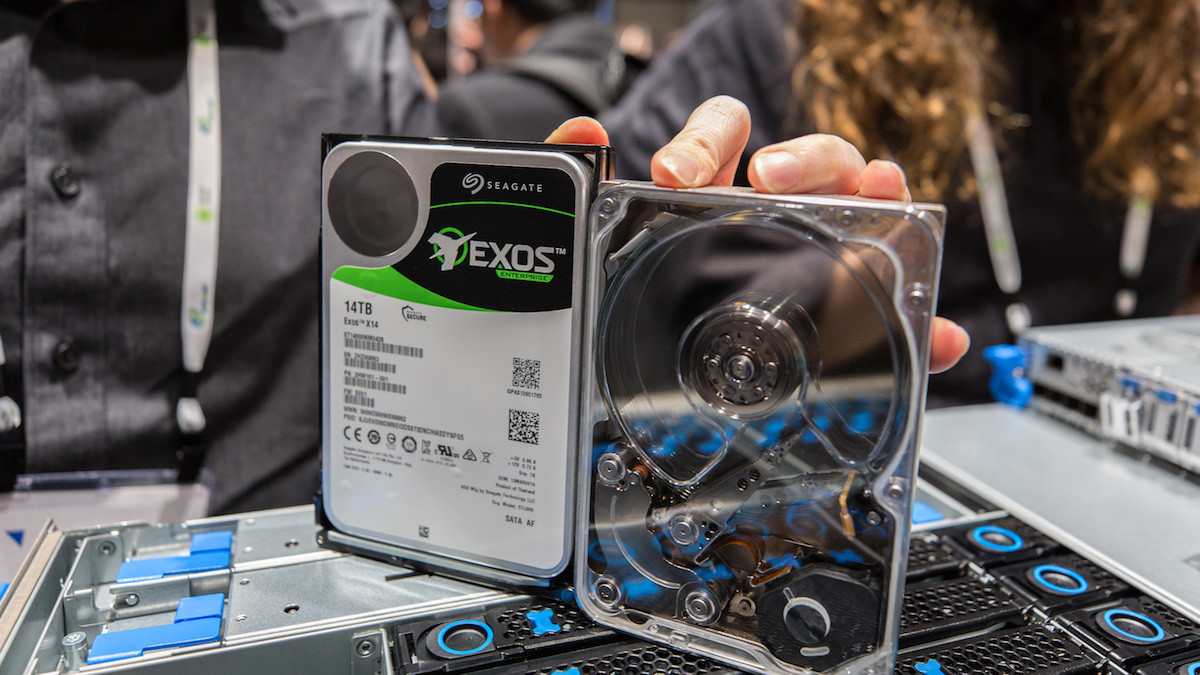
Seagate MACH.2 Multi Actuator Tech Enables 480MB/s HDDs

At the OCP summit this week Seagate and its partners revealed new proof points showing continued progress, solid results, and customer and industry adoption of the company's advanced HAMR and Multi Actuator technologies, which will be implemented in the near future in Seagate Exos enterprise hard drives.

Today Seagate said its new MACH.2 Multi Actuator technology has enabled them to set a new hard drive speed record, demonstrating up to 480MB/s sustained throughput - the fastest ever. Seagate formally introduced its MACH.2 Multi Actuator technology yesterday, which has now been deployed in development units for customer testing prior to productization. Read below to learn more.

Toshiba Adds New Lineup of Data Center SSDs Featuring 64-layer BiCS Flash

Toshiba Memory America, Inc. (TMA), the U.S.-based subsidiary of Toshiba Memory Corporation, has enhanced its portfolio of solid-state drives (SSDs) for the data center with a new, 3D flash memory-based lineup of PCI Express NVMe and SATA SSDs in multiple form factors. The new CD5, XD5 and HK6-DC SSDs enable infrastructure managers to address performance and workload demands by offering robust performance and reliability with lower operating power for read-intensive applications such as NoSQL databases, big data analytics and streaming media.

"Demand for flash storage in data centers continues to grow rapidly - with capacity shipped into the enterprise expected to increase at a 58 percent CAGR through 2021," said Jeff Janukowicz, IDC Research Vice President for Solid State Drives and Enabling Technologies. "In order for hyperscale, virtualization, automation/orchestration and software-defined storage applications to thrive, cloud data centers must meet specific workload requirements. Toshiba's latest data center SSDs are designed to help customers address these demanding environments and realize the most value from their flash storage."

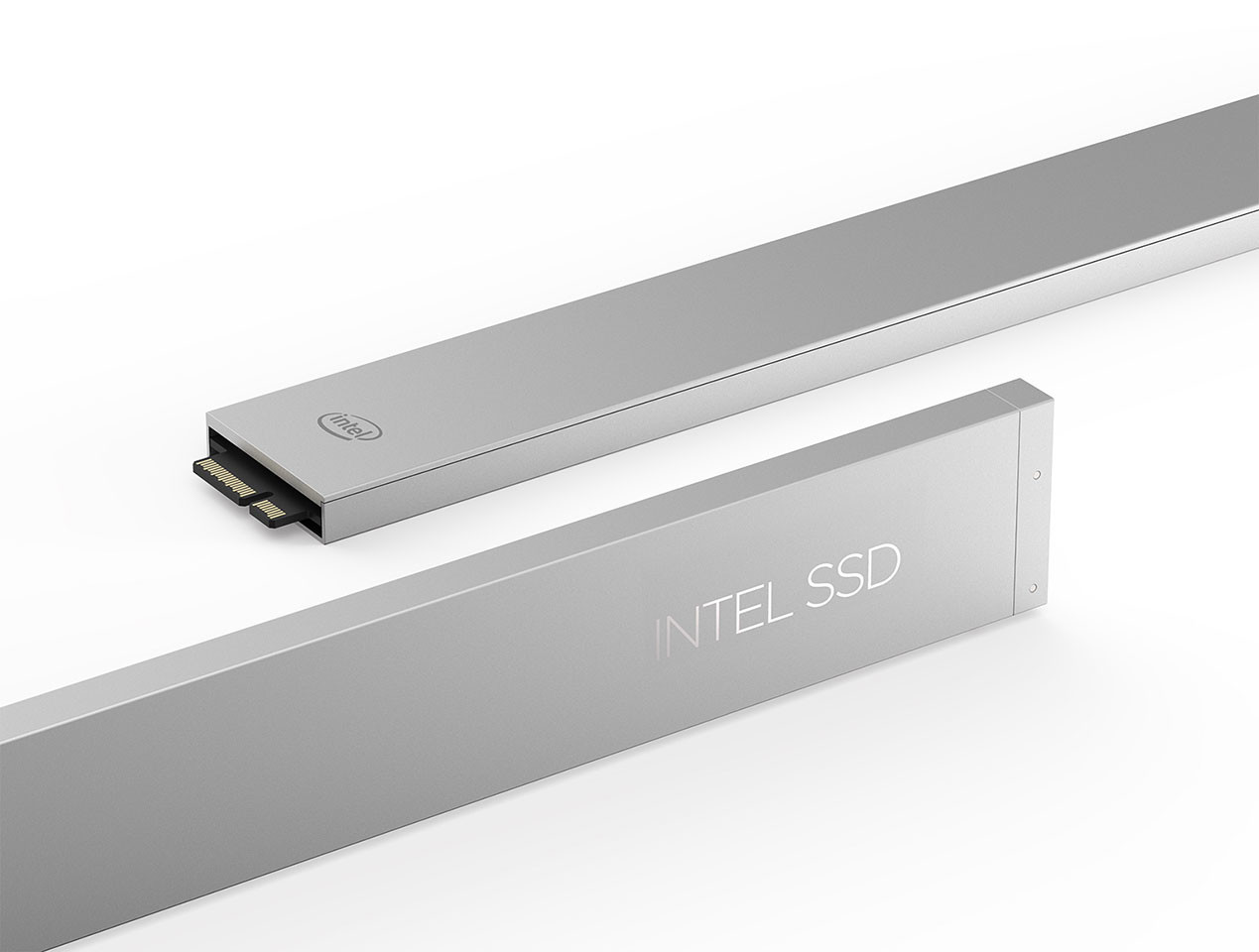
Intel Reimagines Data Center Storage with New 3D NAND SSDs

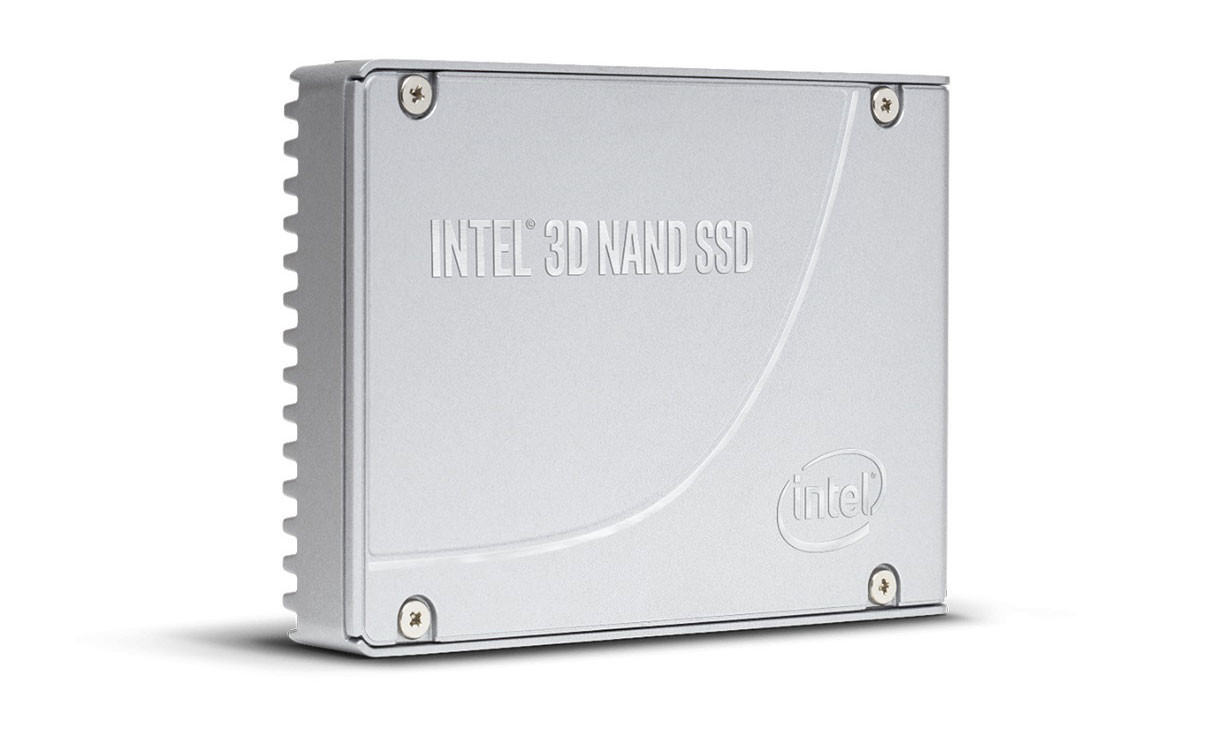
Today, Intel announced the Intel SSD DC P4510 Series for data center applications. The P4510 Series uses 64-layer TLC Intel 3D NAND to enable end users to do more per server, support broader workloads and deliver space-efficient capacity. The P4510 Series enables up to four times more terabytes per server and delivers up to 10 times better random read latency at 99.99 percent quality of service than previous generations. The drive can also deliver up to double the input-output operations per second (IOPS) per terabyte. The 1 and 2TB capacities have been shipping to cloud service providers (CSPs) in high volume since August 2017, and the 4 and 8TB capacities are now available to CSPs and channel customers. All capacities are in the 2.5-inch 15 mm U.2 form factor and utilize a PCIe NVMe 3.0 x4 connection.

To accelerate performance and simplify management of the P4510 Series PCIe SSDs and other PCIe SSDs, Intel is also delivering two new technologies that work together to replace legacy storage hardware. Intel Xeon Scalable processors include Intel Volume Management Device (VMD), enabling robust management such as surprise insertion/removal and LED management of PCIe SSDs directly connected to the CPU. Building on this functionality, Intel Virtual RAID on CPU (VROC) uses Intel VMD to provide RAID to PCIe SSDs. By replacing RAID cards with Intel VROC, customers are able to enjoy up to twice the IOPs performance and up to a 70 percent cost savings with PCIe SSDs directly attached to the CPU, improving customer's return on their investments in SSD-based storage.

Italian Multinational Gas, Oil Company Fires Off HPC4 Supercomputer

Eni has launched its new HPC4 supercomputer, at its Green Data Center in Ferrera Erbognone, 60 km away from Milan. HPC4 quadruples the Company's computing power and makes it the world's most powerful industrial system. HPC4 has a peak performance of 18.6 Petaflops which, combined with the supercomputing system already in operation (HPC3), increases Eni's computational peak capacity to 22.4 Petaflops.

According to the latest official Top 500 supercomputers list published last November (the next list is due to be published in June 2018), Eni's HPC4 is the only non-governmental and non-institutional system ranking among the top ten most powerful systems in the world. Eni's Green Data Center has been designed as a single IT Infrastructure to host all of HPC's architecture and all the other Business applications.

NVIDIA Forbids GeForce Driver Deployment in Data Centers

NVIDIA recently updated the end-user license agreement (EULA) for their GeForce Software. There's one particular statement in the limitations section that caught our eye. And it reads: No Datacenter Deployment. The SOFTWARE is not licensed for datacenter deployment, except that blockchain processing in a datacenter is permitted. It seems that NVIDIA isn't too happy with data centers that utilize GeForce and TITAN graphics cards instead of the more expensive Quadro or Tesla cards. With this prohibition in place, data centers are forced to either invest in NVIDIA's pricier offerings or completely switch over to AMD. Data centers that are using GeForce products for cryptocoin mining are unaffected by this change in the EULA.
Return to Keyword Browsing
Nov 23rd, 2026 01:10 CST change timezone

New Forum Posts

Popular Reviews

TPU on YouTube

Controversial News Posts