News Posts matching #Handheld

Return to Keyword Browsing

Xbox Game Pass December Additions Revealed: Mortal Kombat 1, Dome Keeper, & More

Happy December, friends! There have been so many incredible games this year, and to pass the time as you're waiting to see who makes it to the stage to snag their award, check out our collection of The Game Award nominees! While this is our only "Coming Soon" Wire post for December, we'll be back at it as usual in the new year with more games. For now, let's get to what's Coming Soon (and available today)!

Available Today: Lost Records: Bloom & Rage (Cloud, PC, and Xbox Series X|S)
Game Pass Ultimate, Game Pass Premium, PC Game Pass
Embark on a new narrative journey by the creators of Life is Strange. Film your summer of 1995 and create memories of a lifetime with your new friends. 27 years later, confront the dark secrets that made you all promise to never speak again after that fateful summer.


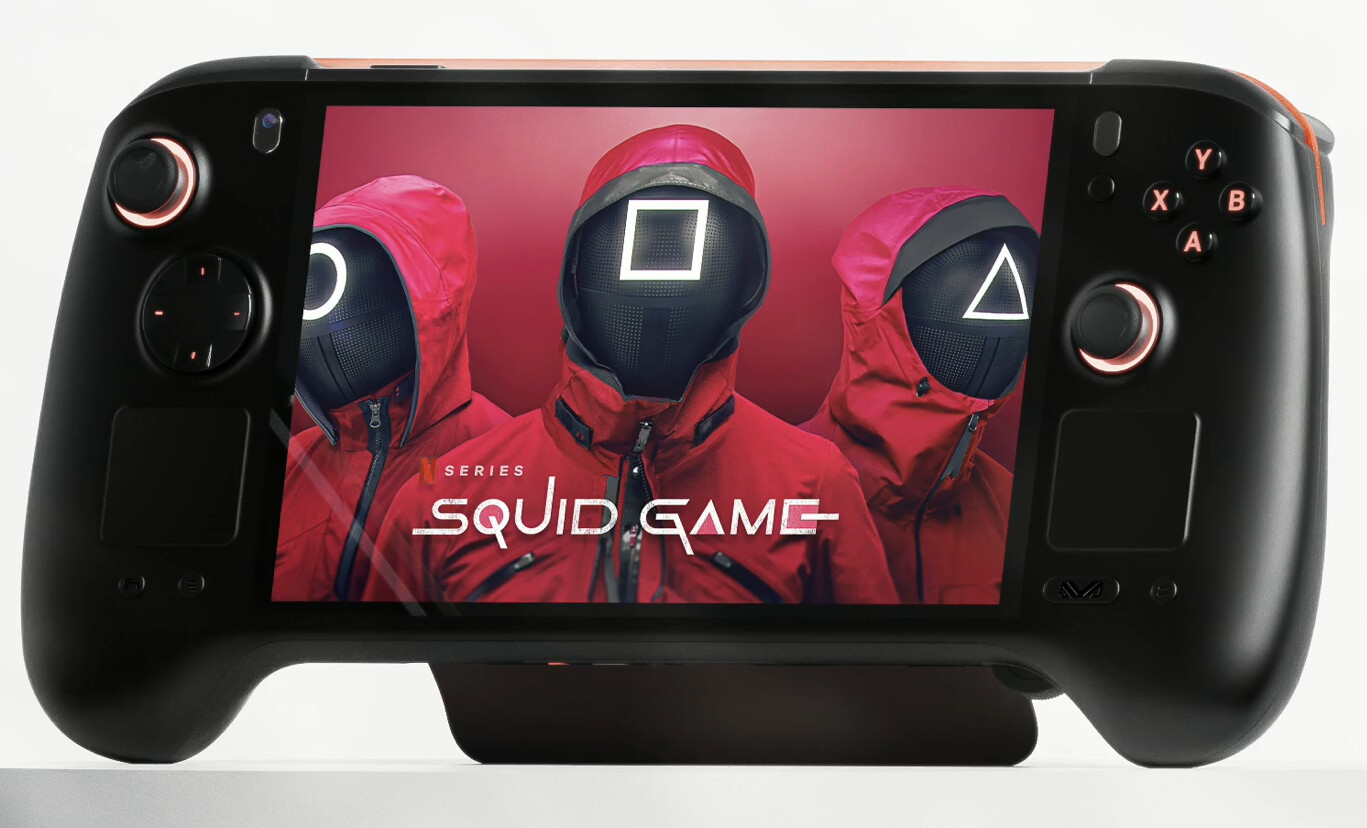
Ayaneo Next II Gaming Handheld Will Feature AMD Strix Halo and 9-inch OLED Display

The Ayaneo Next II was recently revealed as a new gaming handheld powered by AMD's Ryzen AI Max+ 395 APU and its Radeon 8060S iGPU. Aside from those details and a few tidbits about the controller specifications, however, not much had been revealed about the new gaming handheld until now. Ayaneo recently posted a few additional details about the new plus-size Strix Halo gaming handheld on X, mostly centering on screen specs. Ayaneo also teased a launch event for November 28, 2025 at 23:30 PT (7:00 UTC).

According to the post, the Ayaneo Next II will have a 9-inch OLED display with a 165 Hz refresh rate, 2400×1504 resolution, and a native landscape orientation. This works out to a screen ratio of just under 3:2 (3:1.88, to be exact), and Ayaneo claims that this display is a custom, exclusive design, although it seems somewhat unlikely that it will stay this way for very long, given how competitive the high-performance gaming handheld market is getting these days—at the very least, we can likely expect other devices from Ayaneo to feature the same display at some point. Curiously, Ayaneo makes no mention of whether the display will feature VRR, although it seems unlikely that such a premium gaming handheld wouldn't.

OneXPlayer to Adjust "Strix Halo" APU-powered Handheld Prices, Prompted by RAM & SSD Shortages

A month ago, OneXPlayer publicly unveiled its OneXFly Apex liquid-cooled system—introduced as the "world's most powerful 8-inch gaming handheld." This top-tier portable gaming PC takes advantage of AMD's Ryzen AI "Strix Halo" mobile platform; normally present within pricey pro-level laptops and mini PCs. An Indiegogo campaign offered a range-topping model configured with Team Red's Ryzen AI Max+ 395, and up to 128 GB of LPDDR5x-8000 memory, plus a 2 TB NVMe SSD. Backers/customers could pick up this setup for a cool $2239, but OneXPlayer has warned that price adjustments are on the way. Thankfully, an initial batch of orders will be fulfilled at promised price tags. Today's update states: "due to rising memory and SSD costs and our current inventory being fully allocated to existing orders, APEX pricing will increase by $200 for all new backers after 96 hours. Existing backers remain fully protected at their original price."

The Chinese manufacturer is likely sitting on component stock that was acquired prior to recent market fluctuations—shipments to customers are due at the start of 2026. Unfortunately, volatile conditions could cause ripples beyond this week. Continuing with their forecast, OneXPlayer elaborated: "due to depleted (OneXFly) APEX memory and SSD inventory, along with continued component cost increases, the APEX Indiegogo pricing will be adjusted in 96 hours. A second price adjustment may also be required if market conditions continue to change. For those planning to back APEX, now is the best time to secure the current pricing." Last week, the company unveiled another AMD "Strix Halo"-powered product, minus pricing details—their Super X gaming tablet. At the time of writing, a connected Indiegogo has not been launched.

ROG Xbox Ally Range Updated w/ Default Game Profiles - Preview Available Now

Handheld gaming just keeps getting better. You, our players, are shaping the future of handheld gaming by providing feedback to Xbox, Windows, and ASUS, and we're listening and delivering updates to enhance the way you play. Since the launch of the ROG Xbox Ally handhelds, we've been hard at work, listening to level up your experience—and today, we're excited to share what's new, what's improved and what's coming up next, as we continue to raise the bar on gaming experiences.

What's New: Default Game Profiles (Preview)
Spend more time playing and less time fine-tuning. Default Game Profiles, available in preview starting today, automatically balance frame rate (FPS) and power consumption for 40 supported games at launch, including Fortnite, Gears of War: Reloaded, Hollow Knight: Silksong, and others, with more coming soon. This means smoother, more enjoyable gameplay and extended battery life, without requiring manual adjustments. For example, in Hollow Knight: Silksong, the Default Game Profile can add nearly an hour of battery life compared to Performance mode while still delivering smooth 120 FPS gameplay.

Raw Fury's Monsters are Coming! Rock & Road Now Available for Xbox Game Pass, Steam & GOG

Today, Swedish indie publisher Raw Fury and French developer Ludogram launched their 'tower-survivor' game Monsters Are Coming! Rock & Road day one on Xbox on PC and Xbox Cloud with Xbox Game Pass, alongside Steam and GOG. The game will be Xbox Handheld Verified and support Xbox Play Anywhere, and will also be Steam Deck Verified. Players can fortify, forage and fight through challenges and try their hand at reaching the Ark today. Following this initial release, Monsters Are Coming! Rock & Road will also launch at a later date on Xbox Series X|S.

In Monsters are Coming! Rock & Road, players act as a dispensable, multi-tasking hero who must protect an ever-moving city from ancient horrors that approach from all sides, intending to destroy it. Players will need to gather resources and level up their abilities, as well as discover hidden secrets to give them an edge, all while building and upgrading their city to turn it into a rolling fortress of destruction. Players must reach the Ark and defeat one of several daunting bosses that protect it to find safety and move on to the next thrilling biome.

abxylute Claims World's First Glasses-Free 3D PC Gaming Handheld with 3D One

abxylute officially launches 3D One, the world's first, and currently the only PC gaming handheld capable of running modern titles in native, glasses-free 3D. Powered by a custom 11-inch electronic-raster (parallax barrier) display, next-generation real-time eye tracking, and the Intel Core Ultra 7 Processor 258V, 3D One brings a completely new visual dimension to PC gaming. At a time when glasses-free 3D has nearly vanished from mainstream consumer electronics, the 3D One revives and significantly modernizes the technology with a purpose-built hardware-software system designed specifically for high-definition, low-latency 3D gameplay.

"Rendering glasses-free 3D video is easy; gaming is extremely hard. Within a single second, the system must break down each frame into dozens of interlaced perspectives, which requires massive computing power," said CEO Donald Zhang. "We believe today's advancements in display tech, content availability, and AI acceleration finally make high-quality glasses-free 3D gaming not only possible, but genuinely exciting."

Valve: Steam Deck 2 not Until 50%+ Performance Uplift

Almost immediately after Valve launched the Steam Deck, fans were already starting to ponder what the next version of the gaming handheld would look like. Now, following the launch of the Valve Steam Machine, Steam Frame, and the new Steam Controller, Valve has confirmed that there will still be a considerable wait for the next-gen gaming handheld. In an interview with IGN, Valve engineer, Pierre-Loup Griffais, commented that the company has "a pretty good idea of what the next version of Steam Deck is going to be," but that current-gen hardware doesn't yet meet Valve's expectations when it comes to battery life or efficiency. This is in keeping with Valve's previous statements regarding a Steam Deck 2—in 2023, Valve designer Lawrence Yang and Griffais himself said that the Steam Deck 2 would not launch for "a few years," again citing a lack of meaningful CPU and GPU performance improvements.

As it turns out, the hang-up for the Steam Deck 2 is battery life, not so much performance, with Griffais saying "We're not interested in getting to a point where it's 20 or 30 or even 50% more performance at the same battery life. We want something a little bit more demarcated than that." As we've seen with recent devices like the OneXPlayer OneXFly Apex, it is possible to achieve desktop RTX 4060-tier performance in a handheld form factor, but even optimistic manufacturer-supplied battery life estimates on those devices are not particularly impressive. On the other hand, Valve's current-gen Steam Deck boasts impressive efficiency. Even if it doesn't deliver high-resolution AAA gaming performance, the Steam Deck manages to deliver halfway decent gaming performance, even at just 15 W TDP.

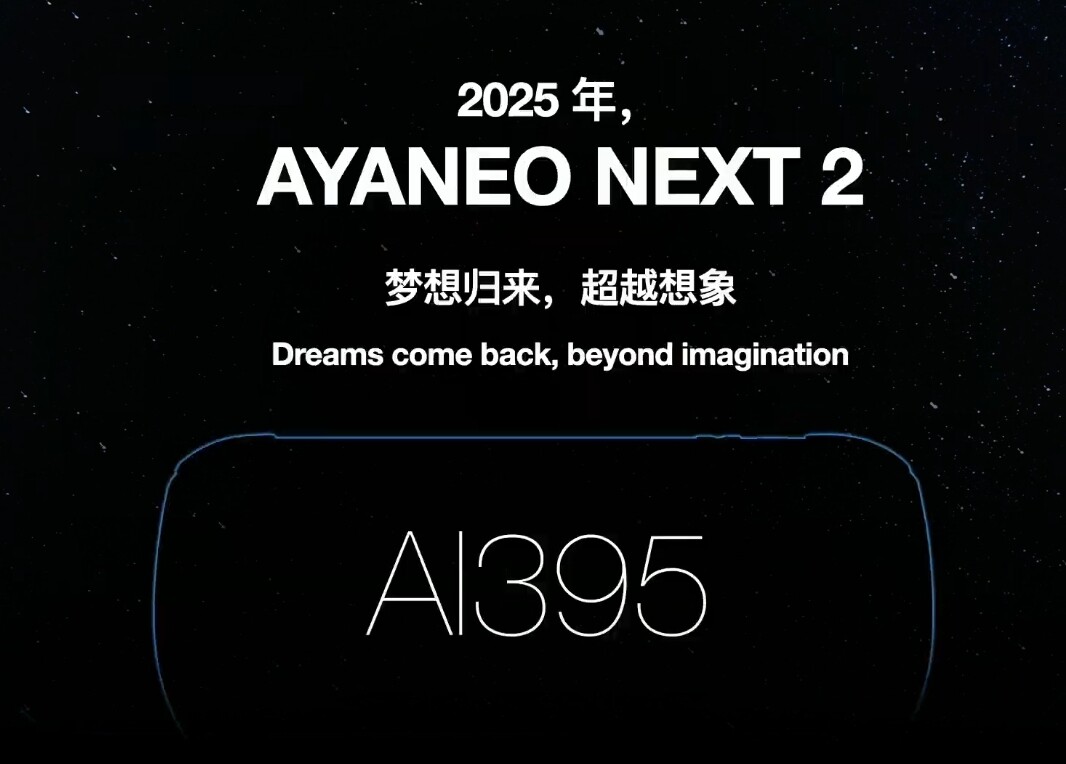
Ayaneo Nears Launch of Next 2 Handheld Featuring Ryzen AI Max+ 395 APU

Ayaneo appears to be nearing the launch of its long-awaited Next 2 Windows handheld, the true successor to the original Ayaneo Next. The company has revealed new details confirming that the device will be powered by AMD's Ryzen AI Max+ 395 APU, featuring 16 cores and 32 threads built on the Zen 5 architecture, with 64 MB of L3 cache and boost clocks of up to 5.1 GHz. The integrated Radeon 8060S GPU features 40 compute units running at up to 2.9 GHz, capable of offering discrete-class performance in a handheld form factor.

The Next 2 will also feature Ayaneo's latest custom hardware design, including a dual-fan cooling system, high-capacity battery, and at least an 8-inch display, judging from the released pictures. The controls combine a floating 8-way D-pad, Hall effect triggers, and dual intelligent touchpads, with customizable rear buttons and dynamic Chroma lighting.

MSI Teams Up With Bandai Namco for Little Nightmares III Game Handheld Bundle

MSI is partnering with Bandai Namco Entertainment to bring gamers a special offer. Starting from October 10, 2025, users who purchase MSI Claw A8, Claw 8 AI+, or Claw 7 AI+ will receive a FREE digital copy of the new Little Nightmares III on PC.

Embark on a new adventure in the unique world of Little Nightmares. In Little Nightmares III, you follow the journey of Low & Alone, as they search for a path that could lead them out of the Nowhere. Trapped within the Spiral, a cluster of disturbing places, the two friends will have to work together to survive in a dangerous world full of delusions and escape the grasp of an even greater threat lurking in the shadows. For the first time in the franchise, face your childhood fears together with a friend using online co-op, or solo with an AI companion.

Xbox Full Screen Experience Rolls Out to Third-Party Handhelds

Microsoft has announced that it is expanding its Xbox Full Screen Experience (FSE)—initially exclusive to ASUS ROG Xbox Ally and ROG Xbox Ally X—to third-party Windows handheld devices. Users with Windows 11 build 26220.7051 on the Dev or Beta channel will notice a new option under Settings > Gaming > Full Screen Experience. This feature allows the Xbox PC app to take over the screen at startup, hiding the desktop and reducing background tasks, similar to a living-room console. FSE can also be activated from the Task View or Game Bar.

The interface is designed to be minimalistic. Game tiles occupy the entire display, navigation is controlled by a game controller, and typical Windows elements are hidden to ensure that gamer's attention and resources are focused at the game. Microsoft states that this mode also pauses maintenance activities and mutes notifications to maintain consistent frame delivery, whether you're on a bus, sofa, or in front of a TV. Task View and Game Bar offer a way to return to the desktop if needed, so that your regular PC work besides gaming can be done. Interestingly, Microsoft is rolling out this feature before its next-generation console hits mass production. Microsoft is reportedly planning a hybrid approach with a console that can also run regular PC services, and FSE could be one of the elements making this happen.

OneXPlayer Officially Reveals Water-Cooled AMD Strix Halo-Powered OneXFly Apex Gaming Handheld

OneXPlayer has officially announced its latest gaming handheld, the OneXFly Apex, which puts the exciting AMD Ryzen AI Max+ 395 APU and Radeon 8060 graphics into a compact handheld form factor with some interesting cooling and power tricks. The new Windows gaming handheld from OneXPlayer is clearly aimed to combat recent announcements from the likes of GPD, replete with a detachable battery, just like GPD's Win 5. Unlike the Win 5, however, OneXPlayer also saw fit to equip the OneXFly Apex with a liquid cooling system to keep the AMD Ryzen AI Max+ 395 in check. OneXPlayer says that the powerful APU is capable of drawing as much as 120 W with this cooling solution, claiming that it is the first Windows gaming handheld to achieve this feat. The Apex will come with an 8-inch, 120 Hz IPS display with a maximum rated brightness of 500 nits and 100% coverage of the sRGB color space.

The watercooling solution is a detachable tower containing the radiator, pump, and reservior, much like the XMG Neo 17's Oasis system we reviewed prior. In handheld mode, without the water cooling tower, the OneXFly's APU is said to be capable of sustained 80 W TDP with up to 100 W supposedly also possible. This is all powered by an 85 Wh external battery in a similar piggyback configuration to GPD's Win 5 detachable battery. OneXPlayer showed off some comparative testing putting the device up against another handheld equipped with the AMD Ryzen Z2 Extreme, and the Strix Halo-powered device expectedly blew the smaller APU out of the water when it came to gaming tests. As is the case with other portable devices using the same APU, the OneXPlayer OneXFly Apex will be available with up to 128 GB of LPDDR5x-8000 memory and a 2 TB NVMe SSD (with another M.2 slot available for upgrades). While the device is clearly intended primarily as a gaming handheld, OneXPlayer is openly marketing the Apex as a do-it-all machine, especially considering the water cooling dock.

Former PlayStation Boss Calls Out Diminishing Returns on Graphical Fidelity: "They Cannot Do the Same Thing They Have Been Doing"

With talks of next-gen console hardware now afoot, both on the Xbox and Sony sides of things, conversations have started to spring up about the potential performance and fidelity improvements that will materialize with the likes of the PS6 and next-gen Xbox. Shuhei Yoshida, however, argued in a recent episode of the FPS podcast on the Skill Up YouTube channel that we are beyond the point where graphics and performance are the differentiating factor. Yoshida seems to suggest that Sony should pursue frame rates rather than graphical fidelity, "Graphics have almost hit the level that even I cannot tell the difference between some of the graphics capabilities, like ray-traced or not ray-traced, unless it's side by side, or higher frame rate," going on to say that higher graphical fidelity may have some continued niche appeal. The current-gen Sony PS5 and PS5 Pro both offer high framerate gameplay options, although those frame rate modes generally sacrifice some graphical fidelity in the process by dropping the resolution. An improvement in processing power on the PS5 may mean that these performance modes will no longer need to drop the image quality or resolution.

Current rumors suggest that the PS6 console launch could see an additional PlayStation 6 Portable handheld device launch alongside the living room console, a strategy that affirms Yoshida's position. The former Sony executive is confident that Sony's "new generation" management, which is led by 47-year-old CEO, Hideaki Nishino, is capable of pulling off the necessary innovations. Yoshida also touched on the Japanese game publishing scene during the interview, specifically mentioning that the indie publishing scene appears to be growing. The indie game industry has recently earned itself a reputation for eschewing high-resolution graphics, with a lot of indie titles garnering attention thanks to innovative game mechanics instead.

SteamOS Update 3.7.15 Brings Slew of QoL Updates For Deck and Third-Party Gaming Handhelds

Since the launch of the Steam Deck, Valve has been hard at work polishing its Arch-based Linux distro, SteamOS, for both its own gaming handheld and, more recently, third-party gaming handhelds. With the launch of the SteamOS 3.7.15 update, Valve has taken steps to correct a handful of gaming handheld issues. Most of the updates are bug fixes and quality of life updates, rather than new features, but there are also a number of security updates included that patch out known CVEs. This follows recent news about the official full release of the new Steam Store redesign and the Steam beta that adds support for detecting Secure Boot and TPM states for modern anti-cheat solutions. Overall, Valve seems to be working towards getting SteamOS in a state that is both user-friendly and stable in an attempt to attract and keep as many users on its platform as possible.

For the Steam Deck, the clock and power limits and Wi-Fi connection should more reliably return to their configured states after the device wakes from sleep, and the battery charge estimation has been improved. Wake-on-Bluetooth support has also been returned to all versions of the Steam Deck with support for BLE peripherals—which should prove handy when the handheld is docked. The built-in screen reader also now has multi-language support, and there are a number of audio improvements. For starters, the Steam Deck's volume will no longer jump to 100% when removing wired headphones, the Deck will now also automatically switch to USB audio devices when detected, and audio distortion in the built-in microphone has also been removed. Valve has also removed the Pro Audio profile from the KDE desktop mode—an anti-feature many Linux users will be aware of because it simply disables audio when you select it.

OneXPlayer Teases OneXFly Apex: 8-Inch Gaming Handheld With AMD Ryzen AI Max+ 395

OneXPlayer, famous for its super-sized gaming handhelds and the recent launch of the AMD Strix Halo-powered Super X gaming tablet, has officially confirmed that it will be putting the high-powered AMD Strix Halo APU into a compact gaming handheld with the OneXFly Apex. The Apex, officially teased by OneXPlayer, will be available with an AMD Ryzen AI Max 385 or Max+395, and exact pricing is yet to be confirmed, but a $1,000+ price point is fully expected, given its internals. No official release date has yet been announced for the OneXPlayer OneXFly Apex gaming handheld, either.

The OneXFly Apex will have a native landscape 8-inch display, so there will be no incompatibilities like there were in the early days of the Lenovo Legion Go, and that display will feature a 120 Hz refresh rate with VRR. The controller layout will be similar to that of the ASUS ROG Ally, with asymmetrical joysticks, and it will have two-stage triggers. It will also have a microSD card slot for storage expansion, but there is no word on what the internal storage size would be. OneXPlayer also mentioned what it calls the "ONE Dock silent liquid cooling system," but it has not provided any details about how the dock would work. The closest competitor to the OneXFly Apex is the GPD Win Max 5, which features a detachable 80 Wh battery.

ASUS ROG Xbox Ally Leak Tips Competitive Price and Imminent Pre-Order Date

Previous leaks pertaining to the ASUS ROG Xbox Ally purported to reveal a retail price around the $550 mark, and as the official October 16 launch date approaches, a new leak disputes that price and adds that the gaming handheld will be available for pre-order as early as September 24. Pre-order pricing on the leaked documentation indicates a pre-order price of £499.99, which would convert to roughly $605 at the time of writing. While tech pricing almost never converts that linearly, the ASUS ROG Ally retails for £549.99 in the UK and $649.99 in the US, so the conversion more or less lines up. On the other hand, Xbox console pricing converts at a 1:1 ratio, although it seems as though ASUS will handle production, pricing, and distribution, so it seems unlikely that the Xbox Ally will follow Microsoft's pricing strategy.

The Reddit user who shared the information, u/FriendlyPharma, claims to work at UK retailer Argos and has shared promotional material that claims to contain the pre-order information for the ROG Xbox Ally with the AMD Ryzen Z2A. The Z2 Extreme is notably missing from the leak. The actual marketing materials make no mention of a pre-order date, but the redditor said in the September 23 post that pre-orders would start "tomorrow," meaning September 24. That said, no official announcement has been made, so if the leak is accurate, it would mean the pre-orders will likely open at midnight, making the supposed pre-order date September 25. While the leaked pre-order pricing is still significantly higher than the Steam Deck LCD price, it's dangerously close to the price of the Steam Deck OLED, which retails for $549, with the 1 TB version costing $649.

DigiEra Unveils HoloMax - World's First Glasses-free 3D Laptop-Handheld Hybrid, Debuting at IFA 2025

DIGIERA today unveiled HoloMax, the world's first glasses-free 3D laptop-handheld hybrid, at IFA 2025. HoloMax pairs an immersive 10.95" 2.5K, 120 Hz autostereoscopic display with real-time eye-tracking and a high-performance compute platform to convert standard 2D titles into natural stereoscopic 3D with a single button—no headsets required.

HoloMax's autostereoscopic 3D pipeline with eye-tracking keeps visuals stable across viewing angles and motion, delivering instant depth for games, video, and creative previews. The device is engineered for demanding experiences while remaining portable: it combines console-class compute with flexible form factors—detachable magnetic controllers, an adjustable stand, and a magnetic snap-on keyboard to switch between handheld and desktop workflows in seconds.

New CachyOS Release Adds Quality-Of-Life Features and Enables FSR 4 for RDNA 3 GPUs

Back in the days before Valve had published the SteamOS ISO for anyone to download, CachyOS became a popular Linux distro for handheld gamers. It offered the same Arch Linux base and a similar user interface to Valve's own Linux distribution, with the added bonus of NVIDIA support and being a distro that focuses on performance. The CachyOS development team has recently released the latest version of CachyOS along with a blog post detailing the changes coming in the new version.

Aside from the usual flurry of bug fixes, stability improvements, and general package updates, the biggest update to the CachyOS August 2025 release is the addition of a web-based package curation service called packages.cachy.org, which lists all the packages in the standard CachyOS repositories. Users can use the search functions filter by repository and narrow down their search with a description and package name search field. It also shows when the package was last updated and which architectures the packages are available for. CachyOS users with AMD RDNA 3 GPUs can also now enable the use of FSR 4 with the built-in Proton-CachyOS (a forked, modified version of Valve's compatibility layer), and NVIDIA and Intel users can use the built-in DLSS and XeSS upgraders to force the latest versions of Intel and NVIDIA's super sampling tech.

2.3 Million PC Gaming Handhelds Expected to be Sold in 2025

New Omdia research reveals 2.3 million PC gaming handhelds, including the Steam Deck, will be sold globally in 2025. This will represent growth of 32% from 2024, when 1.7 million units were sold. Omdia forecasts 4.7 million PC handhelds will be sold annually by 2029.

PC vendors continue to face challenges. "Windows 11 is currently poorly suited to handheld gaming, and devices are not delivering a generational leap in performance over the market leading Steam Deck," commented James McWhirter, Senior Analyst covering games at Omdia.

MSI Claw 8: Intel Lunar Lake vs AMD Ryzen Z2 Extreme

MSI offers two versions of its Claw handheld gaming console: the Claw A8, based on the AMD Ryzen Z2 Extreme SoC, and the Claw 8 AI+, based on the Intel "Lunar Lake" CPU. In the latest gaming benchmarks, with both processors capped at the same power envelopes, the AMD-based Claw A8 delivers a slight win. In a detailed comparison, courtesy of Golden Pig Upgrade, we see the AMD-based Claw handheld competing against the Intel-based model across ten AAA titles in terms of average FPS and 1% lows at 1080p resolution, as well as at 17 W capped TDP and 30 W capped TDP for both processors.

MSI's Claw A8 handheld powered by the Ryzen Z2 Extreme pulled ahead of the Intel-based Claw 8 AI+ in many titles, with Monster Hunter Wilds seeing up to a 27% frame-rate boost, while average gains stayed under 5% in most games. At 1080p and 30 W, it ran about 5.7% faster, rising to 7.4% at 17 W, and its superior 1% lows frame rates delivered noticeably smoother gameplay under stress. Under the hood, the Z2 Extreme built on TSMC's 4 nm node packs eight cores and sixteen threads that boost up to 5.0 GHz, plus a Radeon 890M-equivalent iGPU with 16 RDNA 3.5 CUs, and offers a flexible power envelope from 17 W up to 35 W for either tuned performance or extended battery life. Intel's Lunar Lake is giving a good battle with only eight Xe2 cores, showing that the potential Lunar Lake successor can put up a strong fight with next-gen Xe3 cores.

Ayaneo Teases Pocket Vert: Portrait Handheld Game Console for Retro Emulation

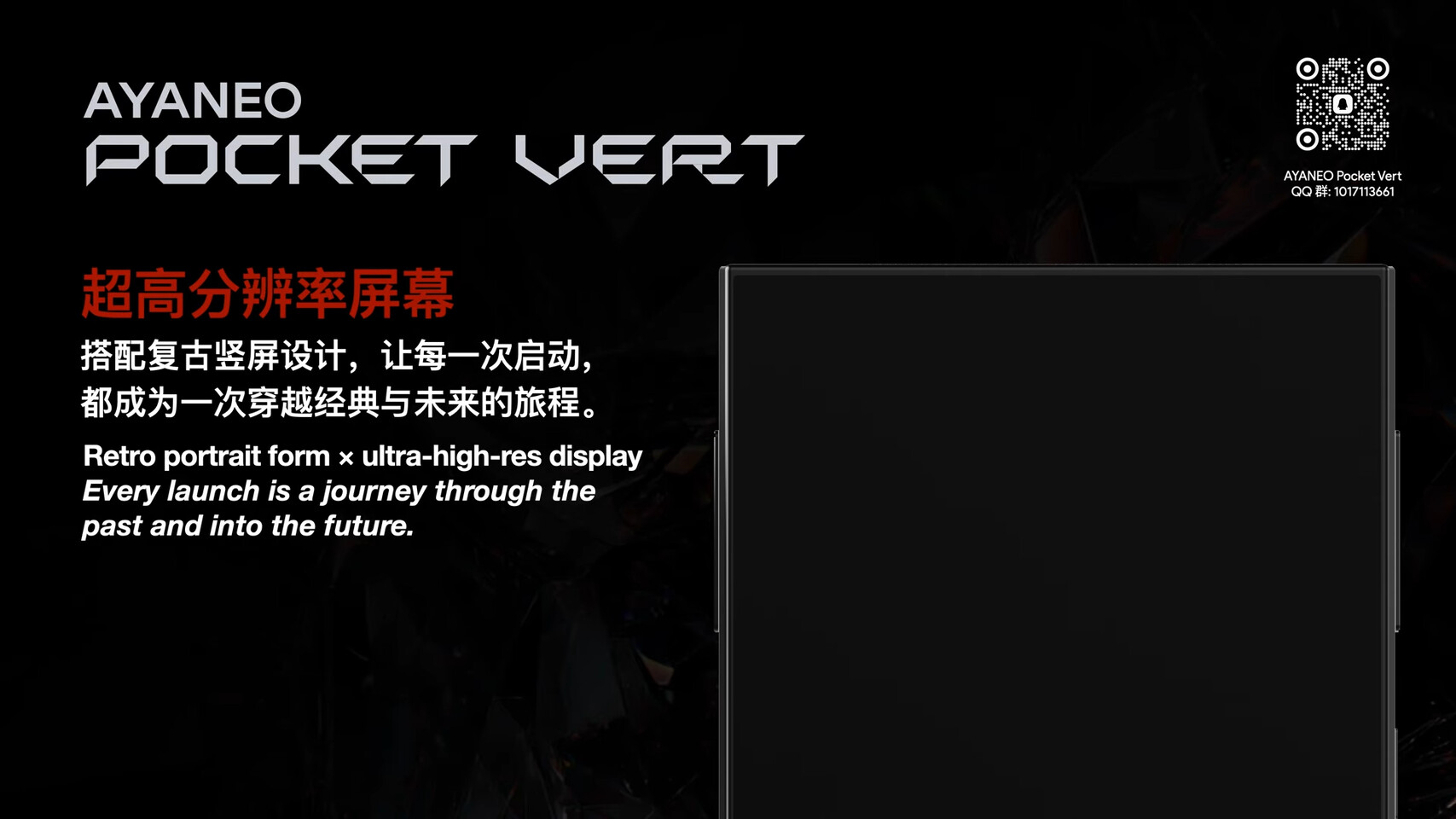
Along with the recent launch of the AMD Strix Halo-powered Ayaneo Next 2, Ayaneo also announced the Ayaneo Pocket Vert in its latest 2025-2026 Strategy Sharing Session video on YouTube. The Vert is an Android-powered gaming handheld that is apparently intended for mobile emulation of retro games. It should also be capable of playing current mobile games intended for portrait-orientation gaming, although it's unclear how much tinkering will be required to get those games to install and work properly.

Exact specifications have yet to be revealed, but Ayaneo says that it will feature an "ultra-HD" display, suggesting that it might have a 4K resolution. The exact display size and aspect ratio are also unknown, although something like 1:1 or 2:3 seem likely, given the handheld's "retro" intentions. During the presentation, Ayaneo teased the form factor of the Vert in the bottom portion of an image—the third image embedded below. What appears to be a Vert laying on its side looks to be split in half, with the top (or left in the image) half being dedicated to display duties, while the bottom (right) will be a thicker control portion with an angular design. Materials are, again, unclear, but Ayaneo says that it will use "premium" materials, suggesting that there may be an aluminium frame. It doesn't look like the new device will feature any of the flip-out or slide-out functions of the Ayaneo Pocket DS or Ayaneo Slide.

KONKR Pocket FIT Android Handheld Officially Unveiled

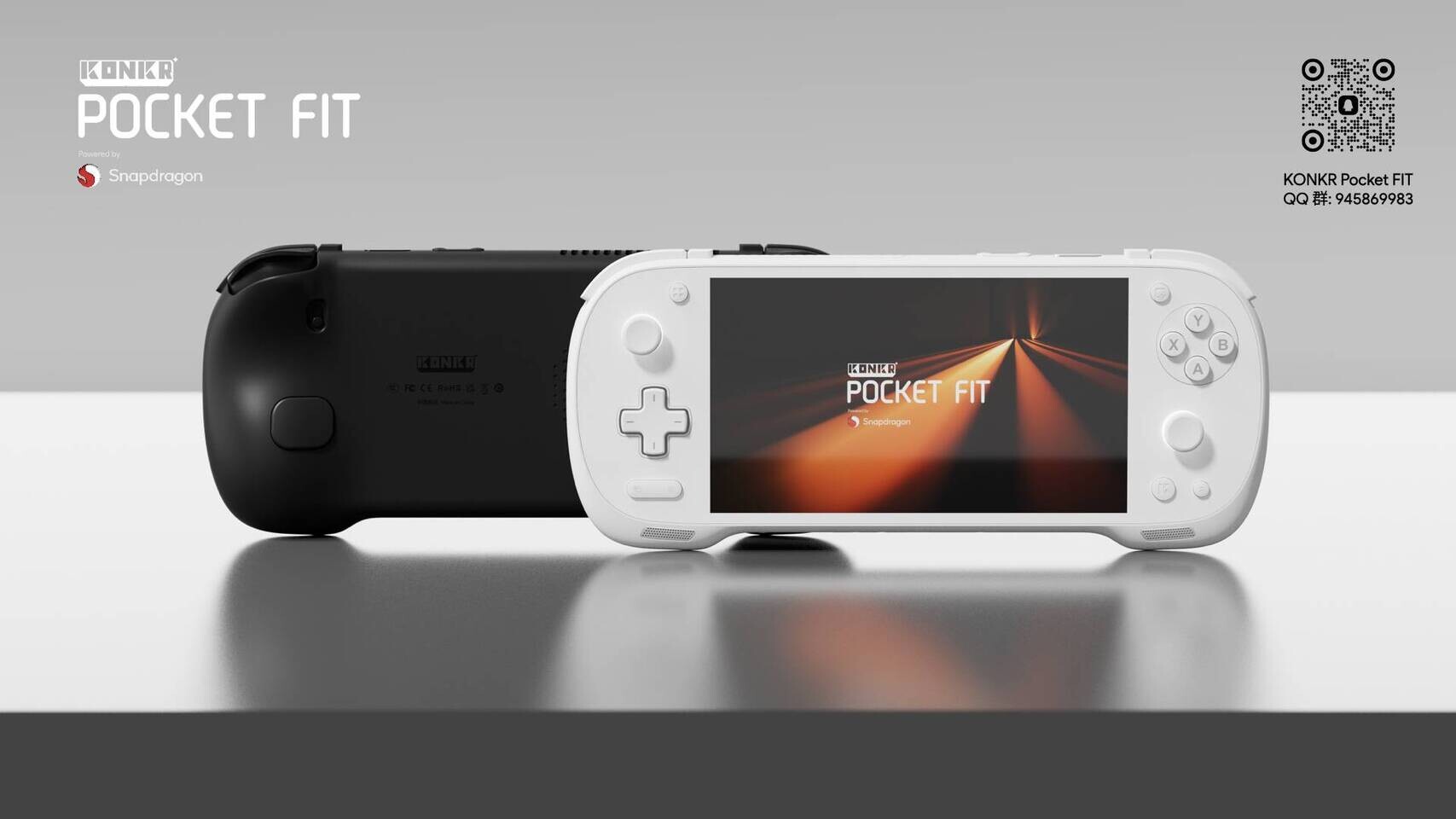
On the evening of July 30, 2025, AYANEO hosted a live online event to unveil the first product under its brand-new sub-brand KONKR—the KONKR Pocket FIT. This strategic new Android handheld has been in development for over a year and now makes its official debut to global players, not only marking the official launch of KONKR but also showcasing AYANEO's relentless innovation and exploration in the handheld gaming space. With its exceptional price-to-performance ratio, the KONKR Pocket FIT is boldly positioned as the Android handheld king—built for every gamer.

Extreme Value, Born for Every Gamer
The creation of KONKR is AYANEO's answer to a growing demand for both high performance and high value. With flagship hardware and a premium user experience, KONKR redefines what players can expect from a cost-effective handheld. The KONKR Pocket FIT is the first creation of this new vision—a true handheld marvel.

PlayStation 6 Leak Reveals Orion and Canis APUs for Home Console and Handheld System

PlayStation 6 development has taken an interesting turn as recent leaks suggest that Sony plans to use two platforms for its next-gen gaming system. Recent information from Moore's Law is Dead, as Notebookcheck reports, shows that the company is working on two different AMD-powered APUs. They've even given them star-themed codenames: Orion and Canis. The Orion APU will be the heart of Sony's main PlayStation 6 console. Canis, on the other hand, is something new: a handheld gaming device. It's not just a PS5 offshoot, but a key part of the upcoming PS6 lineup. This handheld system is expected to be able to play games from three console generations. It supports PS4, PS5, and PS6 titles, with options to play at 1080p or 720p. The recent introduction of power-saving functionality on PlayStation 5, which dynamically adjusts performance to reduce energy consumption, appears to validate earlier predictions about Sony's handheld ambitions.

Sony's vision goes beyond just making different hardware. The shared CPU and GPU design in both APUs can make development easier, which might cut costs and make things simpler for game makers. The handheld version could work as a portable gaming device and a smaller home console option, giving Sony a way to attract budget-minded buyers and current PS4 users. Last but not least, Sony's shift from Shakespearean codenames used during PS5 development to astronomical nomenclature signals a new chapter in PlayStation evolution, with additional specifications and pricing details expected in upcoming months.

Ayaneo Reveals Next 2: AMD Strix Halo Gaming Handheld Slated for 2025 Launch

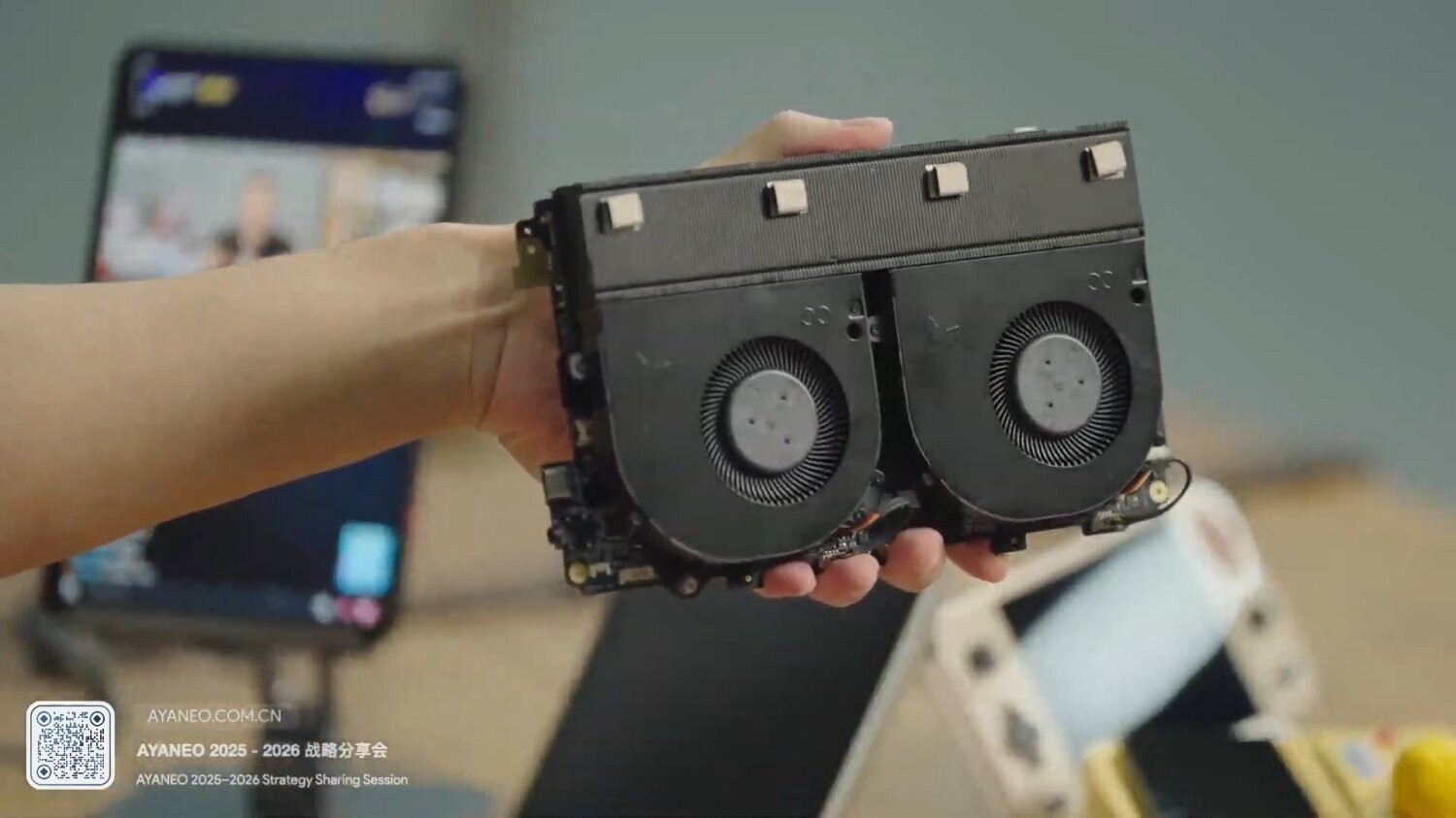
Just a few days ago, we got our first taste of what's to come with AMD's Strix Halo Ryzen AI Max+ 395 APU coming to the GPD Win 5, but now Ayaneo has confirmed on YouTube that it will be joining the Strix Halo-powered handheld battle, with the Ayaneo Next 2—only the second confirmed gaming handheld to feature the powerful AMD APU. The new Windows gaming handheld will be the company's next true flagship system, and is technically the successor to the Ayaneo Next, powered by the AMD Ryzen 7 5820U—although Ayaneo does have more powerful handhelds that feature the AMD Ryzen 7 8840U. No official launch date has been announced, but Ayaneo claims that the Next 2 will launch sometime in 2025. Unlike the aforementioned GPD Win 5, the Ayaneo Next 2 will have a built-in battery, which might be slightly more limiting than GPD's backpack design, and it will also feature a dual-fan cooling system—both of which make the prototype assembly shown off in the stream look exceptionally chunky.

The specs for the Ayaneo Next 2 are few and far between, but what Ayaneo has shown off looks like at least an 8-inch display, a "high-capacity battery," and back-mounted paddles similar to those found on the Steam Deck and the Lenovo Legion Go. It's unclear just what the Ayaneo Next 2 will look like, since most of the images shared by the company are labelled as renders of an early design, but the likelihood is strong that it will need a sizeable battery pack for the 16-core APU and Radoen 8060S iGPU. There's also no word on whether there will be a version of the Next 2 with the Ryzen AI Max 385. Ayaneo also teased the potential for a mini PC based on the same motherboard as the upcoming Next 2, which would compete with the likes of Aoostar and the recently announced Mini-ITX motherboards that we covered.

AMD Strix Halo Makes Handheld Debut in GPD Win 5 Teaser, Boasts Impressive FPS

AMD's Strix Halo APU has finally shown up in a gaming handheld, with the GPD Win 5 today appearing in a teaser by GPD and further specifications being revealed by The Phawx on YouTube shortly thereafter. The GPD Win 5 shown off by the Chinese handheld manufacturer featured the AMD Ryzen AI Max+ 395 with the fully fledged AMD Radeon 8060S running at a CPU power of 55-60 W. With those power figures, the GPD Win 5 is able to run Black Myth Wukong at 160+ FPS for the most part. Of course, there is no way to know what sort of settings the game was running at or what the CPU or iGPU loads were, but the temperatures also seemed to be relatively healthy, with the CPU temperature fluctuating between the mid- and high 60° range throughout the video. The iGPU also showed off some healthy clock speeds, at around 2300-2500 MHz.

According to the follow-up video by The Phawx, the specifications of the GPD Win 5 include a 7-inch, 1080p, 120 Hz display with AMD FreeSync Premium support, ten-point touch support, and 100% sRGB coverage. The display is also covered by Corning Gorilla Glass 6, which should protect it against scratches and minor drops. The gaming handheld will come with either the AMD Ryzen AI Max+ 395 or the slightly less powerful AMD Ryzen AI Max 385. The former is the full-fat 16-core, 32-thread APU with the Radeon 8060S iGPU, while the latter offers just 8 cores and 16 threads and ships with the slower, less power hungry Radeon 8050S iGPU. Both APUs, however, will have a TDP of 45-75 W. Both configurations offer 32, 64, or 128 GB of LPDDR5x-8000 RAM in quad-channel configuration and 1, 2, or 4 TB of PCIe Gen 4 M.2 storage. If the Win 5 follows the same formula as the Win 4, it will feature a slide-up display that hides a basic keyboard, solving one of the more annoying quirks of using these Windows-powered gaming handhelds—the on-screen keyboard.

Borderlands 4 To Target Just 30 FPS on Nintendo Switch 2 'With Some Dips'

Following the official announcement of the Borderlands 4 release date for the Nintendo Switch 2, Gearbox Entertainment CEO, Randy Pitchford, has officially addressed questions about the Switch 2 version of the upcoming looter-shooter. One of the biggest questions fans have had about the Switch release of the game is the target frame rate, and, according to Pitchford at least, the answer to that question is 30 FPS. Pitchford explained in a post on X that "It was important to us to not cut anything and to support cross play with other platforms. So, no. It'll be mostly around 30 FPS, with some dips in some intense moments heavy combats or if hosting a multiplayer game in handheld mode, etc." This suggests that 30 FPS will be the frame rate target, not necessarily even the expected average frame rate, so it's unlikely that Borderlands 4 will ever take advantage of the Switch 2's screen refresh rate upgrade. In another comment on X, Pitchford also confirmed that even physical copies of Borderlands 4 will require a download, although it's unclear if physical copies will just be a key or if some of the game will be on the game card.

Some gamers have responded to the announcement as an example of poor optimization, pointing to games like Metroid Prime 4, which will supposedly run at up to 120 FPS on the Switch 2 at 1080p while docked and at 120 FPS 720p in handheld mode, despite the limited technical capabilities of the hardware. Others question the lack of a performance mode to lock the game to something like 40 or 60 FPS. Previously, a Nintendo Creator's Voice video on YouTube saw Pitchford and other Gearbox executives talk about how Borderlands 4 was being designed to run on the Switch 2 instead of being ported after the fact, leading to the assumption that the Switch 2 version of Borderlands 4 would be more optimized than it now appears to be. Pitchford also declined to mention what the target resolution is for Borderlands 4 on the Switch 2, so there are still a few unanswered questions and potential for additional settings presets to enable higher frame rates.
Return to Keyword Browsing
Nov 28th, 2026 14:37 CST change timezone

New Forum Posts

Popular Reviews

TPU on YouTube

Controversial News Posts