News Posts matching #Handheld

Return to Keyword Browsing

This Working Handheld Radio Only Picks Up Transmissions From Your Favorite Video Games

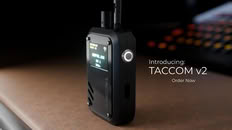
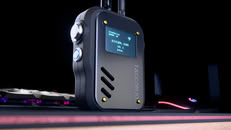
BlueUplink has begun shipping the TACCOM v2, a handheld, out-of-game VoIP radio whose frequencies exist only inside multiplayer games. The TACCOM v2 is built for flight sims, space sims, and milsim titles. Operators tune to a variety of pre-defined frequencies, and press a button to transmit; all transmissions regardless of how many players on a frequency are received in an orderly fashion. The first customer radios are shipping now. The radio comes in two editions, Wired at $99 and Wireless at $199.

Voice chat in large multiplayer groups is chaotic. Open lobbies dissolve into crosstalk, and larger, organized groups need a way to communicate with other allied groups. The TACCOM VoIP radio borrows the fix pilots have used for a century: frequencies. Every supported game gets a band of public channels that any player can simply tune into and immediately hear who is around, no invite required.

Modder Turns Steam Deck into Modern Game Boy

The modern gaming handheld boom has given rise to everything from the Steam Deck to quirky little Android-powered emulation machines that are more limited, but more affordable and portable. However, one modder, who goes by u/PhyFawkes on Reddit, has done some serious modding to turn his Steam Deck LCD into a compact gaming handheld that aims to be the best of both worlds.

The SteamBoy, as it is called by the modder, uses the original Steam Deck LCD motherboard, daughter boards, controller boards, and original battery stacked together very carefully in a vertical sandwich. The resulting SteamBoy features stock ABXY face buttons as well as a single trackpad and thumb stick. The new form factor also requires a new display, which turned out to be one of the biggest challenges, as the modder opted for a 1200×1080p AMOLED panel originally designed for VR headsets, which is still a work in progress.

Konkr Pocket Advance Retro Handheld Officially Unveiled

On July 31, AYANEO CEO Arthur brought an exciting live-streaming sharing session to players, where the real machine of KONKR's brand-new retro handheld masterpiece, the KONKR Pocket Advance, was officially unveiled. As a sub-brand of AYANEO dedicated to creating high-value handheld gaming products, KONKR has always been committed to allowing more players to enjoy the fun of handheld gaming in a more relaxed and purer way. As the latest product, the KONKR Pocket Advance rekindles the spark of the golden age of handheld consoles, serving as a perfect response to the expectations and passions of nostalgic players.

KONKR Pocket Advance, with the core concept of "Totem in Your Palm, Full Awakening," pays tribute to the most iconic horizontal handheld consoles of the golden age by REMAKE the classics, allowing the classic totems that once carried the youthful memories of countless players to return in a new form in the new era. For many players, those timeless classic handheld consoles have never been just gaming devices. The familiar silhouettes, unique button layouts, and exceptional control experiences together form the most precious memories of the golden age of gaming for a generation of players. Even after all these years, these classics still hold an irreplaceable charm.

Steam Deck LCD Battery Spares Return to iFixit With Steep Price Hike

We previously reported that iFixit may have been discontinuing Steam Deck LCD battery replacement parts, after which iFixit CEO, Kyle Wiens, issued a formal response indicating that the replacement batteries would be back in stock soon. This has since come to pass, and the Steam Deck LCD batteries are once again available at iFixit, however, the spare parts have received a significant price increase.

Before the restock, the original OEM Steam Deck LCD battery kit cost $84.99, while the battery alone cost $79.99. After the restock, the OEM battery kit with iFixit's tools included costs $134.99, and the battery alone costs $129.99. That's a $50 price increase across the board on a part for a four-year-old device. What's more, the OEM battery for the Steam Deck OLED still carries the same $79.99/$84.99 pricing as the original, Steam Deck LCD battery. It's currently unclear if the OLED model's battery will also see a price increase.
Original Steam Deck LCD battery pricing

Intel Arc G3-Powered OneXPlayer 3 Handheld Hits Retail at $1,699.99 MSRP

OneXPlayer recently announced early bird launch pricing for the Intel Arc G3 Extreme-powered OneXPlayer 3, with the variant featuring 24 GB of memory and 512 GB of storage coming in at $1,400. Now, however, the OEM has officially announced the retail MSRP of the OneXPlayer 3, and that same base model now starts at $1,699, although a launch discount brings that down to $1,499. Stepping up to 1 TB of storage increases that price to $1,599 (marked down from $1,899), and upgrading to 32 GB of RAM and 1 TB of storage brings the price up to $1,799 (marked down from $2,099).

It's unclear if the present discounts are actually temporary, since it is common practice amongst many smaller OEMs to advertise the effective MSRP as a discounted price. The new discounted prices are lower than the suggested MSRPs were during the Indiegogo crowdfunding campaign. The OneXPlayer 3 is only available with an Intel Arc G3 Extreme, unlike the Acer Predator Atlas 8, which looks to be launching at around $1,200 for a base model with an Intel Arc G3 CPU.

Microsoft Adds Original Xbox Games to PC via New Backward Compatibility Program

Microsoft has launched Xbox Backward Compatibility on PC, starting with four original Xbox titles: BLiNX: The Time Sweeper, Conker: Live and Reloaded, Crimson Skies: High Road to Revenge, and Fuzion Frenzy. All four games are available through the Xbox app on PC and included with every Xbox Game Pass tier. Digital console license holders can also access them via Xbox Play Anywhere. The feature requires Windows 11 and works on PC and supported handhelds including the ROG Xbox Ally and Xbox Ally X. Hardware requirements are modest, all you need is an NVIDIA GTX 950, AMD Radeon RX 550, or Intel UHD 770 / Arc A310 on the GPU side, a quad-core CPU, and 8 GB of RAM.

The company added several PC-specific enhancements like 4x resolution upscaling, V-Sync, fullscreen and windowed modes, anisotropic filtering, improved antialiasing, and adjustable language and audio settings. According to the official blog post published today by Jason Ronald, VP of Next Generation, Xbox, more backward-compatible titles are planned for later, however, no timing or hints about future titles have been made.

OneXPlayer X2 Mini Pro Now Available: AMD Ryzen AI Max+ 388 Handheld for $2,499

OneXPlayer announced the Ryzen AI Max+ 388-powered X2 Mini Pro in April 2026 shortly before the device launched on Indiegogo. Now, following the Indiegogo launch, the X2 Mini Pro has officially launched as an in-stock product on the OneXPlayer store. Some of the starting prices are currently discounted to celebrate the official launch, but it's unclear how long those discounts will last or if they will be temporary at all, since a lot of OneXPlayer products seem to effectively be perpetually discounted.

The OneXPlayer X2 Mini Pro is a 3-in-1 gaming handheld equipped with AMD's Ryzen AI Max+ 388 APU and the powerful Radeon 8060S iGPU, up to 64 GB of RAM, and an 8.8-inch, 144 Hz OLED display. There are three spec variants available on the OneXPlayer online store, starting at $2,499—discounted from $2,699—for the Standard version with 48 GB of memory and 1 TB of storage. All versions of the X2 Mini Pro come with a free controller connector for the detachable controllers, a magnetic keyboard for the laptop mode, and a protective bag. There is also an optional liquid cooling module, which adds $80 to the purchase price of all versions of the X2 Mini Pro.

Assassin's Creed Black Flag Resynced Gets Steam Deck Verified Ahead of Launch

As was the case with Assassin's Creed Shadows, Ubisoft has just announced that Assassin's Creed Black Flag Resynced has been Steam Deck Verified ahead of its July 9 launch, and that it will also support Steam Achievements on day one, again following the recent trend of doing the same with older Assassin's Creed games. In the announcement of day-one Steam Deck support, Ubisoft claims that Black Flag Resynced has been optimized for and looks great on the Steam Deck, despite its low-powered APU. Of course, given the relaxed Steam Machine Verified requirements, this means Black Flag Resynced will also work on the new mini PC, too.

Ubisoft also claims that the Black Flag Resynced will "look and run great on the Steam Deck," and that "developers have worked hard on features like ray tracing across all platforms, dynamic weather that looks and feels fantastic, and a Caribbean remade from the ground up." Assassin's Creed Shadows, for its part, mostly runs at 30 FPS on the Steam Deck with a built-in graphics preset, which locks down a number of graphics options, and upscaling tech is doing a lot of heavy lifting to keep the game running smoothly. Given that Assassin's Creed Black Flag Resynced is being built on the modern Ubisoft Anvil engine with support for many of the same visual settings and graphical fidelity options as Shadows, we can likely expect similar performance. More good news is that more powerful gaming handhelds, like the new Intel Arc G3-powered versions or the ASUS ROG Xbox Ally X (read TechPowerUp's review here) will run Assassin's Creed Black Flag Resynced even more smoothly.

PlayStation Renews Live Service Games Push and PS6 Handheld Hype

When news broke about PlayStation's return to console exclusives, it was accompanied by a caveat that live service multiplayer games would continue to launch on multiple platforms, with Sony's Hedeaki Nishino stating that games would release on platforms that would enhance the gameplay experience. The executive has since conducted another interview with Famitsu, in which he both doubles down on this commitment and expands on Sony's plans for live service games. Despite the recent Destiny 2 debacle—which has resulted in layoffs of around 300 employees at Bungie—and lukewarm Marathon launch, Nishino says he believes that live service games attract users on a global level, and Sony will "continue to revitalize the market through first-party and third-party content." He continued, saying that PlayStation is looking to experiment within the live-service genre in the medium to long-term, and that the genre is still new and growing.

Nishino also spoke on the future of the gaming console, saying that Sony still sees a future in the console as a gaming format, and that you will continue to need a console to play some games. However, he mentioned that console hardware would need to adapt to the gamer's lifestyle, teasing that Sony is moving out of the living room, with future speakers and monitors planned for other use cases. He then went on to mention the PlayStation Portal as one of the ways Sony has attempted to address the changing lifestyle demands of a gamer, and said that he would like to continue to push that frontier to better match diversifying lifestyles. We've known for a while that Sony has been planning to launch a standalone PS6 Portable, with recent rumors claiming that the gaming handheld would launch with as much as 24 GB of GDDR7 VRAM as shared system and graphics memory.

Ayaneo Launches Pocket Micro 2 Horizontal Retro Handheld on Friday, June 26

Retro handhelds have always held a special place in the hearts of gaming enthusiasts—an enduring symbol of nostalgia and passion. As the retro gaming wave continues to grow, Ayaneo once again brings classic design and modern evolution into a new balance. The next-generation Ayaneo Pocket Micro 2 is officially on its way. Built upon the Ayaneo REMAKE design philosophy, it preserves the spirit of the classic horizontal retro handheld while delivering a comprehensive redesign and upgrade across aesthetics, performance, and control experience. For players who continue to cherish the pixel era and the golden age of handheld gaming, this is more than a new device—it's a revival of memories once thought distant.

Ayaneo Pocket Micro 2 continues Ayaneo's signature minimalist design language, reinterpreting the fusion of classic proportions and modern premium craftsmanship within a compact body. The CNC all-metal frame, combined with layered contours and rounded transitions, creates a fuller and more ergonomic grip while maintaining a lightweight and refined form factor. We've also introduced creative new color options to extend the retro identity—transforming nostalgia from something remembered into something newly expressed.

OneXPlayer 3 Gaming Handheld Emerges With Intel Arc G3 Extreme, $1,400 Starting Price

Following the launch of the Intel Arc G3 series CPUs designed for next-gen gaming handhelds, OneXPlayer has officially revealed its first handheld gaming PC based on the new Arc G3 CPU. OneXPlayer has pitched the OneXPlayer 3 as a 3-in-1 productivity and gaming handheld, bundling the new handheld with a magnetic keyboard and detachable controllers, and allowing it to work as both a mini laptop, a standalone tablet, or a gaming tablet, like the Lenovo Legion Go. The OneXPlayer 3 and many of its core specs have been unveiled on Indiegogo. The OneXPlayer 3 will feature a built-in 85 Wh battery, an 8.8-inch, 144 Hz native landscape display with VRR and HDR support, and Hall-effect joysticks. The OneXPlayer 3 will also have a built-in kickstand and come with a controller connector with what seems to be a built-in trackpad for gaming when seated. Exact specs for the ports are also elusive, but the images on Indiegogo indicate that the OneXPlayer 3 will feature two USB Type-C ports and a single USB Type-A port along the top edge alongside a 3.5 mm audio jack.

Update Jun 23rd: OneXPlayer has officially revealed pricing for the OneXPlayer 3 gaming handheld. There will be two SKUs at launch, both with the Intel Arc G3 Extreme CPU and different RAM and storage configurations. At the time of writing, the 32 GB RAM and 1 TB storage variant costs HK$13,320 ($1,698.98) with an MSRP of HK$15,672 ($1,9998.99), while the version with 24 GB of RAM and a 1 TB SSD costs HK$11,752 ($1,498.98) with a HK$14,104 ($1,798.99) MSRP, and the handheld with 24 GB of RAM and a 512 GB SSD comes in at HK$10,968 ($1,398.98) with a HK$13,320 ($1,698.98) MSRP. All three versions will include a hard-shell carry case, a soft screen protector, and a OneXPlayer backpack with early bird orders. It should also be noted that the 32 GB RAM version has faster LPDDR5X-8533 memory, while the 24 GB version comes with LPDDR5X-7467 memory.

MSI's $1,800 Gaming Handheld Will Likely Get More Expensive

An MSI online store listing recently revealed the pricing on the new Intel Arc G3 Extreme-powered Claw 8 EX AI+, which will apparently retail at a whopping $1,799.99, but, in a recent interview with FRVR, MSI product marketing lead, Andy Chu, explained that things are likely to get worse as the ongoing AI-driven DRAM and component shortage worsens. Chu, who said that even he, as an insider, is "unsure of where the market will go," also says that "there's much room for another price hike, at least from my own observation."

According to the executive, handheld sales are stable, and MSI is "confident with the new handheld, not just the new platform," referring to Intel's new handheld-specific G3 CPUs. He also championed the idea of releasing handhelds with expanded capabilities, stating that "it's good timing to take a look at what kind of true potential or the capability of this new handheld can provide us." His argument appears to be that, since handheld prices are high, it stands to reason that they should be more performant and more capable—to his credit, this is a topic that has been discussed online in social media posts and YouTube videos asking whether something like a Lenovo Legion Go or Steam Deck can be used as a desktop PC with an external monitor and a dock, for example.

SteamOS 3.8 Stable Release: Wider Handheld Support and Improvements for DIY Steam Machines

Despite the Valve Steam Machine being right around the corner, there has been a lot of interest from gamers who want to run SteamOS on custom gaming desktops or DIY Steam Machine console builds, while others may be looking to extract as much of the Steam Deck experience out of something like a used Lenovo Legion Go after the recent Steam Deck price increases. Fortunately, the latest SteamOS release, version 3.8, has officially landed in the stable release channel with a host of compatibility, performance, and usability upgrades. First and foremost, SteamOS 3.8 brings initial support for the upcoming Steam Machine and improvements to the desktop mode for those who want to use the Steam Machine as a PC-console hybrid. This is aside from a host of bug fixes for both the OS and certain game bugs and general improvements to the overall level of polish of the OS.

SteamOS 3.8 updates both the Arch Linux base and the KDE Plasma desktop mode to KDE 6.4.3 and switches to the Wayland display protocol by default. The update also improves VRR frame pacing and adds support for HDMI Variable Refresh Rate thanks to AMD's recent efforts to bring HDMI 2.1 support to Linux. The OS now also supports the LAVD CPU scheduler if manually enabled via the command "steamosctl set-cpu-scheduler lavd". SteamOS 3.8 also updates the graphics driver and fixes performance discrepancies between game mode and desktop mode, specifically addressing performance regressions in desktop mode. It also re-enables Bluetooth wake from sleep on Steam Deck LCD models. There are also improvements to game capture in game mode, as well as support for HDR, VRR, and per-display scale factor on external displays in desktop mode. Critically for desktop builds, SteamOS 3.8 also significantly improves video memory management on systems with discrete GPUs and support for recent Intel and AMD platforms.

MSI Showcases Its Claw 8 EX AI+ Gaming Handheld Powered by Latest Intel Arc G3 Series Processors

MSI showcased at Computex 2026 its latest version of Claw 8 EX AI+ gaming handheld. The device is built around Intel's new Arc G3 Extreme processors that are designed exactly for gaming handhelds. The Arc G3 series is based on Intel Panther Lake architecture combining CPU and GPU in a power-efficient package. The Arc G3 Extreme processor features a 2P+8E+4LPE core configuration using Intel's latest Coyote Cove performance cores and Darkmont efficiency cores. Graphics are handled by a Xe3 "Celestial" iGPU with 12 Xe cores, while CPU boost frequencies reach up to 4.7 GHz. The MSI Claw 8 EX AI+ gaming handheld looks and specifications confirm recent rumors and leaks, which we previously reported on.

The Claw 8 EX AI+ pairs the new Intel processor with a 9-inch IPS-level touchscreen display offering a 1920×1200 resolution, 48-120 Hz variable refresh rate support, 100% sRGB coverage, and up to 500 nits of brightness. MSI has also equipped the handheld with Hall-effect joysticks and triggers, a redesigned vibration motor for more detailed haptic feedback, and an 80 Wh battery. Cooling is handled by the Cooler Boost HyperFlow system featuring dual fans, dual heat pipes and an intraflow thermal design. Connectivity includes two Thunderbolt 4 ports supporting up to 40 Gbps transfer speeds. The handheld also comes with up to 32 GB of onboard LPDDR5X memory and a single M.2 PCIe 4.0 NVMe SSD slot. Additional features include dual 2 W speakers with TD Audio processing and Hi-Res Audio support, Wi-Fi 7 and Bluetooth 6 connectivity, a microSD card reader, and a 3.5 mm audio jack. The device weighs 785 g.

Leak Tips Potential New ASUS ROG Xbox Ally Gaming Handheld

It was previously revealed that ASUS may be launching an update to the ASUS ROG Ally gaming handheld at Computex 2026, but not much was known about the new handheld at the time. Now, thanks to licensing documentation from the Korean National Radio Research Agency, shared by Huang514613 on X, a little more information has been revealed about what was previously referred to as the ASUS ROG Ally 2, and it looks like ASUS will apply some of the lessons it learned from the ROG Xbox Ally and ROG Ally X to the new model. The new model carries the model number RC74XA, which suggests that it will be another 7-inch display, but it's also notable that the closest model number in ASUS's current line-up is the ASUS ROG Xbox Ally X, which carries the model number RC73XA-NH011W, so it's possible that this will just be another version of the ROG Xbox Ally series. The original ROG Ally goes by RC71L-ALLY.Z1X, and the ROG Ally X is the RC72LA-ALLYX.Z1X. This also raises questions about the future of ASUS's non-Xbox gaming handhelds.

According to Huang, the new ROG Ally handheld will still use the AMD Ryzen Z2 Extreme, and it's unclear if ASUS will be hopping onto the new Intel Arc G3 bandwagon. Details in the certification documentation indicate that the new handheld will be available with several storage configurations, with SSDs from a variety of suppliers, from 512 GB Micron and Sandisk SSDs to 1 TB variants from Sandisk, Micron, Samsung, and Kioxia, and 2 TB Micron SSD. The most notable thing about the SSDs is that ASUS will once again be using the M.2 2280 standard, like the ROG Ally X and Xbox Ally models, so SSD upgrades should be easier to find in large capacities. There is also speculation that the new spec refresh will feature an OLED display, but there have not yet been any credible leaks to suggest that this will be the case. An official launch date and pricing have not yet been leaked or officially revealed, but it seems reasonable to assume that whatever new handheld ASUS has planned will make its debut at Computex.

SteamOS Update Adds Support for Slew of Gaming Handhelds and VRR on HDMI

Valve's SteamOS 3.8.6 Beta update has officially been announced, and although it brings the usual list of bug fixes and stability updates, the new update also adds support for a host of new hardware and some software features. For one, it looks as though AMD's work to get HDMI 2.1 functional on Linux is progressing, with SteamOS 3.8.6 bringing support for VRR over HDMI on devices with native HDMI output. The HDMI VRR support is noted as preliminary, so it may still be an imperfect experience, but it seems as though the work is coming along. VRR frame pacing has also been improved, and TCL TVs will now more reliably connect to the handheld via the Steam Deck Dock.

SteamOS 3.8.6 also adds controller support for several new gaming handhelds—specifically, the MSI Claw A1M, 7 AI+ A2VM, 8 AI+ A2VM, A8 BZ2EM, and the OneXPlayer Apex and X1 series—and it improves support for controllers using AccelGyro3D devices, with specific mention of the original Lenovo Legion Go and MSI Claw A1M. The graphics driver has also been updated with improved stability, and the update added graphics features necessary for some games, including Crimson Desert. The update also improves audio over HDMI, and there are several audio bug fixes and stability improvements. Last, but not least, SteamOS will also yet again allow Bluetooth Wake for the Steam Deck LCD, and it enables wake from sleep for connected Steam Controllers.

More Leaks Reveal MSI Claw 8 Gaming Handheld With Arc G3 Update

Intel recently announced the new Arc G3 and G3 Extreme CPUs designed for the gaming handheld market, with both Acer and OneXPlayer announcing new gaming handhelds based on the updated Panther Lake CPUs. Intel has confirmed the existence of a new "MSI Claw 8 EX AI+" handheld with the new Arc G3 Extreme CPU. Previous retail leaks of the Claw 8 EX AI+ hinted at pricing in the region of €1,500 in Europe, although we likely won't know actual retail or US pricing until the official launch. Those prior leaks also tipped an 8-inch, 500-nit, 120 Hz, 1080p display, 32 GB of RAM, and an 80 Wh battery.

Following the announcement, alleged leaked images of the gaming handheld appeared on Reddit, showing off a refreshed design language. The supposed image leak reveals a design more akin to the current ASUS ROG Xbox Ally, with the lower portion of the grips separated from the screen, with the display slightly jutting out from the rest of the body along the bottom edge—likely a design choice to achieve more ergonomic grips without losing a large display. The images only reveal the front of the device, which has a usual Xbox controller layout and two sizeable front-facing speaker grilles, so it's unclear where the ports will be, but based on the small glimpse of the bottom edge of the device, it seems as though all of the I/O will be on the top edge of the handheld. VideoCardz also shared an image of the device that it obtained from its own sources, which appears to corroborate the top I/O position.

Intel Arc G3 CPU Family Officially Released for Handheld Gaming PCs

Following a series of leaks about an upcoming Intel Panther Lake CPU for gaming handhelds, the hardware giant has officially announced the Intel Arc G3 CPU series, which features the powerful Arc B390 iGPU and optimizations for the Windows Xbox mode that started rolling out to gaming handhelds and Windows PCs alike not too long ago. Both new CPUs are based on the same 14-core CPU design—with 2 P-Cores, 8 E-Cores, and 4 LP E-Cores—but the Arc G3 CPU has a 100 MHz lower max Turbo frequency and a less powerful Arc B370 iGPU. The Arc G3 Extreme and the Arc G3 have already been confirmed as coming to the new Acer Predator Atlas 8 gaming handheld, slated to launch in October 2026.

The Arc G3 Extreme tops out at 4.7 GHz, while the Arc G3 is capable of 4.6 GHz max Turbo frequency. The base frequencies on both CPUs are the same 1.9 GHz on the P-Cores and 1.5 GHz on the E-Cores and LP E-Cores. The Arc B370 iGPU is built on the same Xe3 architecture as the B390, but it features 10 Xe cores instead of the 12 in the B390 iGPU. The cores in the Arc B370 iGPU are clocked at 2.2 GHz, and Intel claims the cut-back iGPU is capable of 90 TOPs of Int8 performance, compared to 113 TOPs on the G3 Extreme. In TechPowerUp's prior testing of the Arc B390, the iGPU was significantly faster than the AMD Radeon 890M that has become ubiquitous in so many gaming handhelds, suggesting that the B370 should at least be on-par with the 890M, if not slightly faster. Both new CPUs also have the same 25 W base power, with a maximum turbo TDP of 80 W and a minimum assured power of 15 W.

Acer Expands Gaming Portfolio with Predator Atlas 8 Handheld Powered by Intel

Acer today announced the Predator Atlas 8 (PA08-I51) gaming handheld, broadening the portfolio of high-performance solutions under the Predator brand. The device is powered by up to the new Intel Arc G3 Extreme processor, delivering breakthrough handheld performance and battery efficiency for serious PC gamers to take on the go. Offering the full Windows 11 experience combined with XBOX Game Pass, the Predator Atlas 8 provides faster access to gaming, system tools, and settings, keeping every session moving with less friction.

Jerry Kao, Chief Operating Officer at Acer, commented: "With the Predator Atlas 8, we are combining the Predator design philosophy with the power of the new Intel Arc G-Series processors to blur the lines between gaming PC and handheld performance. From the Predator AeroBlade cooling system to PredatorSense to the adaptive trigger controls, every element of this handheld is curated to give gamers maximum control over their own experiences, wherever they choose to play."

Ayaneo Officially Unveils AIR Mini IGS Limited Edition, Debuts New Retro Handheld

During its product sharing session held yesterday (May 21), Ayaneo made several announcements about its future and current products. The company introduced a limited-edition version of its Pocket AIR Mini in collaboration with IGS and Arcade Home. The main attraction point is that it features officially licensed retro arcade content and a themed design inspired by classic arcade machines. The handheld keeps the same compact 4.2-inch 4:3 display, is powered by the MediaTek Helio G90T and is equipped with Hall-effect joysticks and triggers alongside a 4,500 mAh battery. The device runs Ayaneo's own software ecosystem and comes preloaded with licensed IGS arcade titles, including Knights of Valour and Oriental Legend, alongside a built-in emulator. Two configurations are offered: 2 GB + 32 GB for $129.99 and 3 GB + 64 GB for $139.99.

Ayaneo sub-brand Konkr is also developing the Pocket Block, a vertical-format Android handheld with AI-focused features and a compact design inspired by Game Boy. The product is intended to blend retro handheld ergonomics with modern gaming capabilities.

THEC64 and Spectrum Retro Gaming Handhelds Launch in October 2026 with 25 Built-In Games

Blaze Entertainment and Retro Games Ltd are delighted to announce two new portable retro game consoles that answer the question - What if your favorite home computers of the 1980s were portable? Introducing THEC64 Handheld and The Spectrum Handheld - two new handheld retro gaming consoles licensed by Retro Games Ltd and created by the makers of the critically acclaimed Super Pocket consoles. These two new handhelds are designed around the imagination of what a portable version of these classic home computers would look like in the 1980s.

Each handheld follows the color scheme of the home computers and is inspired by the design choices of each original release. The clamshell case design takes inspiration from some of the most successful gaming handhelds of the past, while also evoking the style of portable computers, palmtops and organizers of the 1980s. Answering the question of what these classic home computers would be like if they were designed and made in the 1980s.

Intel "Arc G3 Extreme" Makes It to Handhelds in Leaked MSI Claw 8 EX AI+ Retail Listing

MSI's Claw line-up of gaming handhelds has gone from being overpriced and underperforming in the original Intel-powered Claw 8 A1M to being widely regarded as solid performers in both the new AMD- and Intel-powered variants. Now, however, an Italian retail listing on Ollo Store has tipped an updated version of the Intel-powered Claw handheld, this time appearing as the MSI Claw 8 EX AI+ for a price of €1,599, which is €300 more than the current-gen Claw 8 AI+ A2VM with the same memory and storage specs on the same site.

[Editor's note: Our in-depth review of the MSI Claw 8 AI+ A2VM can be found here]

The new Claw 8 EX AI+ will feature Intel's new Arc G3 Extreme CPU, which has been reported to be a 14-core (2× P-Core, 8× E-Core, 4× LPE-Core) CPU. The G3 Extreme's graphics will rely on the Intel Arc B380 iGPU, which is slated to have 12 Xe3 cores at 2.3 GHz. The only real difference between the B390 and the B380 is the GPU core clocks, which are 200 MHz lower on the B380, so performance shouldn't be too far off what we've seen on the flagship Intel Core Ultra X9 388H in our recent Intel Panther Lake review. The rest of the Claw 8 EX AI+ looks to be pretty standard fare for MSI's gaming handhelds these days, with 32 GB of RAM, an 8-inch, 16:10 IPS display with 500 nits of brightness and 100% sRGB coverage, an 80 WHr battery, Wi-Fi 7, and an included carrying case.

Bazzite Staggers Fedora 44 Roll-Out: Desktops First, Handheld Users To Wait

Following the official release of Fedora 44, Bazzite's lead developer Kyle Gospodnetich has announced the release of Bazzite 44, the atomic gaming-focused distribution based on Fedora, which brings Gnome 50 and KDE Plasma 6.6, as well as many of the same improvements as the workstation OS. However, there are some notable differences for the atomic distribution—namely, the Linux kernel is still on version 6.19.x. Other notable changes and updates to Bazzite 44 include an update to the KDE Plasma Login Manager for KDE versions, a new version of the Bazaar app store, improved image security for ISOs, built-in support for Elgato 4K capture cards, and the removal of QEMU and ROCM, Bazzite 44 also includes the latest ASUS Linux patches for ASUSCtl, which provides access to LED customization, fan control, and various BIOS, boot, and power settings.

While the desktop images of Bazzite 44 are already available, the handheld versions have been delayed, with the developer stating that "we are slow-rolling this update due to the nature and amount of changes present in it to ensure that the vast majority of our existing users have a good experience." He also indicates that there will be more news about Bazzite 44's handheld images "in the coming weeks," so it seems like the delay will be more than just a few days. While this may be somewhat disappointing to hear, it also means that the developers will have more time to test and validate Bazzite 44 ahead of release, hopefully delivering a more stable OS as a result. Bazzite's development team has also promised to ship the new VRAM management patch that recently made a buzz in the Linux gaming world when it releases kernel version 7.

Splatoon Raiders Breaks Ground as Nintendo Switch 2-Exclusive Shooter

Nintendo seems to be revisiting Splatoon, the traditionally multiplayer game for the Switch and Wii U, with Splatoon Raiders, a new single-player action shooter. Splatoon Raiders will officially be available on July 23 for the Nintendo Switch 2 from Nintendo for $49.99 for the digital version and $59.99 for the physical version, and it is currently available for pre-order. The Splatoon Raiders launch date announcement comes with a launch date trailer that reveals some of the gameplay.

Based on the gameplay trailer and the game description, Splatoon Raiders will see players take up residence as a mechanic aboard a floating raft alongside the musical trio Deep Cut—making their return from Splatoon 3—where they will have to survive by exploring and raiding nearby islands, facing off against en enemy known as Salmonids in outlandish combat encounters. Splatoon Raiders will also allow players to customize the raft they call home and seems to offer comprehensive weapons and loadout customization options for players to experiment with. The game's graphics, however, follow the same cartoonish aesthetic as prior Splatoon games, but Nintendo hasn't provided any information about expected frame rates or image quality just yet. The Splatoon Raiders trailer follows.

OneXPlayer Plans AMD Ryzen AI Max+ 395 Gaming Handheld With Detachable Controllers, 8.8-inch OLED Display

Shortly after announcing the OneXPlayer ONEXStation, powered by the AMD Ryzen AI Max+ 395 APU, OneXPlayer is apparently planning to launch the OneXPlayer X2 Mini, a new gaming handheld powered by the same powerful AMD Strix Halo APU with its Radeon 8060S iGPU. The OneXPlayer X2 Mini features many of the same features and design cues as the X1 Pro that released in 2025, but in a more compact form factor, much like the OneXPlayer Apex that we saw at CES 2026. The new X2 Mini, however, also has a few upgrades over the Apex, including a slightly larger display, an optional exclusively air-cooled version, and a modular design. Pricing has not yet been revealed, although the X2 Mini is slated to launch on May 10.

According to a video posted by Nitrix on YouTube, the X2 Mini will have an 8.8-inch, 144 Hz, OLED display with VRR and HDR. It will feature an 85 Wh battery that is user-swappable, allowing users to keep an extra battery on-hand to swap in when the battery dies. The rest of the console is modular, as well. The detachable controllers will feature user-replaceable buttons, casings, joysticks, and vibration motors, and the display will also be user-serviceable. The Joy Con-like controllers will also have a frame to join the two halves into a single mini controller, and the X2 Mini will include two d-pad configurations—the standard cross and an octagonal pad, similar to Microsoft's Xbox Series Elite controller. One point of contention that has been mentioned on Reddit is that the X2 Mini will feature micro switches for the face buttons—although notably not the d-pad—which means the buttons will have lower travel and be slightly louder than a normal membrane switch. There will also be a magnetic connection with pogo pins to attach a keyboard accessory to the bottom of the gaming handheld. The full video showing off the device follows below.
Return to Keyword Browsing
Nov 28th, 2026 14:37 CST change timezone

New Forum Posts

Popular Reviews

TPU on YouTube

Controversial News Posts